


Peter Duker, a PhD student in geography at the University of Guelph, has undertaken a significant research project in Northern Thailand, focusing on Indigenous approaches to environmental governance. His work, supported by an IDRA scholarship, delves into the often-overlooked riverine practices and knowledge systems of the Pgakenyaw people. Duker’s community-engaged fieldwork, conducted between 2024 and 2025, aimed to meticulously document and understand these vital, yet under-researched, aspects of environmental stewardship. This initiative not only contributes to academic discourse but also empowers local communities and offers a model for future Indigenous-led environmental initiatives.
Unveiling Pgakenyaw Riverine Practices Through Community Engagement
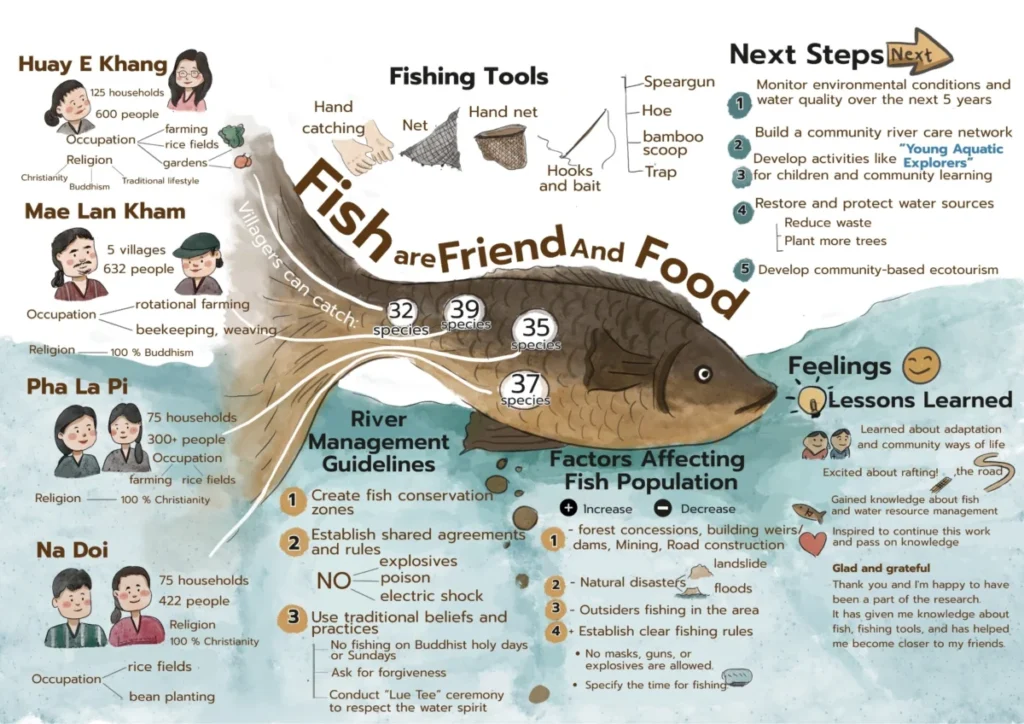
Duker’s research methodology was deeply rooted in collaboration, working closely with an Indigenous Pgakenyaw-led non-governmental organization (NGO) and four partner Pgakenyaw communities. This community-engaged approach was crucial for building trust and ensuring the research directly addressed the needs and priorities of the communities involved. The project’s central aim was to bring to light the intricate relationship the Pgakenyaw people have with their rivers, a relationship often marginalized in broader research and policy discussions.
The fieldwork employed a mixed-methods approach, combining qualitative and quantitative data collection over an extensive period. Duker visited each of the four communities multiple times throughout the year, engaging in immersive qualitative research. Methods included participant observation, where he actively joined community members in their daily activities, individual interviews to gather in-depth perspectives, focus groups to foster collective discussion, and participatory activities such as walking meetings and the creation of livelihood maps and food calendars. These participatory methods ensured that the research process was co-created and reflective of community realities.
To capture a comprehensive understanding, Duker also incorporated quantitative data collection. He trained two youth leaders in each community to monitor fish catches weekly and conduct 24-hour dietary recalls. This dual approach allowed for a nuanced understanding of both the practices and their impacts, bridging traditional knowledge with empirical data. The success of this intensive fieldwork was underpinned by Duker’s decade-long experience working in Thailand, which had fostered crucial cross-cultural competencies and established strong relationships with community members and NGO staff prior to the commencement of his PhD research. Preliminary visits in 2023 and 2024 laid the groundwork for this extensive period of data collection.
A nine-minute documentary video, produced in collaboration with Pgakenyaw creator Thinnaphat Phattharakiatthawee (Pokwa Productions), serves as a powerful dissemination tool for the project’s findings. This video showcases aspects of the fieldwork and was instrumental in sharing the messages from the project’s culminating gathering event with a wider Pgakenyaw audience and the broader Thai society. This initiative highlights the project’s commitment to not only academic inquiry but also to accessible and community-driven knowledge sharing.
Key Highlights and Unexpected Discoveries
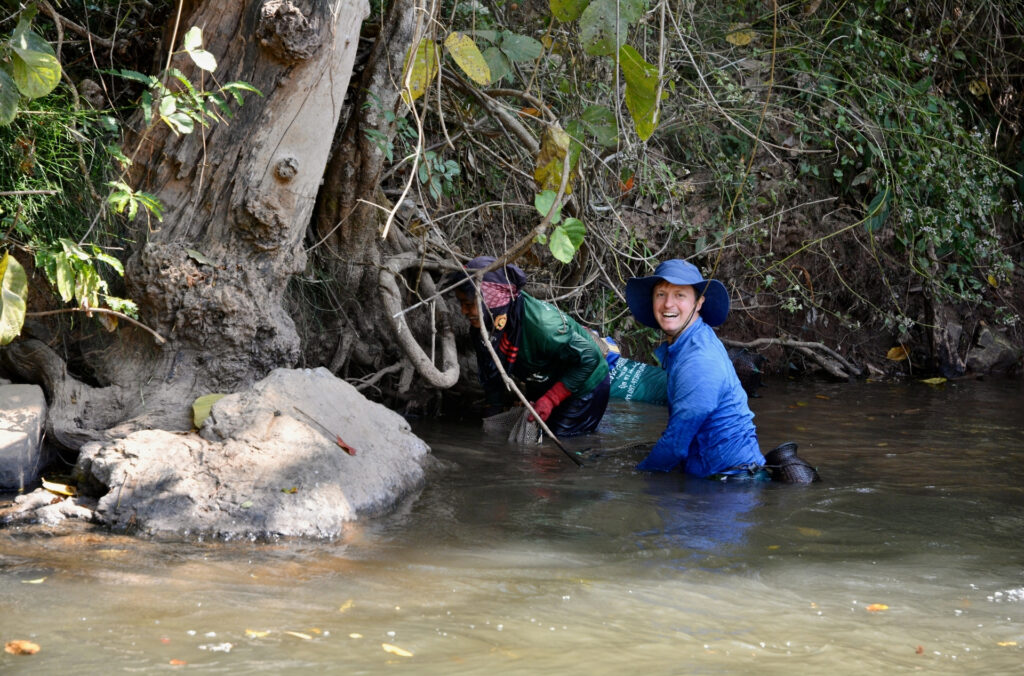
One of the most significant highlights of Duker’s fieldwork was the profound relationships he forged with community members. These connections were often deepened through participant observation, particularly during fishing activities. Beyond documenting these practices with his camera, Duker actively participated, attempting to replicate the traditional fishing methods. He recounts a memorable instance in one community where his initial fishing attempt yielded only a single, tiny fish, a humorous anecdote that remains a fond memory shared by the community.
These shared experiences were more than just research opportunities; they fostered a sense of camaraderie and mutual respect. A poignant moment captured this sentiment when a community member expressed, "I love to go fishing, but I love it even more when you are with us." Such interactions underscored the intangible, often surprising, humanistic outcomes of research, demonstrating how academic pursuits can foster genuine connection and enrich lives beyond data points.
The research also unveiled unexpected dimensions of riverine practices, moving beyond initial assumptions focused on material benefits like food security. Duker was particularly struck by the significant non-material benefits derived from fishing. He observed that fishing was frequently a communal activity, accompanied by laughter and expressions of joy, highlighting its crucial role in promoting mental well-being and strengthening social cohesion. The research also revealed that while fishing is a widespread activity, it is particularly important for women, youth, and the elderly, underscoring its role in supporting these demographic groups.
Navigating Challenges and Adapting Research Approaches
Despite the enriching nature of the fieldwork, Duker encountered significant challenges, primarily related to the demanding physical and mental toll of frequent travel. The necessity of commuting between his base in Chiang Mai and the partner communities, often every other week, coupled with additional trips for NGO support, led to considerable fatigue. However, Duker emphasizes that these challenges were ultimately outweighed by the invaluable experiences and insights gained.
His fieldwork significantly reshaped his understanding of his research topic and approach. Duker contrasts his current PhD research with his master’s research, which was conducted remotely during the COVID-19 pandemic. While that experience yielded valuable learning, the in-person immersion of his PhD project revealed a critical divergence between stated practices and contemporary realities. He observed that while community members might articulate the importance of fish for their diets, the actual consumption patterns, as revealed by weekly data collection, did not always align with these historical understandings.
This discrepancy was not attributed to dishonesty but rather to a nuanced understanding that community members’ perceptions often reflected historical truths rather than current ecological and social conditions. Duker’s research illuminated that fish and riverine activities provide a spectrum of benefits, including social and psychological well-being, even if their role in daily diets has evolved. This nuanced understanding is vital for informing policy-makers and empowering communities to engage in effective human-nature management strategies.
Disseminating Knowledge and Empowering Communities
Duker has prioritized knowledge mobilization, ensuring the research benefits extend beyond academia to the local communities and broader society. In February 2026, he organized a significant knowledge-sharing gathering that brought together the four partner communities, other community representatives, and academic and NGO allies. This event served as both a celebration of the project’s culmination and a platform for collaborative reflection.
At this gathering, research assistants presented findings specific to their communities, while Duker shared broader insights from the project. A key component of the event involved exploring how river conservation practices could translate into viable ecotourism opportunities, offering potential income streams for the communities. The evenings were dedicated to cultural exchange, with elders sharing traditional stories and poems, reinforcing the intergenerational transmission of knowledge.
The gathering also facilitated discussions on future river care strategies, emphasizing the interconnectedness of Pgakenyaw riverine livelihoods with ecological knowledge and environmental management. The crucial role of women and their knowledge systems was a recurring theme. The project highlighted the communities’ adeptness at strategically integrating diverse knowledge systems, including traditional wisdom and modern science, to maintain riverine ecological health amidst ongoing environmental changes. This initiative not only reaffirmed the value of these ancestral knowledges and practices but also provided a foundation for their continued development and application.
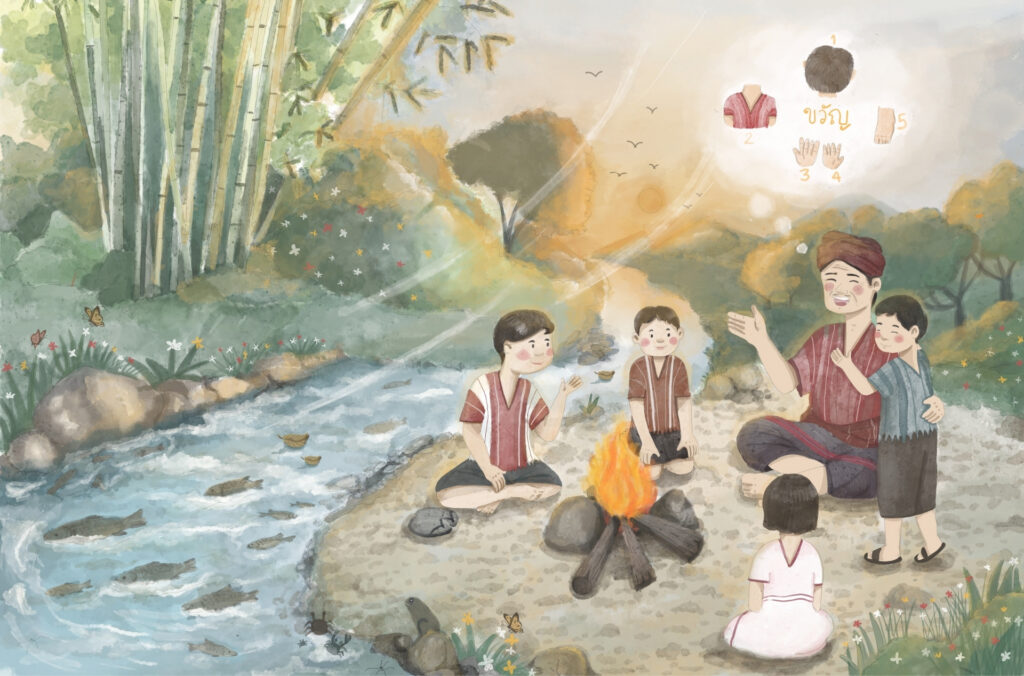
To further support the communities, Duker developed educational books for Pgakenyaw youth. These books weave key findings and elder teachings into narratives that explain the historical and contemporary relationships between the Pgakenyaw people and their rivers. They also incorporate suggested survey activities and ecological data collected by research assistants, equipping communities with tools for ongoing river monitoring. These books are further enhanced by illustrations from Indigenous Hmong artist Oranee Saewan.
Academic dissemination is also a core component of Duker’s plan. He is preparing three journal articles for his dissertation, which will focus on how Indigenous Peoples and Local Communities (IPLCs), particularly women, leverage multiple knowledge systems for effective environmental stewardship amidst political, economic, and environmental transformations. These articles aim to advocate for increased power for IPLCs and women in environmental governance, addressing historical injustices and bolstering preparedness for future environmental crises.
Future Directions: Building Transnational Indigenous Networks
Duker’s immediate next step is to complete his dissertation within the coming year. Looking ahead, he aims to establish an international research program focused on how IPLCs in multiple countries develop diverse forms of environmental governance that integrate varied knowledge systems. He believes that IPLCs possess invaluable insights for mainstream society and envisions this program fostering a new transnational network of IPLC communities.
Rivers, with their inherent interconnectedness, will remain a central focus of his research program, as they naturally facilitate the pan-community dialogue essential for building robust networks. Building on his experience leading an 11-person research team, Duker plans to train and establish research teams within each partner community. This collaborative structure will enable communities to forge connections with other participating communities, creating a network capable of advocating for IPLCs’ leadership in effective environmental governance, ultimately driving positive social and environmental outcomes. This ambitious research agenda is poised to contribute significantly to both knowledge production and community capacity-building on a global scale.