



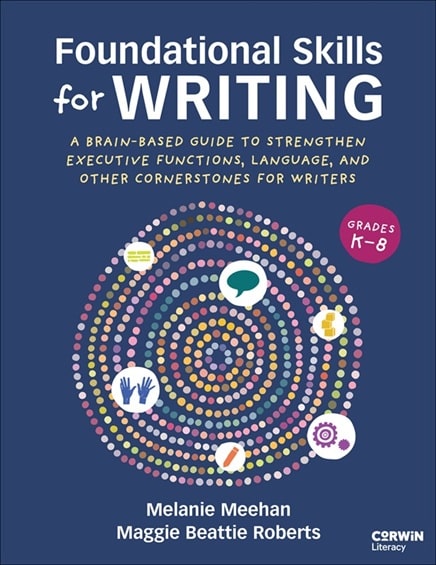
The landscape of education has long been dominated by intense debates surrounding literacy, with discussions frequently centering on reading instruction—phonics, fluency, and comprehension—often overshadowing the equally critical domain of writing. Despite the deep, reciprocal relationship between reading and writing, the latter often receives significantly less attention in curriculum development, teacher training, and public discourse. This glaring disparity in focus has prompted two experienced educators, Melanie Meehan and Maggie Roberts, to address this omission with their new book, "Foundational Skills for Writing: A Brain-Based Guide to Strengthen Executive Functions, Language, and Other Cornerstones for Writers." Published earlier this month, the book offers a timely intervention, exploring the intricate cognitive demands of writing and providing educators with practical, research-informed strategies to cultivate proficient writers.
The Overlooked Pillar of Literacy: Rebalancing the Reading-Writing Dialogue
For decades, educational policy and pedagogical practices have been heavily weighted towards reading instruction. The so-called "reading wars," oscillating between phonics-based and whole language approaches, have consumed considerable resources and attention, leading to significant advancements and shifts in how reading is taught. However, writing, often viewed as a more complex and less easily quantifiable skill, has remained a secondary concern. National assessments, such as the National Assessment of Educational Progress (NAEP), consistently reveal that a significant percentage of American students struggle with writing at proficient levels. For instance, recent NAEP data for writing has shown stagnant or declining scores across various grade levels, underscoring a systemic challenge that demands urgent attention.

Research consistently demonstrates that reading and writing are not merely complementary but deeply intertwined cognitive processes. Strong writing skills contribute directly to improved reading comprehension, as the act of constructing sentences and paragraphs deepens a student’s understanding of text structure, vocabulary, and authorial intent. Conversely, extensive reading exposes students to diverse writing styles, grammatical structures, and rich vocabulary, which in turn enhances their own writing abilities. This symbiotic relationship suggests that neglecting one invariably weakens the other, creating a significant impediment to overall literacy development. The historical sidelining of writing instruction represents a critical oversight that Meehan and Roberts are determined to rectify.
Authors and Their Vision: A Unified Approach to Writing Development
Melanie Meehan, a former curriculum coordinator and now the proprietor of an in-person writing center, brings a wealth of practical experience in designing and implementing educational programs. Maggie Roberts, a literacy consultant and former middle school teacher with nearly two decades dedicated to supporting classroom teachers, offers deep insights into pedagogical challenges and effective instructional strategies. Their combined expertise forms the bedrock of "Foundational Skills for Writing," a book born out of a shared recognition of the urgent need for a more comprehensive and neurologically informed approach to writing instruction.
The authors’ primary motivation was to demystify the writing process, breaking it down into its constituent cognitive components. They observed that many educators, while adept at teaching reading, often felt less equipped to teach writing effectively, particularly when students struggled. The book aims to bridge this knowledge gap by elucidating "what the brain actually has to do when we ask kids to write, and what gets in the way." Their vision is to empower teachers with the understanding and tools necessary to systematically build the foundational skills that underpin successful writing, ensuring that no student is left behind due to underdeveloped cognitive or motor capacities.
"Foundational Skills for Writing": A Multidimensional Framework
The cornerstone of Meehan and Roberts’ approach is the disaggregation of the complex act of writing into three primary skill categories, each crucial for developing a proficient writer:
-
Transcription Skills: This category encompasses the mechanical aspects of writing, including handwriting, keyboarding, spelling, and both large and small motor development. While often considered basic, the automaticity of these skills is paramount. When students struggle with forming letters, typing efficiently, or correctly spelling common words, their cognitive energy is diverted from higher-order tasks such as generating ideas, organizing thoughts, and crafting compelling arguments. The book emphasizes that mastering these foundational mechanics frees up working memory, allowing students to focus on the content and quality of their writing.
-
Oral Language: This domain highlights the critical link between spoken language and written expression. It includes speaking and listening skills, with a particular focus on sentence construction and vocabulary development. Oral language serves as a vital precursor to writing; students who can articulate complex thoughts verbally are better positioned to translate those thoughts into written form. The ability to construct grammatically correct, coherent sentences orally directly translates into stronger sentence formation in writing.

-
Executive Functioning: This category delves into the higher-level cognitive processes essential for effective writing. It includes working memory (the ability to hold and manipulate information), cognitive flexibility (the capacity to adapt thinking and consider multiple perspectives), and inhibitory control (the ability to manage impulses and stay focused). Writing demands significant executive function; students must plan their ideas, organize information, sustain attention, monitor their progress, and revise their work. Deficits in executive functions can manifest as difficulties in planning essays, maintaining coherence, or self-editing.
Meehan and Roberts argue that a holistic approach to writing instruction must address all three categories. By understanding these foundational components and identifying where students may be struggling, teachers can implement targeted interventions that systematically strengthen these underlying skills.
"Minute Moves": High-Impact Strategies for Daily Integration
To make their framework actionable, Meehan and Roberts introduce a collection of practical strategies they term "Minute Moves." These are short, flexible activities, designed to take just one to two minutes, and can be easily integrated into various parts of the school day—as warm-ups, during transitions between subjects, or even on a walk to lunch. The genius of "Minute Moves" lies in their ability to help students automatize foundational skills, thereby reducing the cognitive load required for the more complex aspects of writing. This frees up crucial working memory for higher-level thinking, allowing students to engage more deeply with the "real work" of crafting meaningful text.

Category 1: Spelling Minute Moves
The book offers three key "Minute Moves" designed to enhance spelling proficiency, moving beyond rote memorization to foster a deeper understanding of word structure and etymology.
-
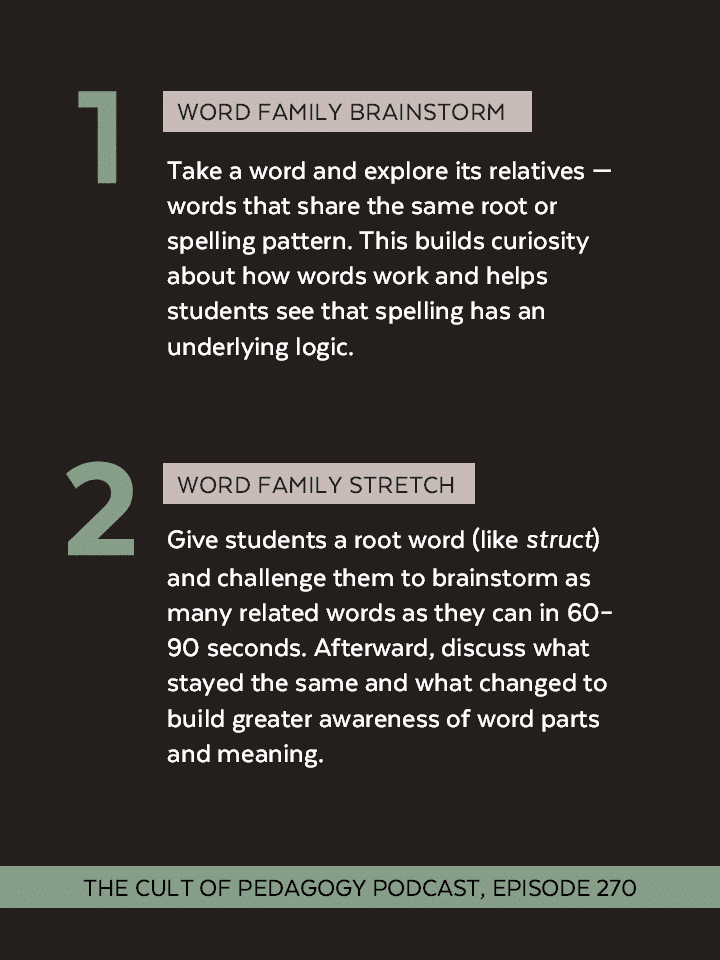
Word Family Brainstorm: Inspired by spelling researcher Rebecca Treiman, this activity encourages students to explore the etymological connections between words. Instead of treating commonly confused homophones like "two," "to," and "too" in isolation, students are prompted to identify their relatives. For example, linking "two" (the number) to words like "twin," "twine," and "twenty" reveals a consistent "TW" pattern associated with the concept of "twoness." Meehan recounts a student struggling with "decision" who discovered its link to "decide," then further to "incision," "concise," and even "scissors," all tracing back to a Latin root meaning "to cut." This method transforms spelling from a chore into a detective-like investigation, igniting curiosity and embedding words within a meaningful semantic network. As Meehan notes, "The more that you can get kids curious and thinking words are cool, the better."
-
Word Family Stretch: Closely related to the brainstorm, this activity focuses on morphological awareness. Teachers provide a root word, such as "struct" (meaning "to build"), and challenge students to brainstorm as many related words as possible within a 60-90 second timeframe: "structure," "destruction," "construct," "structural," "instruct," "instruction." The critical follow-up is a debriefing session where students analyze what remained consistent, what changed, and how prefixes or suffixes altered the meaning. This guided discussion helps students internalize that word parts carry meaning, revealing pervasive patterns across academic vocabulary. Roberts highlights the distinction between "bound" roots (like "struct," which cannot stand alone) and "free" roots (like "form," which can be a standalone word but also forms "reform," "transform," "inform," "deform"), further deepening students’ appreciation for linguistic mechanics.
-
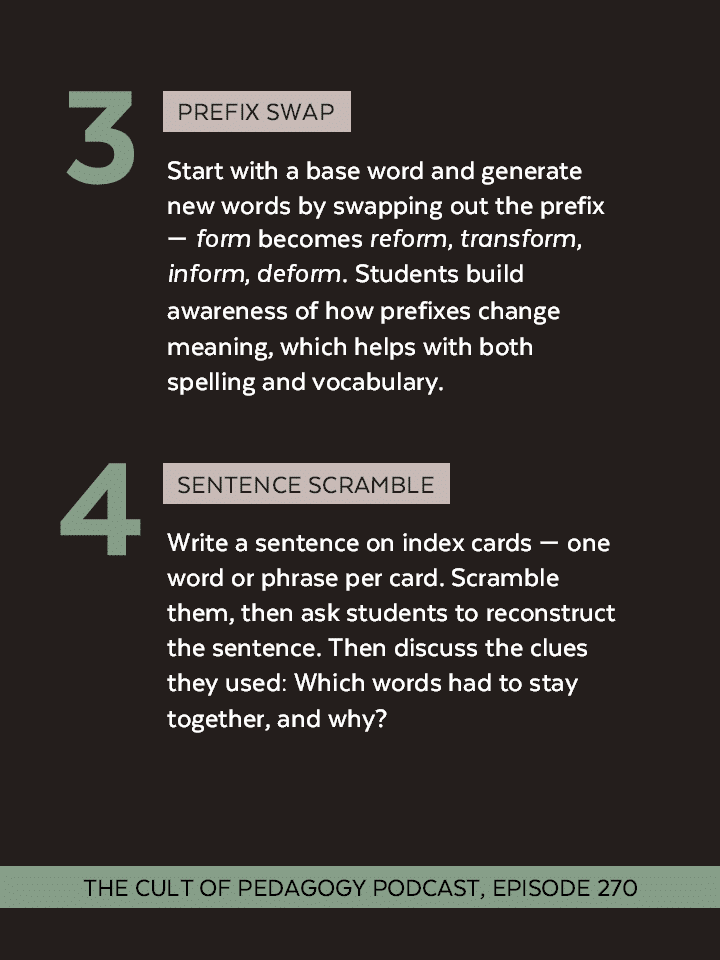
Prefix Swap: Building directly on the previous strategies, "Prefix Swap" specifically targets the impact of prefixes on word meaning and spelling. Students are given a base word and tasked with generating variations by changing its prefix. For instance, "form" can become "reform," "transform," "inform," or "deform." Each swap prompts a discussion about the shift in meaning, reinforcing the semantic power of prefixes. This activity is particularly beneficial for multilingual learners, who often recognize Latin or Greek roots and prefixes from their other languages, as observed by Meehan with students who quickly grasped "benevolent" and "malevolent" through their existing knowledge of "bene" and "mal." These three spelling "Minute Moves" collectively work to build and strengthen the neurological pathways necessary for efficient word retrieval and accurate spelling, mitigating the common struggle of constantly attempting to recall word forms.
Category 2: Sentence Construction Minute Moves
These strategies are designed to help students develop a robust understanding of sentence structure and syntax, moving them beyond simple, choppy sentences to more complex and nuanced expressions.
-
Sentence Scramble: In this activity, a sentence is broken into its component words or phrases, each written on an index card. Students then reassemble the sentence. The tactile nature of physical cards allows for experimentation and manipulation. After reconstruction, a crucial debriefing involves questions like, "How did you figure out the order? What clues did you use? Which words had to stay together, and why?" This process fosters an "internalized understanding of sentence patterns and sentence construction," as Roberts explains. Teachers can increase complexity by removing punctuation, adding a distractor word, or challenging students to extend the sentence with their own words.
-
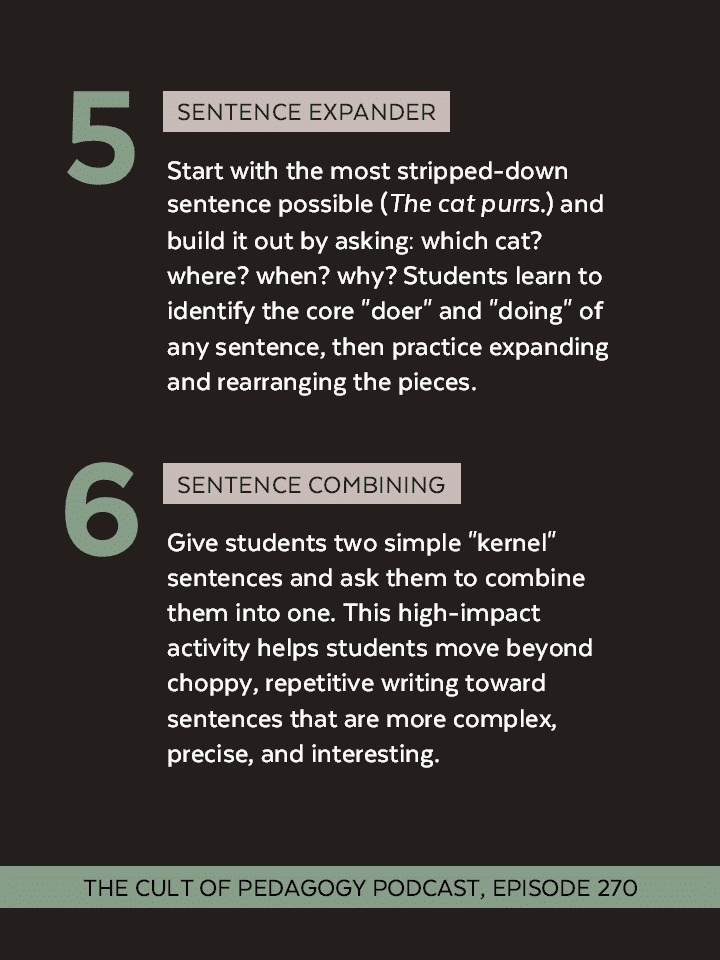
Sentence Expander: Starting with a basic kernel sentence, such as "The cat purrs," students collaboratively expand it by answering a series of guiding questions: "Which cat? What color? Where? When? Why?" Meehan advocates for using accessible terms like "doer" and "doing" instead of the more abstract "subject" and "predicate" to help younger students grasp the core elements. This process often leads to richer sentences, like "The orange cat is sleeping on the couch in the afternoon because he is tired." Experimenting with rearranging expanded sentences then helps students understand how word order affects emphasis and flow, cultivating the ability to craft more sophisticated and varied sentences.
-
Sentence Combining: Roberts describes sentence combining as "a really high-impact, quick way for kids to graduate from writing a series of simple sentences to ones that are more syntactically complex, interesting, and precise." Students are given two short sentences, such as "My cat is orange" and "My cat is big," and asked to combine them into one, leading to "My big orange cat…" For beginners, teachers can scaffold by underlining the word to be "harvested" from one sentence and integrated into the other. As students gain confidence, they can combine three or more sentences and experiment with different conjunctions (e.g., "because," "and," "but") to alter meaning and create more sophisticated structures. This practice directly translates into students naturally merging short, choppy sentences into more polished, complex expressions in their own writing.
Category 3: Executive Functioning Minute Moves
These activities directly target crucial executive functions, particularly cognitive flexibility, which are vital for planning, organizing, and revising written work.
-
What’s Another Way?: This "Minute Move" directly addresses cognitive flexibility, the ability to shift perspectives and approaches. Students are given a sentence and challenged to rewrite it in multiple ways. This could involve starting with a dependent clause instead of an independent one, replacing a noun with a pronoun, or intentionally shortening the sentence for impact. Meehan emphasizes that effective writing is not solely about creating complex sentences; sometimes, a concise, powerful sentence is more impactful. Giving students the vocabulary to describe this skill as "cognitive flexibility" can be profoundly empowering, especially for those who have previously struggled with writing, fostering a sense of capability and intellectual engagement.
-
New Angle: Zooming out from the sentence level to narrative, "New Angle" also cultivates cognitive flexibility by asking students to retell a familiar scene from a different character’s perspective. This can be applied to a shared class text, a book they are reading, or a short film. Roberts illustrates this with her own memory of a high school cafeteria food fight, noting how vastly different the narrative becomes when told from the perspective of the teacher who had applesauce poured on her hair. This exercise requires students to hold multiple viewpoints simultaneously, make deliberate choices about voice, detail, and interpretation. Meehan uses short Pixar films like "Snack Attack," which depicts the same event from two distinct points of view, to great effect. She recounts a session where she and a student collaboratively wrote from different character perspectives, fostering a competitive yet engaging environment. Beyond writing skills, this activity nurtures empathy and the ability to understand diverse perspectives, a skill Meehan rightly connects to "democracy and thinking about how other people think."
Broader Impact and Implications for Educational Practice
The insights and strategies presented in "Foundational Skills for Writing" carry significant implications for the broader educational landscape.
- Curriculum Development: The book provides a robust framework for curriculum designers to re-evaluate and enhance existing writing programs, ensuring that foundational skills are explicitly taught and regularly practiced. It advocates for a more balanced approach to literacy, giving writing its due prominence alongside reading.
- Teacher Professional Development: The "Minute Moves" offer a clear, actionable pathway for professional development. Training teachers in these brain-based strategies can significantly boost their confidence and effectiveness in teaching writing, moving beyond generic prompts to targeted skill development.
- Student Outcomes: A systematic implementation of these strategies promises to improve student writing proficiency across all grade levels. By addressing the underlying cognitive demands, the approach can help students develop greater automaticity, allowing them to allocate more cognitive resources to higher-order thinking, creativity, and effective communication. This, in turn, can lead to improved performance in all academic subjects that rely on written expression.
- Addressing Learning Gaps: The explicit focus on foundational skills and executive functions makes this approach particularly beneficial for students who struggle with writing, including those with learning disabilities or multilingual learners. By breaking down the writing process into manageable, targeted interventions, teachers can better support diverse learners and foster a sense of accomplishment.
- A Shift in Educational Focus: The book serves as a powerful call to action, urging educators, policymakers, and parents to elevate writing instruction to a status commensurate with its importance in comprehensive literacy. It encourages a shift from viewing writing as merely an assessment tool to recognizing it as a fundamental cognitive process that shapes thinking, learning, and communication.
By foregrounding the intricate cognitive processes involved in writing and offering practical, brain-based strategies, Melanie Meehan and Maggie Roberts’ "Foundational Skills for Writing" represents a critical step forward. It provides educators with a clear roadmap to cultivate not just competent writers, but confident, flexible thinkers who can navigate and shape the complex world through the power of the written word.