



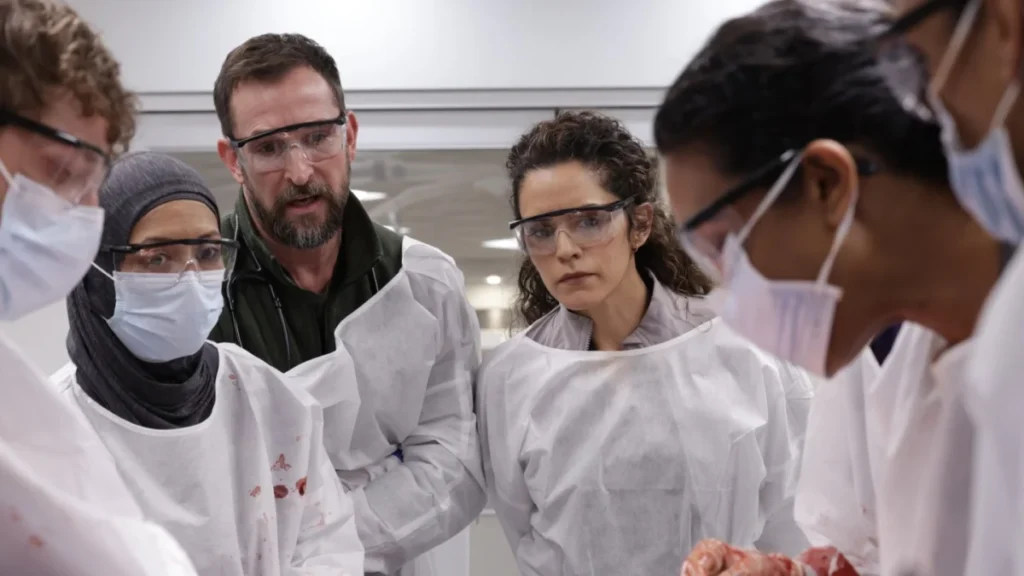
Television has long fascinated audiences with high-stakes medical dramas, yet few series have achieved the unflinching, visceral authenticity of The Pitt. Entering its second season, the critically acclaimed series broadcast by Warner Bros. Discovery on Max has redefined the visual boundaries of television. Blending the real-time urgency of 24 with the clinical precision of ER and the grounded humanity of Scrubs, the show is set within the chaotic emergency department of the fictional Pittsburgh Trauma Medical Center. While its writing, direction, and performances have earned prestigious accolades—including Emmy Awards for Outstanding Drama, Lead Actor, and Supporting Actor and Actress—The Pitt is perhaps most widely recognized for its uncompromising, hyper-realistic depiction of medical trauma.
From degloved flesh, severe dismemberment, and electrocutions to complex physiological states like priapism, impalements, botched cosmetic procedures, and high-risk childbirth, the series presents human anatomy and medical intervention with a graphic fidelity previously unseen in serialized television. Even anatomical professionals and medical educators frequently express astonishment at the accuracy of the show’s visuals. For viewers and healthcare workers alike, watching an episode of The Pitt closely mirrors shadowing physicians in a high-volume trauma center. This level of technical execution is not achieved through computer-generated imagery alone; rather, it is the result of a meticulously coordinated partnership between in-house makeup departments, specialized prosthetic effects houses, and trauma-trained medical consultants.
The Evolution of Wound Simulation and Moulage
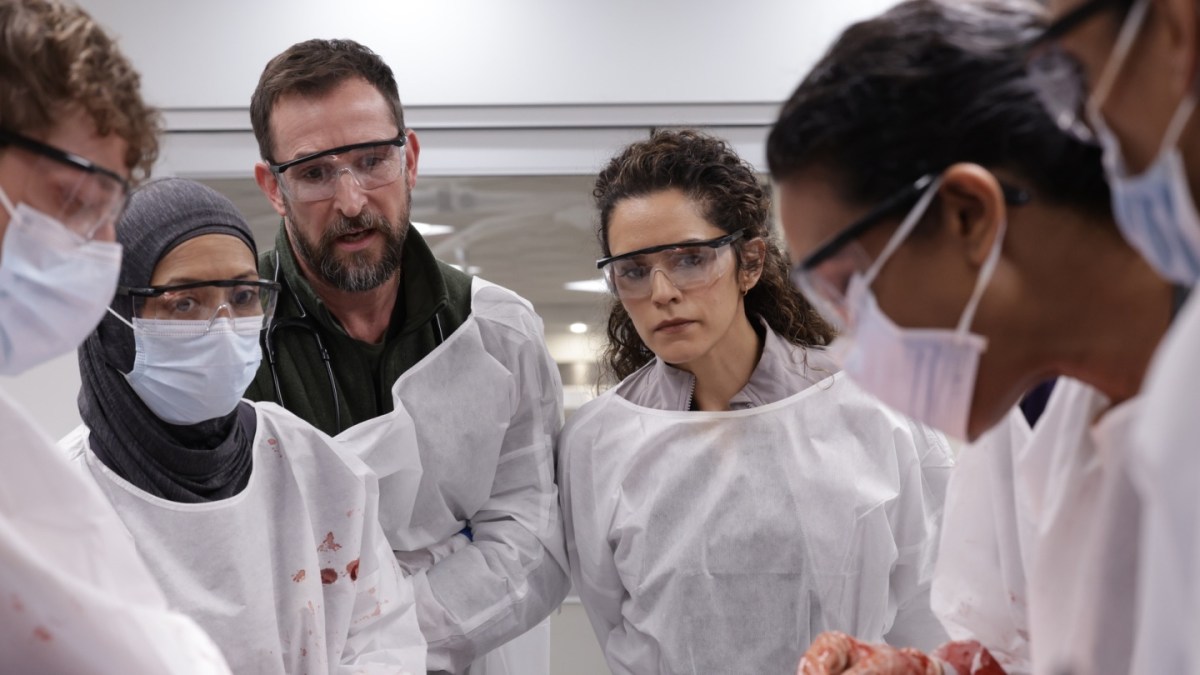
To understand how The Pitt achieves its groundbreaking visual standards, one must examine the historical evolution of wound simulation, traditionally known as moulage. For decades, the special effects industry relied on basic materials to replicate human injuries. Early techniques utilized heavy layers of spirit gum, cotton, flexible collodion, and rigid modeling waxes. These methods were largely sufficient for black-and-white broadcasting or early color television formats characterized by lower resolution and standard definition. However, as television production transitioned into high-definition and ultra-high-definition digital formats, the limitations of traditional moulage became glaringly apparent. Under bright studio lighting and high-resolution lenses, older materials often appeared artificial, prone to melting, or structurally unconvincing.
The industry’s response to the high-definition era required a synthesis of advanced material science and artistic craftsmanship. Special effects supervisor Jason Collins of Autonomous F/X, whose portfolio includes medical dramas such as House, M.D., The Resident, and Grey’s Anatomy, notes that modern production requires continuous reinvention. The process of fooling the human eye demands a delicate balance between empirical science and traditional artistry. If the technological application overshadows the artistic execution, the narrative cohesion of the storytelling risks being compromised. Consequently, the production teams behind The Pitt have adopted innovative methodologies that merge cutting-edge manufacturing techniques with centuries-old sculpting traditions.
The Production Pipeline: From Storyboard to Prosthetic Reality
The operational workflow employed by The Pitt’s production team differs significantly from traditional television scheduling. According to Department Head of Makeup Myriam Arougheti, the creation of physical prosthetics often begins long before a script is formally finalized or scenes are blocked.

The process begins with writer and executive producer Dr. Joe Sachs, a medical professional who outlines the clinical interventions, pathologies, and injuries that will feature in upcoming episodes. Once these medical requirements are established, Arougheti initiates the fabrication timeline, which typically spans anywhere from two to nine weeks depending on the complexity of the procedure. Because of these extensive lead times, casting decisions for patient roles must occur rapidly.
Once an actor is cast to portray a specific patient, they immediately undergo a comprehensive body-casting process. This procedure creates a precise three-dimensional mold of the actor’s anatomical features—ranging from limbs and torsos to specialized facial structures. Using these physical lifecasts, specialized effects houses sculpt, mold, and cast custom prosthetic appliances designed to seamlessly integrate with the actor’s body during filming. This rigorous pipeline ensures that complex interventions, such as open-heart cardiac massage or tracheal repairs, maintain absolute visual consistency with real-world medical procedures.
Technological Pillars Driving Modern Medical Prosthetics
The unprecedented realism of The Pitt is underpinned by five core technological and operational advancements that separate it from preceding medical television programs.

Silicone Supremacy and Advanced Material Science
Decades ago, medical education and television production relied on rudimentary stand-ins for human tissue. In academic settings, student healthcare workers frequently practiced subcutaneous injections on citrus fruits to simulate the tactile resistance of human skin. Today, medical simulation and television prosthetics rely heavily on advanced platinum-cure silicones. These modern chemical compounds possess elastic properties, tensile strength, and translucent qualities that closely mimic living human flesh. Modern silicone prosthetics can stretch, gape, lacerate, and be sutured in real-time on camera, providing actors and directors with interactive physical props that respond organically to surgical tools.
Integration of 3D Scanning and Digital Printing
Historically, special effects artists sculpted every prosthetic appliance entirely by hand using oil-based clays. While this traditional approach produced impressive results for its era, it was inherently time-consuming, difficult to replicate precisely, and limited in geometric accuracy. The integration of high-resolution 3D scanning and digital sculpting software over the past decade has completely transformed this workflow. Effects teams can now scan an actor’s body, digitally modify anatomical models with absolute precision, and print multiple identical molds using industrial 3D printers. This technology allows for the creation of customized internal components—such as heart gaskets or localized hematomas—that exhibit a 99.9 percent accuracy rate compared to real human anatomical structures.
Miniaturized Robotics and Control Systems
The evolution of unmanned aerial vehicle technology over the last ten years inadvertently revolutionized animatronics within the entertainment industry. The micro-servos, lightweight wireless transmitters, and compact control boards originally developed for drone engineering have been successfully adapted by special effects practitioners. Complex physical events, such as a mechanically assisted childbirth, can now be executed remotely using compact control systems roughly the size of a modern smartphone. This technological leap allows operators to orchestrate complex physical movements—such as a realistic delivery sequence—from another room or behind set monitors, eliminating the need for bulky mechanical rigs and spring-loaded apparatuses that previously cluttered medical sets.
Rigorous Clinical Oversight
A foundational element of the show’s success is its dedicated team of on-set medical consultants. Unlike standard television productions where minor injuries are styled with theatrical fake blood and minimal oversight, The Pitt assigns trauma-trained clinicians to monitor nearly every aspect of physical production. These medical professionals oversee every incision, contusion, suture pattern, and anatomical exposure. Their constant presence ensures that the narrative and visual representations strictly adhere to established medical protocols, providing a level of authenticity that resonates strongly with actual healthcare professionals.

Dedicated Time and Financial Investment
The logistical success of The Pitt’s prosthetic department is heavily supported by adequate resource allocation from its network distributors, including Max and Warner Bros. Discovery. Arougheti notes that unlike fast-paced television environments where art departments face severe time constraints, the production grants her team the necessary budgets and multi-week preparation windows required to perfect complex sculpts. By allowing artists adequate time to capture intricate biological details—such as microscopic skin pores, realistic vascular patterns, and natural tissue textures—the production achieves a standard of visual execution that has earned widespread industry recognition, including consecutive Emmy nominations for prosthetic and makeup design.
Implications for Entertainment and Medical Education
The cultural and professional impact of The Pitt extends far beyond traditional television entertainment. By bridging the gap between cinematic storytelling and rigorous medical accuracy, the series has sparked broader discussions regarding the portrayal of healthcare systems in popular culture. For audiences, the show offers an unfiltered, high-adrenaline window into the realities of emergency medicine, fostering a deeper appreciation for the psychological and physical demands placed on trauma personnel.
Concurrently, the advanced simulation techniques pioneered for the show intersect directly with modern medical education. Institutions such as Harvard Medical School and the University of Idaho increasingly utilize high-fidelity simulation models for student training. The overlap between cinematic special effects and clinical simulation highlights a shared objective: the pursuit of absolute realism to improve both narrative engagement and practical training outcomes. As production technologies continue to advance, series like The Pitt establish a new benchmark for how complex professional environments are represented in media, ensuring that artistic ambition and factual integrity remain inextricably linked.