


A Global Climate of Repression
The landscape of higher education is currently defined by a duality of threats: overt state-sponsored violence and subtle, administrative erosion. In nations such as India, Bangladesh, and Iran, military and security forces have increasingly targeted student movements, utilizing excessive force to quell protests. The human cost has been significant, with reports detailing severe injuries, detentions, and long-term psychological trauma among scholars, students, and university staff.
The severity of these interventions extends beyond civil unrest. In countries like Guatemala and Pakistan, the report identifies targeted assassinations of high-ranking university administrators, a tactic designed to decapitate academic leadership and instill fear among the faculty. Simultaneously, in states like Russia and China, the institutionalization of censorship has led to the wrongful imprisonment of scholars, while Afghanistan continues its campaign of systemic exclusion, including the total banning of specific academic texts and the arbitrary blacklisting of entire institutions.
The Erosion of Institutional Autonomy
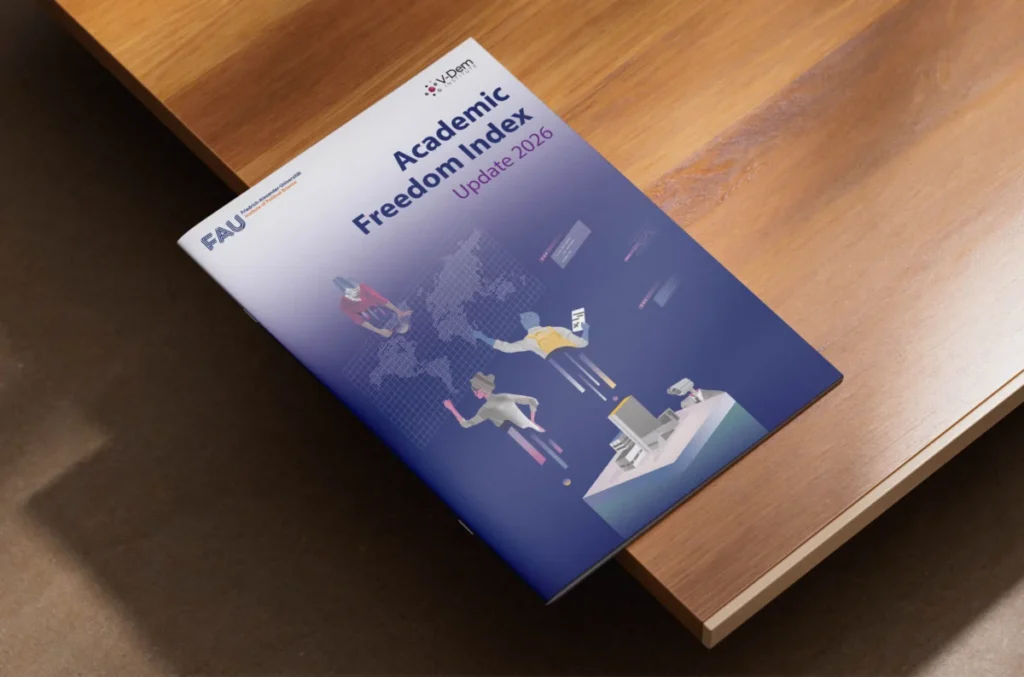
The Academic Freedom Index (AFI), which provides the quantitative backbone for the SAR analysis, reveals a concerning long-term trend. Over the past decade, academic freedom has significantly declined in 50 of the 170 countries surveyed, while only nine nations showed measurable improvement. Perhaps most alarming is the deterioration of institutional autonomy—the ability of universities to govern themselves without external political mandates.
Twenty-one countries that were categorized as having "strongly protected" institutional autonomy in 2015, largely concentrated in the democratic strongholds of Europe and North America, have experienced a marked decline. This trajectory suggests that the "autocratization" of higher education is no longer confined to authoritarian regimes but is actively taking root in liberal democracies.
The United States: A Rapid Descent
The United States has emerged as a primary focus of the report, accounting for 40 of the 382 documented incidents. The decline in the U.S. has been described by AFI researchers as "steep" and "pronounced," particularly over the last 12 months. This acceleration coincides with the policies of the second Trump administration, which has introduced structural changes to how universities interact with the federal government.
A critical point of tension arose in October 2025 with the introduction of the "Compact for Excellence in Higher Education." The policy framework mandates that universities align with the administration’s specific political agenda as a prerequisite for receiving priority access to federal research funding. By tying financial survival to ideological compliance, critics argue that the federal government is effectively eroding the neutral, evidence-based nature of research.
Furthermore, a proposed rule change in May 2026 from the Office of Management and Budget would empower political appointees to bypass traditional peer-review panels when awarding or rescinding research grants. This shift removes the layer of expert oversight that has historically shielded scientific inquiry from partisan influence. In addition to administrative pressures, the U.S. has seen an intensification of restrictive immigration policies affecting international scholars, including increased visa cancellations and detention at ports of entry, which further isolates the American academic community from the global talent pool.
The Impact of Politicized Governance
Robert Quinn, Executive Director of Scholars at Risk, characterizes the current situation as a dangerous normalization of coercive tactics. "What is unfortunate is that the U.S. is modeling these restrictive behaviors as if they are perfectly normal policy choices," Quinn noted. By treating academic institutions as extensions of the executive branch rather than as independent crucibles of inquiry, the U.S. is signaling to other nations that the suppression of dissenting intellectual activity is an acceptable exercise of state power.
The implications of this shift are profound. As the U.S. cedes its historical role as a primary defender of global academic freedom, a vacuum is created. Quinn emphasizes that Canada and European nations must now take on a more proactive role in safeguarding intellectual liberty. "Academic freedom is far too important to leave its protection to vague statements of principles," he asserted. "We have to accelerate legal protections and provide systematic training for academic freedom, while simultaneously engaging the public so that the broader society understands why the independence of universities is a prerequisite for a functioning democracy."
Canadian Challenges and the Guelph Incident
While Canada is often viewed as a sanctuary for scholars fleeing persecution, the report indicates that it is not immune to the pressures affecting the broader West. A significant case study occurred on November 25, 2025, when the University of Guelph cancelled the "People’s Conference for Palestinian Solidarity" just four days before it was scheduled to begin.
The university cited "new information" regarding security concerns as the primary justification for the cancellation. However, event organizers and civil liberty advocates criticized the decision, pointing to a lack of transparency in the university’s risk assessment process. Quinn noted that while institutions must maintain safety, the lack of a clear, evidence-based justification for cancelling a political conference creates the perception that the institution is using security as a pretext to silence specific viewpoints.
Canada’s changing approach to international students and increasingly stringent immigration barriers are also contributing to a sense of instability. As Canada tightens its borders, it risks undermining its reputation as a global leader in academic exchange. "It has become much harder to welcome people into Canada," Quinn observed. "That is ultimately the choice of the Canadian people, but they should be aware of the consequences this has for the health of their own intellectual ecosystem."
Future Outlook and Policy Implications
The 2026 report serves as a diagnostic tool for a world in transition. The data suggests that the protection of academic freedom is no longer a passive endeavor that can be sustained by inertia. Instead, it requires deliberate legal action and an unwavering commitment to the principles of institutional autonomy.
The trajectory of the last six years shows how quickly political and administrative pressures can dismantle the safeguards that protect research and teaching. If the current trend of "autocratizing" higher education continues, the global capacity to address complex challenges—from climate change to public health—will be fundamentally compromised.
For universities to survive as pillars of democratic society, they must resist political encroachment and ensure that the right to challenge, criticize, and innovate remains protected. As SAR concludes, the independence of the academy is not merely a privilege for scholars, but a vital infrastructure for the public good. The decline in these indicators across the globe suggests that without a concerted effort to reverse these trends, the future of open, evidence-based inquiry remains in a state of precarious uncertainty.