


For decades, the standard for measuring the success of corporate Learning and Development (L&D) initiatives has remained stagnant, tethered to the metrics of course completion, learner satisfaction scores, and self-reported knowledge acquisition. While these data points are easy to capture and report to stakeholders, they often fail to withstand the scrutiny of executive leadership, primarily because they measure the activity of learning rather than the tangible impact of behavioral change. As organizations face increasing pressure to demonstrate a return on investment (ROI) in human capital, the industry is reaching a critical inflection point where traditional metrics are no longer sufficient.
The Problem with Traditional L&D Metrics
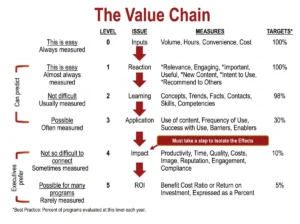
The fundamental flaw in modern L&D measurement lies in the reliance on lagging indicators. Whether utilizing the Kirkpatrick model, the Phillips ROI methodology, or the Training Evaluation and Metrics (TDRp) framework, the hierarchy of evidence is consistent. The lowest level of the pyramid—utilization and completion—is the most accessible but offers the least insight into organizational performance. Conversely, behavioral change sits at the apex of these models, representing the point where training translates into workflow improvement.
Because observing behavioral change traditionally required labor-intensive manual assessments, such as manager checklists or external coaching sessions, most organizations have historically abandoned the measurement process before reaching this critical stage. Instead, they wait for business metrics—such as quarterly revenue growth, customer satisfaction indices, or employee retention rates—to materialize. This creates a significant "measurement gap" where learning leaders are unable to provide evidence of progress during the critical window between training delivery and long-term business outcomes.
The Velocity of Learning and Organizational Capability
Recent industry discussions, including a high-profile webinar hosted by GP Strategies titled "Why Chasing Speed is Killing Your Learning Velocity," have highlighted a growing disconnect between content deployment and actual business improvement. Many organizations equate "learning velocity" with the speed of content rollout and the volume of course completions. However, data from the 2025 Measuring the Business Impact of Learning Report suggests that this approach often backfires, leading to cognitive overload, decision fatigue, and increased hesitation among employees.
True learning velocity, according to industry experts, is defined by how quickly an organization improves its collective capability. This is characterized by observable leading indicators: the speed of decision-making, the confidence of employees to act in ambiguous situations, a willingness to experiment, and a marked reduction in operational hesitation. When training is treated merely as a box-checking exercise, it fails to account for the "four pillars" of behavior change: the learner must have the knowledge, the will, the skill, and an environment that supports the new behavior through proper tools and reinforcement. When performance fails to improve, the fault often lies not with the training content, but with an organizational environment that failed to reinforce the learned behaviors.
The Maturity Model: A Roadmap for Change
The 2025 Measuring the Business Impact of Learning Report indicates that more than 50% of surveyed L&D professionals still focus primarily on completion and participation rates. This consistency across the industry suggests that the barrier is not a lack of intent, but a systemic deficiency in resources, technology, and operating models. To bridge this gap, consultants recommend a measurement maturity model, which categorizes practices into three pillars: people, technology, and process.
At the "emerging" level, organizations often operate in silos where L&D teams are disconnected from business units, data systems are fragmented, and processes are reactive. In contrast, "mature" organizations treat measurement as a continuous, integrated function. In these high-maturity environments, L&D professionals act as performance consultants who map training objectives directly to business outcomes, leverage automated data streams, and possess the analytical capability to interpret leading indicators. The transition from emerging to mature requires a shift from viewing measurement as an end-of-course survey to viewing it as a continuous, data-informed feedback loop.
AI as the Catalyst for Scalable Observation
The emergence of Generative AI has fundamentally altered the feasibility of measuring behavioral change. For the first time, organizations have access to a tool that can observe, analyze, and provide feedback on human behavior at an enterprise scale, bypassing the limitations of human-led observation.
A practical application of this shift involves the use of AI-driven rubrics for interpersonal interactions. For example, project managers completing a leadership program can upload meeting transcripts and recordings into an AI-based tool. By utilizing a standardized prompt—designed to evaluate executive presence, communication structure, and audience engagement—the AI provides near-instant, individualized feedback.
Unlike traditional methods, this approach allows for iterative learning. Participants can engage in a dialogue with the AI to refine their approach, asking for specific suggestions on phrasing or executive-level communication strategies. Because this process can be implemented using existing AI tools without the need for complex, proprietary software, it provides a low-barrier, high-impact method for gathering leading-indicator data on soft skills that were previously considered "unmeasurable."
Aligning Measurement with the Rhythm of the Business
The most advanced applications of this technology integrate learning measurement directly into the "Rhythm of the Business" (ROB). In a recent enterprise-level redesign of new-manager onboarding, the training was structured not as a standard series of modules, but as an 18-month engagement with an AI-facilitated coach.
This facilitator acts as a bridge between HR data—such as promotion cycles, performance review windows, and budgeting seasons—and the manager’s development needs. By nudging managers to practice critical conversations (e.g., salary negotiations or performance feedback) via AI roleplay immediately before those events occur, the organization can track behavioral data in real-time. This method ensures that reinforcement occurs during the actual cadence of work, rather than at a generic, pre-determined interval.
Leading indicators in this model include:
- The frequency of interaction with the AI facilitator prior to key business events.
- The quality and complexity of roleplay outcomes during simulated conversations.
- The variance in decision-making speed compared to pre-training benchmarks.
- The rate of "first-time right" performance in complex managerial tasks.
- The correlation between AI-coached preparation and subsequent employee engagement scores within the manager’s team.
Implications and the Attribution Gap
Despite the progress afforded by AI, challenges remain, particularly regarding self-reporting. Historically, L&D metrics have relied on surveys where participants rate their own confidence. This is prone to "halo bias," where learners overestimate their proficiency in the immediate aftermath of training.
Furthermore, the "attribution gap" remains a persistent hurdle for learning leaders. In a complex corporate environment, it is difficult to isolate the impact of a single training initiative from other variables, such as mentorship, direct managerial coaching, or individual stretch assignments. When asked how they separate the influence of training from these other professional development factors, many organizations still lack a definitive quantitative answer.
However, the shift toward AI-observed behavior is a significant step toward narrowing this gap. When AI evaluates an actual output—such as a written report, a meeting transcript, or a workflow decision—the resulting data is an objective record of performance, not a subjective self-rating. While this does not provide a perfect solution to the attribution problem, it provides a much higher degree of granularity than traditional methods.
Future Outlook
The transition toward behavior-based measurement represents a fundamental realignment of the L&D function. By moving away from the "completion-first" mentality and embracing the power of AI to observe and reinforce behavior within the rhythm of the business, organizations can transform L&D from a cost center into a strategic lever for performance.
As these practices mature, the role of the learning leader will increasingly mirror that of a data scientist or performance architect. The future of L&D measurement will not be found in the number of courses completed, but in the precision with which organizations can measure the velocity of their workforce’s improvement. For companies willing to invest in the systems and processes required to capture these leading indicators, the potential to drive sustained, measurable business impact is higher today than at any point in the history of corporate education.