


Few technological innovations in recent memory arrived with as much promise for transforming workplace productivity as the personal computer. Envisioned as a digital partner capable of vastly simplifying complex tasks, its advent in the late 20th century heralded a new era of efficiency. Tools like spreadsheets, word processors, databases, and presentation software were designed to streamline operations, automate routine processes, and empower individual workers to achieve unprecedented levels of output. The subsequent rise of email and collaborative platforms further cemented the belief that digital tools would unlock a continuous upward trajectory in productivity. Yet, the reality of the personal computer’s integration into the workforce proved far more nuanced than initial projections suggested, a historical lesson that bears significant relevance to the current fervor surrounding artificial intelligence.
The Dawn of the Digital Office: Promises of the Personal Computer
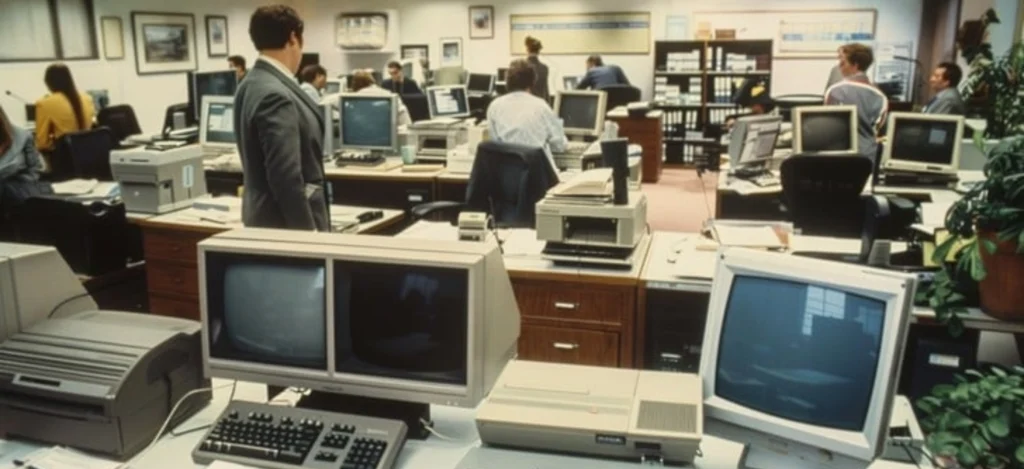
The journey of the personal computer from a niche enthusiast’s device to an indispensable office tool was rapid and transformative. In the 1980s, the introduction of affordable PCs from companies like IBM, Apple, and Compaq, coupled with user-friendly operating systems and powerful application software, began to reshape the corporate landscape. Prior to this, many office tasks were manual, labor-intensive, and time-consuming. Typewriters, filing cabinets, ledger books, and physical mail dominated administrative processes. The vision articulated by early computing pioneers promised a future where these bottlenecks would be eliminated, freeing up human capital for more creative and strategic endeavors.
Software applications were the linchpin of this promise. VisiCalc, released in 1979, is often credited as the first "killer app" for personal computers, demonstrating the immense power of electronic spreadsheets to financial professionals. It allowed for instant recalculations, scenario planning, and complex data analysis that previously required hours or days of manual effort. Following VisiCalc, Lotus 1-2-3 and later Microsoft Excel became industry standards, profoundly altering accounting, finance, and data management. Word processors like WordStar, WordPerfect, and eventually Microsoft Word revolutionized document creation, editing, and distribution, eliminating the need for constant retyping and physical corrections. Database management systems such as dBase enabled businesses to organize and retrieve vast amounts of information with unprecedented speed.
The initial rollout of these technologies was met with widespread enthusiasm. Businesses invested heavily, anticipating significant returns on their technological expenditure through reduced labor costs, faster processing times, and improved decision-making. The general consensus was that the digital revolution would usher in an era of sustained, rapid productivity growth across all sectors of the economy.
The Productivity Paradox Emerges: A Discrepancy in Data
Despite the widespread adoption and evident utility of personal computers and information technology (IT) more broadly, economic data from the 1970s, 1980s, and early 1990s painted a perplexing picture. During this period of burgeoning IT investment, measured productivity growth, particularly in the United States, actually slowed down compared to the post-World War II boom. This phenomenon was famously dubbed the "productivity paradox" by Nobel laureate economist Robert Solow in 1987, who quipped, "You can see the computer age everywhere but in the productivity statistics."
This paradox was a significant concern for economists and policymakers. Conventional economic theory suggested a direct correlation between capital investment, especially in transformative technologies, and an increase in labor productivity. Yet, billions of dollars were being poured into IT infrastructure, hardware, and software without a clear, corresponding uptick in output per worker. For instance, data from the U.S. Bureau of Labor Statistics showed that average annual productivity growth in the nonfarm business sector, which had been robust at over 2% from 1948-1973, dipped to around 1.4% from 1973-1995, even as computer penetration soared. This created a profound disconnect between anecdotal evidence of enhanced capabilities and macroeconomic indicators.
Unpacking the Paradox: Why PCs Fell Short of Immediate Expectations
Several factors contributed to the perceived productivity paradox, illustrating the complex interplay between technology, human behavior, and organizational structures.
Firstly, learning curves and integration challenges were significantly underestimated. Introducing new software and hardware required substantial investment in training employees, often leading to temporary dips in productivity as workers adapted to unfamiliar systems. Furthermore, integrating new digital tools with existing legacy systems and traditional workflows was a monumental task, frequently complicated by compatibility issues and resistance to change within organizations. Companies often "paved the cow paths," digitizing inefficient manual processes rather than fundamentally re-engineering them to leverage the full power of the new technology.
Secondly, the mismeasurement of productivity was a pervasive issue. Traditional economic metrics struggled to capture the qualitative benefits of IT, such as improved customer service, greater flexibility, enhanced information access, and higher product quality. For example, a word processor allowed for faster document creation, but also enabled more revisions, potentially extending the total time spent on a document while improving its quality. These qualitative improvements, while valuable, did not always translate directly into quantifiable increases in output per hour. The service sector, where IT investment was heavy, also proved particularly difficult to measure, as its outputs are often intangible.
Thirdly, the rise of digital distraction and information overload began to emerge as an unforeseen consequence. While email was hailed as a breakthrough for rapid communication, it quickly became a source of constant interruptions and a drain on attention. Early internet access, though limited by today’s standards, also introduced new avenues for non-work-related activities during business hours. The very tools designed to enhance focus and efficiency inadvertently created new forms of cognitive burden, fragmenting attention and increasing the time spent managing digital communications rather than performing core tasks. Collaborative platforms like Slack, while offering real-time communication, also contributed to this always-on culture, making it harder for employees to achieve deep work.
Historical Precedents: Beyond the Desktop
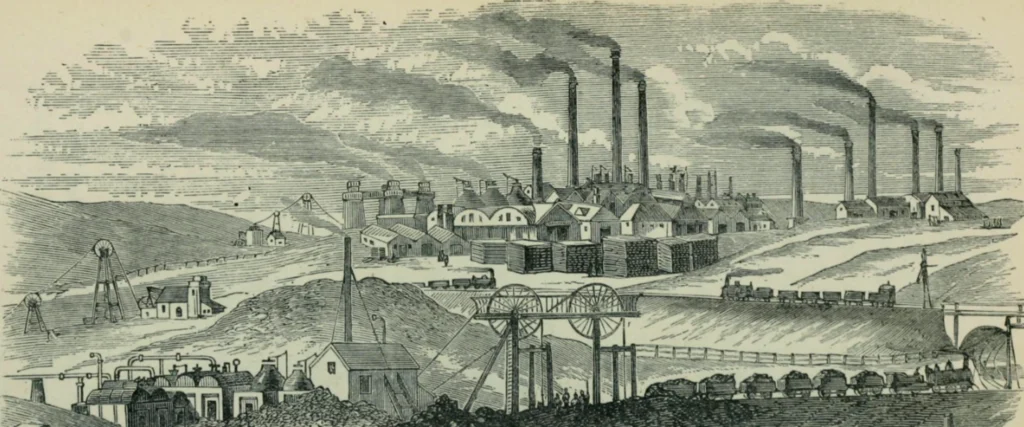
The personal computer’s initial impact on productivity mirrors a broader pattern observed throughout industrial history. Major technological revolutions, from the steam engine to electricity and the internal combustion engine, did not immediately translate into widespread productivity gains. Instead, they required decades of complementary innovations, infrastructure development, and profound societal and organizational restructuring.
For instance, the steam engine, invented in the early 18th century, took over a century to significantly impact factory production and transportation. Its full potential was only unlocked with the development of precision manufacturing techniques, new factory layouts, and the expansion of railway networks. Similarly, electricity, first harnessed for practical use in the late 19th century, did not revolutionize factory productivity until the 1920s. This was largely because factories had to be completely redesigned, moving from centralized power shafts to individual electric motors for each machine, a process that fundamentally altered workflows and supply chains. These historical precedents suggest that the integration of truly transformative technologies is a marathon, not a sprint.
The AI Revolution: A New Wave of Hype and Hope
Today, the world stands at the precipice of another technological transformation with the rapid advancement of artificial intelligence, particularly generative AI models. Tools capable of drafting complex texts, generating code, designing graphics, and synthesizing vast amounts of information are becoming increasingly accessible. The promises echoed from the dawn of the PC era are remarkably similar: AI will automate mundane tasks, augment human capabilities, accelerate innovation, and ultimately usher in an unprecedented era of productivity growth.
Indeed, early case studies and demonstrations suggest AI’s potential to dramatically reduce the time spent on tasks such as report writing, data analysis, customer service, and content creation. Companies are investing heavily, driven by the belief that AI will provide a critical competitive advantage, streamline operations, and enhance decision-making across all levels of an organization. Projections from major consulting firms and tech analysts often forecast trillions of dollars in economic value and significant boosts to global GDP attributable to AI. Leaders across various industries express a conviction that AI represents a paradigm shift, one that will fundamentally redefine the nature of work.
Echoes of the Past: The Potential for an AI Productivity Paradox
Despite the undeniable power and potential of AI, the lessons from the personal computer era serve as a critical cautionary tale. The very factors that contributed to the productivity paradox of the late 20th century could resurface in the age of AI, potentially delaying or complicating the realization of its full economic benefits.
Integration Complexities and the Human Element: Just as early PCs required significant adjustments, AI demands a complete rethinking of workflows, job roles, and organizational structures. Integrating AI tools effectively is not merely a matter of deploying software; it requires retraining workforces, establishing new protocols for human-AI collaboration, and often redesigning entire business processes. The "black box" nature of some advanced AI models also presents challenges for transparency, auditing, and ensuring accountability, adding layers of complexity to their deployment in critical functions. Resistance to change, fear of job displacement, and the need for new skill sets (e.g., prompt engineering, AI ethics) could slow adoption and limit initial gains.
The New Frontier of Digital Overload and Misinformation: While AI promises to free up time, it could also introduce new forms of cognitive burden. The ability to generate vast quantities of information rapidly, if not properly managed, could lead to an even greater deluge of data, making it harder for individuals to discern valuable insights from noise. Furthermore, the risk of "hallucinations" or biased outputs from generative AI models necessitates human oversight and verification, potentially adding new steps to workflows rather than simply automating them. The constant flow of AI-generated content, if not curated effectively, could contribute to a new level of information overload, challenging workers’ ability to focus and process critical data.
Mismeasurement of Productivity in the AI Age: Quantifying the productivity gains from AI could prove even more challenging than with PCs. How do economists measure the value of a more creative marketing campaign generated by AI, or the improved accuracy of medical diagnoses, or the accelerated pace of scientific discovery? Many of AI’s benefits are qualitative or contribute to long-term innovation rather than immediate, measurable increases in output per hour. Traditional metrics may again struggle to capture the full spectrum of value created by these advanced tools, leading to a perceived paradox even as the underlying impact is profound.
Expert Perspectives and Industry Reactions
Economists and technology analysts widely acknowledge the potential for a similar "AI productivity paradox." Dr. Erik Brynjolfsson, a leading researcher on IT and productivity, has consistently highlighted that the full benefits of general-purpose technologies like AI often materialize with a significant time lag, requiring extensive co-invention and organizational restructuring. Industry leaders, while bullish on AI’s long-term potential, frequently emphasize the need for careful implementation, ethical guidelines, and significant investment in human capital. A recent survey of Fortune 500 CEOs, for instance, indicated that while over 80% plan substantial AI investments, nearly 60% expressed concerns about the readiness of their workforce and the complexity of integrating AI without disrupting existing operations. Many emphasize that AI is a tool that augments human intelligence, not a complete replacement, requiring a symbiotic relationship to unlock its true value.
Navigating the Future: Strategies for Realizing AI’s Full Potential
To avoid a prolonged AI productivity paradox, businesses and policymakers must learn from the past. A concerted effort is required across several fronts:
- Investment in Human Capital: Comprehensive training programs are essential to equip workers with the skills needed to effectively utilize and manage AI tools. This includes not just technical proficiency but also critical thinking, ethical reasoning, and collaboration skills for human-AI teaming.
- Process Re-engineering, Not Just Automation: Organizations must be willing to fundamentally redesign their workflows and business models to leverage AI’s capabilities, rather than simply overlaying AI onto outdated processes. This may involve radical shifts in how tasks are performed and how teams are structured.
- Ethical AI Development and Governance: Establishing clear ethical guidelines, ensuring data privacy, and developing robust frameworks for AI accountability are crucial for building trust and facilitating responsible adoption.
- Rethinking Productivity Metrics: Economists and statisticians need to develop more sophisticated methods for measuring productivity that capture the qualitative benefits and long-term impacts of AI across various sectors, especially in knowledge work and services.
- Fostering an Adaptive Culture: Companies must cultivate a culture of continuous learning, experimentation, and adaptability to navigate the rapidly evolving AI landscape.
Conclusion
The personal computer, initially seen as an instant productivity slam dunk, taught us that the path from technological innovation to widespread economic benefit is often winding and fraught with unforeseen challenges. While its conveniences eventually became indispensable, its true impact on output was neither as immediate nor as clear-cut as early predictions suggested, or as transformative as earlier innovations like the steam engine and power loom. As we grapple with the immense promise of artificial intelligence, it is imperative to remember this history. AI, much like the early PC, offers unparalleled convenience and potential. However, realizing its full, transformative productivity gains will likely require patience, strategic investment in human and organizational capital, and a willingness to fundamentally rethink how work is done. The digital world has consistently demonstrated that productivity doesn’t always align with our initial expectations; true transformation often emerges from a careful, long-term dance between technology and human adaptation.