
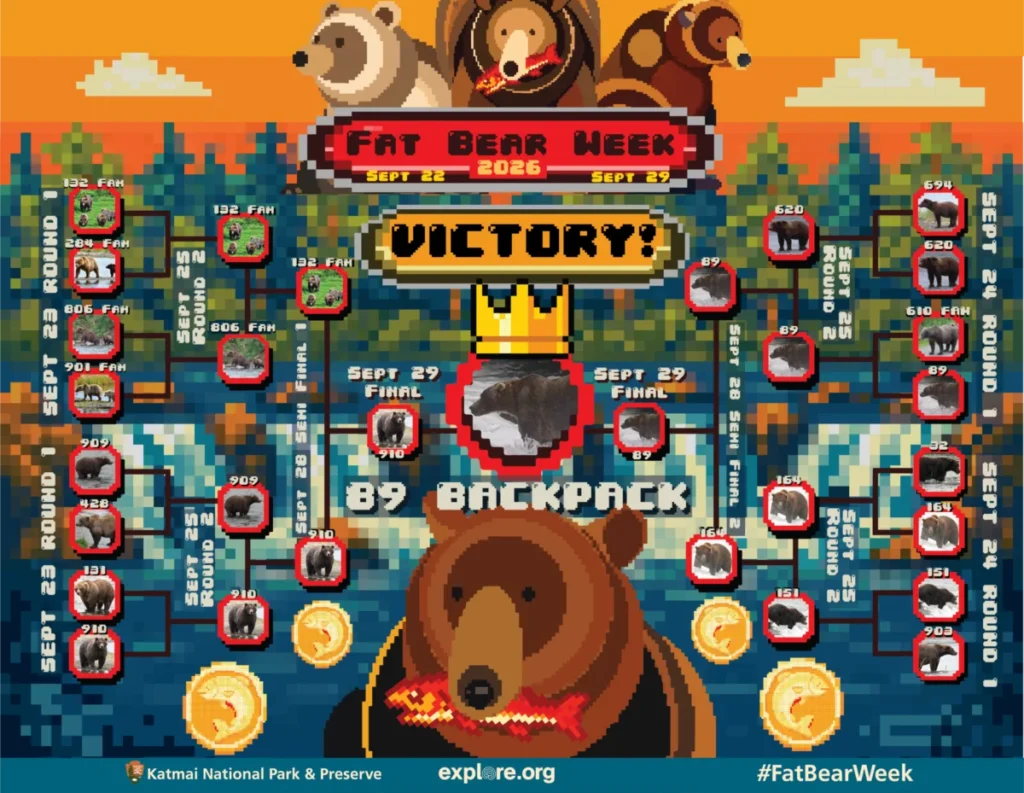
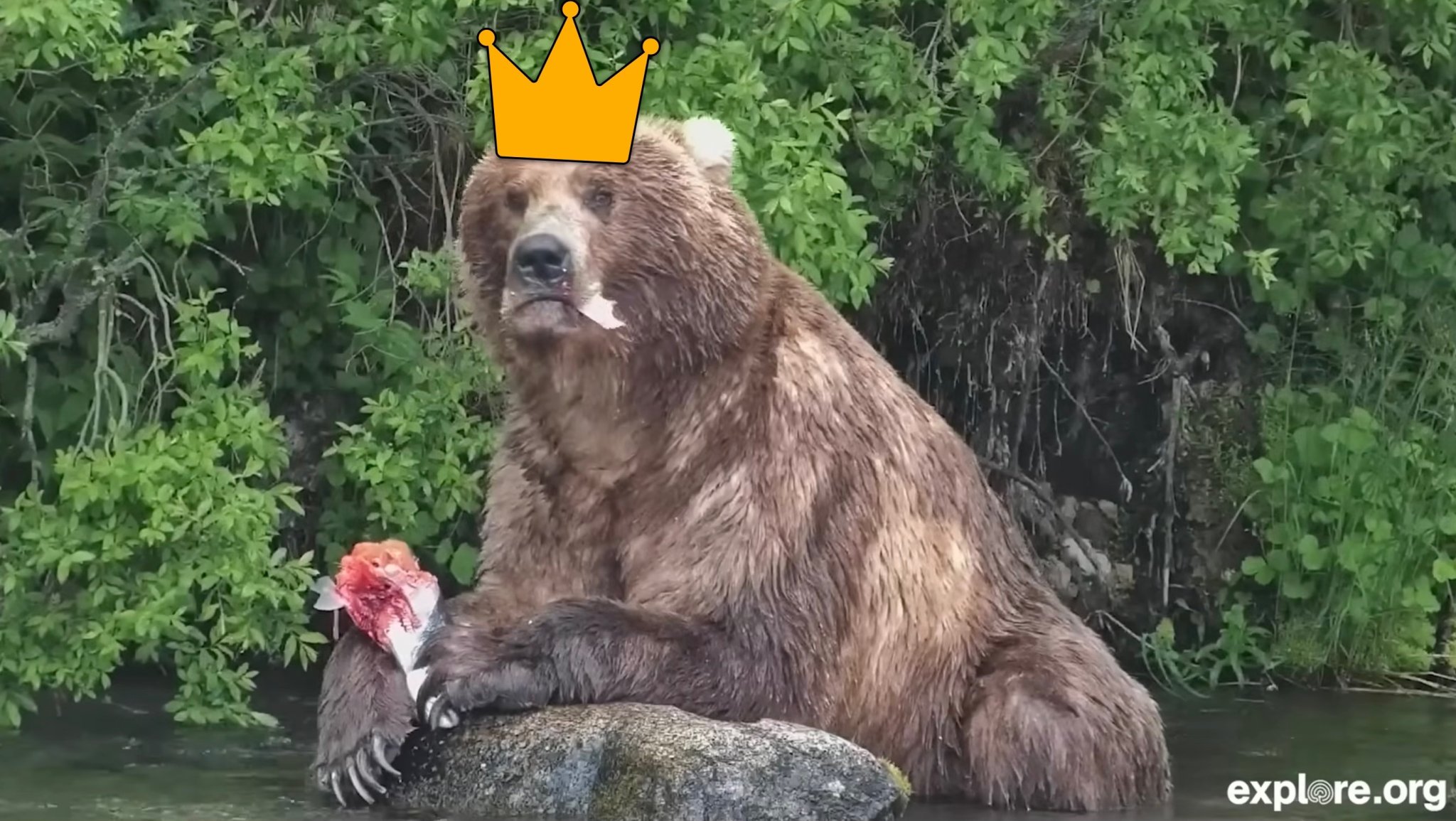
The majestic wilderness of Alaska’s Katmai National Park and Preserve has crowned a new heavyweight champion. Bear #89, affectionately known to global wildlife enthusiasts as "Backpack," has officially secured the title of Fat Bear Week 2026 champion. Emerging victorious in a fiercely contested final round against Bear #910, Backpack captured the hearts and online ballots of millions of voters worldwide. This annual, bracket-style tournament celebrates the apex physical condition of the park’s brown bear population, turning ecological survival into a global phenomenon of public engagement and conservation education.
The Rise of a Champion: From Vulnerable Cub to Heavyweight King
Backpack’s journey to the pinnacle of Fat Bear Week is a narrative of resilience, survival, and maternal dedication. At 20.5 years old, Backpack is a seasoned resident of the Brooks River ecosystem, known for his imposing physical stature and remarkably calm disposition. Park naturalists and long-time observers note that despite his massive size, he exudes a quiet strength and rarely engages in aggressive confrontations with peers, often preferring to lounge on his favorite rock slightly downstream.
The moniker "Backpack" originates from his early days as a cub, when he famously developed a habit of riding on his mother’s back while navigating the rushing waters of the Brooks River. That maternal figure is none other than Katmai royalty: Bear #435, better known as Holly, a former Fat Bear Week champion herself.
However, Backpack’s path to adulthood was fraught with peril. In the spring of 2007, as a yearling, he emerged from hibernation with a severe leg injury that severely impaired his mobility. Park rangers at the time expressed grave concern that the young bear would not survive the rigorous demands of the wilderness, and concerned livestream viewers frequently implored park staff to intervene medically. Ultimately, nature was allowed to take its course. Bolstered by the protection and guidance of his mother, Backpack overcame his debilitating injury. He healed completely, eventually developing into one of the most robust and recognizable bears in the national park.
A Historic and Hard-Fought Tournament
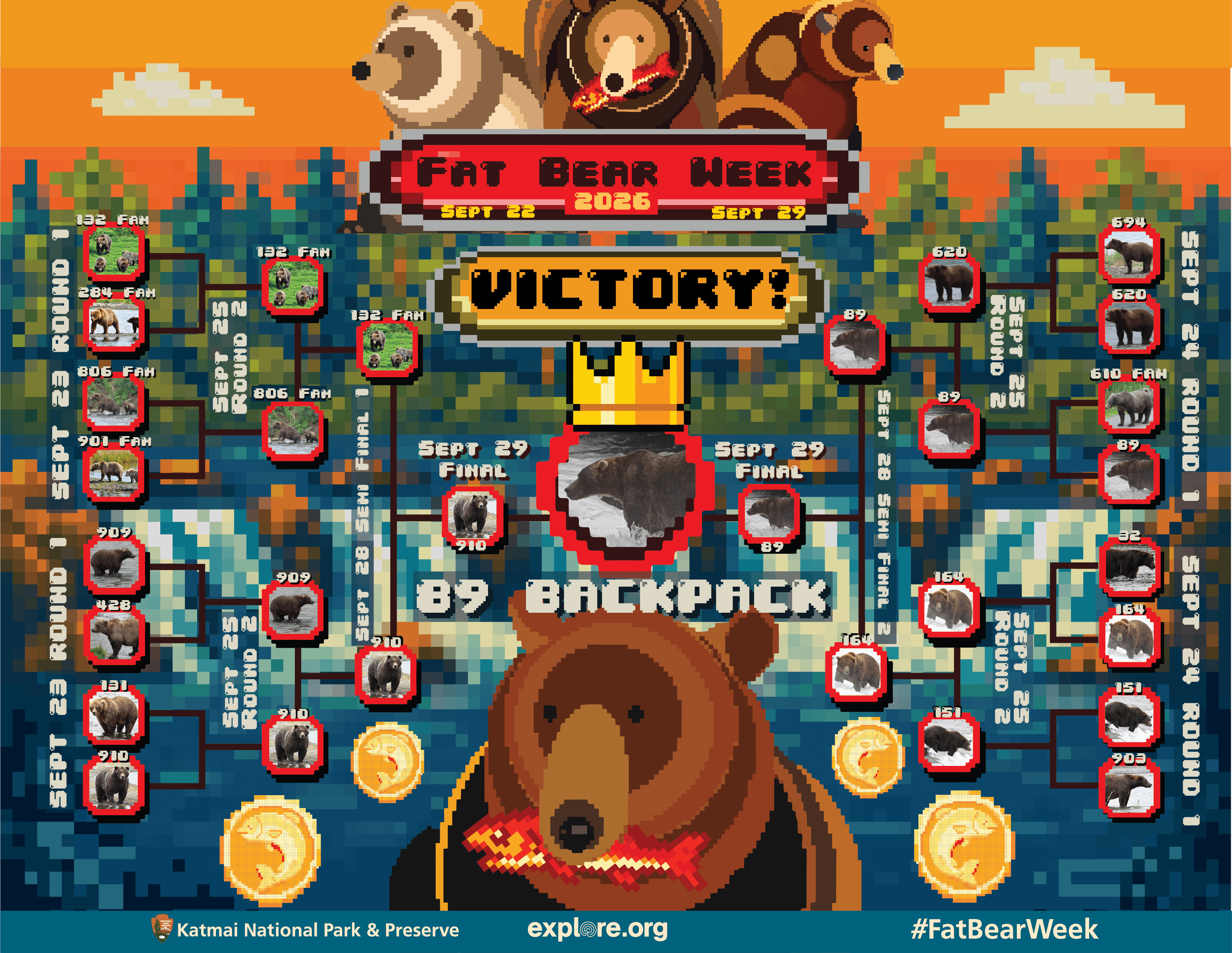
The 2026 iteration of Fat Bear Week will be remembered as one of the most competitive in the event’s history. The tournament commenced on Tuesday, September 22, featuring 16 of Katmai National Park’s most prominent adult brown bears (Ursus arctos). The competitors were divided into four distinct divisions: mother bears, single females, sub-adults, and adult males.
Backpack’s path to the crown required him to navigate a gauntlet of formidable opponents. The culmination of the tournament pitted him against Bear #910 in the final showdown. Earlier in the bracket, Backpack faced off against fishing prodigy and Katmai newcomer Bear #164, known as Bucky Dent, in a nail-biting semi-final matchup. Backpack secured his victory over Bucky Dent by a razor-thin margin of less than one percentage point, illustrating the intense engagement of the global voting public.
Notably, the 2025 champion, Bear #32 (Chunk), was dethroned early in the competition. Chunk fell to the newcomer Bucky Dent during Round 1 on September 24, proving that the crown in Katmai is perpetually up for grabs as new generations of bears master the art of seasonal foraging.
The Ecological Significance of Katmai’s Salmon Feast
While Fat Bear Week functions as an entertaining public engagement tool, it is underpinned by serious ecological realities. The annual congregation of brown bears at Brooks Falls is directly tied to one of nature’s most reliable biological events: the Pacific salmon migration.
Beginning in late June, sockeye salmon return in staggering numbers to the waters of Katmai, providing an unmatched caloric bounty. Viewers from across the globe tune into high-definition livestreams provided by explore.org to watch the bears hone their fishing techniques, capturing leaping salmon at the falls or diving for them in the churning rapids.

As the summer progresses into late August and September, the surviving salmon spawn and begin to die off. The bears subsequently shift their feeding grounds to the lower Brooks River, where they gorge themselves on the dense accumulation of post-spawn fish. This intense feeding frenzy is not merely a display of gluttony; it is a biological imperative.
Understanding Torpor: The Physiology of Bear Winter Survival
The primary objective for every bear participating in Fat Bear Week is to maximize their body mass before the onset of winter. The heftier a bear enters the colder months, the higher its statistical probability of surviving hibernation.
Contrary to popular belief, bears do not experience "deep hibernation" in the classical sense—a physiological state characterized by a radical drop in body temperature and metabolic rate, as seen in smaller mammals like bats, chipmunks, and certain species of rodents. Instead, bears enter a specialized state known as torpor.
Torpor is an involuntary physiological condition primarily triggered by environmental cues, most notably the seasonal scarcity of food. During torpor, a bear’s metabolic rate decreases significantly, and its eating, drinking, and waste elimination functions cease entirely. The animal relies exclusively on the dense fat reserves accumulated during the summer and autumn salmon feasts to sustain its vital organs through the winter months. A failure to build sufficient fat stores can result in starvation or a compromised immune system before spring arrives.
Conservation, Community, and the Otis Fund
Fat Bear Week was originally conceived in 2014 by Katmai National Park ranger Mike Fitz as a modest local initiative to highlight bear biology and the rich ecosystem of the Brooks River. Over the past decade, the event has evolved into an international sensation, drawing millions of votes and generating widespread media coverage. Beyond the friendly rivalry of the brackets, the event serves as a vital fundraising and educational platform.
Organizers emphasize that public participation extends beyond casting votes. Conservation efforts are continuously supported through initiatives like the Katmai Conservancy’s Otis Fund, named in honor of the legendary four-time Fat Bear Week champion, Bear #480 (Otis). The Otis Fund directly finances scientific research, habitat preservation, and educational outreach programs within Katmai National Park and Preserve. To bolster these efforts, explore.org committed to matching all donations made to the Otis Fund, creating a lasting financial safety net for the park’s wildlife management programs.
Broader Implications and Looking Ahead
The conclusion of Fat Bear Week 2026 marks a seasonal transition within the park. As the victorious Backpack and his ursine peers finish fattening up on the final runs of salmon, they will begin retreating to their dens to initiate the winter cycle of torpor.
Wildlife biologists and park rangers view the immense popularity of Fat Bear Week as a triumph for conservation advocacy. By humanizing individual bears through nicknames and tracking their life stories—from Backpack’s youthful leg injury to his triumphant championship—the public develops a vested interest in the preservation of wild habitats. The event demonstrates that when science communication is paired with accessible, interactive formats, millions of people worldwide become passionate stewards of natural ecosystems.
As the snows begin to blanket the Alaskan wilderness, Katmai enters a period of quiet dormancy. But with the resilience demonstrated by champions like Backpack, the legacy of Fat Bear Week ensures that the world will be watching eagerly when the rivers thaw and the bears return to Brooks Falls in the spring.