



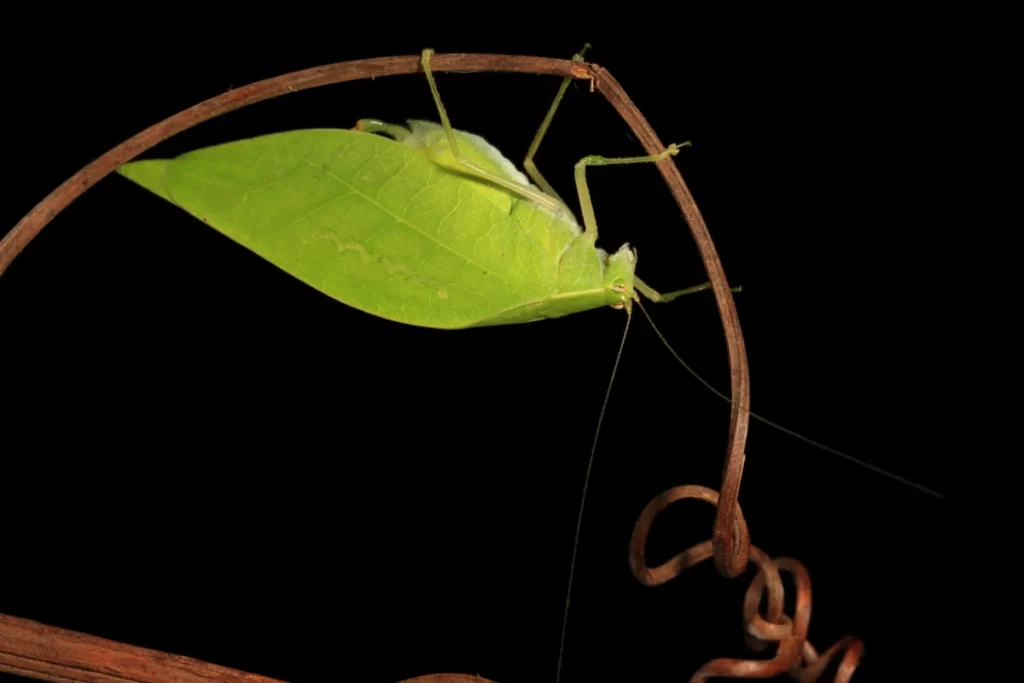
In the dense, tropical rainforests of Panama, survival is a game of high-stakes deception. For the katydid, an insect often resembling a vibrant green leaf, camouflage is the primary line of defense against a multitude of predators, including birds, bats, and lizards. However, a groundbreaking study published in the journal Proceedings of the Royal Society B reveals that these intricate disguises serve a far more complex role than simple concealment. Researchers have discovered that the leaf-mimicking wings of the male Viadana brunneri katydid function as sophisticated acoustic resonators, amplifying their mating calls to attract females. This finding challenges long-held biological assumptions regarding the inherent conflict between survival-based adaptations and reproductive signals, providing a rare example of natural and sexual selection working in perfect synchronization.
The study, led by Dr. Benito Wainwright, an evolutionary biologist at the University of St Andrews, and a team of international collaborators, focused on the biodiversity-rich Barro Colorado Island. This location, managed by the Smithsonian Tropical Research Institute, has long been a hub for entomological research due to its stable ecosystem and high density of Tettigoniidae, the family of insects commonly known as katydids. While it has been known for decades that katydids evolved leaf-like structures—complete with "veins" and "blemishes" that mimic decaying plant matter—to evade detection, the acoustic properties of these structures had remained largely unexplored until now.
The Evolutionary Paradox of Signal and Survival
In the natural world, biological traits often exist in a state of tension. This concept, known as an evolutionary trade-off, suggests that an adaptation benefiting one aspect of an organism’s life may hinder another. The classic example is the male peacock’s tail: while the large, iridescent feathers are essential for attracting peahens, they simultaneously make the bird more conspicuous to predators and physically impede its ability to escape. In the case of katydids, researchers previously hypothesized that the large, leaf-like wing area required for camouflage might interfere with the insect’s ability to produce clear, loud acoustic signals.
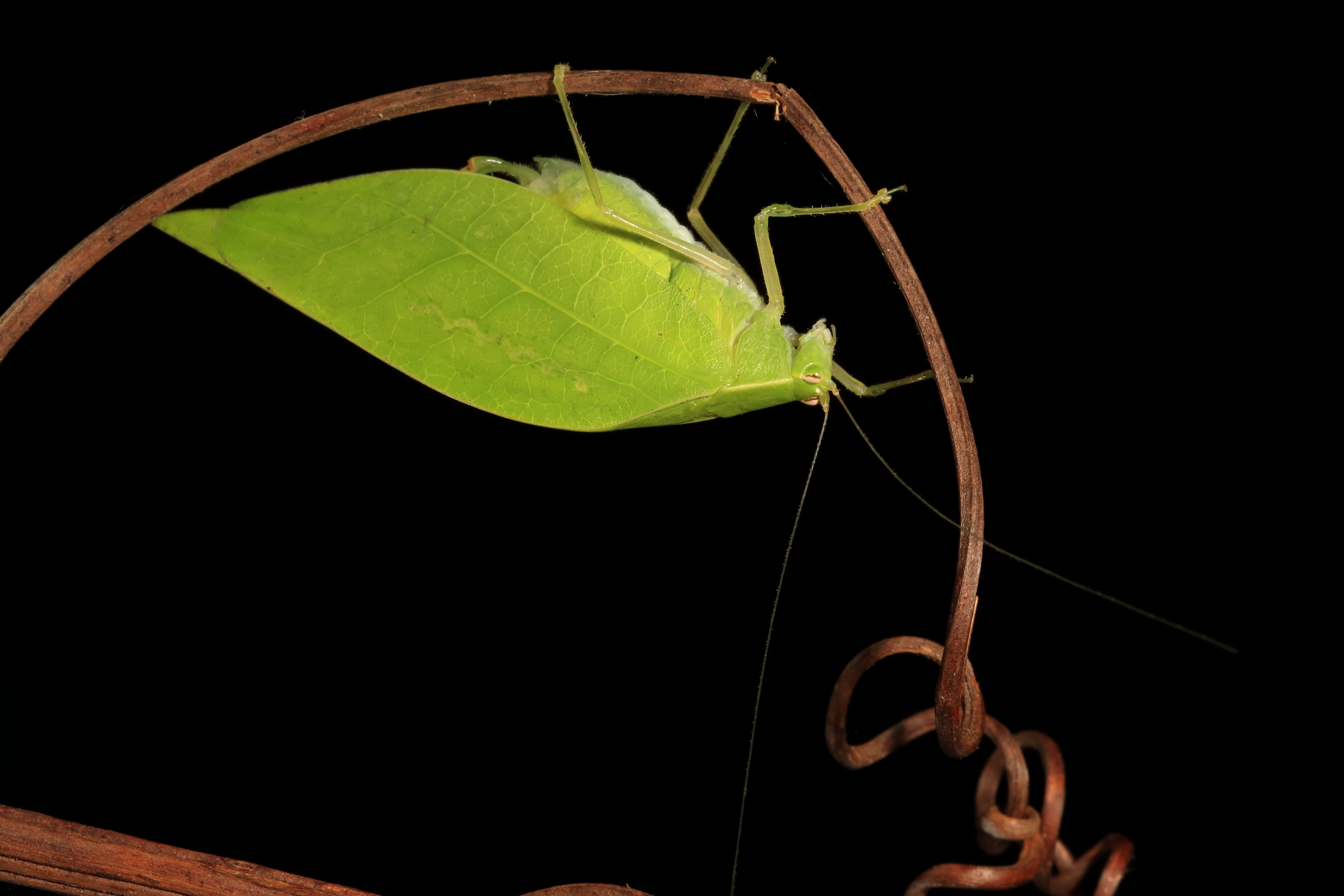
Contrary to this expectation, the research on Viadana brunneri demonstrates that the physical structures evolved for defense are the very tools used to enhance sexual signaling. Most tropical katydids produce sound through stridulation, a process where they rub a "scraper" on one wing against a "file" on the other. In V. brunneri, the majority of the wing surface is dedicated to the leaf-mimicking structure. The study found that these expansive, leaf-like surfaces vibrate in sympathy with the stridulatory mechanism, acting as a natural amplifier that projects the male’s call across the forest floor.
Experimental Methodology and Bioacoustic Findings
To uncover the dual functionality of these wings, the research team conducted a rigorous series of biophysical and behavioral experiments. The study was divided into three primary phases: acoustic analysis, physical manipulation, and female preference trials.
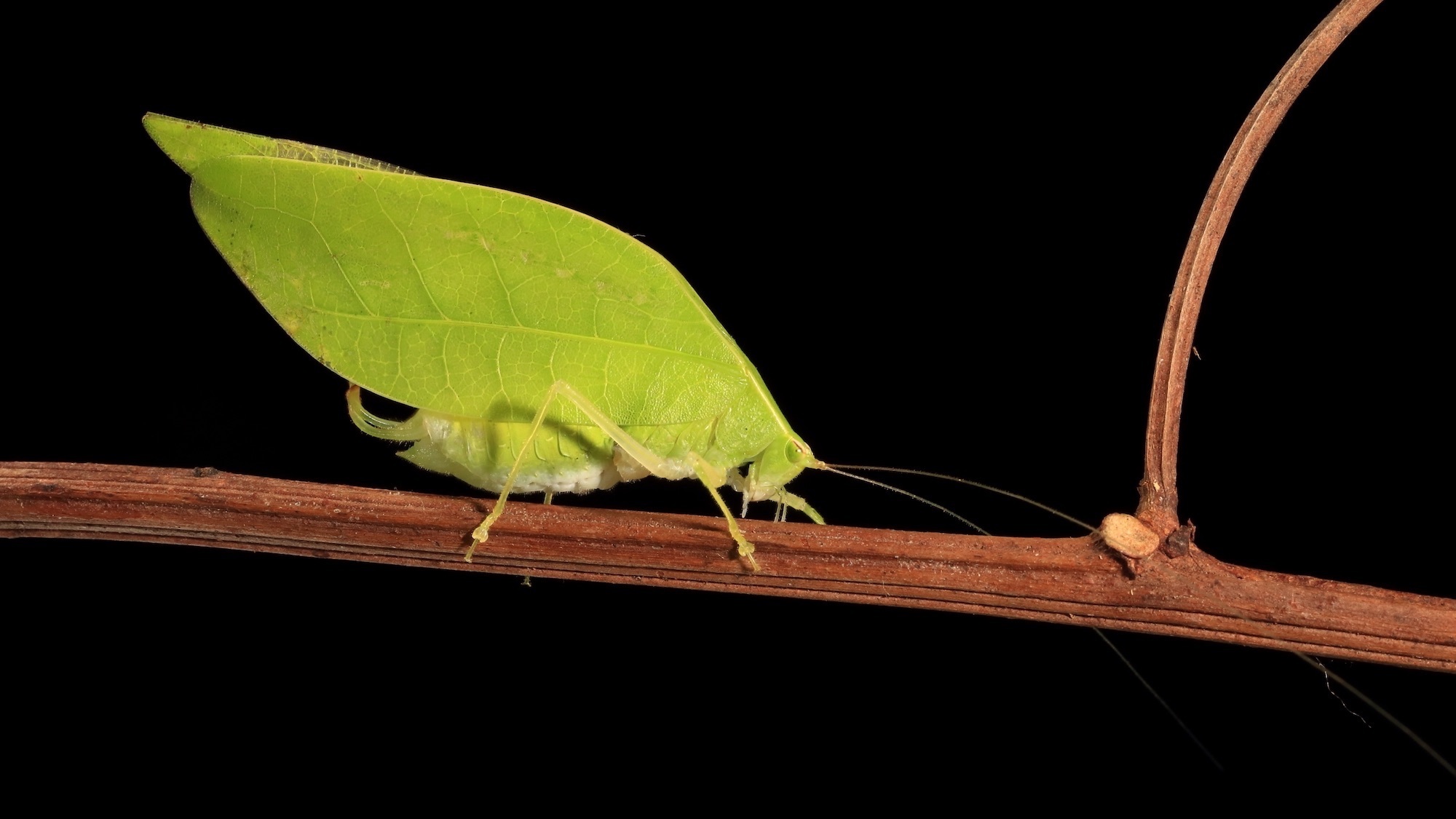
In the first phase, researchers recorded the mating calls of intact male katydids using specialized ultrasonic microphones. These insects communicate in frequencies far above the range of human hearing, utilizing ultrasound to avoid detection by certain predators and to ensure their signals cut through the low-frequency noise of the rainforest. The recordings established a baseline for the pitch (frequency) and volume (amplitude) of the calls.
The second phase involved a delicate surgical procedure where the leaf-mimicking portions of the wings were removed while leaving the stridulatory apparatus intact. When the researchers recorded the "clipped" males, they observed a significant shift in the acoustic profile. Without the leaf-like resonators, the pitch of the calls became notably higher, and the overall volume decreased. This provided the first direct evidence that the leaf-mimicry structures were physically responsible for lowering the frequency and increasing the resonance of the song.
Finally, the team conducted behavioral trials to determine how these acoustic changes affected mating success. Using a playback system, they presented female katydids with a choice between the original, lower-pitched calls of intact males and the higher-pitched calls of the manipulated males. The results were definitive: females overwhelmingly preferred the deeper, more resonant calls produced by males with intact leaf-mimicking wings. This preference suggests that the wings are not just accidental amplifiers but are essential components of a male’s sexual fitness.
The Mechanics of Sound in the Rainforest
The acoustic environment of a tropical rainforest is incredibly crowded. From the constant hum of cicadas to the calls of frogs and birds, an insect must find a specific "frequency niche" to be heard by potential mates. The Viadana brunneri has solved this problem by utilizing the surface area of its camouflage.
The physics of this amplification are similar to those of a hollow-body guitar. While the strings (the scraper and file) produce the initial vibration, it is the body of the guitar (the leaf-wing) that provides the resonance and volume. In V. brunneri, the wing’s surface area is optimized to vibrate at specific frequencies. By lowering the pitch, the male ensures his call travels further through the humid air and stands out against the higher-frequency background noise of other insects.
Furthermore, the study noted that the calls are extremely brief and sporadic, often lasting only two seconds in a single night. This "stealth calling" strategy, combined with the leaf-like camouflage and the amplified ultrasound, creates a highly efficient reproductive system. The male can project a powerful signal to females while remaining virtually invisible and silent to predators for the vast majority of the time.
Implications for Natural and Sexual Selection
The discovery of harmony between natural selection (camouflage for survival) and sexual selection (amplification for mating) is a significant contribution to evolutionary biology. Dr. Benito Wainwright noted that the study provides a rare example of traits that simultaneously improve survival and mating success. "We are now extremely excited to start exploring how such an interesting interaction evolved in katydids," Wainwright stated in a press release.
This research also highlights the extraordinary diversity of the Arota and Viadana genera. In other species, such as Panama’s Arota festae, katydids have been observed changing color from green to hot pink to mimic specific floral environments. The fact that Viadana brunneri has integrated its camouflage into its acoustic communication suggests that leaf mimicry is a far more versatile evolutionary tool than previously imagined.
The findings have broader implications for our understanding of biodiversity in the tropics. As climate change and habitat loss threaten the delicate ecosystems of Panama and Central America, understanding the complex interdependencies of species becomes crucial. The V. brunneri serves as a reminder that even the most subtle physical traits can have multi-layered functional importance.
Chronology of Research and Future Directions
The study of katydid acoustics has evolved significantly over the last century. Early entomologists focused primarily on the visual aspects of mimicry, captivated by the uncanny resemblance of insects to foliage. It was not until the mid-20th century, with the advent of high-fidelity recording equipment, that scientists began to decode the ultrasonic language of these insects.
- Early 1900s: Initial documentation of leaf-mimicry in Neotropical katydids, focusing on visual camouflage.
- 1970s-1980s: Research at Barro Colorado Island identifies the use of ultrasound in katydid communication as a defense against eavesdropping bats.
- 2010s: Studies begin to explore the biophysics of stridulation in greater detail, identifying the "mirror" and "scraper" mechanisms.
- Today: The publication of the Wainwright study marks a pivotal shift, identifying the leaf-structure itself as an active participant in sound production.
Looking ahead, the research team intends to investigate whether this dual-purpose adaptation is widespread among other leaf-mimicking insects. There is also potential for this research to inform the field of bio-inspired engineering. Engineers specializing in acoustics and miniature robotics often look to nature for ways to create efficient, small-scale sound resonators. The katydid’s wing offers a blueprint for a device that is both structurally lightweight and acoustically powerful.
In conclusion, the male Viadana brunneri katydid represents a pinnacle of evolutionary efficiency. By turning its shield into a megaphone, it has bypassed the typical biological requirement to choose between safety and reproduction. In the quiet, dark reaches of the Panamanian canopy, these insects continue to sing their ultrasonic songs, hidden in plain sight, proving that in the natural world, the most effective disguise is one that also serves as a beacon.