


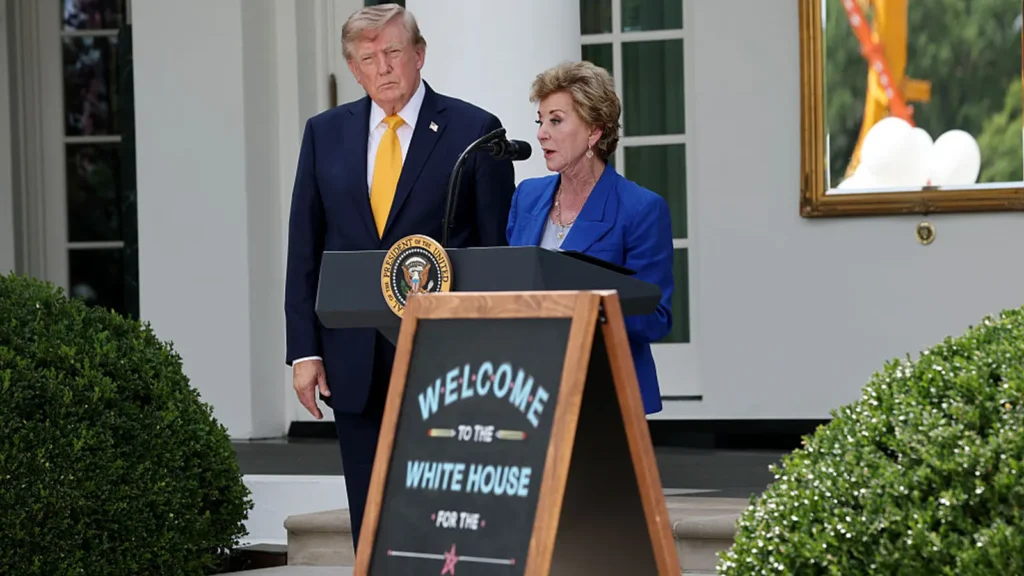
The federal government has taken a definitive step toward implementing the nation’s first universal school choice initiative, releasing a highly anticipated framework that outlines how states, donors, and educational institutions will interact under the new system. According to a proposed rule published by the U.S. Treasury Department, participating states will face tightly constrained authority to set independent operational mandates for the landmark program, ensuring a centralized structure for what is expected to become one of the largest overhauls of American education finance in decades.
The initiative, formally established under the Education Freedom Tax Credit program, stems from the legislative package colloquially known as the "One Big Beautiful Bill," which was advanced by the Republican majority in Congress and signed into law in 2025. Proponents of the policy argue it represents a transformative leap in educational equity and parental empowerment, projecting that it will inject tens of billions of dollars into K-12 education. Conversely, opponents—including public school advocates, civil rights organizations, and key federal lawmakers—warn that the program threatens to siphon critical resources from the public school system, erode civil rights protections for marginalized students, and deepen educational inequities across the country.
With the program slated to officially launch on January 1, 2027, the Treasury Department and the Internal Revenue Service released both the proposed rule and a complementary set of temporary regulations. These guidelines are designed to provide immediate clarity for state governments and nonprofit scholarship-granting organizations as they build the administrative infrastructure required to collect donations, manage funds, and distribute scholarships.
Structuring the Nation’s New School Choice Framework
Under the newly released regulatory framework, individual taxpayers will be permitted to make financial contributions of up to $1,700 annually to approved scholarship-granting organizations, or SGOs. These contributions are capped at the donor’s total income tax liability and will qualify for a dollar-for-dollar, 100% federal income tax credit. Crucially, the rules stipulate that participating taxpayers cannot direct their donations to benefit their own children or specific individual students, maintaining an arm’s-length distance between donors and beneficiaries.
The funds amassed by these 501(c)(3) nonprofit SGOs will then be distributed as scholarships to eligible families. Unlike traditional state-level voucher systems that have historically focused primarily on private school tuition, the federal initiative boasts a broader scope of qualifying expenses. Families will be permitted to use taxpayer-supported scholarship funds for private school tuition as well as a wide array of public school and homeschooling expenses. These include tutoring services, specialized education for students with disabilities, textbooks, computers, and other auxiliary learning costs.
To qualify for a scholarship, students must reside in households with incomes up to 300% of their local area’s median gross income. Treasury and IRS economic models suggest this generous threshold will make approximately 96% of all school-aged children in participating states technically eligible for financial assistance.
However, participation is voluntary for state governments. Only students living in states that formally opt into the federal program will be eligible to receive the tax-advantaged scholarships. State leaders face a deadline of January 1, 2027, to commit to participation for the inaugural year. According to preliminary IRS data, 30 states had indicated their intent to participate by mid-September, while other states—such as Oregon and Wisconsin—have publicly declared they will sit the program out.
Projections and Financial Scale
The economic footprint of the Education Freedom Tax Credit is projected to be immense, dwarfing many existing federal education funding streams. Treasury and IRS estimates indicate that by the year 2030, more than 11 million American taxpayers will collectively donate nearly $26 billion annually to the program. This capital is expected to flow through an estimated 600 to 700 certified SGOs nationwide, generating roughly 2.2 million individual student scholarships each year.
To contextualize the sheer magnitude of these projections, the federal investment dwarfs traditional targeted education spending. For comparison, the U.S. Department of Education’s budget for Title I grants—which are specifically directed toward low-income public schools—stood at $18.4 billion for fiscal year 2026. Critics of the tax credit program frequently point to this financial comparison, arguing that channeling billions of private-dollar tax credits toward alternative schooling models will starve traditional public institutions of the resources they desperately need.
Chronology of the Legislative and Regulatory Process
The journey toward a nationwide school choice program represents the culmination of decades of advocacy by school choice proponents, accelerated rapidly by the political shifts of the mid-2020s.
- Mid-1989: The U.S. Department of Education launches its first dedicated school choice office, laying the early bureaucratic groundwork for alternative education funding models.
- June 12, 2025: Prominent conservative lawmakers, including Sen. Ted Cruz of Texas, heavily promote the concept of a national school choice initiative during high-profile Capitol Hill events.
- Late 2025: The Republican-led Congress passes and enacts the "One Big Beautiful Bill," formally codifying the Education Freedom Tax Credit into law.
- September 14, 2026: IRS data reveals that 30 states have signaled their intent to participate in the voluntary federal scholarship program ahead of its operational launch.
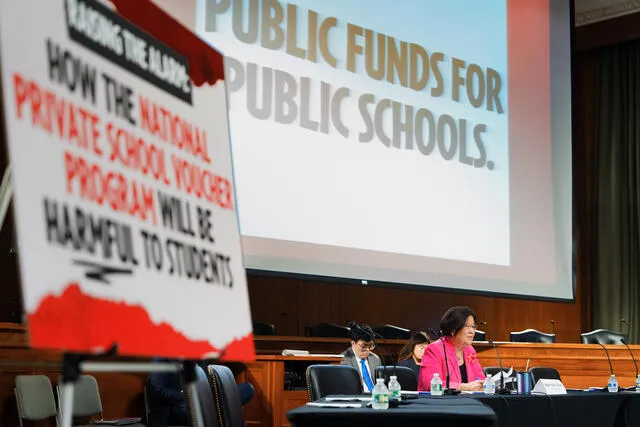
- September 22, 2026: Sen. Mazie Hirono, D-Hawaii, hosts a spotlight congressional forum in Washington, D.C., where expert witnesses warn of potential funding drains and the erosion of student protections.
- September 23, 2026: Polling data released by EdChoice indicates that while 77% of parents with school-aged children support their state’s participation in the program, only 27% had heard of the initiative prior to taking the survey.
- September 28, 2026: The National Center for Learning Disabilities, alongside 15 other civil rights organizations, dispatches an open letter to state governors urging them to opt out of the federal voucher scheme.
- Late September/Early October 2026: The Treasury Department and IRS officially publish the proposed rule and temporary regulations, establishing a 60-day public comment window.
- January 1, 2027: The statutory deadline for states to commit to program participation, concurrent with the official launch date for taxpayers to begin making contributions to SGOs.
- Tax Day 2028: The anticipated milestone by which early donors will claim their federal income tax credits for contributions made during the inaugural 2027 tax year.
Stakeholder Reactions and Institutional Preparations
Reactions to the regulatory rollout have sharply divided education leaders, civil rights advocates, and political figures, reflecting deep ideological fractures over the future of American schooling.
Supporters view the program as a historic victory for educational pluralism. William Hansen, CEO of the education-focused nonprofit Building Hope and a veteran of the Education Department’s original 1989 school choice office, hailed the federal initiative as "revolutionary." While acknowledging that building the necessary administrative infrastructure will involve a steep learning curve, Hansen predicted the program would ultimately inject vital competition, innovation, and alternative models into a stagnant educational landscape.
Nonprofit leaders are already moving aggressively to establish the organizational capacity required to meet the anticipated wave of funding. Educational entities such as ACE Scholarships are actively preparing families to apply for upcoming allocations while encouraging donors to position themselves for tax credits ahead of the 2028 tax filing season. Norton Rainey, CEO of ACE Scholarships, expressed optimism that the program could serve as a constructive catalyst for traditional public schools to engage donors and seek innovative funding partnerships, pushing back against the narrative that public systems will inevitably suffer.
Similarly, figures like Deborah Gist, former Rhode Island commissioner of education and founder of the Future School Fund, are working to channel donations toward specialized support services that directly benefit public school students, attempting to bridge the ideological divide between public and private educational models.
Deep Opposition and Civil Rights Concerns
Conversely, the program faces fierce and organized resistance from public education advocates and civil rights organizations who warn of catastrophic consequences for vulnerable student populations.
A central point of contention is the legal status of students with disabilities who choose to leave the public system. Jacqueline Rodriguez, CEO of the National Center for Learning Disabilities, delivered a stark warning during the September congressional forum hosted by Sen. Hirono. Rodriguez emphasized that when students with disabilities transfer from public schools to private institutions using scholarship funds, they forfeit their federally protected rights to a "free and appropriate public education" as mandated by the Individuals with Disabilities Education Act (IDEA).
"It is so deeply troubling that this program, funded with federal tax dollars, will be implemented without regulation or further clarification of rights and protections for students most marginalized—those with disabilities," Rodriguez stated. "A program that was designed to fund private school tuition is not a solution for public schools."
These concerns were amplified when NCLD and 15 other prominent civil rights organizations sent a coordinated letter to governors nationwide, urging them to reject participation in the program. The coalition argued that the rhetoric surrounding parental choice and public school support is merely a veneer masking a deliberate legislative effort to privatize education at the expense of systemic equity.
Outlook and Next Steps
As the 60-day public comment period for the Treasury Department’s proposed rule gets underway, state governments, school districts, and advocacy groups are scrambling to assess their positions ahead of the fast-approaching January 1, 2027 participation deadline.
While public polling suggests broad theoretical enthusiasm among parents for expanded educational options, the low baseline awareness—with fewer than three in ten parents familiar with the program prior to polling—suggests a massive educational campaign will be necessary on both sides of the debate. Whether the Education Freedom Tax Credit ultimately revitalizes American education through market-driven competition or destabilizes an already fragile public school infrastructure will depend heavily on the final rules issued by the Treasury Department and the strategic decisions made by state leaders in the coming months.








