



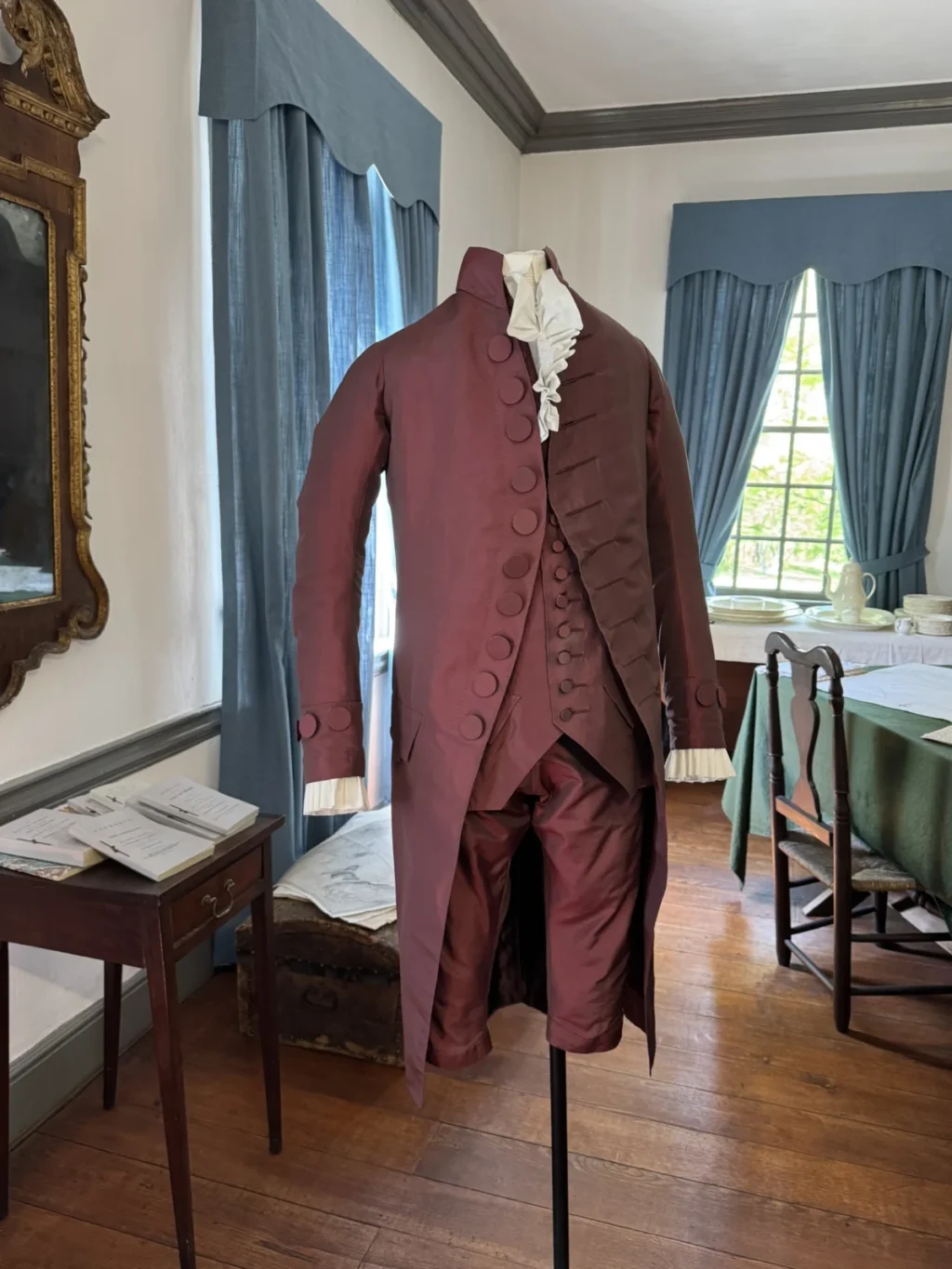
As the United States approaches its semiquincentennial—the 250th anniversary of the signing of the Declaration of Independence—a renewed wave of historical inquiry is sweeping through the nation’s cultural institutions. From the hallowed halls of Colonial Williamsburg to the stages of Broadway, the image of George Washington remains a central pillar of American identity. However, recent scientific analysis conducted by the Smithsonian Institution and the Morristown National Historical Park has revealed that our visual understanding of the first president may be colored by centuries of environmental degradation. For generations, a specific overcoat worn by Washington was known as his "golden suit" due to its brilliant mustard-yellow hue; however, sophisticated chemical testing has proven that the garment was originally a deep, vibrant plum.
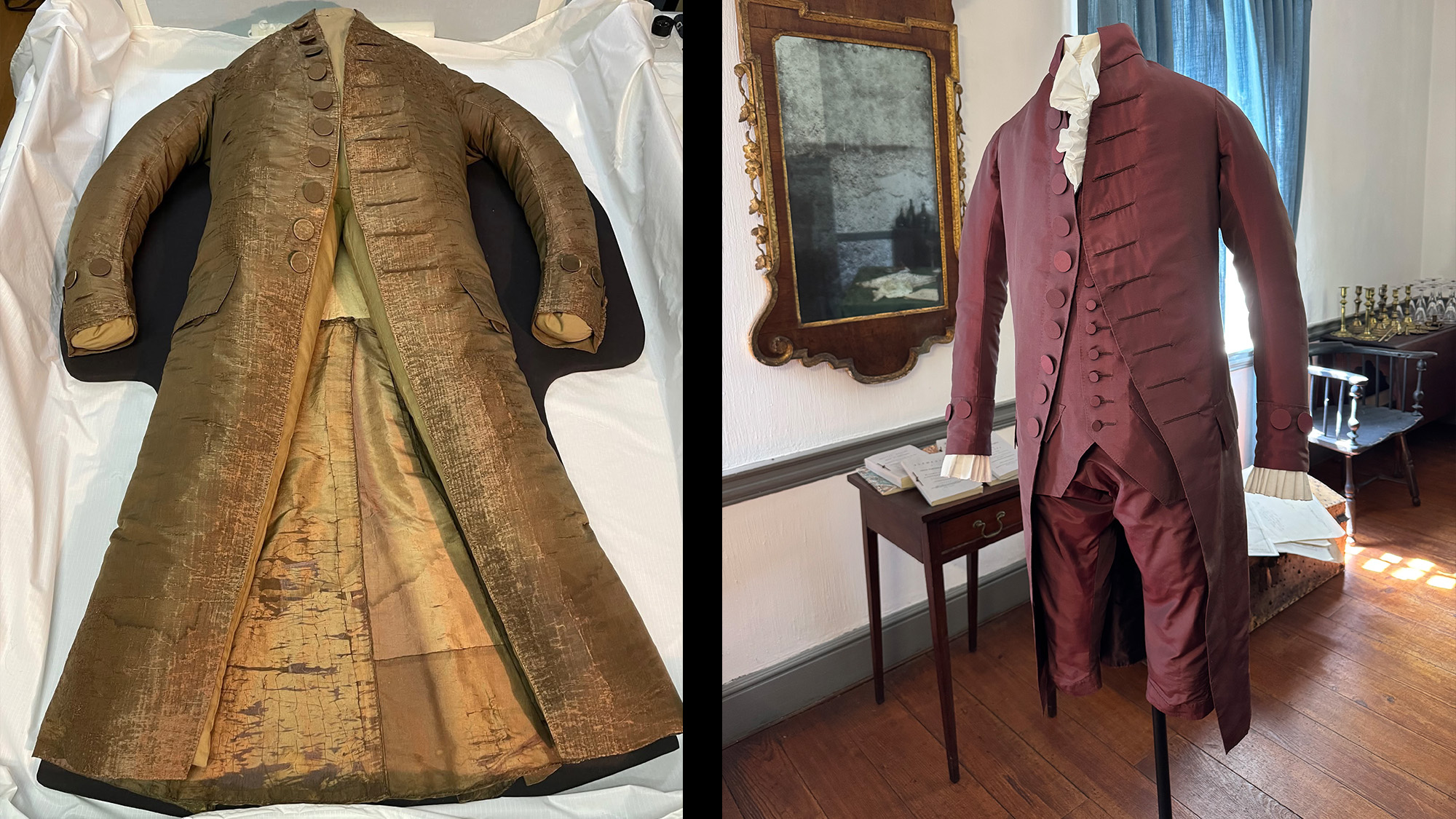
This discovery, facilitated by the intersection of forensic chemistry and textile conservation, offers a rare glimpse into the sartorial choices of the early Republic. The overcoat in question is not a mere relic of the Revolutionary War but a piece of political theater: it is the garment Washington wore to the inaugural ball in 1789 following his swearing-in as the first President of the United States. While the coat currently appears to be a shimmering gold, researchers have now confirmed that the original color was a rich purple, a shade that carried significant connotations of status, dignity, and the emerging American identity.
The Mystery of the Golden Overcoat
The garment is currently housed at the Morristown National Historical Park in New Jersey, a site significant for being the location of the Continental Army’s grueling winter encampment from December 1779 to June 1780. As part of the preparations for the 2026 celebrations, curators sought to better understand the provenance and physical history of the items in their collection. The "golden suit" had long been an object of curiosity. While 18th-century fashion was often colorful, the specific shade of yellow seen on the coat today seemed inconsistent with contemporary descriptions of formal attire for a man of Washington’s station.
The transformation of the coat’s color over 235 years is a testament to the volatility of organic dyes. In the late 18th century, textiles were colored using natural pigments derived from plants, insects, and minerals. Unlike modern synthetic dyes, these natural compounds are highly susceptible to photodegradation—the chemical breakdown of molecules caused by exposure to light—as well as oxidation and fluctuations in pH levels. To uncover the truth hidden beneath centuries of fading, the park’s curators turned to the Smithsonian’s Museum Conservation Institute.
Analytical Techniques: The Role of Mass Spectrometry
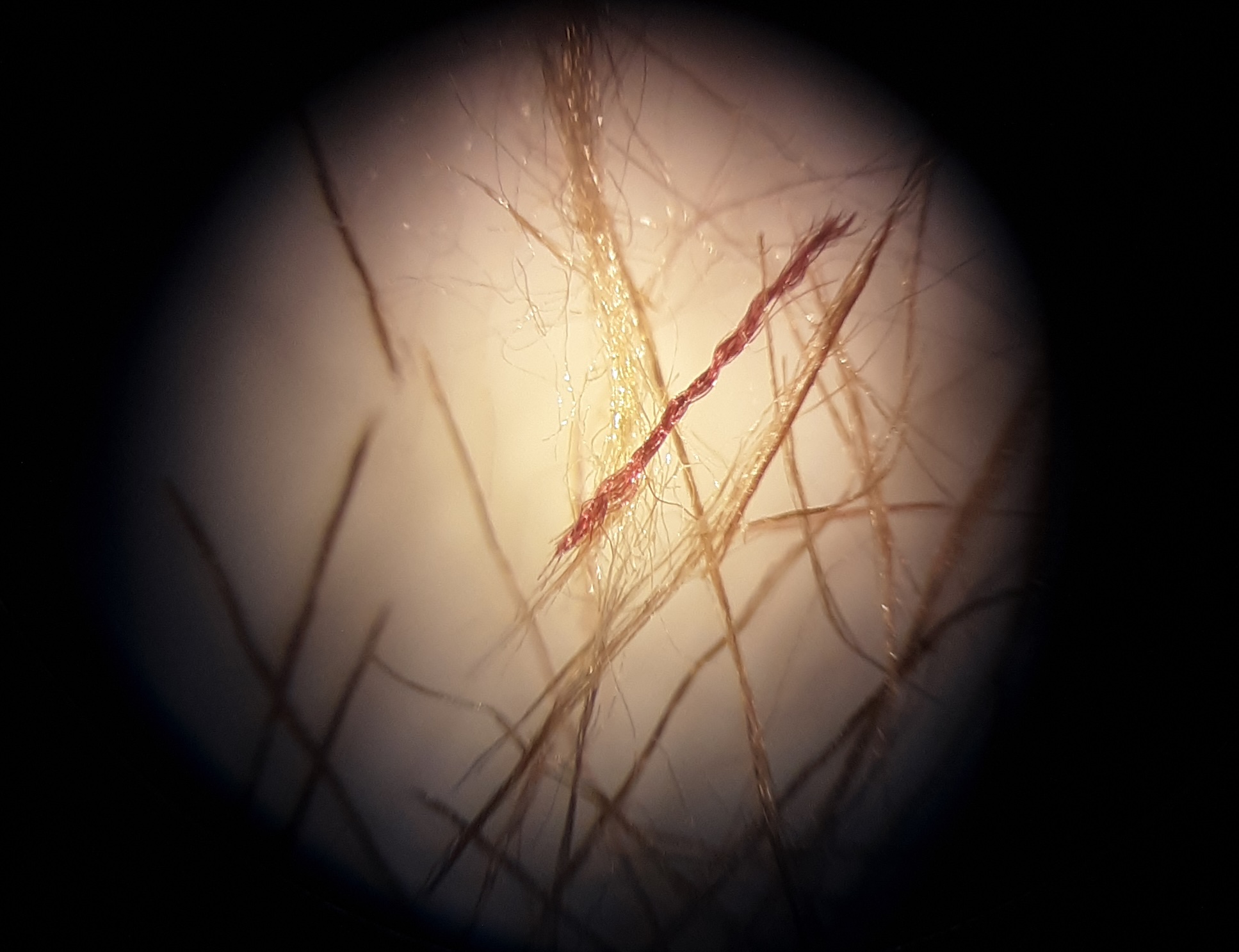
The investigation was led by Dr. Asher Newsome, a physical chemist at the Smithsonian’s Museum Conservation Institute. The primary challenge facing the team was the delicate nature of the artifact. Destructive testing—where large portions of a garment are destroyed to extract data—was strictly prohibited. Instead, the team utilized "self-sampled" fibers. These are microscopic fragments of silk and wool that have naturally detached from the garment over time due to the aging of the fabric. These fibers, often found at the bottom of display cases or within the folds of the lining, provide a non-invasive window into the object’s chemical makeup.
Dr. Newsome employed a cutting-edge technique known as Direct Analysis in Real Time Mass Spectrometry (DART-MS). Mass spectrometry is an analytical tool that measures the mass-to-charge ratio of ions to identify the chemical signatures of molecules within a sample. The "Direct Analysis in Real Time" component allows scientists to analyze samples in their native state with minimal preparation, reducing the risk of contaminating the historic fibers.
By vaporizing the tiny fiber samples and passing them through the mass spectrometer, Newsome was able to identify the specific chemical markers of the dyes used in 1789. The results revealed a complex "cocktail" of natural pigments that, when combined, would have produced a regal, dark purple rather than the yellow seen today.
A Global Palette: The Chemistry of 18th-Century Dyes
The DART-MS analysis identified several key organic components that illuminate the global trade networks of the late 1700s. The presence of these dyes suggests that Washington’s suit was a high-status item, utilizing expensive materials imported from across the colonial world.
Logwood and Shellac
The primary colorant identified was logwood (Haematoxylum campechianum), a flowering tree native to southern Mexico and northern Central America. In the 18th century, logwood was a highly prized commodity, often the subject of maritime disputes and privateering. When processed, it produces a range of purples and blacks. To achieve a more vibrant, reddish-purple hue, the logwood was supplemented with shellac. Derived from the secretions of the Kerria lacca insect native to India and Southeast Asia, shellac (or lac dye) was used to provide a crimson or deep violet undertone.
Madder and Brazil Wood
The analysis also detected madder and Brazil wood. Madder, derived from the roots of the Rubia tinctorum plant, was one of the most common red dyes in Europe and the colonies, known for its durability. Brazil wood, another imported timber, provided additional red and purple pigments. The combination of these red-leaning dyes with the blue-purple of the logwood created a "plum" or "mulberry" shade that was both fashionable and exceptionally difficult to maintain.
Walnut and Tannins
Finally, the presence of walnut dyes indicates the use of tannins to fix the colors to the fibers. Walnut husks provided a brown base that added depth to the purple, ensuring the color appeared "solid" rather than translucent. This sophisticated layering of dyes demonstrates the high level of craftsmanship involved in tailoring the President’s wardrobe.
The Chronology of Color: Why the Change Occurred
The transition from plum to gold is a well-documented phenomenon in textile science known as "yellowing" or "browning" of organic dyes. The purple pigments in logwood and Brazil wood are particularly fugitive, meaning they fade quickly when exposed to ultraviolet (UV) light. Over decades of display in various lighting conditions before modern conservation standards were established, the blue and red components of the dye molecules were systematically destroyed.
What remains today are the more stable yellow and brown degradation products of the original tannins and the natural color of the silk and wool fibers themselves. In a controlled experiment, curators at Morristown took a patch of silk dyed with the reconstructed plum formula and exposed it to concentrated light. The results were definitive: the vibrant purple rapidly faded into a golden-yellow shade that perfectly matched the current state of Washington’s overcoat.
Historical Context: The 1789 Inauguration
To understand why Washington chose a plum-colored suit, one must look at the political climate of 1789. Having recently won the Revolutionary War, the United States was a fragile new republic. Washington was acutely aware that every choice he made—from his title to his clothing—would set a precedent for the American presidency.
Historians note that for the actual swearing-in ceremony at Federal Hall in New York City, Washington wore a suit of "homespun" brown broadcloth. This was a deliberate political statement, signaling his support for American manufacturing over British imports. However, for the inaugural ball—a social event intended to demonstrate the dignity and "republican court" of the new nation—he opted for a more sophisticated look. A deep plum suit struck the perfect balance: it was regal enough to command respect from foreign dignitaries, yet distinct from the bright "royal purple" associated with the British monarchy.
Broader Implications for Conservation and History
The findings at Morristown have significant implications for how history is presented to the public. For years, the "golden suit" was interpreted as a sign of Washington’s penchant for bright, perhaps even ostentatious, colors. The scientific reality—that he was dressed in a dignified, somber plum—aligns more closely with his known character as a man of gravity and restraint.
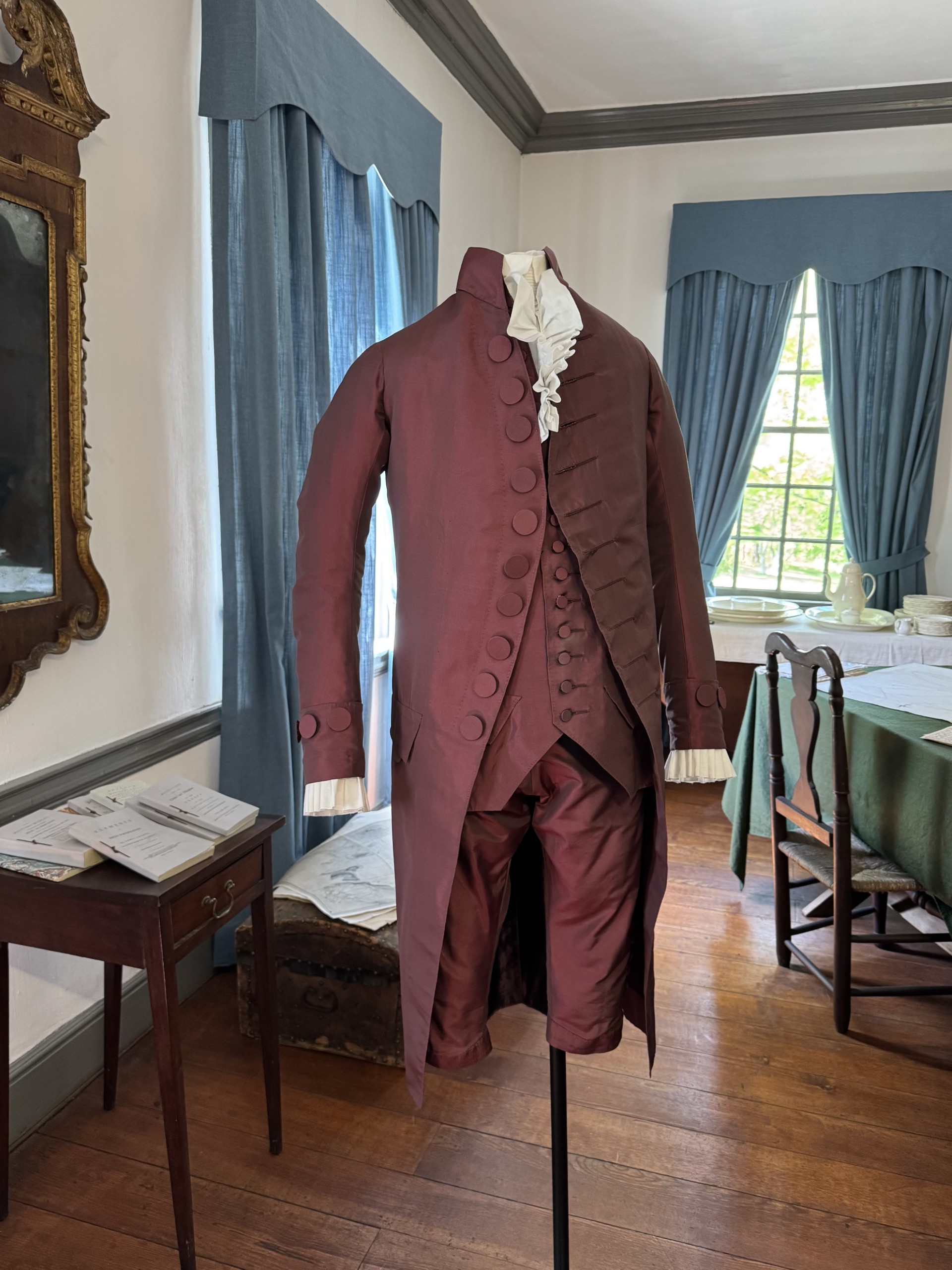
This discovery has prompted the Morristown National Historical Park to commission a full-scale reproduction of the suit. Created by historical clothier Philip DePaola, the replica uses the exact dye recipes identified by Dr. Newsome’s analysis. This reproduction is now on display alongside the original, allowing visitors to see the "then and now" of American history.
The use of DART-MS in this context also highlights the growing importance of "heritage science." As our ability to detect trace chemicals improves, museums are finding that many of their most famous artifacts are not what they seem. Statues that appear white were once painted in garish colors; documents that appear blank contain hidden ink; and, as proven here, the "golden" heroes of the past may have actually been dressed in plum.
Preparing for the Semiquincentennial
As the United States moves toward July 4, 2026, the revelation of Washington’s true colors serves as a metaphor for the broader goals of the anniversary: to look past the faded surface of history and rediscover the vibrant, complex reality of the nation’s founding. The "Washington’s World" exhibit at Morristown, featuring the plum suit, is just one of many initiatives aimed at humanizing the Founding Fathers through the lens of modern science.
The reaction from the historical community has been one of fascination. "We are seeing a shift in how we interpret the material culture of the 18th century," says one curator involved in the project. "Science isn’t just for the future; it’s the best tool we have for accurately recovering the past."
By combining the rigor of mass spectrometry with the narrative power of historical textiles, researchers have ensured that when the nation celebrates its 250th birthday, it will do so with a clearer, more colorful understanding of the man who first led it. The "golden suit" may be a myth, but the plum-colored reality is a far more accurate reflection of a president who understood the power of image in the birth of a nation.