



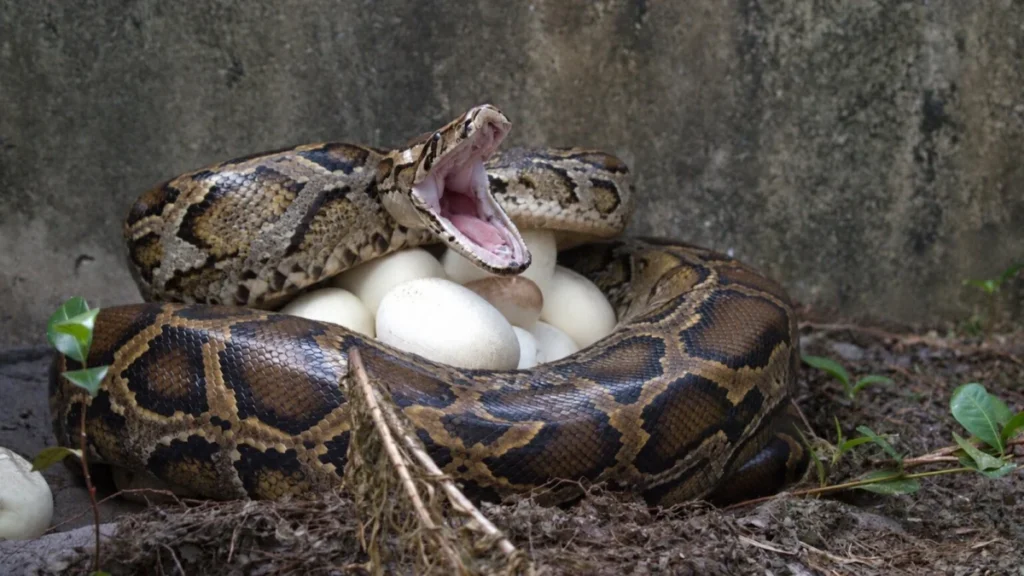
The ecological crisis unfolding across the Florida Everglades represents one of the most formidable environmental challenges in modern North American conservation. At the center of this crisis is the Burmese python (Python bivittatus), a massive, non-native constrictor capable of disrupting entire food webs. With an estimated population ranging between 100,000 and 300,000 individuals roaming the subtropical wetlands, state and federal wildlife agencies have spent decades attempting to curb their relentless spread.
Traditional management techniques have historically relied on a broad, indiscriminate approach. Because the snakes are classified as an unregulated invasive species, Florida permits year-round hunting on private lands and public management areas alike. The state even hosts high-profile annual events, such as the Florida Python Challenge, which incentivize citizens to capture and euthanize as many animals as possible over a designated 10-day period.
However, a groundbreaking study published in the scientific journal Ecological Applications suggests that a total-removal strategy may be inefficient. Conservation scientists from the University of Florida (UF) argue that wildlife managers must shift away from treating every captured snake as an equal ecological victory. Instead, they propose a strategic framework that prioritizes specific demographics within the python population to maximize conservation outcomes.
The Flaw in Equal-Opportunity Removal
For years, the prevailing logic among eradication teams was straightforward: the more snakes removed from the landscape, the better. Yet, this volume-based metric overlooks the complex biological realities of the invasive species. A juvenile python weighing just a few pounds and measuring two feet in length poses a vastly different threat to the ecosystem than an apex adult female capable of laying dozens of eggs per clutch.
Alex Romer, an ecologist with the UF Croc Doc Wildlife Research Team, highlighted the fundamental disconnect in historical culling methods during a recent institutional profile. “Our previous work treated all Burmese pythons as contributing equally to the population,” Romer explained. “But removing the biggest female we’ve ever caught is very different from removing a tiny snake that might not survive next year.”
Juvenile mortality rates among wild Burmese pythons are exceptionally high. A large percentage of hatchlings fall victim to native predators, starvation, or environmental stressors long before they reach sexual maturity. Consequently, time and resources spent tracking and capturing young or adolescent snakes yield a relatively low return on investment in terms of population suppression.
To rectify this inefficiency, Romer and a collaborative team of researchers analyzed extensive field data collected through the South Florida Water Management District’s Python Elimination Program. By combining demographic information with machine learning models, the research team developed a novel evaluative metric known as the Weighted Removal Index (WRI).
Mechanics of the Weighted Removal Index
The Weighted Removal Index assigns specific point values to captured pythons based on a multitude of biological and temporal factors. Under this system, a snake’s worth is calculated using variables such as age, sex, body size, and the precise time of year it was removed from the wild.
Adult female pythons sit at the pinnacle of the WRI scoring hierarchy. Because a single mature female can lay approximately 70 eggs in a single reproductive cycle, removing her from the ecosystem prevents a massive influx of future predators. Conversely, smaller, younger snakes receive significantly lower index rankings due to their low probability of surviving to reproductive age.
“The idea is that a big female might be worth 100 arbitrary ecological points, while a little snake might be worth five,” Romer illustrated.
UF invasive ecologist Melissa Miller echoed the sentiment, emphasizing the targeted nature of the new proposal. “Every Burmese python removed is a win for the Everglades, but targeting large reproductive females is likely to reduce the population most effectively,” Miller noted.
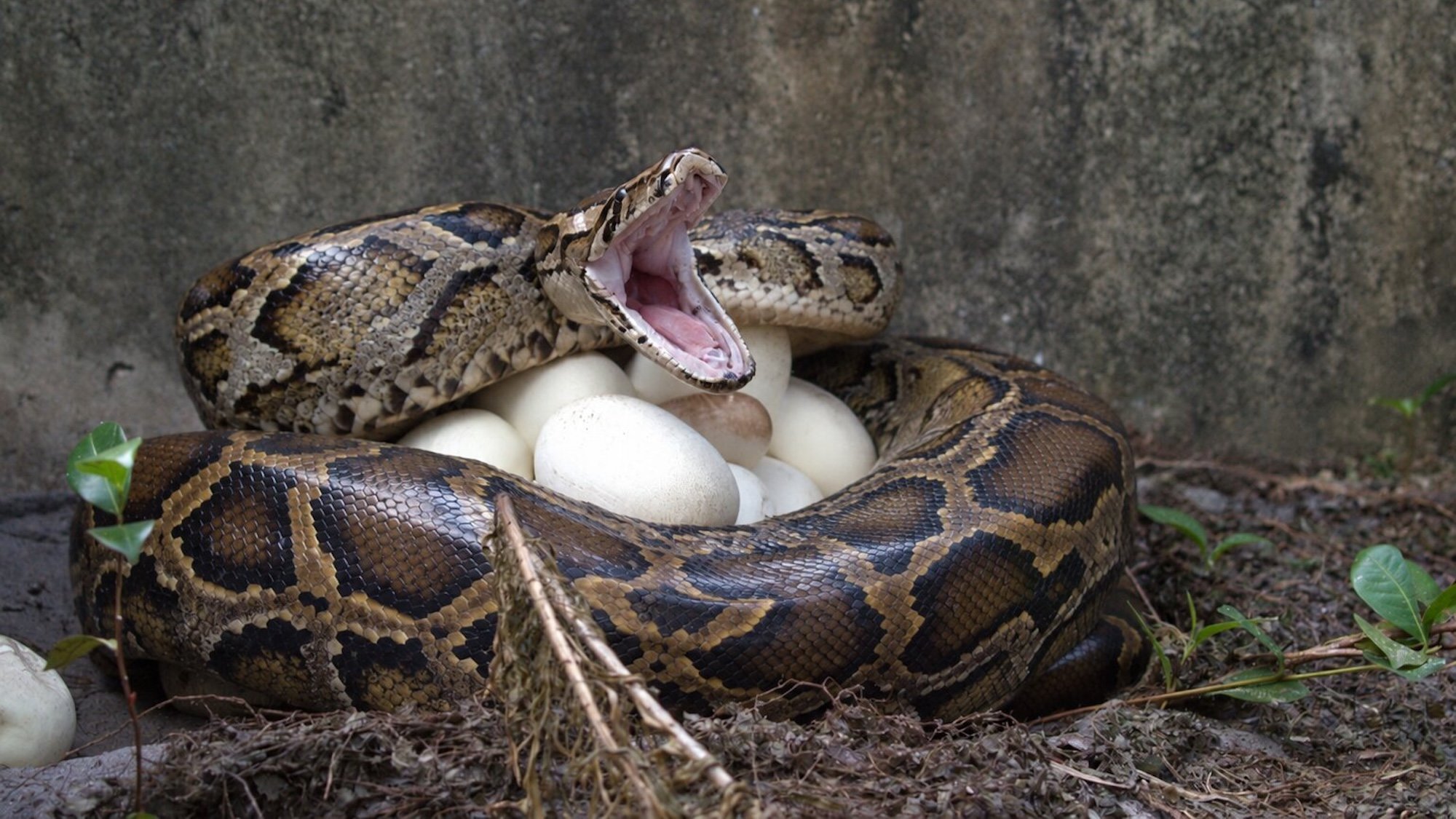
By prioritizing high-scoring individuals, conservationists believe field teams can achieve superior population control without necessarily increasing the sheer volume of hours spent searching the sprawling, inaccessible terrain of the Greater Everglades Ecosystem.
Chronology of an Invasion: How the Burmese Python Took Root
The establishment of the Burmese python in Florida is not a recent phenomenon, but rather the culmination of decades of exotic pet trade dynamics and environmental vulnerabilities. Understanding the timeline of this biological invasion provides crucial context for why advanced tools like the WRI are urgently needed today.
- 1980s and 1990s: Burmese pythons, native to the tropical and subtropical grasslands and forests of Southeast Asia, were imported into the United States in massive numbers through the exotic pet trade. Hundreds of thousands of hatchlings and juveniles were sold to private owners across the country.
- August 1992: Hurricane Andrew struck South Florida, destroying numerous exotic pet facilities, breeding operations, and private enclosures. While unconfirmed reports of pythons in the wild existed prior to this event, the hurricane is widely believed to have accelerated the release or escape of a significant number of captive snakes directly into the Everglades.
- Early 2000s: Wildlife biologists began documenting a self-sustaining, rapidly expanding population of wild Burmese pythons in Everglades National Park and surrounding areas. Native mammal populations, including marsh rabbits, raccoons, bobcats, and opossums, experienced catastrophic declines exceeding 90 to 99 percent in areas where pythons became established.
- 2010: Recognizing the escalating threat, the Florida Fish and Wildlife Conservation Commission (FWC) and federal partners began implementing regulatory measures, eventually lifting protections for the snakes and allowing year-round hunting on public lands.
- 2013: The State of Florida hosted the inaugural Python Challenge, a public hunting competition designed to raise awareness and remove invasive constrictors.
- 2026: The publication of the WRI study in Ecological Applications marks a conceptual turning point, shifting the management paradigm from indiscriminate culling to precision-targeted demographics.
Rescheduling Conservation Efforts: The Seasonal Factor
One of the most provocative implications of the UF study involves the timing of python removal efforts. For years, public engagement campaigns and competitive hunts have been heavily concentrated during the summer months. Summer aligns with the rainy season in South Florida, a period when field conditions are challenging, but human outdoor activity is high.
However, the data analyzed by Romer and his colleagues reveal a counterintuitive trend regarding seasonality and demographic availability. While raw numbers show that fewer pythons are removed during the cooler winter months—such as January and February—the snakes encountered during this window boast significantly higher WRI ratings.
During the winter, lower ambient temperatures influence python behavior. Adult snakes, particularly large females, become more conspicuous as they bask in open areas to regulate their body temperatures. Furthermore, winter coincides with the core of the python breeding season, during which males actively seek out large females, concentrating vulnerable adults in predictable spatial zones.
Consequently, the research team suggests that wildlife agencies and event organizers should reconsider the timing of intensive removal initiatives. Shifting structural emphasis, public awareness campaigns, or competitive hunting windows toward the winter months could disproportionately target the adult demographic that drives population growth.
Broader Implications and Future Management
The introduction of the Weighted Removal Index arrives at a critical juncture for South Florida conservation. Billions of dollars are currently being poured into the Comprehensive Everglades Restoration Plan (CERP), an unprecedented federal-state initiative aimed at restoring historic water flows, revitalizing wetlands, and safeguarding the water supply for millions of residents.
Ecologists emphasize that large-scale physical restoration of the Everglades will fail to achieve its ecological benchmarks if apex invasive predators continue to suppress native fauna unchecked. By integrating machine learning models with demographic field data, wildlife managers can optimize resource allocation in a region where funding, personnel, and operational hours are finite.
Sergio Balaguera-Reina, a biologist and study co-author at the UF Fort Lauderdale Research and Education Center, underscored the transformative potential of the research. “Combining and plugging this knowledge into models… can be a game changer that can really make a difference in the battle to combat these invaders,” Balaguera-Reina stated.
The research team also noted that applying the WRI strategy could prove exceptionally effective along the expanding frontiers of the python invasion. As pythons push northward out of the Everglades into agricultural and suburban regions of Central Florida, halting their geographic expansion is paramount. By focusing removal efforts specifically on large, gravid females at the leading edge of the invasion front, authorities can directly impede the establishment of new reproductive nuclei.
As state wildlife officials review the findings from the Ecological Applications study, the management of Florida’s most notorious invasive species may undergo a quiet yet profound evolution. Moving past the era of counting every captured snake, conservationists are preparing to deploy a smarter, sharper weapon in the defense of America’s most unique wetland ecosystem.