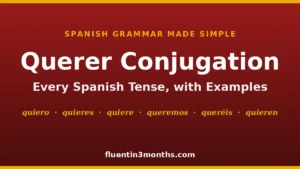



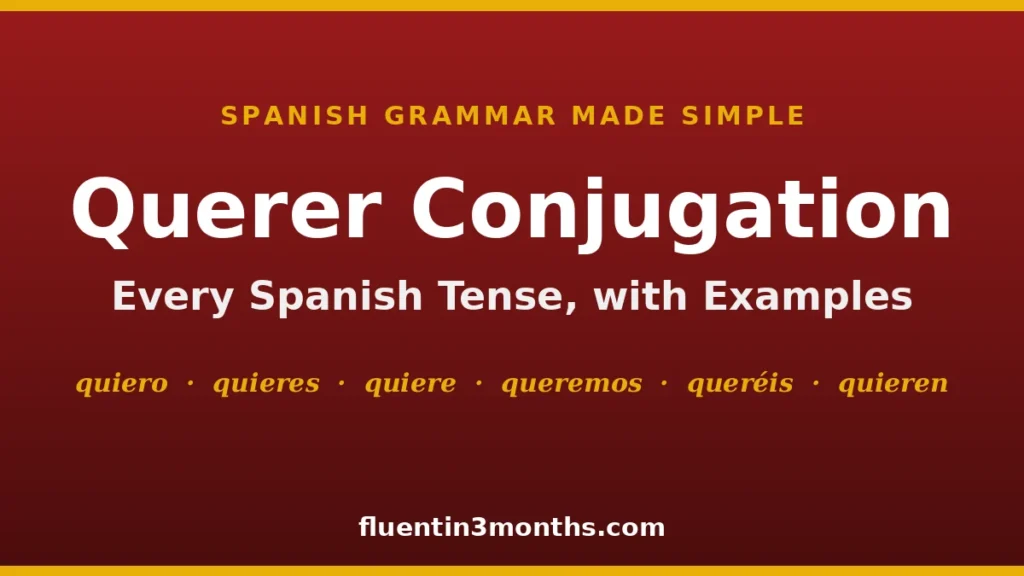
The Spanish verb querer serves as a cornerstone of the Hispanic linguistic landscape, functioning as a primary vehicle for expressing desire, intent, and affection. Derived from the Latin quaerere—meaning to seek or to ask—the verb has evolved into an irregular powerhouse of the Spanish language. Understanding its conjugation patterns and nuanced usage is essential for both novice learners and advanced speakers aiming to navigate the complexities of interpersonal communication and formal discourse in the Spanish-speaking world.
Etymological Origins and Structural Irregularity
The historical development of querer provides a window into the evolution of Romance languages. While its Latin root quaerere primarily denoted the act of searching or inquiring, the Spanish derivative shifted semantically over centuries to encapsulate the concepts of "wanting" and "loving." This shift is mirrored by its structural irregularities, which defy the standard conjugation rules applied to regular -er verbs.
The verb’s primary irregularity stems from a stem-changing pattern (e→ie) in the present tense, alongside a distinct, strong preterite stem (quis-). These deviations are not arbitrary; they reflect deep-seated morphological transformations that prioritize phonetic efficiency in rapid speech. Linguists note that these irregular patterns are consistent across various dialects, providing a reliable, if complex, framework for speakers globally.
Chronology of Conjugation and Mood
For the learner, navigating the tense system of querer requires a structured approach that prioritizes high-frequency forms before moving into specialized literary or formal registers.
The Indicative Mood: The Foundation of Fact
The indicative mood represents the baseline for daily interaction. It is divided into simple tenses—Present, Preterite, Imperfect, Future, and Conditional—and compound tenses formed with the auxiliary verb haber.
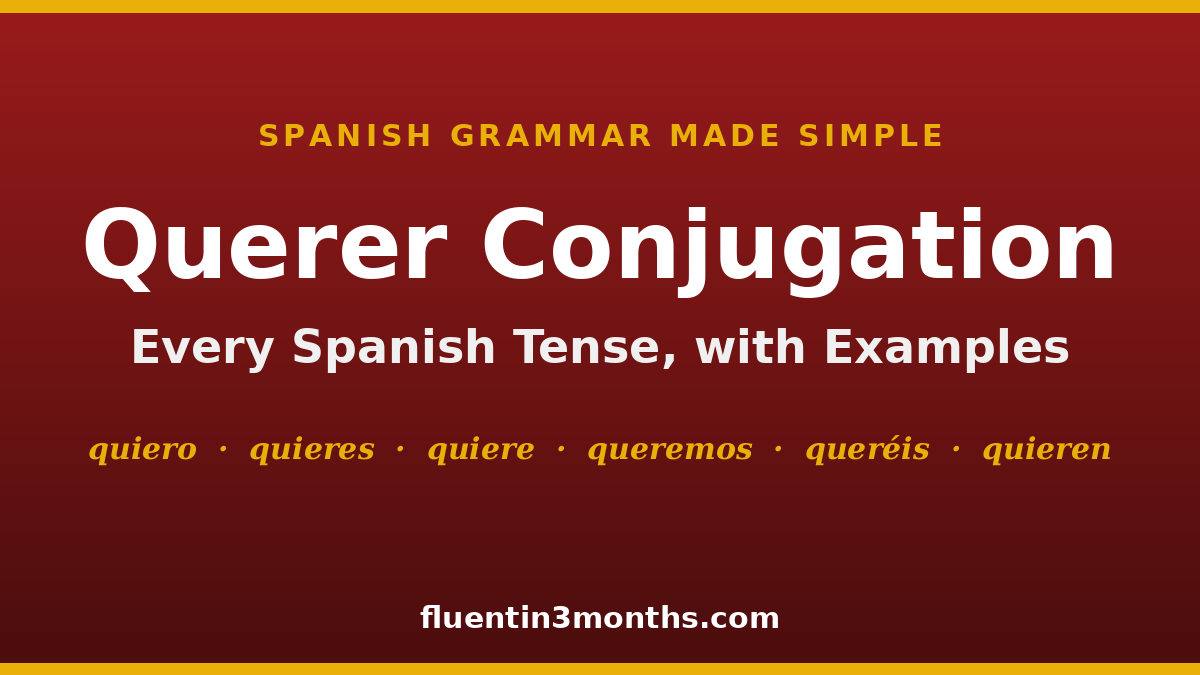
- The Present Tense: This is the most critical segment of the verb. Forms such as quiero (I want) and quieren (they want) are indispensable for basic needs, such as ordering food or stating intentions.
- The Past Tense (Preterite vs. Imperfect): The distinction between the preterite (quise) and the imperfect (quería) is a frequent point of confusion. The preterite is typically reserved for a specific, bounded moment of desire or an attempt to achieve something. Conversely, the imperfect describes an ongoing state or background emotion, such as "I used to want" or "I was wanting."
- Future and Conditional: These forms, querré and querría, demonstrate the verb’s consistent stem mutation. The conditional is particularly vital for social etiquette, as it allows speakers to employ quisiera—a softened, polite request that is preferred in professional and service-oriented environments over the more direct quiero.
The Subjunctive Mood: Expressing Subjectivity
Beyond facts, querer is frequently deployed in the subjunctive mood to express wishes, emotions, or hypothetical scenarios. The present subjunctive (quiera) and the imperfect subjunctive (quisiera/quisiese) are essential for expressing desires involving third parties (e.g., "I want you to leave"). The prevalence of the -ra ending in the imperfect subjunctive varies by region, with Latin American speakers often favoring it over the -se variant in both speech and writing.
Comparative Usage: Te Quiero vs. Te Amo
A frequent point of inquiry among students of the Spanish language is the distinction between te quiero and te amo. While both translate to "I love you," their functional applications are governed by regional cultural norms.
Data from sociolinguistic studies suggest that in many parts of Spain and Latin America, te quiero is the standard expression of affection, used liberally between friends, family members, and romantic partners. In contrast, te amo carries a significantly higher emotional weight. It is often reserved for long-term romantic commitments and carries a tone of intensity that, in some contexts, can sound overly dramatic if used prematurely. Understanding these nuances is critical for maintaining appropriate social registers.
Supporting Data and Statistical Context
In a linguistic analysis of the 5,000 most common words in the Spanish language, querer consistently ranks within the top 100 most used verbs. This high frequency is attributed to its dual utility: it functions both as a modal-like verb for expressing intentions and as an emotional verb for expressing interpersonal connections.
Professional linguists note that the irregular preterite stem quis- is a hallmark of "strong" verbs in Spanish, a category that includes other high-frequency verbs like hacer (hice) and venir (vine). The consistency of these irregularities suggests that while the verb is complex, it follows predictable patterns that, once mastered, allow for a significant leap in conversational fluency.
Official Responses and Academic Perspectives
Academic institutions and language academies, such as the Real Academia Española (RAE), emphasize the importance of mastering the distinction between the subjunctive and indicative modes when using querer. While casual speech often elides certain complexities, formal writing requires strict adherence to the rules governing the use of the subjunctive after expressions of desire.
Educators frequently warn against common errors, such as the incorrect conjugation of the vosotros form or the over-reliance on the present tense when narrating past events. By incorporating the conditional quisiera into daily practice, learners can immediately elevate the perceived professionalism and politeness of their communication.
Broader Impact and Implications
The utility of querer extends beyond simple vocabulary; it is a gateway to understanding the cultural prioritization of relationships in Spanish-speaking societies. Unlike English, where "want" and "love" are distinct and rarely interchangeable, the Spanish language links these concepts through a single verb, suggesting a linguistic philosophy that sees desire and affection as intrinsically connected.
For the international traveler or the business professional, the ability to deploy the correct form of querer is more than a grammatical achievement—it is a tool for social integration. Whether it is negotiating a contract using the conditional querríamos (we would like) or expressing heartfelt sentiment with te quiero, the verb remains the primary instrument for bridge-building across Spanish-speaking cultures.
Future-Proofing Language Acquisition
To achieve long-term retention, experts recommend a multifaceted approach. Rather than rote memorization of tables, learners are encouraged to integrate querer into high-context scenarios. Using digital flashcard platforms, such as Anki, to practice the transition between the present, preterite, and imperfect tenses has proven highly effective. Furthermore, pairing these studies with broader linguistic frameworks—such as the distinction between ser and estar—creates a holistic understanding of how Spanish verbs function in real-world environments.
Ultimately, querer is not merely a verb to be conjugated; it is a fundamental element of the Hispanic identity. As learners progress from simple "wanting" to expressing complex desires and deep-seated affections, they unlock a more profound connection to the language and the people who speak it. By focusing on the high-frequency indicative forms first and gradually layering in the subjunctive and conditional, any student can move from a rudimentary grasp to a nuanced, fluent command of this essential Spanish verb. Through consistent practice and an appreciation for its irregular history, querer becomes a reliable, versatile, and deeply expressive tool in any polyglot’s repertoire.