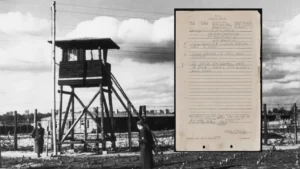



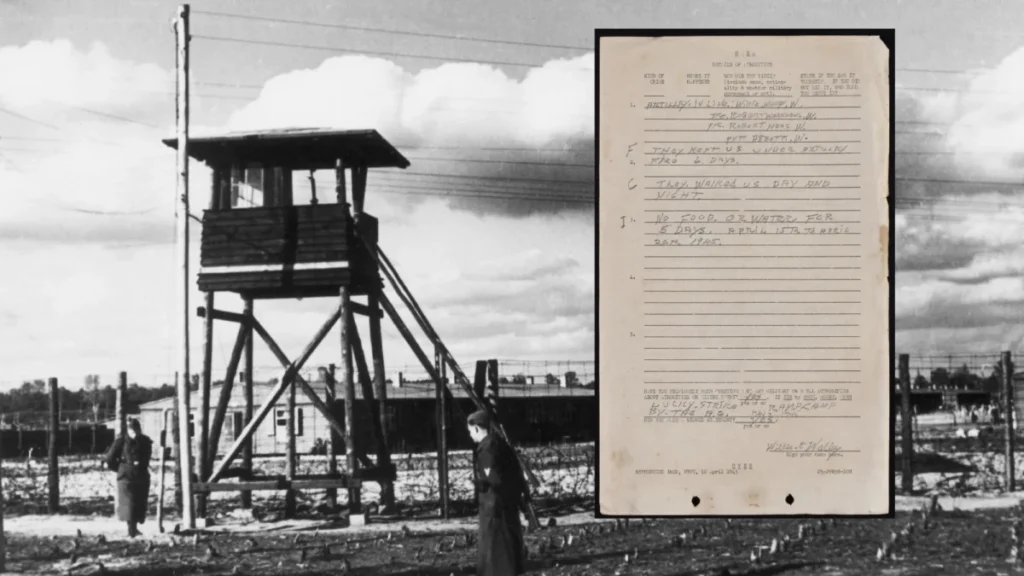
A routine garage cleanup in upstate New York recently yielded an extraordinary historical artifact: more than 300 pages of classified, handwritten accounts detailing the harrowing atrocities committed inside Nazi prisoner-of-war camps during World War II. Homeowner Jason Hurdle stumbled upon the cache behind a concealed wood plank in a long-forgotten crawlspace while clearing out clutter. Among vintage milk pails and an old safe sat a dusty box of documents stamped with the word “Secret.”
What nearly ended up in a municipal trash bin has now transformed into a vital historical archive. The documents, authenticated by specialists from the National Archives, focus primarily on Stalag Luft 3—the notorious Luftwaffe-run prison camp immortalized in history and popular culture by the legendary 1944 mass escape and the 1963 film The Great Escape. Thanks to the fortunate timing of a sudden gust of wind that blew open the box’s lid, these harrowing testimonies of prisoner abuse, systemic neglect, and war crimes have been rescued from obscurity and digitized for public access.
An Unlikely Discovery in Waterloo
The remarkable find occurred in Waterloo, New York, when Hurdle was sorting through the storage spaces of a property he maintains. Hidden behind a small wood partition, the crawlspace contained remnants of decades past. Initially focused on clearing out everyday debris and old holiday decorations, Hurdle noticed the weathered box of files.
"I intended to simply toss the papers in the trash," Hurdle recalled during an interview with local news affiliate WHEC. However, before he could discard the crate, a sudden draft lifted the lid, revealing a trove of official-looking documentation. Intrigued by the headings, Hurdle began to inspect the contents.
The box contained over 300 pages of questionnaires, interviews, and direct accounts compiled in 1945 by military investigators. The documents chronicled the brutal experiences of Allied soldiers who survived incarceration under the Nazi regime. "I feel the hurt, the pain, and a lot of things these guys have been through," Hurdle said, describing the emotional weight of reading the firsthand testimonies.
Recognizing the potential significance of his find, Hurdle contacted local authorities, which led to an expedited visit from representatives of the National Archives. Upon inspecting the papers, the federal archivists immediately verified their authenticity. "When I first laid them on the table in front of them, the first thing the one agent said was, ‘These are original, we want these,’" Hurdle noted.
Inside Stalag Luft 3 and the 1945 Investigations
To understand the weight of Hurdle’s discovery, historians must look back to the closing months of World War II. Stalag Luft 3, situated near Sagan (now Żagań, Poland) near Germany’s western border, was established in March 1942 as a prisoner-of-war camp specifically for captured Allied air force personnel.
While the camp is most globally recognized for the daring March 24–25, 1944, breakout masterminded by Royal Air Force Squadron Leader Roger Bushell—in which 76 prisoners escaped through a tunnel named "Harry," leading to the execution of 50 recaptured men by the Gestapo—the daily reality for thousands of other inmates was a relentless struggle for survival.
As Allied forces advanced across Europe in the spring of 1945, liberating concentration and prisoner-of-war camps in the process, the U.S. military launched systematic investigations to document enemy conduct. Intelligence officers and investigators distributed detailed questionnaires to liberated POWs to gather actionable evidence of war crimes.
The documents recovered from the New York garage are a direct product of this post-liberation evidence-gathering effort. The pages contain stark, unvarnished recollections from American servicemen detailing systematic mistreatment by their German captors. Prisoners reported living in quarters completely devoid of heat or adequate bedding, leaving them exposed to extreme winter weather and rampant vermin infestations. Other accounts detail forced labor on heavily targeted rail lines, where exhausted troops were subjected to routine beatings, summary executions, and what survivors described as the "cold-blooded murder" of surrendering Allied personnel.
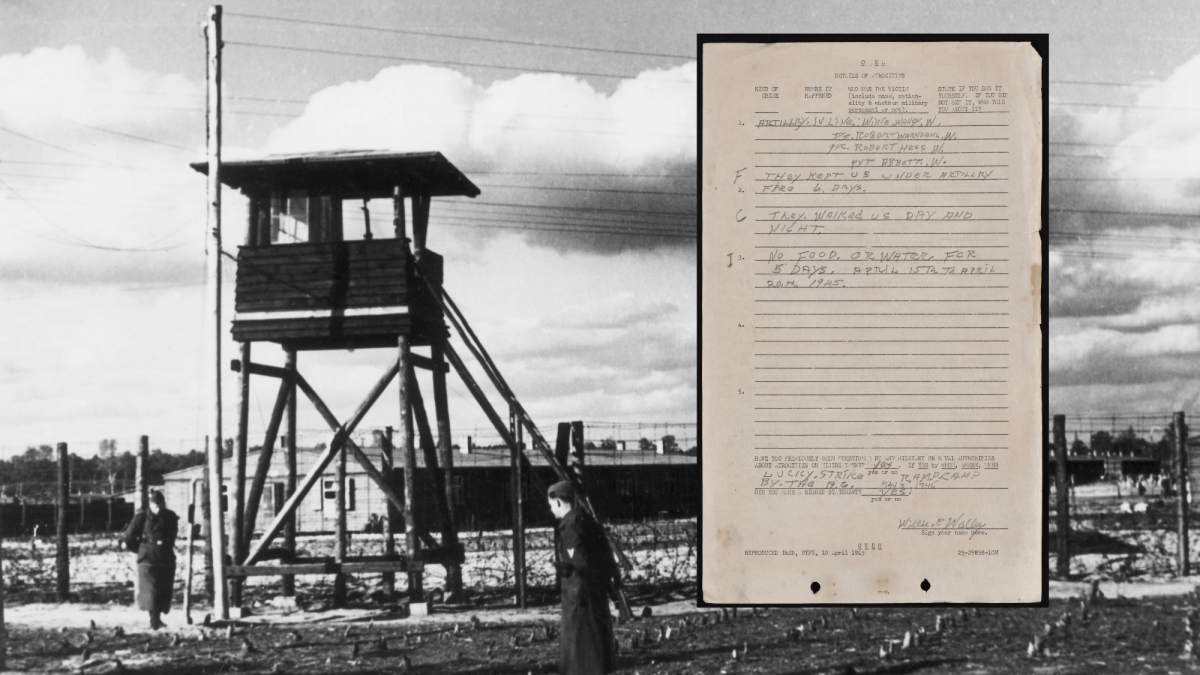
Piecing Together the Mystery: How Did the Files Reach Upstate New York?
Despite the definitive authentication of the documents, a lingering historical mystery surrounds how the secret files traveled from post-war Europe to a residential crawlspace in upstate New York.
Hurdle has pieced together circumstantial evidence pointing toward a former neighbor—a retired U.S. Army officer who once lived adjacent to the property. The garage crawlspace also contained personal family memorabilia, photographs, and military effects belonging to the veteran. Investigators theorize that the officer may have participated in the 1945 war crimes investigations or served within the administrative divisions tasked with processing liberated POW debriefings, retaining copies or working files that were eventually packed away and forgotten during a post-war relocation.
Military historians note that it was not entirely uncommon for returning service members to bring home administrative records, maps, or intelligence reports, either for personal reference, future testimony, or unintentional oversight. However, holding classified documents labeled "Secret" outside official military channels for nearly eight decades highlights the unpredictable paths historical artifacts often take.
Preservation, Digitization, and Public Access
Recognizing the irreplaceable nature of the documents, the National Archives swiftly took custody of the collection. Conservation specialists initiated a rigorous preservation protocol to stabilize the fragile, aging paper, ensuring that decades of environmental exposure in the unconditioned garage caused no permanent loss of data.
In alignment with federal transparency initiatives and the ongoing mission to preserve the legacy of the "Greatest Generation," the National Archives completed the digitization of the entire collection. The complete, unclassified records are now permanently cataloged and accessible to the public through the official National Archives online catalog (reference ID 684104338).
The swift transition from a forgotten box in a garage to a globally accessible digital archive has been welcomed by historians, genealogists, and families of World War II veterans. Researchers studying the administrative mechanics of Nazi prison camps and the subsequent collection of war crimes evidence now have direct access to hundreds of primary source testimonies that were effectively lost to history for decades.
Broader Historical Implications
The discovery of the Stalag Luft 3 secret files arrives at a critical juncture in global history. As the living memory of World War II fades—with the vast majority of veterans and camp survivors having passed away—reliance on physical archives, primary documents, and digitized records becomes paramount for historical education and remembrance.
Historians emphasize that while the broad strokes of Nazi atrocities and POW camp conditions are well-documented in academic literature, granular, individual accounts provide a vital human dimension to the historical record. The questionnaires recovered in Waterloo capture the immediate, unfiltered voices of servicemen recording their trauma mere weeks or months after liberation, offering a level of immediacy that retrospective memoirs often lack.
Furthermore, the documents reinforce the evidentiary foundation used by Allied prosecutors during the immediate post-war tribunals, including the Subsequent Nuremberg Proceedings. By preserving and publishing these investigative files, contemporary archivists ensure that the documentation compiled to hold perpetrators accountable remains accessible for future generations of scholars, legal analysts, and citizens.
For Jason Hurdle, the casual garage cleanup has cemented his unexpected role in preserving a piece of global history. What began as an afternoon of manual labor has resulted in the reclamation of a lost chapter of World War II history, ensuring that the sacrifices, suffering, and resilience of American POWs will continue to be remembered, studied, and honored.