


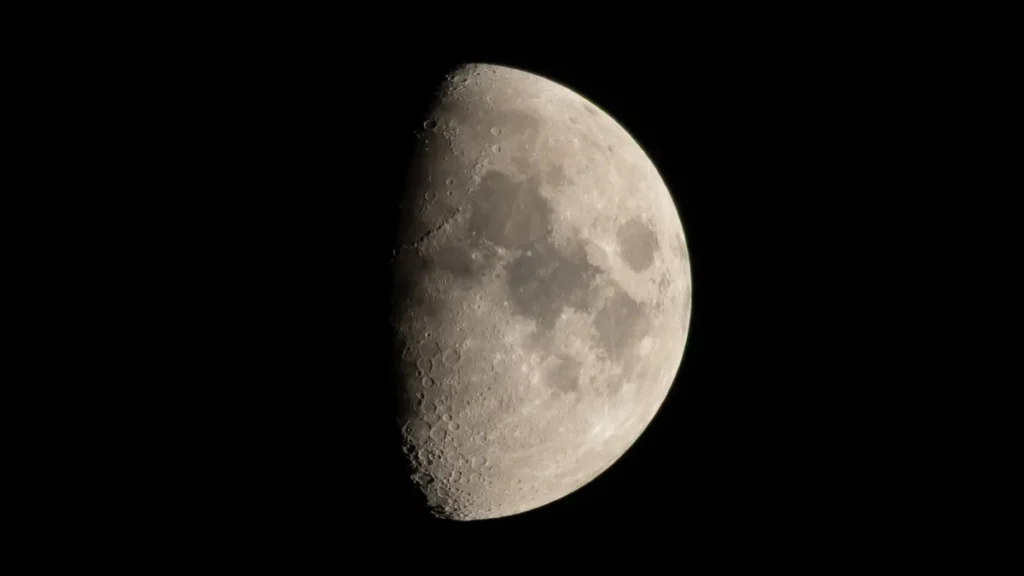
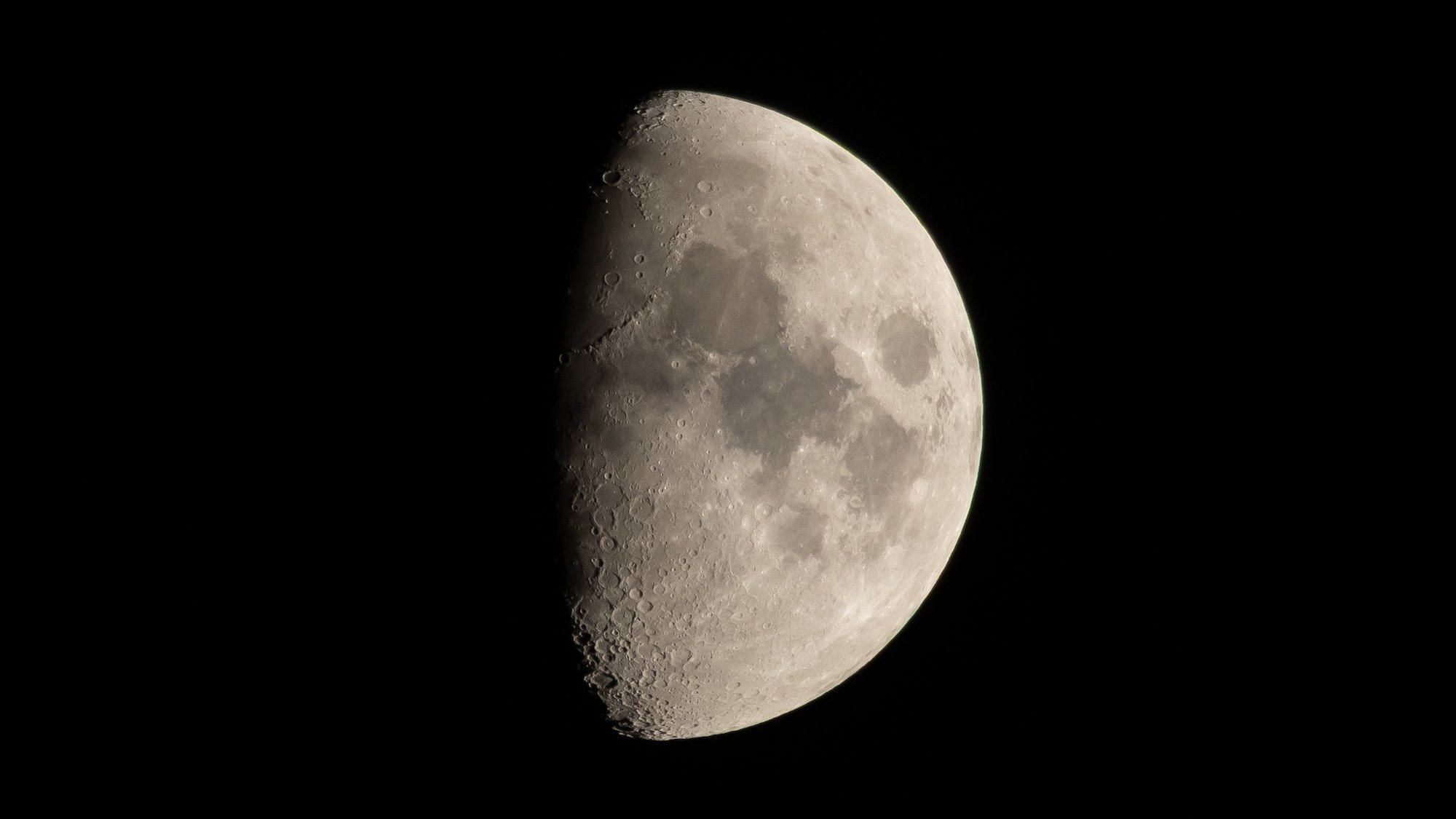
Scientists have confirmed that the Earth’s only natural satellite is steadily contracting, driven by the cooling of its interior over hundreds of millions of years. While the process occurs at an extraordinarily sluggish geological pace, newly published research provides unprecedented precision regarding the rate of this contraction and highlights the persistent seismic hazards it creates. Unlike Earth, which is fractured into shifting tectonic plates, the moon is encased in a single, rigid shell resembling an eggshell. As the lunar interior cools and shrinks, this brittle outer layer must accommodate the reduction in surface area, leading to widespread faulting and sudden seismic activity known as moonquakes.
The findings, detailed in a study published in The Planetary Science Journal, were led by Dr. Thomas Watters, a senior scientist in the Center for Earth and Planetary Studies at the Smithsonian National Air and Space Museum. By analyzing high-resolution imaging data gathered by NASA’s Lunar Reconnaissance Orbiter Camera (LROC), Watters and his team have mapped thousands of previously unidentified young scarps and thrust faults. This comprehensive mapping effort sheds new light on the mechanical evolution of planetary bodies lacking active plate tectonics, offering a crucial window into the geological history of the inner solar system.
Quantifying the Shrinkage: Rates and Measurements
To understand the scale of the lunar contraction, researchers must analyze high-angle and low-angle lighting conditions captured by orbiters, which reveal small-scale tectonic landforms across the rugged highlands and basaltic plains. According to the study’s calculations, the moon’s overall radius has decreased by approximately 148 feet (45 meters) over the past 400 million to 800 million years.
Expressed on an annualized timeline, this reduction equates to a mere 2.4 to 4.3 inches (6 to 11 centimeters) per million years, or roughly 0.1 micrometers annually. Although this movement is imperceptible on a human timescale, the cumulative physical result over geological epochs is substantial. The crust crumples, folds, and breaks as the surface area diminishes, pushing segments of the lunar crust upward to form steep, cliff-like ridges known as lobate scarps.
LROC data has proven instrumental in identifying these features. Operating since its launch in June 2009, the camera has amassed millions of frames covering nearly the entire lunar globe at resolutions of up to 50 centimeters per pixel. By comparing images taken at different solar elevations, scientists can detect subtle topography shifts and measure the heights of newly formed scarps, some of which stand dozens of meters high and stretch for many miles across the landscape.
A Single-Plate Paradigm: Why the Moon Quakes Differ From Earthquakes
The mechanisms driving lunar seismicity differ fundamentally from those operating on Earth. On our planet, the lithosphere is broken into roughly fifteen major tectonic plates that float atop the asthenosphere. These plates interact at convergent, divergent, and transform boundaries, where approximately 90 percent of global seismic activity is concentrated.
The moon, by contrast, operates under a single-plate tectonic regime. Because the lunar body lacks mobile plates that can subduct or collide to relieve internal stress, the entire globe acts as a continuous, unyielding shell. As the interior cools and the core contracts, compressive stress builds uniformly beneath the rigid outer crust. When this stress exceeds the shear strength of the rock, the crust fails, generating shallow-focus moonquakes and creating new thrust faults or reactivating existing ones.
This distinct geological architecture means that moonquakes are not confined to predictable boundaries or fault lines in the way earthquakes are. Instead, tectonic adjustments and subsequent seismic tremors can occur virtually anywhere on the lunar surface. The identification of over 10,000 distinct young faults via LROC imagery demonstrates that tectonic deformation is far more widespread and active than early planetary models had predicted.
Chronology of Lunar Seismology and Tectonic Discovery
The realization that the moon is tectonically active is a relatively modern scientific breakthrough, built upon decades of instrument deployment, orbital observation, and theoretical modeling.
The foundational evidence for moonquakes originated during the Apollo era. Between 1969 and 1972, astronauts deployed the Apollo Passive Seismic Experiment, placing seismometers at Apollo 12, 14, 15, 16, and 17 landing sites. These instruments operated continuously until September 1977, recording thousands of seismic events. Among these were deep moonquakes occurring roughly 700 kilometers below the surface, triggered by tidal stresses from Earth. However, the network also detected a distinct class of shallow moonquakes originating just tens of kilometers beneath the crust. These shallow tremors were notably energetic, lasting for hours and registering magnitudes equivalent to moderate earthquakes on Earth—enough to potentially jeopardize unreinforced surface structures.
For decades, the exact source of these shallow moonquakes remained debated within the planetary science community. A major turning point occurred in 2010 with the initial analysis of high-resolution LROC images. Researchers began identifying widespread, youthful thrust fault scarps that cut across small impact craters. Because small craters degrade and erase quickly in the lunar environment due to micrometeorite bombardment, the presence of sharp, un-degraded scarps cutting through them indicated that these faults formed very recently—likely within the past few tens of millions of years, and potentially continuing into the present day.
The 2026 study published in The Planetary Science Journal represents the culmination of more than a decade and a half of targeted LROC observations. By utilizing machine-learning algorithms alongside manual photo-interpretation, the research team expanded the inventory of known fault scarps exponentially, providing a statistically robust foundation for calculating the modern contraction rate.
Implications for Future Human Exploration and Infrastructure
As international space agencies and private aerospace companies prepare to establish permanent, long-term human outposts on the lunar surface—exemplified by NASA’s Artemis program and international partner initiatives—understanding the distribution and intensity of moonquakes has transitioned from pure academic interest to an urgent engineering necessity.
The realization that tectonic faults are distributed globally, rather than clustered in localized seismic zones, requires a reassessment of site selection and habitat engineering. Engineers designing lunar habitats, power grids, communications towers, and pressurized rover maintenance bays must account for potential ground shaking and surface displacement.
Furthermore, data from the recent study indicates that regions with thicker crusts exhibit fewer young fault scarps, suggesting that these areas may possess greater structural stability over extended operational lifespans. Conversely, areas near dense concentrations of lobate scarps could experience higher risks of localized fault slippage.
Dr. Watters and his colleagues emphasize that while the ongoing contraction should not deter planned lunar exploration, it must be factored into hazard assessments. Future lunar missions are expected to deploy modern, dense networks of seismometers across various geological provinces of the moon. These advanced sensor arrays will work in tandem with orbital monitoring to track active faulting in real time, ultimately safeguarding future explorers as humanity takes its next permanent steps into the cosmos.