




Artificial intelligence has rapidly established itself as an indispensable tool across modern scientific disciplines, offering researchers unprecedented acceleration in data processing, literature reviews, and hypothesis generation. However, a comprehensive multi-institutional study released in September—co-authored by researchers affiliated with Google, Google DeepMind, and the Massachusetts Institute of Technology (MIT)—reveals that these remarkable efficiency gains are increasingly being offset by a hidden operational cost: the time scientists must invest to audit, verify, and debug automated outputs.
Entitled "AI in Science: Early Insights," the study provides an empirical examination of how generative artificial intelligence and specialized machine learning models are fundamentally altering day-to-day academic and industrial research workflows. While approximately three-quarters of surveyed scientists report tangible time savings, the investigation introduces the concept of a "verification tax." This tax represents the substantial allocation of human resources required to ensure that AI-generated insights maintain scientific rigor, free from hallucinations, systemic errors, or ungrounded theoretical leaps.
Rather than focusing on speculative risks such as rogue autonomous systems deceiving researchers or intentionally sabotaging experiments, the research addresses immediate, practical concerns. These include the management of inflated research volumes, the strain on traditional peer-review mechanisms, and a growing disconnect between the rapid generation of computer-modeled hypotheses and the physical constraints of laboratory experimentation and clinical validation.

Methodology and Empirical Foundations of the September Study
To capture a holistic view of AI integration in laboratories, the research team synthesized three robust empirical pillars. First, the study analyzed approximately 15 million anonymized interactions with Gemini, Google’s multimodal AI model, providing a macroscopic look at how scientists practically prompt and utilize general-purpose AI for technical queries and task execution.
Second, the authors compiled a comprehensive inventory of 2,690 specialized scientific AI models deployed across various fields, ranging from genomics and protein folding to materials science and astrophysics. This inventory underscored the vertical integration of machine learning, demonstrating that general assistants represent only a fraction of the AI ecosystem transforming scientific discovery.
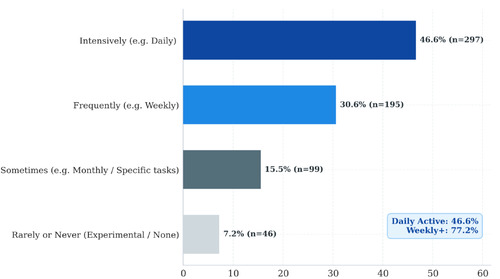
Third, the study conducted a detailed survey of 637 active scientific researchers based in the United States and the United Kingdom. The demographic surveyed spanned diverse fields, offering firsthand perspectives on how automation influences daily experimental routines. The findings indicated high baseline adoption rates: nearly half of all surveyed scientists reported integrating AI tools into their workflows on a daily basis. Among those who experienced measurable net time savings, the average efficiency gain hovered just under seven hours per week.
Broader Context and the September ATLAS Update
The publication of "AI in Science: Early Insights" coincided with broader efforts by major technology companies to quantify the macroeconomic and sector-specific impacts of machine learning. On September 15, Google highlighted the core findings of the study within its monthly AI & Economy ATLAS update.
In its dissemination, Google emphasized a crucial nuance: while individual tasks are completed with unprecedented speed, this velocity does not immediately translate into a proportional surge in peer-reviewed discoveries or commercialized innovations. The tech conglomerate acknowledged that human bottlenecks—such as the physical execution of chemistry experiments, clinical trial approvals, and stringent validation protocols—create a ceiling on how fast theoretical models can be transformed into empirical breakthroughs.
This dynamic highlights a transitional phase in the scientific enterprise. Laboratories are transitioning from an era of data scarcity and manual computation to an era of data abundance, where the primary constraint is no longer the generation of ideas, but the rigorous filtering of signal from noise.

Quantifying the Verification Tax
The core economic narrative of the study centers on the duality of AI-driven productivity. On one hand, the quantitative metrics are overwhelmingly positive regarding task efficiency. Approximately 75% of participating researchers stated that AI tools saved them noticeable time, averaging roughly seven hours per week. Furthermore, 68% of respondents perceived a democratization of knowledge, noting that AI gave them enhanced access to insights, methodologies, and terminology from adjacent scientific disciplines. Additionally, 65% reported that machine learning tools expanded the overall breadth of their research agendas, enabling them to explore interdisciplinary hypotheses that would have previously required extensive foundational study.
On the other hand, the study illuminated the friction points of this transition. Among the cohort reporting time savings, nearly 89% confessed that more than 10% of their newly recovered time had to be redirected back into verifying, debugging, or fact-checking AI-generated outputs. More strikingly, about 46% of these respondents indicated that a quarter or more of their saved time was entirely consumed by audit tasks.
The authors categorize this phenomenon as the "verification tax." Because the scientific method relies fundamentally on reproducibility, empirical verification, and peer scrutiny, researchers cannot afford to treat AI outputs as definitive answers. Every algorithmically generated code snippet, literature summary, or synthetic chemical pathway must undergo rigorous cross-examination, imposing a mandatory labor cost on the initial time savings.

Implications for the Research Pipeline and Peer Review
The widespread adoption of generative AI in academia threatens to alter the traditional research pipeline in systemic ways. By drastically lowering the barrier to generating hypotheses and drafting manuscripts, AI tools threaten to flood academic journals and preprint servers with unprecedented volumes of low-quality or superficially validated research.
This looming influx poses a significant challenge for the peer-review system, which is already experiencing operational strain. If AI-generated content, subtle hallucinations, and what previous literature terms "illusions of understanding" bypass initial screening phases, the burden of catching errors shifts heavily onto journal reviewers and editorial boards.
Moreover, the imbalance between computational hypothesis generation and physical validation creates a bottleneck. A researcher can use AI to generate dozens of viable molecular structures in an afternoon, but synthesizing, testing, and analyzing those molecules in a wet lab remains bound by the laws of physics, chemistry, and biological safety. Consequently, the true return on investment for AI in science may depend less on how quickly researchers can generate ideas, and more on how efficiently laboratories can automate downstream physical testing.

Future Outlook and Strategic Adaptations
As scientific institutions continue to absorb the lessons of the Google-DeepMind-MIT study, institutional strategies are beginning to adapt. Universities and research and development (R&D) corporations are increasingly recognizing that deploying AI tools without simultaneously training personnel in AI literacy and output auditing is counterproductive.
Future developments in scientific AI will likely focus on domain-specific fine-tuning, where models are constrained by fundamental physical laws and verified training datasets to minimize hallucinations. By embedding factual grounding mechanisms directly into scientific models, developers hope to lower the verification tax, allowing researchers to trust outputs with a higher degree of statistical confidence.
Ultimately, "AI in Science: Early Insights" serves as a pragmatic reality check for the research community. While artificial intelligence remains a revolutionary force capable of expanding the boundaries of human knowledge and accelerating multidisciplinary inquiry, it is not an administrative or intellectual shortcut. The path forward requires a balanced integration of machine speed and human skepticism, ensuring that the pursuit of velocity does not compromise the bedrock principles of scientific truth.