



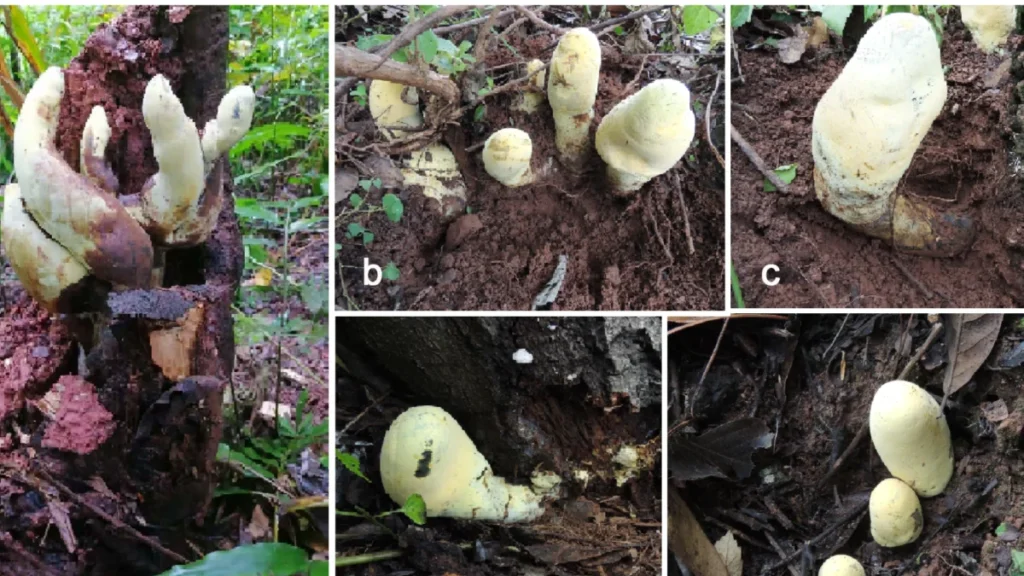
Deep within the damp, biodiversity-rich forests of Yunnan province in southern China, an international team of mycologists has unearthed a fungal behemoth that is rewriting the biological record books. Formally designated as Dianjunus rex—and affectionately nicknamed "D-rex" by the researchers—this newly discovered organism stands apart not only for its impressive physical dimensions, but also for its profound evolutionary implications. Representing an entirely new species, a novel genus, and a distinct taxonomic family, Dianjunus rex sheds rare light on how some of the planet’s most resilient organisms adapted to radical ecological shifts in Earth’s deep past.
The findings, detailed in a comprehensive study published in the journal Frontiers in Fungal Biology, underscore the staggering, yet largely undocumented, biodiversity hidden within East Asian ecosystems. As scientists race to catalogue the planet’s remaining wildlife and flora, this discovery serves as a striking reminder that the fungal kingdom—comprising an estimated 150,000 to 157,000 formally known species—still holds massive secrets.
Main Facts of the Discovery
Dianjunus rex is a gargantuan organism that shatters conventional expectations regarding the physical limits of its phylum. Belonging to Ascomycota—the largest known phylum of fungi, which encompasses over 64,000 catalogued species—D. rex is by far the largest known representative of its taxonomic group.
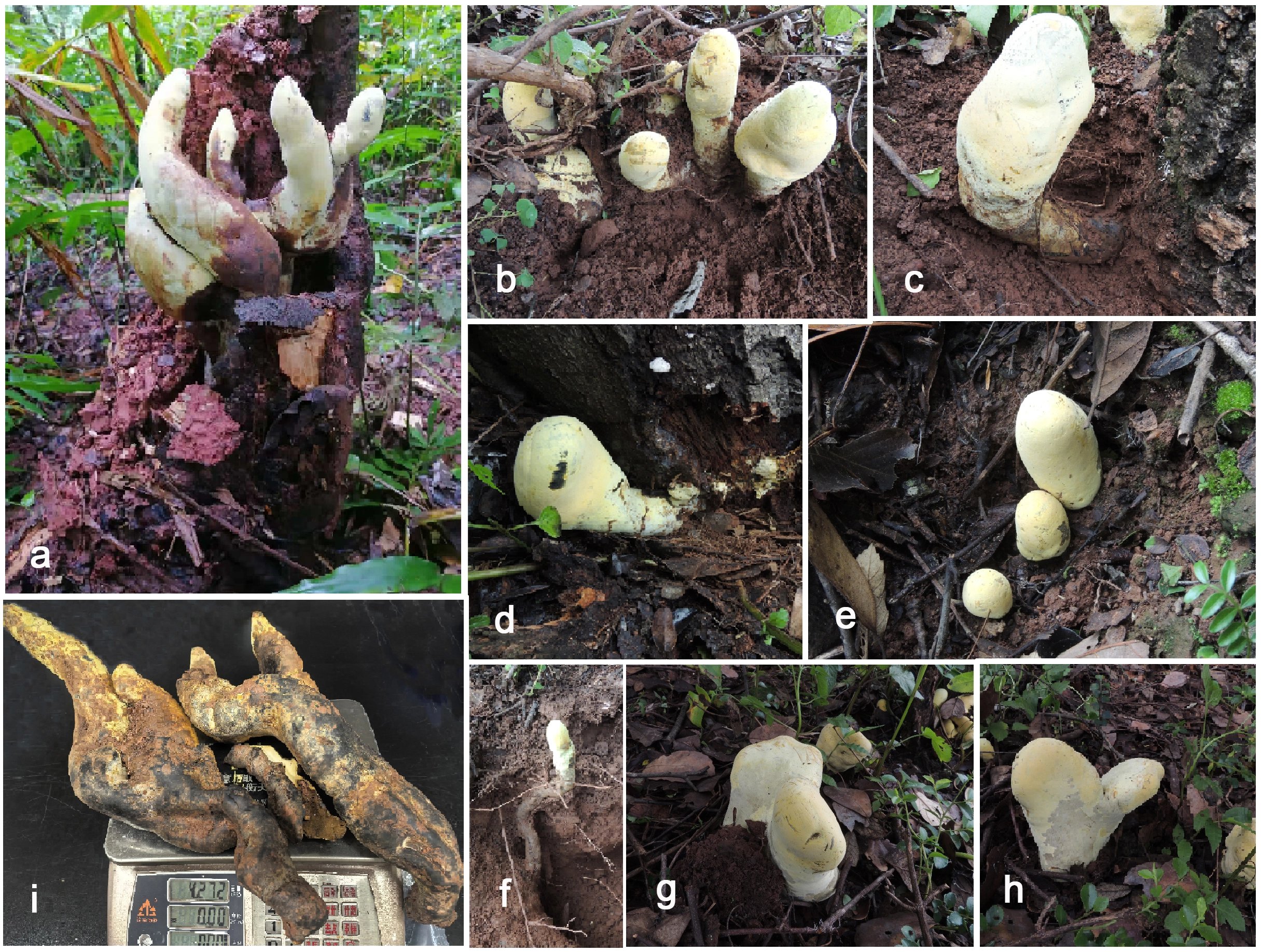
Unlike typical mushrooms that emerge from the ground via a delicate stem and cap, Ascomycetes often produce dense masses of hardened fungal tissue known as stromata, from which spores are released via microscopic, sac-like structures. The stromata of Dianjunus rex defy typical constraints by growing vertical fruiting bodies that reach heights of up to one foot (50 centimeters) and scale weights approaching five pounds (2.2 kilograms). These pale, robust structures were observed sprouting directly from the woody roots and surrounding soil of host plants, specifically the Chinese cork oak, within temperate coniferous forests near Damaidi and Yipinglang, as well as tropical rainforests near Nanbang.
Chronology and Fieldwork
The journey to identifying Dianjunus rex was an exhaustive scientific endeavor spanning multiple expeditions across the varied terrains of Yunnan province. Field researchers initially spotted the unusual, whitish stromata emerging from decaying wood during routine ecological surveys in southern China. Recognizing that the morphology did not match any documented species within regional or global databases, the field team carefully excavated samples for laboratory analysis.
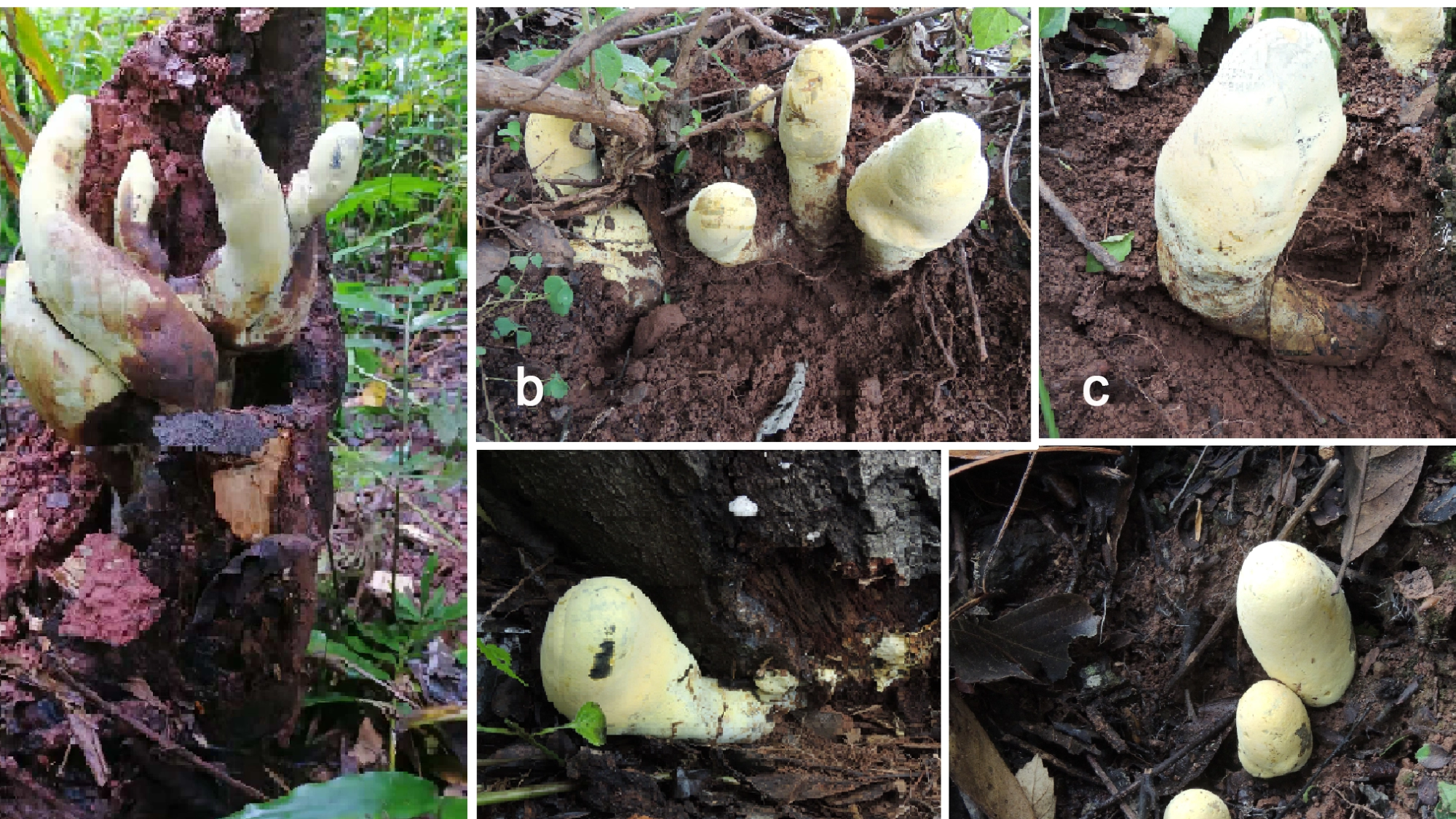
Back at the laboratory, researchers cultivated spores extracted from the collected fruiting bodies to study the organism’s morphology and sequencing its genome in detail. Genomic sequencing, coupled with rigorous phylogenetic analyses, confirmed that the organism was not merely a new species, but belonged to an entirely new genus and a newly erected family, Dianjunaceae. The formal naming of the fungus honors its majestic size and draws from the ancient Dian kingdom, an influential civilization that flourished in Yunnan during the second and first centuries BCE.
Supporting Data and Evolutionary Timeline
One of the most compelling aspects of the Dianjunus rex discovery is its estimated evolutionary origin. Genetic molecular clock dating conducted by the research team suggests that the newly minted family Dianjunaceae emerged approximately 65 million years ago.
This timeline places the birth of this fungal lineage a mere one million years after the catastrophic Cretaceous-Paleogene (K-Pg) mass extinction event. That cataclysmic global crisis, famously triggered by an asteroid impact, wiped out roughly 75 percent of all plant and animal species on Earth, most notably ending the reign of the non-avian dinosaurs.
The coincidence of this timeline offers a compelling window into post-extinction ecology. Following the collapse of major ecosystems, Earth’s forests underwent dramatic, sudden transformations. The massive, abrupt die-off of countless plants and trees meant that forest floors were suddenly blanketed with unprecedented volumes of dead organic matter. For saprotrophic fungi—organisms that feed on decaying material—this surplus of resources created a golden age of ecological opportunity, likely catalyzing rapid evolutionary radiation and the development of extreme body forms.
Official Responses and Expert Analysis
The discovery has generated considerable excitement within the global mycological community. Commenting on the significance of the find, Dr. Indunil C. Senanayake, a study co-author and mycologist at the Germplasm Bank of Wild Species of the Kunming Institute of Botany in China, emphasized the broader context of the research.
"This remarkable species represents a new fungal family, Dianjunaceae, and provides a rare window into the evolution of extreme fungal body forms," Senanayake stated in a press release. "The discovery illustrates how much fungus biodiversity remains to be discovered in East Asian forests."
Furthermore, addressing the historical timing of the lineage’s emergence, Senanayake noted, "This timing raises an intriguing possibility. After the mass extinction, forests experienced dramatic changes, including the sudden availability of large amounts of dead plant material." This ecological upheaval likely provided the evolutionary pressures and nutritional abundance required for such robust, energy-demanding organisms to evolve and thrive.
Broader Impact and Ecological Implications
The morphology of Dianjunus rex raises compelling questions regarding evolutionary trade-offs in the natural world. Building and maintaining a fruiting body weighing up to five pounds and stretching half a meter into the air demands an immense caloric and energetic investment from the organism.
Biologists theorize that this extreme vertical growth strategy evolved primarily to solve a logistical challenge: spore dispersal. In dense, multi-layered subtropical and tropical forests, low-lying fungi often struggle to catch air currents capable of carrying their spores over significant distances. By elevating its stromata high above the forest floor, D. rex maximizes its chances of wind-assisted dispersal, allowing its spores to colonize distant, uninfected host trees. The reproductive benefits of this strategy evidently outweighed the steep metabolic costs required to construct such a massive structure.
Beyond its evolutionary and physiological marvels, the discovery of Dianjunus rex serves as a stark reminder of the vast gaps remaining in human knowledge concerning microbial and fungal life. Subtropical and temperate regions of East Asia, particularly provinces like Yunnan, continue to act as biodiversity hotspots where modern science routinely encounters lifeforms unknown to Western or global taxonomy.
As habitat fragmentation and climate change place mounting pressures on global ecosystems, researchers stress the urgency of intensifying field surveys and molecular cataloguing. Fungi play fundamental roles in nutrient cycling, carbon sequestration, and maintaining forest health through symbiotic and decomposer networks. Unlocking the history of Dianjunus rex not only illuminates a fascinating chapter from the aftermath of the dinosaur extinction, but also underscores the critical importance of preserving the complex forest habitats that continue to nurture the planet’s most extraordinary, hidden kingdoms.