


As organizations approach 2027, the primary challenge facing human capital management is no longer a lack of educational content or the availability of training platforms. Instead, a growing consensus among workforce analysts and leadership experts suggests that the critical bottleneck for enterprise success is a widening "capacity gap." While businesses are demanding that employees master artificial intelligence, adapt to shifting workflows, and simultaneously maintain high output, they are failing to account for the finite time, energy, and cognitive bandwidth of the workforce.
The professional landscape of the mid-2020s is defined by a frantic pace of adaptation. According to data from Deloitte, the average worker in 2026 is expected to navigate 10 planned enterprise changes per year, a five-fold increase from the two changes recorded in 2016. This constant state of organizational flux has left approximately two-thirds of the global workforce feeling overwhelmed. The existential anxiety is palpable: nearly half of all employees report a persistent fear that the relentless speed of professional evolution will render their existing skills obsolete, effectively leaving them behind.
The Evolution of the Capability Crisis: A Chronology of Change
The trajectory of the modern workplace has been accelerated by the integration of generative AI, which has fundamentally altered the shelf life of professional skills. Between 2020 and 2023, the focus of Learning and Development (L&D) departments was largely on expanding digital access to training. By 2024, the priority shifted toward large-scale upskilling initiatives aimed at AI literacy.
PwC’s 2026 Global AI Jobs Barometer highlights a stark reality: the skill sets required for jobs most exposed to artificial intelligence are evolving more than twice as fast as those in roles with minimal AI interaction. This rapid depreciation of skill sets has created a cycle where companies push more training to keep pace with technology, yet employee performance often fails to track with the amount of training delivered. This phenomenon underscores a critical disconnect between the consumption of learning modules and the actual application of capability.
Distinguishing Capability from Capacity
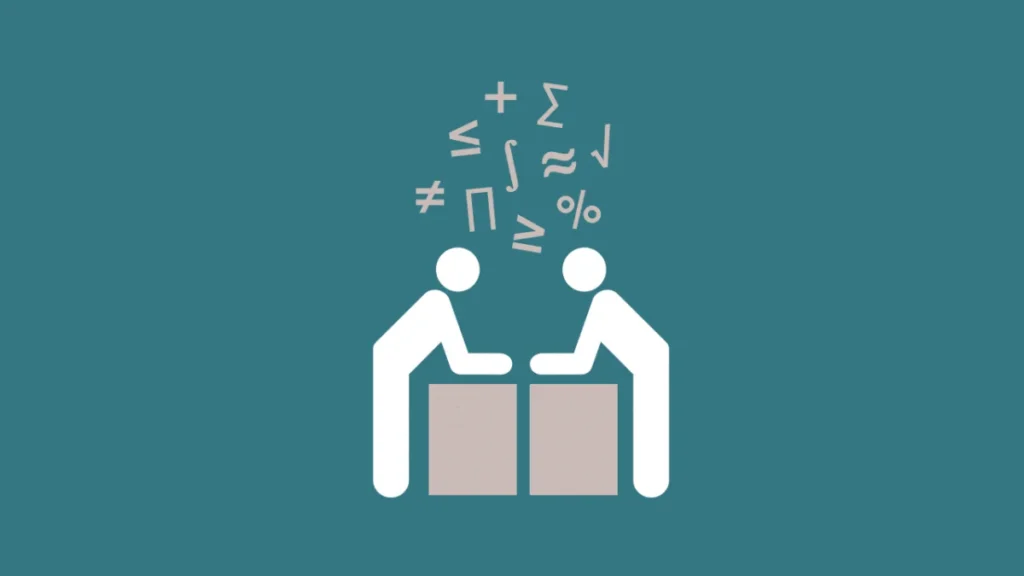
To address this friction, organizational leaders must differentiate between "capability" and "capacity." Capability is defined as the mastery of a specific skill or process required for a business objective. Capacity, however, is the organizational and individual bandwidth required to absorb that change, find the time to practice, and integrate new behaviors into daily routines.
When an employee is forced to juggle existing performance quotas with new, mandatory AI-training programs, the "capacity to learn" is cannibalized by the "requirement to produce." This creates a paradox: by aggressively pushing for continuous learning, organizations may be inadvertently hindering the very agility they seek to build. If an employee has no time to practice a new skill or receive feedback in a real-world environment, that knowledge remains theoretical and, ultimately, useless.
Data-Driven Insights on the Learning Gap
The LinkedIn 2025 Workplace Learning Report underscores the urgency of this situation, noting that 49 percent of surveyed talent development professionals indicated that executive leadership is increasingly concerned about the lack of specific, actionable skills required to execute business strategies. This pressure from the C-suite often results in the immediate deployment of broad-based training catalogs.
However, historical performance data from the last decade suggests that volume-based learning solutions rarely yield significant ROI. Instead, the most successful organizations are those that treat learning as a subset of workflow management. The implication for 2027 is clear: the focus must shift from the "amount" of learning provided to the "friction" removed from the employee experience.
The Role of Personalization in Reducing Cognitive Load
The promise of artificial intelligence in 2027 is not just the generation of content, but the reduction of unnecessary pedagogical burden. Current trends indicate a shift away from massive, generalized curricula toward "precision learning."
The goal of modern personalization is no longer to provide every employee with an expansive library of courses, but to identify the shortest, most efficient path between an employee’s current capability and the required performance standard. For some, this might mean a short, targeted micro-learning module. For others, it might mean the removal of a cumbersome software interface, a change in management expectations, or the implementation of AI-driven performance support that guides them through a task in real-time.
By diagnosing whether a problem is truly a "learning gap" or a "process gap" before prescribing a solution, leaders can save valuable organizational time. In many instances, the best intervention is not a new course, but a structural change that eliminates the need for the training in the first place.
Psychological Safety and the Resilience Threshold
A major factor often overlooked by traditional L&D departments is the role of psychological safety in the capacity equation. When employees operate in an environment where they fear the consequences of a mistake, they are less likely to experiment with new technologies or admit to skill deficits. This creates a "capability silo" where employees struggle in silence to meet unrealistic expectations.
Furthermore, the term "resilience" has frequently been misused as a justification for increasing the workload. Resilience should not be treated as a metric of how much disruption an employee can absorb before reaching burnout. Instead, leaders must view the cumulative demand of 10 annual organizational changes as a finite resource. If the organizational culture does not allow for experimentation and failure, the capacity to adapt will inevitably shrink, regardless of how many training programs are launched.
Strategic Implications for 2027 and Beyond
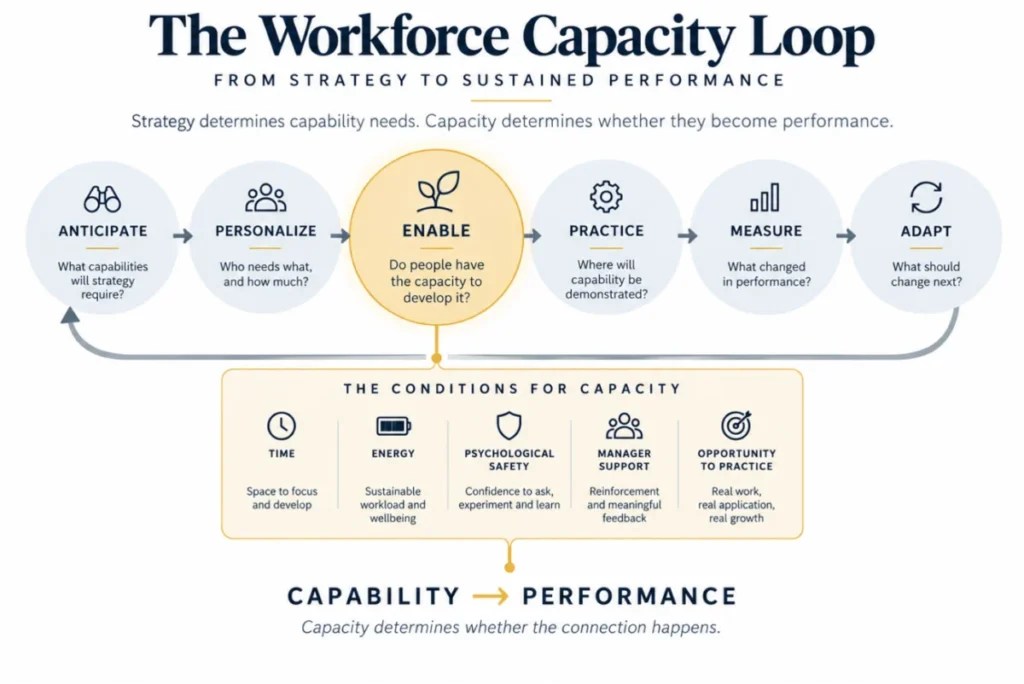
As organizations move toward 2027, the "Workforce Capacity Loop" must become the central framework for L&D. This framework requires leaders to evaluate the entire chain of performance:
- Strategy Alignment: What specific capabilities are required for the upcoming year?
- Diagnosis: Is the current performance shortfall a result of a lack of skill or a lack of opportunity/workflow support?
- Enablement: Does the employee have the psychological safety, time, and managerial support to integrate this new behavior?
- Assessment: How will we measure performance improvement rather than just course completion?
The ultimate objective for the next several years is to achieve "reskilling without continuous training." This involves shifting development away from the classroom and into the flow of work. By leveraging AI to provide guidance, feedback, and peer-expertise access at the moment of need, organizations can reduce the time-to-competency for new tasks.
Conclusion: The Future of Organizational Sustainability
The organizations that will thrive in 2027 will not necessarily be those with the most comprehensive training catalogs, but those that master the art of capacity management. Learning leaders must accept that their role is expanding beyond "content delivery" into the territory of "systemic design."
By rigorously questioning whether a training initiative is the most efficient path to performance, and by actively protecting the time and energy of their workforce, leaders can ensure that their organizations remain agile without exhausting their most valuable asset: their people. Knowledge is now abundant, but human capacity remains a scarce, precious commodity that must be treated with strategic care. The success of the next decade depends on the ability to balance the constant demand for new skills with the fundamental, human necessity for the space to learn, practice, and perform.