


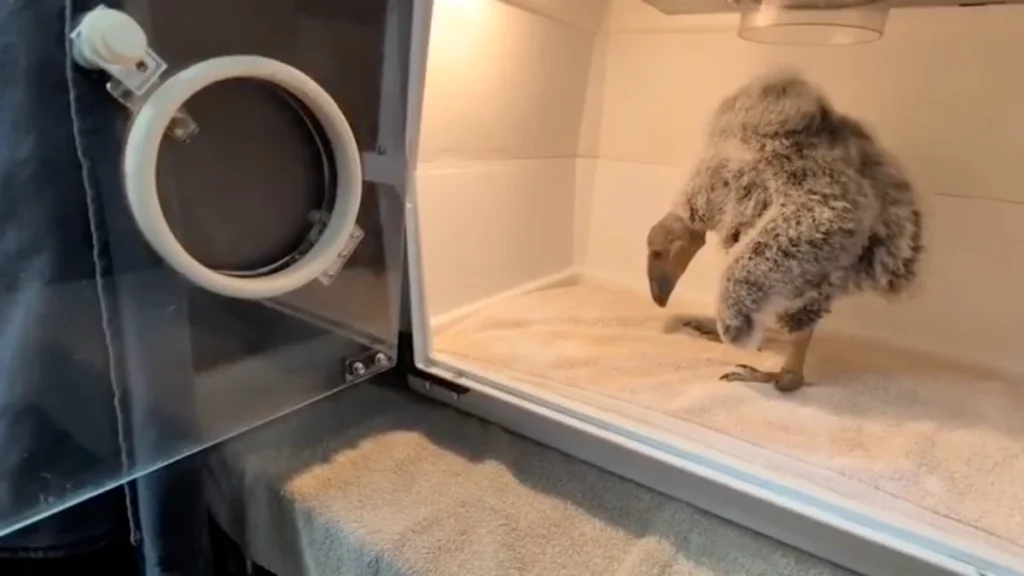
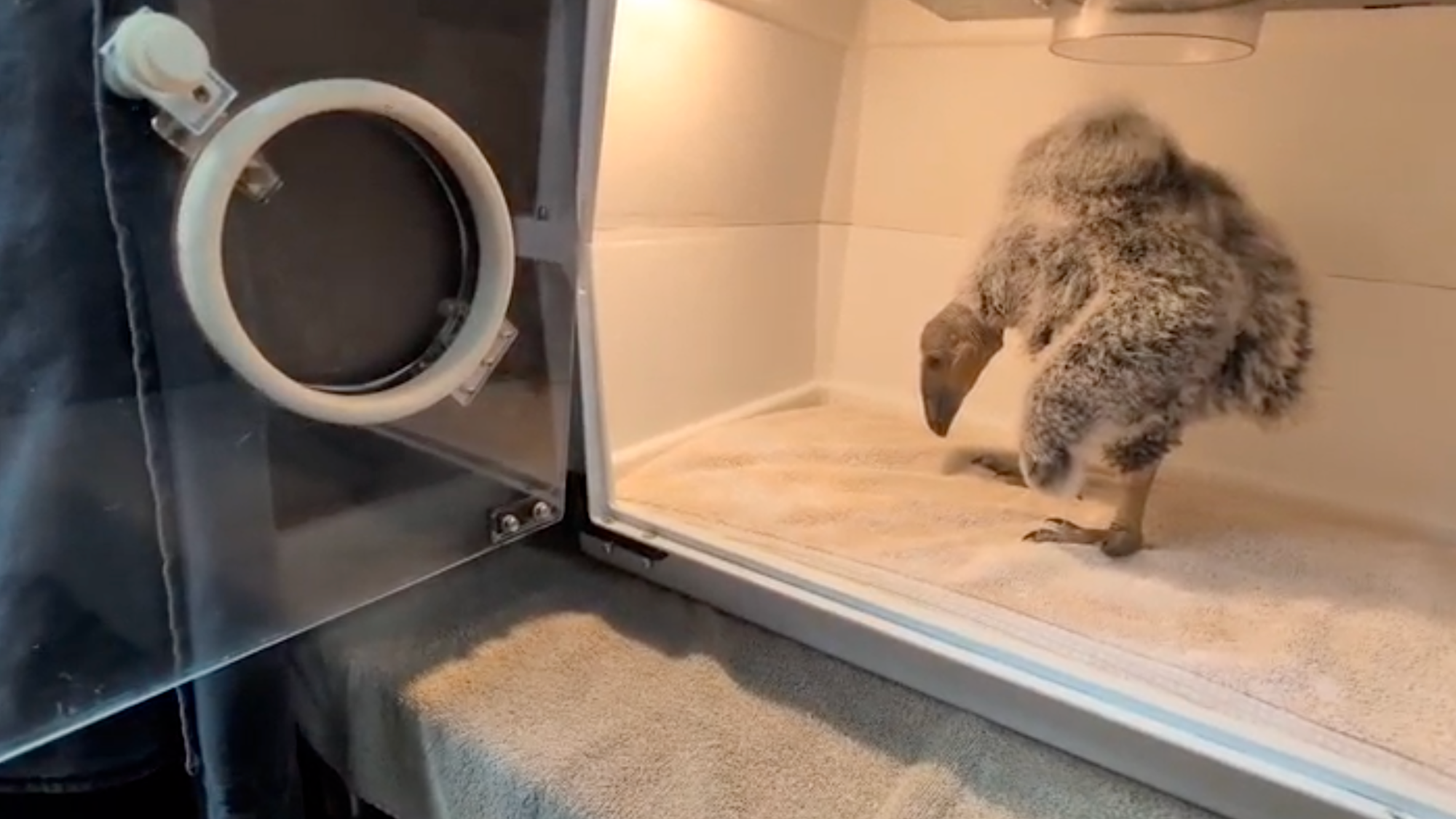
The fragile recovery of North America’s largest flying bird took a dramatic turn in central California, where wildlife biologists intervened to save an orphaned California condor chick from certain starvation. Named Cayic—meaning “strong” in the Mutsun language of the Indigenous people of California’s Central Coast—the roughly one-month-old chick was plucked from its nest in Pinnacles National Park after its mother struggled as a single parent and its father tragically perished. Today, Cayic is receiving specialized, high-tech wildlife rehabilitation at the San Diego Zoo Safari Park, serving as both a symbol of resilience for a critically endangered species and a stark reminder of the persistent environmental hazards threatening North America’s iconic "thunderbirds."
Anatomy of a Rescue: When a Nest is Compromised
The journey that led Cayic to a specialized breeding facility began high on the rocky cliffs of Pinnacles National Park, a critical sanctuary for the reintroduced California condor (Gymnogyps californianus) population. Field biologists monitoring the nest observed a troubling shift in parental behavior. The female condor, left to shoulder the burdens of chick-rearing alone, began spending significantly more time away from the nest in search of dwindling food sources.
Condor parents typically share incubation and foraging duties, alternating responsibilities to ensure their single, highly vulnerable chick receives a steady stream of nutrition. In this instance, however, the mother’s foraging trips became too frequent and prolonged. Park biologists realized that the chick was being severely underfed and neglected.
"Based on her behavior, she had largely abandoned the nest, and the chick was unlikely to survive without intervention," a spokesperson for the San Diego Zoo Wildlife Alliance explained.
Faced with the imminent demise of the vulnerable chick, park authorities made the decisive call to retrieve the one-month-old bird from the wild. The chick was immediately transported south to the San Diego Zoo Safari Park’s specialized California condor breeding facility, where conservationists integrated him into a sophisticated rearing program designed to save endangered avian species without inducing human habituation.
The Art of the Puppet: Preventing Human Imprinting
Raising a critically endangered apex scavenger requires meticulous science and theatrical deception. When wild chicks are removed from danger or hatched in captivity for release programs, wildlife care specialists must ensure the young birds do not associate humans with food or safety—a process known as imprinting that can prove fatal upon release into the wild.
To counter this, the San Diego Zoo Safari Park employs a specialized puppet-rearing methodology. Caretakers utilize hand-crafted puppets meticulously sculpted to mimic the exact appearance, coloration, and contours of adult California condors. These puppets completely envelop the caretaker’s hands, arms, and upper body.
Feeding sessions are carefully choreographed performances. Caretakers use the puppet’s artificial beak to deliver finely sourced meat directly to the chick, precisely replicating the natural feeding kinematics of an adult condor inside a wild nest. This method guarantees that Cayic receives the vital nutrients required for proper skeletal and muscular development while remaining entirely ignorant of human existence, preserving his wild instincts for his eventual return to nature.
A Legacy of Loss and the Shadow of Lead Poisoning
Cayic’s precarious start to life was exacerbated by a double tragedy. While the mother struggled to feed the chick alone, the father had already vanished from the nesting equation. Wildlife officials later confirmed that the male condor had stopped returning to the nest because he had fallen gravely ill. He ultimately died while receiving veterinary treatment for suspected lead poisoning.
Conservation scientists point to lead ammunition as the single greatest mortality factor for wild California condors and the most formidable barrier to their full recovery. Because condors are obligate scavengers, feeding primarily on the carcasses of large mammals, they frequently ingest microscopic lead bullet fragments left behind by hunters in game remains. Even a microscopic fragment can cause acute lead poisoning, leading to neurological damage, paralysis, and death.
Beyond lead toxicity, the species faces an insidious modern threat: microtrash. Adult condors often mistake bottle caps, glass shards, plastic fragments, and metal pieces for calcium sources or food, feeding the debris to their chicks. This indigestible material can cause fatal blockages or perforations in the digestive tracts of young birds, prompting continuous cleanup campaigns across national parks and wildlife refuges.
From the Brink: A Decades-Long Conservation Odyssey
The struggles faced by Cayic’s parents underscore how close California condors remain to the precipice of extinction, despite decades of heroic, multi-agency conservation efforts. Known to Native Americans as thunderbirds, these magnificent birds boast wingspans stretching nearly ten feet—the widest of any North American land bird. Yet, their massive scale and soaring majesty could not protect them from habitat destruction, pesticide accumulation, shooting, and lead poisoning.
By the 1980s, the wild population had plummeted to an alarming low of just 22 individuals. Recognizing that extinction was all but inevitable without drastic measures, the U.S. Fish and Wildlife Service, alongside conservation partners like the San Diego Zoo Wildlife Alliance, made the unprecedented decision in 1986 to capture every remaining wild California condor.

The captive breeding program that followed is widely regarded as one of the most successful, albeit intensive, endangered species recovery operations in history. Through careful genetic management and high-tech incubation protocols, conservationists slowly built up the population. Just six years after the last wild bird was brought into captivity, the first captive-bred condors were successfully reintroduced to the skies of Southern California in 1992.
Data released by the U.S. Fish and Wildlife Service highlights the steady, hard-won progress of these efforts. As of the close of 2025, the global population of California condors stands at 607 individuals. Crucially, 392 of those birds now soar freely in the wild across California, Arizona, Utah, and Baja California, Mexico.
The Road Ahead for Cayic and His Mother
Despite the loss of her mate and the early removal of her chick, the biological cycle at Pinnacles National Park continues. Wildlife experts remain optimistic about the mother’s future contributions to the wild flock.
"The mother may go on to pair with another male, and we hope she will have another opportunity to breed during a future breeding season," the San Diego Zoo Wildlife Alliance spokesperson noted. With a stable population of wild males inhabiting the park, the resilient female has a strong probability of establishing a new bond and successfully raising a chick in the coming years.
Meanwhile, back at the San Diego Zoo Safari Park, Cayic continues to thrive. Caretakers report that the young condor is meeting every developmental milestone, displaying robust health, and exhibiting natural, wild behaviors.
If his rehabilitation continues on its current trajectory, conservation planners anticipate that Cayic will graduate from the puppet-rearing program and make the journey back to his native home. Wildlife officials are tentatively scheduling his release into the skies of central California by next fall, where he will join the growing population of free-flying condors—embodying both the fragility of his species and the unwavering dedication of the scientists fighting for its survival.