



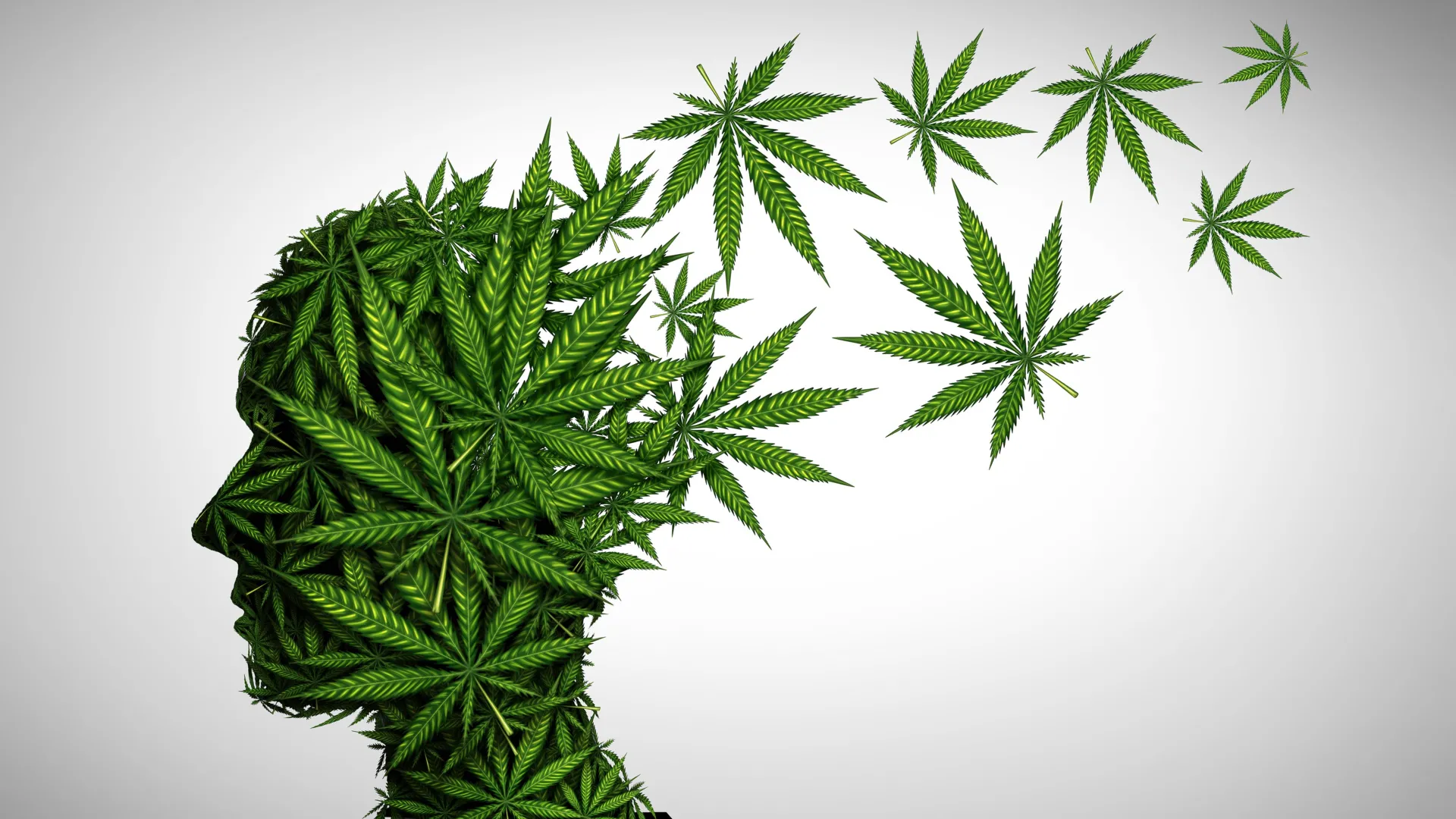
A new comprehensive study emanating from Washington State University (WSU) has cast a significant spotlight on the acute effects of cannabis consumption, demonstrating that tetrahydrocannabinol (THC), the primary psychoactive compound in cannabis, does far more than merely induce a temporary state of forgetfulness. The research, published in the esteemed Journal of Psychopharmacology, meticulously details how acute cannabis intoxication can profoundly alter the very mechanisms by which memories are formed, stored, and retrieved, presenting widespread implications for daily cognitive tasks and public health.
The WSU investigation revealed that individuals under the influence of THC were significantly more prone to recalling words that were never actually presented to them, a phenomenon known as false memory. Furthermore, participants experienced considerable difficulty in performing common memory-dependent tasks, such as remembering future appointments or tracking the origins of information. This intricate examination marks one of the most exhaustive studies to date on how cannabis influences a multitude of human memory systems, extending well beyond simple rote recall.
One of the study’s most surprising revelations concerned the dose-response relationship. Researchers observed no statistically meaningful differences in memory impairment between participants who consumed 20 milligrams of THC and those who consumed 40 milligrams. This finding strongly suggests that even what might be considered moderate amounts of THC can exert a significant and broad disruptive effect on cognitive memory functions, challenging common perceptions about dose proportionality in impairment.
A Deeper Look into the WSU Study’s Findings
The study’s senior author, Carrie Cuttler, an associate professor of psychology at WSU, underscored the novelty and depth of their approach. "Most previous studies have only looked at one or two types of memory, like recalling lists of words," Cuttler explained. "This is the first study to comprehensively examine many different memory systems at once, and what we found is that acute cannabis intoxication appears to broadly disrupt most of them." This broad disruption signifies a more pervasive impact than previously understood, affecting the intricate tapestry of memory systems that govern our daily lives.
To achieve this comprehensive analysis, Cuttler and co-author Ryan McLaughlin, an associate professor in the Department of Integrative Physiology and Neuroscience at WSU, recruited a cohort of 120 regular cannabis users. This population was chosen to reflect real-world usage patterns. Participants were then randomly assigned to one of three groups in a meticulously designed double-blind experiment: vaporizing a placebo cannabis, 20 milligrams of THC, or 40 milligrams of THC. The double-blind methodology is crucial for minimizing bias, ensuring neither the participants nor the researchers knew who received which substance.
Following the consumption of their assigned substance, participants engaged in approximately an hour of rigorous memory assessments. These tests were designed to measure a diverse array of memory types, including verbal memory (recalling spoken words), visuospatial memory (remembering locations or visual patterns), prospective memory (remembering to perform actions in the future), source memory (recalling where information came from), false memory (recalling unpresented information), episodic content memory (recalling details of personal experiences), and temporal order memory (remembering the sequence of events).
The results were stark and consistent: individuals who had consumed cannabis performed significantly worse than those in the placebo group across the majority of these tests. In total, cannabis acutely affected 15 out of the 21 memory measures assessed, indicating a widespread impairment that permeates various facets of cognitive recall and information processing.
Unpacking the Mechanisms of Memory Disruption
The neurological underpinnings of these observed memory impairments are rooted in THC’s interaction with the brain’s endocannabinoid system (ECS). The ECS plays a critical role in regulating numerous physiological and cognitive processes, including mood, appetite, pain sensation, and, crucially, memory. THC mimics endogenous cannabinoids, primarily binding to CB1 receptors, which are highly concentrated in brain regions vital for memory formation and retrieval, such as the hippocampus, prefrontal cortex, and amygdala.
When THC binds to these receptors, it disrupts the normal functioning of neurotransmitter release, interfering with synaptic plasticity – the process by which neurons strengthen or weaken their connections over time, forming the basis of learning and memory. This interference can impede the encoding of new information into long-term memory and impair the efficient retrieval of existing memories. The WSU study’s findings provide empirical evidence of these disruptions manifesting across multiple, distinct memory systems.
Beyond Simple Recall: False Memories and Source Confusion
The most pronounced and arguably most concerning effects documented by the WSU study were observed in false memory and source memory. These two forms of memory are fundamental to accurately recalling information, discerning truth from fabrication, and understanding the context of learned data.
In one particularly illuminating test, participants listened to lists of semantically related words, all connected by an overarching theme. However, the central keyword that tied them together was deliberately omitted from the list. For instance, a list might include "bed, rest, tired, dream, snooze" but omit "sleep." Later, individuals who had consumed cannabis were markedly more likely to confidently assert they remembered hearing the unpresented, thematic keyword. "I found it was really common for people to come up with words that were never on the list," Cuttler elaborated. "Sometimes they were related to the theme of the list, and sometimes they were completely unrelated." This susceptibility to false memories highlights a profound distortion in memory recall, where the brain actively constructs or accepts non-existent information as truth.
Equally critical was the impairment in source memory. Participants under the influence of cannabis struggled significantly more to identify the original source of previously learned information. In an increasingly information-saturated world, the ability to correctly attribute information to its origin – whether a trusted news outlet, a casual conversation, an academic text, or a social media post – is paramount for critical thinking and avoiding misinformation. Problems with source memory can lead to a fundamental breakdown in evaluating the credibility and context of information, potentially making individuals more susceptible to manipulation or misjudgment.
These types of memory distortions carry serious implications, particularly in situations demanding precise and accurate recall. Consider the legal system, where eyewitness testimony is often crucial. Errors in memory, exacerbated by cannabis intoxication or compounded by suggestive questioning, could profoundly influence how events are remembered and recounted, potentially leading to miscarriages of justice. Similarly, in professional settings, misremembering the source of instructions or critical data could have significant operational or safety consequences.
Implications for Everyday Function and Public Safety
Beyond the more abstract concepts of false and source memory, the WSU researchers also identified significant impairments in prospective memory. This crucial cognitive function governs our ability to remember to perform intended actions in the future – the very bedrock of daily planning and independent living. This includes mundane yet essential tasks such as taking prescribed medication at a specific time, attending scheduled meetings, remembering to pick up groceries on the way home, or fulfilling social commitments.
"These are things we rely on constantly in our day-to-day lives," Cuttler emphasized. "If you have something you need to remember to do later, you probably don’t want to be high at the time you need to remember to do it." The disruption of prospective memory has direct consequences for personal responsibility, professional reliability, and overall functional independence. For instance, impaired prospective memory could lead to missed doses of vital medication, forgotten safety protocols in hazardous environments, or neglect of important personal obligations.
Interestingly, one specific form of memory, episodic content memory – which involves recalling the detailed content of personal experiences – did not show a statistically significant effect in this particular study. However, Cuttler cautioned against drawing firm conclusions from this single observation, noting that additional research is necessary to fully understand the nuanced effects of cannabis on this particular memory system. It could be that acute effects are less pronounced here, or that the methodologies used were less sensitive to its disruption.
The Broader Context: Cannabis Legalization and Research Gaps
The release of the WSU study comes at a pivotal moment in the ongoing evolution of cannabis policy and public perception. Across North America and in various parts of the globe, the legalization of cannabis for both medical and recreational use has rapidly expanded. States like Washington, where the study was conducted, have witnessed a dramatic increase in cannabis consumption and accessibility since recreational legalization in 2012. According to the National Survey on Drug Use and Health (NSDUH), in 2022, approximately 22% of people aged 12 or older in the U.S. reported using cannabis in the past year, with rates higher in states where it is legal. This rapid societal shift, however, has outpaced scientific understanding of the full spectrum of short-term and long-term cognitive and physiological effects of cannabis.
Historically, rigorous scientific research into cannabis has been severely hampered by its classification as a Schedule I controlled substance under federal law in the United States. This classification, which designates substances with "no currently accepted medical use and a high potential for abuse," has created significant bureaucratic hurdles, limited funding opportunities, and restricted access to research-grade cannabis, thereby impeding comprehensive study. While some research has emerged, particularly focusing on long-term effects in chronic users or therapeutic applications, acute cognitive impacts across multiple memory systems have remained less explored in such detail until now.
This regulatory environment has created a substantial knowledge gap between public consumption patterns and scientific evidence. "We’re living in a state where cannabis use is very common, but there’s still a lot we don’t know about its acute effects," Cuttler observed. "The goal is to help people make informed decisions about the risks and benefits." The WSU study contributes significantly to filling this gap, providing concrete, data-driven insights into immediate cognitive impairments.
Expert Reactions and Calls for Informed Public Policy
The findings from Washington State University are likely to resonate across various sectors, prompting reactions from public health officials, policymakers, and advocacy groups. Public health agencies are expected to emphasize the importance of public education campaigns, urging individuals to understand the potential cognitive impairments associated with cannabis use, particularly before engaging in tasks that require sharp memory and cognitive function, such as driving, operating machinery, or making critical decisions. These agencies might advocate for clearer labeling on cannabis products regarding potential cognitive side effects.
Policymakers, especially in states with legal cannabis, may consider these findings when developing or refining regulations related to cannabis sales, public consumption, and impairment testing. The observed broad disruption of memory, including false memory and source confusion, could have implications for legal frameworks concerning impaired driving and workplace safety, potentially leading to more stringent guidelines or increased public awareness campaigns. For instance, the findings could fuel discussions around standardized impairment testing beyond simple THC detection, focusing on cognitive performance.
While the cannabis industry and advocacy groups acknowledge the importance of scientific research, their reactions might be more nuanced. They may highlight the study’s focus on acute effects rather than long-term impacts, or emphasize the distinction between recreational use and potential medical applications (where memory impairment might be a secondary concern to symptom relief). However, even these groups are likely to agree on the necessity of responsible consumption and informed user choices, aligning with the researchers’ goal of empowering individuals with knowledge.
Charting the Path Forward: Future Research and Public Education
The WSU study serves as a crucial foundation for future research. Immediate priorities include investigating the effects of cannabis on memory in chronic users, exploring potential differences across various cannabis strains with different cannabinoid profiles (e.g., varying THC:CBD ratios), and examining whether memory impairments persist after acute intoxication subsides or lead to more lasting changes with prolonged use. Further research could also delve into individual differences in susceptibility to memory disruption, considering factors such as genetics, age, and pre-existing cognitive conditions.
From a public education standpoint, the findings underscore the need for targeted, evidence-based campaigns that move beyond general warnings about impairment. Specific information about the risks of false memories, source confusion, and impaired prospective memory could be integrated into public health messaging, allowing consumers to make more informed choices about when and how they consume cannabis. This includes advising against cannabis use when crucial memory-dependent tasks are imminent or when engaging in activities that require accurate recall of information or future intentions.
In conclusion, the groundbreaking research from Washington State University provides compelling evidence that acute cannabis intoxication broadly and significantly disrupts multiple memory systems essential for everyday functioning. By demonstrating impairments in false memory, source memory, and prospective memory, even at moderate doses, the study offers invaluable insights into the multifaceted cognitive impacts of THC. As societies continue to navigate the evolving landscape of cannabis legalization, these findings serve as a critical reminder of the imperative for continued scientific inquiry, robust public education, and informed policy-making to ensure public safety and promote individual well-being. The pursuit of knowledge regarding cannabis effects remains paramount, empowering individuals to make responsible decisions in an increasingly cannabis-friendly world.