




A landmark study published in the journal Science has revealed that human aesthetic preferences for animal sounds are deeply rooted in evolutionary biology, sharing a surprising degree of overlap with the mating preferences of the animals themselves. The research, led by the Smithsonian Tropical Research Institute (STRI) in collaboration with researchers from Yale University and the University of Texas at Austin, suggests that the "taste for the beautiful" once theorized by Charles Darwin may be a cross-species phenomenon driven by shared sensory system properties. By analyzing the responses of over 4,000 human participants to the mating calls of various species, including frogs, birds, and insects, the study provides evidence that humans are instinctively drawn to the same acoustic complexities that female animals use to select their mates.
This discovery challenges the long-held notion that human appreciation for the melodies of nature is purely a cultural or subjective construct. Instead, the findings indicate that certain acoustic features—such as lower pitches, trills, and rhythmic "chucks"—trigger similar neural or sensory responses across a wide range of biological taxa. The study focuses heavily on the túngara frog (Engystomops pustulosus), a species that has been at the center of sexual selection research for more than four decades, but expands its scope to include 16 different species, offering a comprehensive look at the evolution of acoustic attraction.
The Historical Context of Sexual Selection and Acoustic Preference
The foundation for this research was laid more than 150 years ago. In his 1871 work, The Descent of Man, and Selection in Relation to Sex, Charles Darwin proposed that animals possess an aesthetic sense that influences their choice of mates. Darwin argued that the elaborate feathers of a peacock or the intricate songs of a nightingale were not merely functional signals of health, but were evolved to appeal to a "taste for the beautiful" in the female of the species.
For much of the 20th century, this idea remained controversial, as many biologists preferred to view mating signals through a strictly utilitarian lens—viewing them as "honest signals" of genetic quality or physical vigor. However, in 1981, a pivotal shift occurred when A. Stanley Rand and Michael J. Ryan of the Smithsonian Tropical Research Institute published a study in the journal Ethology (then known as Zeitschrift für Tierpsychologie). They discovered that female túngara frogs did not just listen for any call; they specifically preferred males who added complex "chucks" to the end of their standard "whines."
This 1981 discovery established the túngara frog as a model organism for studying "sensory exploitation"—the idea that mating signals evolve to tap into pre-existing biases in the receiver’s sensory system. Over the subsequent 40 years, researchers found that these preferences were not limited to the frogs themselves. "Eavesdropping" predators, such as frog-eating bats and blood-sucking flies, were also found to be more attracted to the complex calls, suggesting that the preference for acoustic complexity was a widespread biological trait.

Methodology: Gamified Citizen Science on a Global Scale
To determine if these animal preferences extended to humans, the research team, led by STRI research associate Logan James and Yale cognitive scientist Samuel Mehr, utilized a modern approach: gamified citizen science. They developed an online computer game hosted by "The Music Lab" at Yale University, which allowed them to reach a massive and diverse audience across the globe.
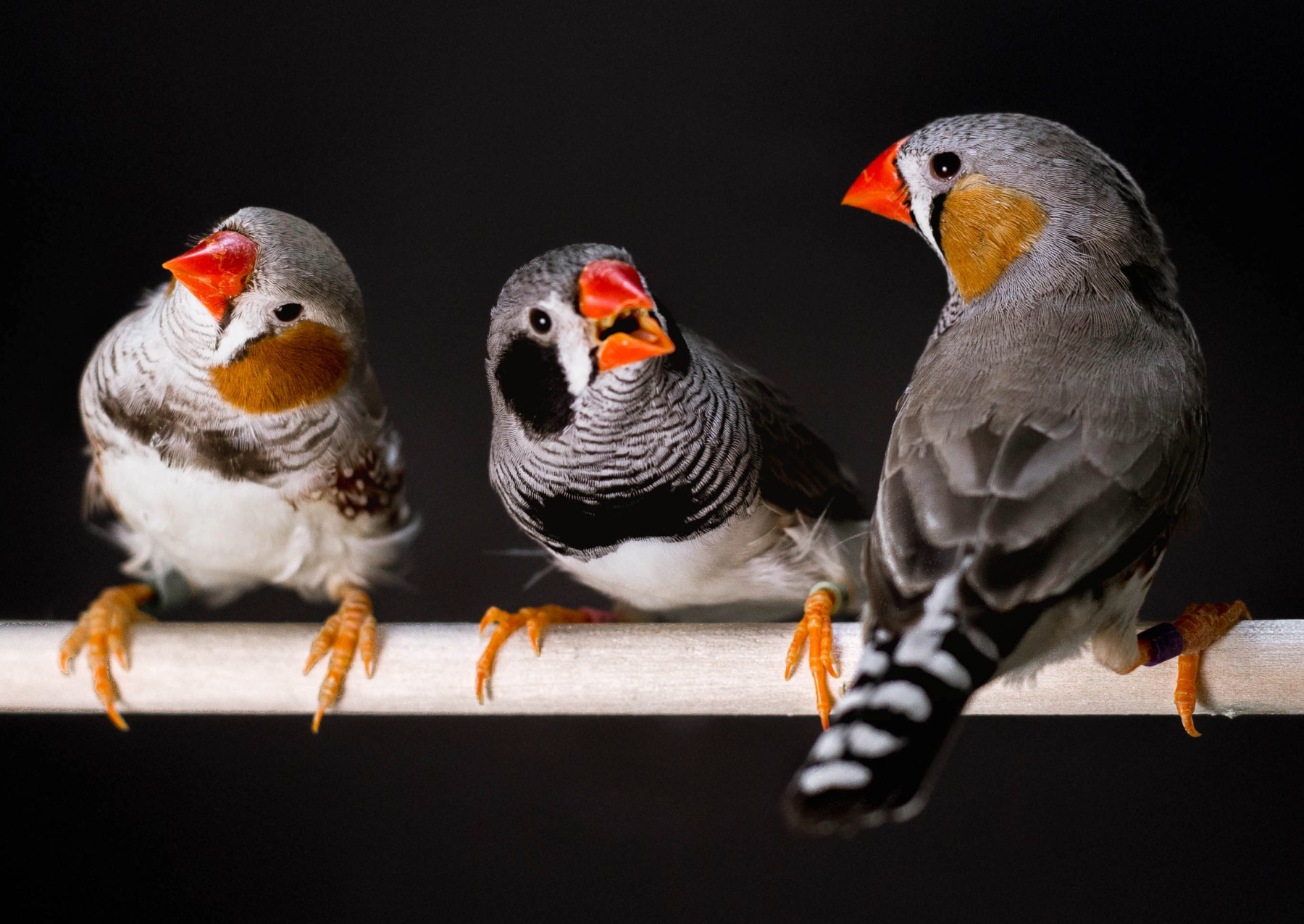
The experiment involved presenting 4,000 human participants with pairs of animal sounds. These sounds were recorded from 16 different species, ranging from the rhythmic chirping of crickets to the melodic sequences of zebra finches (Taeniopygia castanotis) and the percussive calls of various Neotropical frogs. In each pairing, one sound was a "simple" version of a mating call, while the other was a "complex" or "enhanced" version known to be preferred by the females of that species.
Participants were asked to select which sound they found more appealing, mimicking the choice a female animal would make in the wild. By using a game format, the researchers were able to collect a vast dataset that accounted for different cultural backgrounds, ages, and levels of musical training. This methodology allowed for a robust statistical analysis of whether human "taste" correlated with the biological "preferences" of non-human animals.
Analysis of Supporting Data and Key Findings
The results of the study were striking. The researchers found a significant and broad overlap between human and animal sound preferences. Across the 16 species tested, humans consistently identified the biologically "attractive" call as their preferred sound. Furthermore, the data revealed a direct correlation between the strength of an animal’s preference and the strength of the human preference; if a female frog was intensely attracted to a specific complex call, human participants were equally decisive in their choice of that same sound.
Several specific acoustic traits were identified as being universally appealing:
- Lower Pitch: Humans and many animal species showed a distinct preference for lower-frequency sounds. In many species, lower pitch is associated with larger body size, which can be an indicator of fitness or maturity.
- Acoustic Adornments: The presence of "trills," "clicks," and "chucks" increased the attractiveness of a call. These additions increase the "information density" of the sound, making it more salient to the listener.
- Processing Speed: The study measured the reaction times of the participants. Humans were significantly faster at choosing the "attractive" sound when the biological preference was stronger, suggesting that the brain processes these "beautiful" sounds more efficiently.
"In gamified citizen science, people volunteer for experiments simply because they’re fun and interesting," noted Samuel Mehr. "The method is perfect for answering questions from evolutionary biology where we aim to study phenomena across many species as opposed to just a few."

Official Responses and Researcher Insights
The implications of the study have been met with enthusiasm within the scientific community. Lead author Logan James emphasized that the study provides a new perspective on the origin of human aesthetics. "After witnessing those female preferences Stan and Mike [Ryan] discovered when I got to measure them myself, I became fascinated with the question of where these preferences come from," James stated. He noted that the findings suggest acoustic preferences are not just quirks of specific species but are likely "deeply embedded in the architecture of the vertebrate brain."
Michael J. Ryan, whose work in the 1980s paved the way for this study, reflected on the enduring relevance of Darwin’s observations. "Darwin noted that animals seem to have a ‘taste for the beautiful’ that sometimes parallels our own preferences," Ryan said. "We show that Darwin’s observation seems to be true in a general sense, probably due to the many sensory system properties we share with other animals."
The research team suggests that these shared preferences may be the result of "sensory traps" or "latent biases"—neural pathways that are tuned to certain frequencies or patterns for survival reasons (such as detecting movement or identifying a specific habitat) which are then "exploited" by the evolution of mating calls.
Broader Impact and Implications for Evolutionary Biology
The study’s findings have far-reaching implications for several fields, including evolutionary biology, psychology, and musicology. By demonstrating that human aesthetic judgment is linked to animal mating signals, the research suggests that the roots of human music and art may be much older than previously thought.
In the realm of musicology, this research supports the "biomusicology" theory, which posits that the human drive to create and enjoy music is an evolutionary adaptation. If humans are hard-wired to enjoy the "chucks" of a frog or the "trills" of a bird, it stands to reason that human music utilizes these same fundamental acoustic building blocks to evoke emotional responses.
Furthermore, the study highlights the importance of biodiversity and the "acoustic environment." As human-induced noise pollution continues to disrupt the natural world, it may be interfering with these ancient sensory pathways. If the "beautiful" calls of frogs and birds are drowned out by traffic or industrial noise, it could disrupt the reproductive success of these species—a factor that conservationists may need to consider more closely.
Conclusion and Future Research Directions
The collaboration between STRI and Yale University has opened a new door into the study of sensory ecology. Future research is expected to delve deeper into the neural mechanisms that underpin these shared preferences. Scientists are interested in determining whether the same regions of the brain—such as the auditory cortex or the reward centers—are activated in both humans and animals when they hear these "attractive" calls.
Additionally, researchers hope to expand the study to include more diverse taxa, such as marine mammals and insects with even more complex acoustic repertoires. By mapping the "landscape of beauty" across the animal kingdom, scientists may eventually be able to reconstruct the evolutionary history of the senses, tracing the path from the simple clicks of ancient organisms to the complex symphonies of the human experience.
Ultimately, this study serves as a humbling reminder of the human place within the natural world. While humans have developed complex cultures and technologies, our basic instincts for what is "beautiful" or "appealing" remain tethered to the same biological principles that guide a túngara frog in a Panamanian rainforest. As Darwin suggested over a century ago, the thread of beauty runs through all of life, connecting species across the vast expanse of evolutionary time.