




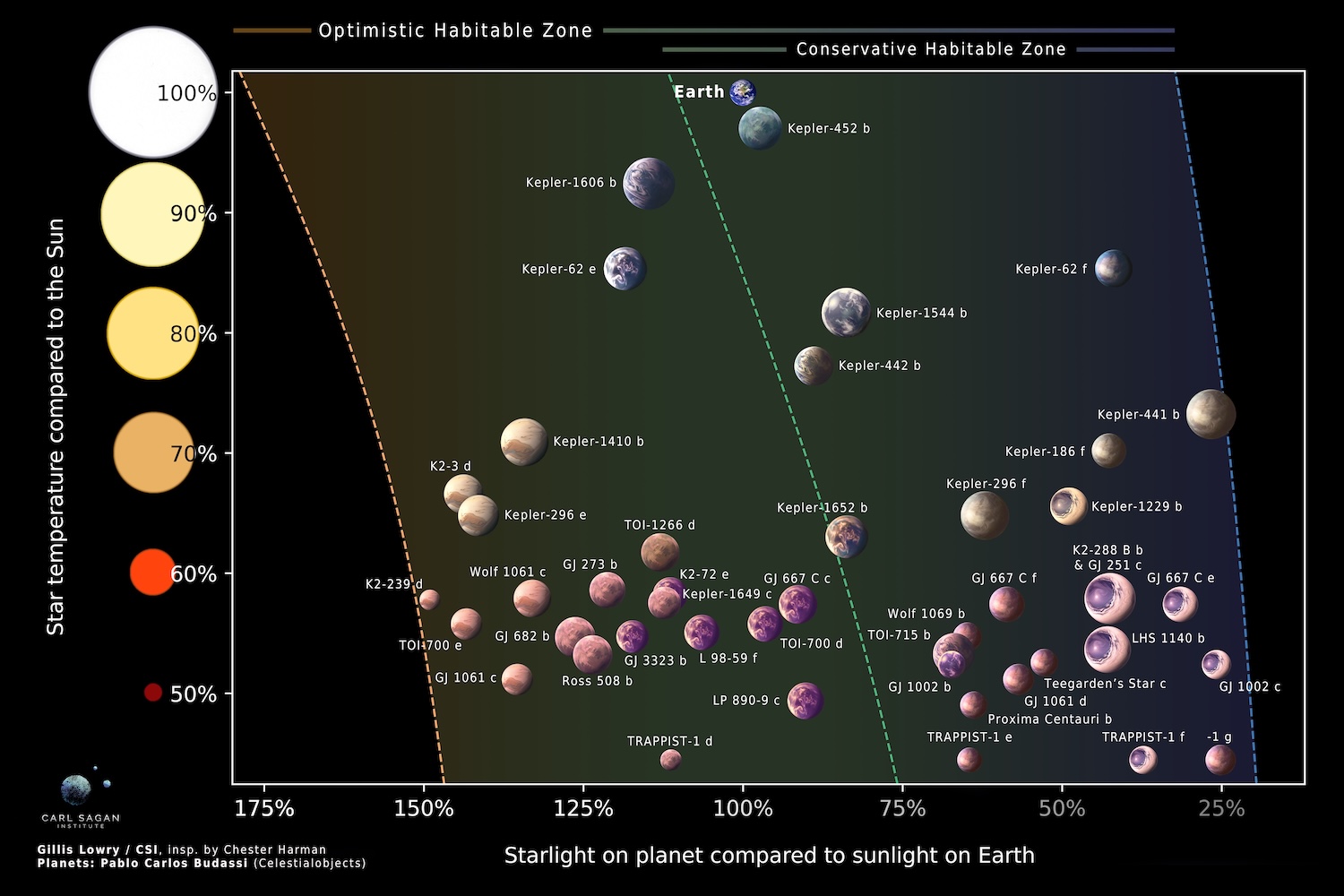
A specialized team of astronomers at Cornell University’s Carl Sagan Institute has released a refined catalog of exoplanets that represent the most promising candidates for supporting life as we know it. According to the study, which was published on March 19 in the Monthly Notices of the Royal Astronomical Society, researchers have narrowed down a list of over 6,000 known exoplanets to just 45 rocky worlds situated within the "habitable zones" of their respective stars. This critical refinement aims to provide a roadmap for the next generation of space-based observatories, including the James Webb Space Telescope (JWST) and the upcoming Nancy Grace Roman Space Telescope, as they begin the arduous task of searching for chemical biosignatures in distant atmospheres.
The research, led by Gillis Lowry and Abigail Bohl, utilizes a rigorous set of criteria to determine which planets possess the physical characteristics and orbital positioning necessary to maintain liquid water on their surfaces. While the generous estimate identifies 45 such worlds, a more conservative model—which accounts for narrower habitable zone boundaries based on specific solar heat flux and atmospheric resilience—reduces the list to a mere 24 primary candidates. This discovery underscores the rarity of Earth-like conditions in the visible universe and highlights the immense challenges inherent in the search for extraterrestrial life.
Defining the Boundaries of the Habitable Zone
The concept of the "habitable zone," often colloquially referred to as the Goldilocks zone, is defined as the orbital region around a star where the temperature is neither too hot to boil water nor too cold to freeze it permanently. However, as the Cornell study clarifies, the boundaries of this zone are not fixed; they shift significantly based on the type of star a planet orbits. Different stars emit different wavelengths of light, which interact with planetary atmospheres in unique ways. A red dwarf star, for instance, emits more infrared radiation, which can heat a planet’s atmosphere differently than the visible light emitted by a yellow G-type star like our Sun.
To establish their list, the researchers used the Solar System as a primary reference point. By comparing the energy received by Earth to the energy received by its neighbors, Venus and Mars, the team created a template for habitability. Venus, which is too close to the Sun, suffered a runaway greenhouse effect, while Mars, which is too far and lacks a thick atmosphere, became a frozen desert. The 45 identified exoplanets exist in the "sweet spot" between these two extremes, receiving a level of stellar radiance that theoretically allows for a stable climate.

Primary Candidates: Proxima Centauri b and the TRAPPIST-1 System
Among the most notable entries in the Cornell catalog is Proxima Centauri b. Located approximately 4.2 light-years away, it remains the closest known potentially life-bearing exoplanet to Earth. Orbiting the red dwarf Proxima Centauri, this planet has long been a subject of intense scientific scrutiny. However, its proximity to its host star presents complications; red dwarfs are known for frequent and violent stellar flares that could strip away a planet’s atmosphere over time. The Cornell study suggests that despite these risks, Proxima b remains a top-tier candidate for atmospheric characterization.
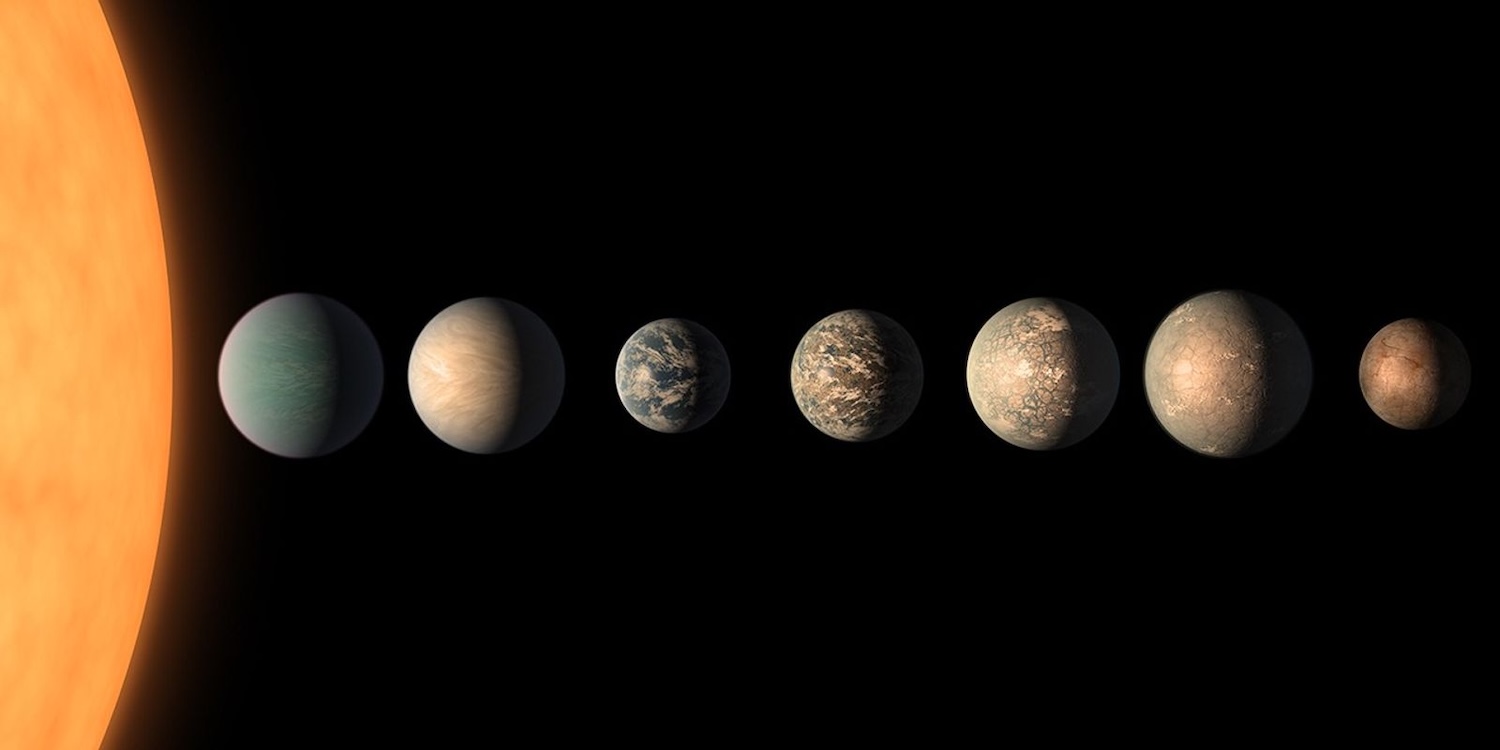
Equally significant are the planets within the TRAPPIST-1 system, located roughly 40 light-years from Earth. The system is home to seven rocky planets, four of which—TRAPPIST-1 d, e, f, and g—are included in the researchers’ shortlist. These worlds orbit a cool M-dwarf star and are packed into a very tight orbital configuration. Because they are so close to one another, these planets could potentially exchange biological material through a process known as lithopanspermia, should life exist on any one of them. The TRAPPIST-1 system is currently one of the highest-priority targets for the James Webb Space Telescope, which is attempting to detect the presence of carbon dioxide, methane, or oxygen in their thin atmospheres.
The Technological Barrier: The Reality of Interstellar Travel
While the identification of these 45 worlds provides a sense of astronomical optimism, the study also serves as a sobering reminder of the technological limitations currently facing humanity. The vast distances involved in interstellar travel mean that even the "closest" neighbors remain effectively out of reach for modern spacecraft.
To put these distances into perspective, Proxima Centauri b is 4.2 light-years away. Light travels at approximately 186,282 miles per second, a speed that allows it to circumnavigate the Earth seven times in a single second. In contrast, the fastest human-piloted vehicle in history, the Apollo 10 command module, reached a maximum speed of 24,791 miles per hour during its return from the Moon. At such speeds, it would take a human crew approximately 114,000 years to reach Proxima Centauri b.
For the more distant TRAPPIST-1 system, the travel time would extend into the millions of years. Unless future breakthroughs in propulsion—such as nuclear thermal rockets, solar sails, or theoretical faster-than-light (FTL) travel—become a reality, these 45 worlds will remain subjects of remote observation rather than destinations for colonization. Consequently, the scientific community is focusing its efforts on "remote sensing"—the use of high-powered telescopes to study the light filtering through an exoplanet’s atmosphere to identify life-sustaining gases.
Methodology and Comparative Planetary Science
The Cornell team’s methodology involved a sophisticated analysis of planetary density, mass, and orbital eccentricity. A key focus of the study was the impact of elliptical (oval-shaped) orbits on habitability. Unlike Earth, which has a nearly circular orbit, many exoplanets follow highly eccentric paths that bring them very close to their star before swinging them far into the cold reaches of their system.
These dramatic shifts in distance cause extreme temperature fluctuations that could be lethal to most forms of life. However, the researchers noted that studying these "extreme" orbits provides valuable data on atmospheric resilience. By observing how a planet’s atmosphere responds to rapid heating and cooling, scientists can better understand the limits of planetary life-support systems.
"We know Earth is habitable, while Venus and Mars are not. We can use our Solar System as a reference to search for exoplanets that receive stellar energy between what Venus and Mars get," stated study co-author Abigail Bohl. This comparative approach allows researchers to filter out planets that, while rocky and Earth-sized, likely lack the temperate conditions required for liquid water.
Guiding Future Observatories: JWST and the Roman Space Telescope
The primary utility of the Cornell list is its role as a strategic guidebook for the astronomical community. Observation time on the James Webb Space Telescope is one of the most competitive resources in modern science, with thousands of researchers vying for limited "window" hours. By providing a curated list of the "best of the best" candidates, Lowry and Bohl’s team ensures that these expensive assets are pointed at the targets with the highest probability of success.
The upcoming Nancy Grace Roman Space Telescope, scheduled for launch in 2027, will further expand this search. Unlike Webb, which focuses on infrared spectroscopy, the Roman telescope will feature a coronagraph—an instrument designed to block the blinding light of a star so that the much fainter light of an orbiting planet can be seen directly. This will allow for the first direct imaging of Earth-like planets around Sun-like stars, a feat that has remained largely impossible until now.
"While it’s hard to say what makes something more likely to have life, identifying where to look is the first key step," said lead author Gillis Lowry. "The goal of our project was to say, ‘here are the best targets for observation,’ so we can maximize our chances of finding a second Earth."
Broader Implications and the Search for Biosignatures
The search for these 45 worlds is about more than just finding a "Planet B" for humanity; it is a fundamental quest to answer the Fermi Paradox—the contradiction between the high probability of extraterrestrial life and the lack of evidence for it. If researchers examine all 45 of these primary candidates and find no signs of life, it would suggest that the "Great Filter"—a theoretical barrier to the development of intelligent life—might be more formidable than previously thought.
Conversely, the detection of a single biosignature, such as the simultaneous presence of oxygen and methane in a planet’s atmosphere, would be one of the most significant discoveries in human history. Such a finding would confirm that biology is not a fluke of the Solar System but a common phenomenon in the galaxy.
As the Cornell study concludes, the search for life in the universe is a game of precision and patience. By narrowing the field from thousands of candidates to a select group of 45, astronomers have moved one step closer to identifying a world that might not only support life but might already be teeming with it. For now, these planets remain distant specks of light, but they represent the most definitive map yet in the humanity’s ongoing journey to understand its place among the stars.