



In an era where educational systems in the United States grapple with declining academic performance and unprecedented challenges in student engagement and behavior, a compelling movement advocating for the amplification of student voice is gaining significant traction. This shift represents a departure from traditional, top-down reform efforts that have historically prioritized standardized test scores and prescriptive curricula, often at the expense of students’ holistic development and their intrinsic motivation to learn. Recent data underscore the urgency of this re-evaluation: reading scores, as reported by Schwartz (2025) via Education Week, have fallen to new lows on the National Assessment of Educational Progress (NAEP), with particularly steep declines among struggling students. Concurrently, a survey highlighted by Stephens (2025) in Education Week reveals that nearly half of educators perceive student behavior as worse than pre-pandemic levels, a figure that has risen in just two years. These statistics paint a stark picture of a system struggling to meet the fundamental needs of its learners, leading to widespread dissatisfaction among both students and educators.
The Foundational Crisis in American Education
For decades, the American educational landscape has been dominated by metrics that, while seemingly objective, often fail to capture the complex tapestry of student experience and learning. The relentless pursuit of higher test scores, coupled with the imposition of uniform curricula, has inadvertently marginalized the very individuals at the heart of the educational process: the students themselves. This approach has not only proven ineffective in achieving its stated goals of academic improvement but has also fostered environments where students feel disconnected, disengaged, and unheard. The emphasis on quantitative data, often referred to as "cold data," provides a limited view, overlooking the qualitative, human elements that are crucial for creating truly effective and nurturing learning environments. The consequence is a system that, despite significant investment and effort, continues to miss the mark in fostering a love of learning, critical thinking, and a sense of belonging among its diverse student population.
Introducing Street Data: A Paradigm Shift
Against this backdrop of systemic challenges, a groundbreaking methodology emerged, offering an alternative pathway toward equitable and anti-racist schools: "Street Data." Co-authored by Shane Safir and Jamila Dugan, the book "Street Data: A Pathway Toward Equitable, Anti-Racist Schools" presented a radically different approach to school improvement. Unlike many expensive, pre-packaged programs, Street Data advocates for a "slow, thoughtful listening" process, focusing specifically on students at the margins—those whose voices are typically overlooked and whose needs are consistently unmet. The core premise involves engaging in deep, qualitative conversations with these students to uncover lived experiences, identify systemic barriers, and collaboratively develop solutions. These solutions are then piloted, iterated upon, and refined through subsequent listening sessions, creating a continuous loop of responsive improvement. This methodology emphasizes "warm data," rich qualitative insights gleaned directly from the experiences of students, which complements and provides crucial context for "cold data" like test scores.

Chronology of a Movement: From Concept to Widespread Adoption
The journey of Street Data from a published concept to a widely recognized educational framework has been a deliberate and impactful one. Four years ago, the book’s ideas began to resonate deeply within the educational community. The initial step in its dissemination involved the authors, Shane Safir and Jamila Dugan, appearing on episode 178 of a prominent educational podcast. This interview served as a crucial introduction, allowing a broad audience of educators and school leaders to grasp the fundamental principles of Street Data.
Building on this initial exposure, the commitment to illustrating the practical application of Street Data intensified. Not long after the podcast, a mini-documentary was produced, showcasing Safir and Dugan actively guiding two schools through the Street Data process. This visual account provided invaluable insights into the methodology’s implementation, allowing educators to witness firsthand how deep listening sessions and iterative problem-solving could transform school culture and student outcomes. A year later, an eight-episode video series further delved into the intricacies of the process, featuring participants who shared their experiences and insights on episode 203 of the podcast, offering real-world testimonials and practical advice. This multi-platform approach—spanning books, podcasts, documentaries, and video series—systematically demystified Street Data, making it accessible and actionable for a diverse range of educational stakeholders.
Pedagogies of Voice: Translating Principles into Classroom Practice
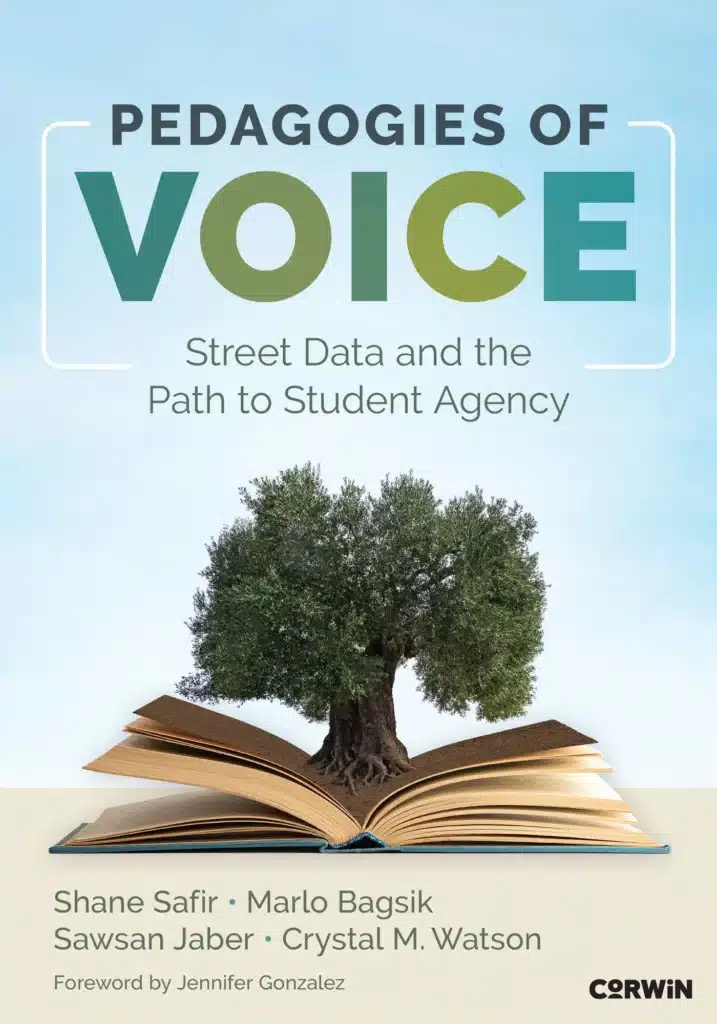
As the Street Data methodology began to embed itself in more schools, a critical question arose: what does the intentional centering of student voice and agency look like within the daily pedagogy of a classroom? To address this vital query, Shane Safir collaborated with three distinguished educators: Marlo Bagsik, Sawsan Jaber, and Crystal Watson. Their collective expertise culminated in the new book, "Pedagogies of Voice: Street Data and the Path to Student Agency."
This seminal work moves beyond theoretical frameworks, offering a practical "seed store" of classroom practices. Rather than prescribing a rigid, one-size-fits-all approach, the book provides a rich collection of adaptable strategies designed to empower educators to cultivate student voice, nurture agency, and foster meaningful learning experiences. These practices are meticulously crafted to be replicable, allowing teachers to integrate them seamlessly into their existing pedagogical repertoires. The book’s timely release comes at a moment when marginalized voices, which had begun to receive long-overdue recognition, face aggressive attempts at suppression. In a climate marked by widespread book bans, teacher censorship, and threats to democratic principles, "Pedagogies of Voice" offers a compelling and urgent mandate: to teach in ways that actively amplify student perspectives, creating spaces where reflection, expression, and collaborative action can flourish. It champions democratic practices such as active listening, respectful challenging of differing opinions, and collective problem-solving, aiming to cultivate a generation of citizens equipped to positively reshape the world.
The Four Domains of Student Agency: A Framework for Empowerment
"Pedagogies of Voice" organizes its wealth of classroom practices into an "Agency Framework" comprising four interconnected domains: Identity, Belonging, Inquiry, and Efficacy. This structured approach provides a comprehensive roadmap for educators seeking to holistically empower their students. During a recent podcast interview, the book’s four authors shared specific, actionable strategies drawn from each of these domains, providing tangible examples for immediate classroom implementation.
1. Practices that Awaken Identity
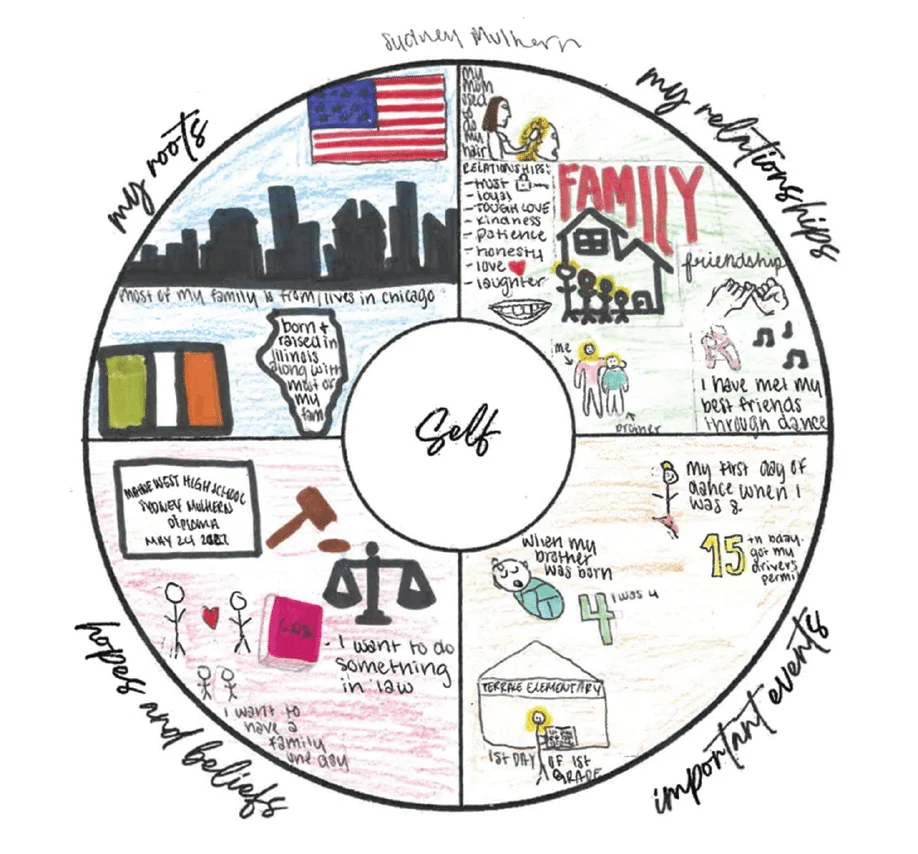
The Identity domain focuses on creating learning environments where every student feels that their unique ways of being, knowing, and learning are not only acknowledged but deeply valued. This domain challenges the homogenizing tendencies of traditional education, asserting that a student’s cultural background, personal experiences, and individual perspectives are invaluable assets to the learning community. Sawsan Jaber, one of the co-authors, highlighted the practice of storientation, which leverages personal narratives as a powerful springboard for both learning and identity development. Storientation moves beyond simple storytelling, embedding personal narratives within academic contexts to deepen understanding and connection. An illustrative example provided is the Identity Mandala, a visual representation where students use symbols, words, and colors to depict various facets of their identity, such as family heritage, passions, struggles, and aspirations. These mandalas then become tools for sharing, reflection, and peer understanding, fostering empathy and affirming individual uniqueness within the classroom. This practice allows students to see their identities as integral to their academic journey, rather than something to be left at the classroom door.
2. Practices that Awaken Belonging
This domain centers on cultivating a classroom atmosphere where every student feels genuinely seen, understood, and cherished. Belonging is not merely about presence but about authentic inclusion and connection. Crystal Watson emphasized the profound impact of a seemingly simple yet transformative practice: circling up. This involves arranging classroom seats in a circle for various activities, fundamentally altering the spatial dynamics and, consequently, the social dynamics of the learning space. Watson eloquently articulates the power of this arrangement: "When you circle up, you’re all equidistant from the center. At any given time, an identity, an idea, a person can be centered. We’re not centering one or two identities or thoughts or ideals. We can center them all at any given time in our time together." This physical arrangement inherently promotes equity and encourages active participation from all members, dismantling hierarchical structures that often silence quieter voices. Watson, whose work often focuses on mathematics education, finds circling up particularly potent in this subject. She notes that students who express a dislike for math often cite the isolating experience of "just sitting there and doing problems." Circling up transforms math into a conversational and argumentative discipline, where students can discuss strategies, challenge assumptions, and collaboratively construct understanding, thus fostering a sense of shared intellectual endeavor.
3. Practices that Awaken Inquiry
The Inquiry domain is dedicated to empowering students to pose questions, explore curiosities, and construct knowledge with increasing complexity and critical discernment. Shane Safir lamentingly observes that "inquiry has been stripped from the learning environments, so many places." This domain seeks to reclaim the student’s inherent curiosity and foster their ability to grapple with complex global issues. Practices in this domain encourage students to move beyond rote memorization, instead engaging in deep questioning, research, and analysis. It cultivates not just literacy, but critical literacy—the capacity to analyze and evaluate texts, media, and the world around them for underlying assumptions, biases, and implications. This domain equips students with the intellectual tools to dissect information, challenge dominant narratives, and form their own well-reasoned conclusions, essential skills for navigating an increasingly complex information landscape.
4. Practices that Awaken Efficacy
Finally, the Efficacy domain focuses on building learning spaces where every student develops a profound belief in their capacity to effect change on issues that matter to them. This is about translating learning into action and fostering a sense of agency—the power to make a difference. Marlo Bagsik shared two complementary practices in this domain that effectively bookend a week, creating a cyclical process of reflection and action. While specific examples were not detailed in the provided text, one can infer practices that involve students setting weekly goals related to real-world problems, collaborating on projects with tangible outcomes, or engaging in community-based initiatives. This domain emphasizes experiential learning, project-based learning, and civic engagement, providing students with opportunities to apply their knowledge and skills to create positive impact, thereby reinforcing their sense of competence and purpose.
The Broader Imperative: Education as a Foundation for Democracy
The principles espoused in "Pedagogies of Voice" and the broader Street Data movement resonate deeply with the current socio-political climate. In an era where democratic institutions are under strain, and attempts to suppress diverse perspectives are increasingly prevalent, the call to amplify student voice becomes an act of civic responsibility. When schools cultivate environments where students are encouraged to reflect, speak their minds, respectfully challenge different opinions, and collaborate towards common goals, they are not merely improving academic outcomes; they are actively nurturing the future citizens of a robust democracy. These pedagogical approaches serve as a bulwark against intellectual conformity and prepare students to engage thoughtfully and effectively with the complexities of the world. By empowering students to understand their own identities, feel a sense of belonging, engage in critical inquiry, and believe in their capacity for action, educators are doing more than teaching subjects—they are shaping individuals who will courageously and competently advocate for a better future.
Looking Ahead: The Future of Student-Centered Learning
The work presented in "Pedagogies of Voice" is more than a collection of teaching strategies; it is a philosophical statement about the purpose of education itself. It argues that true school improvement cannot be divorced from the humanity of its students. By systematically re-centering student voice, educators can create schools that are not only academically rigorous but also emotionally supportive, culturally responsive, and inherently democratic. This movement offers a viable, cost-effective, and deeply humanistic alternative to the prevailing models of educational reform. The ongoing commitment to sharing these practices, through books, podcasts, and documentaries, ensures that educators have the tools and inspiration needed to embark on this transformative journey. As schools continue to navigate an ever-changing landscape, the lessons from Street Data and Pedagogies of Voice provide a clear path forward, advocating for an education system where every student’s voice is not just heard, but valued, amplified, and made central to the collective pursuit of learning and societal betterment.