

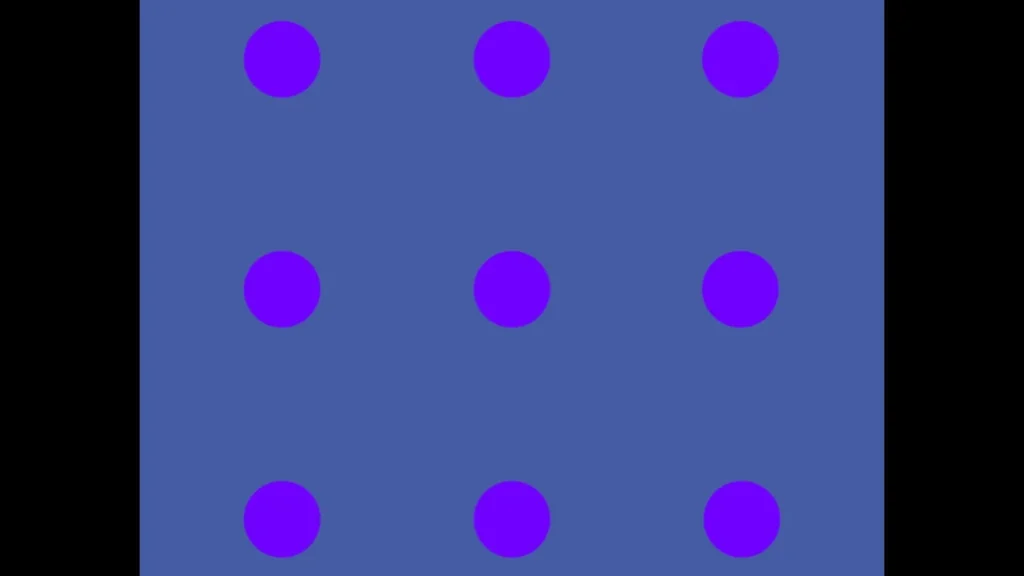
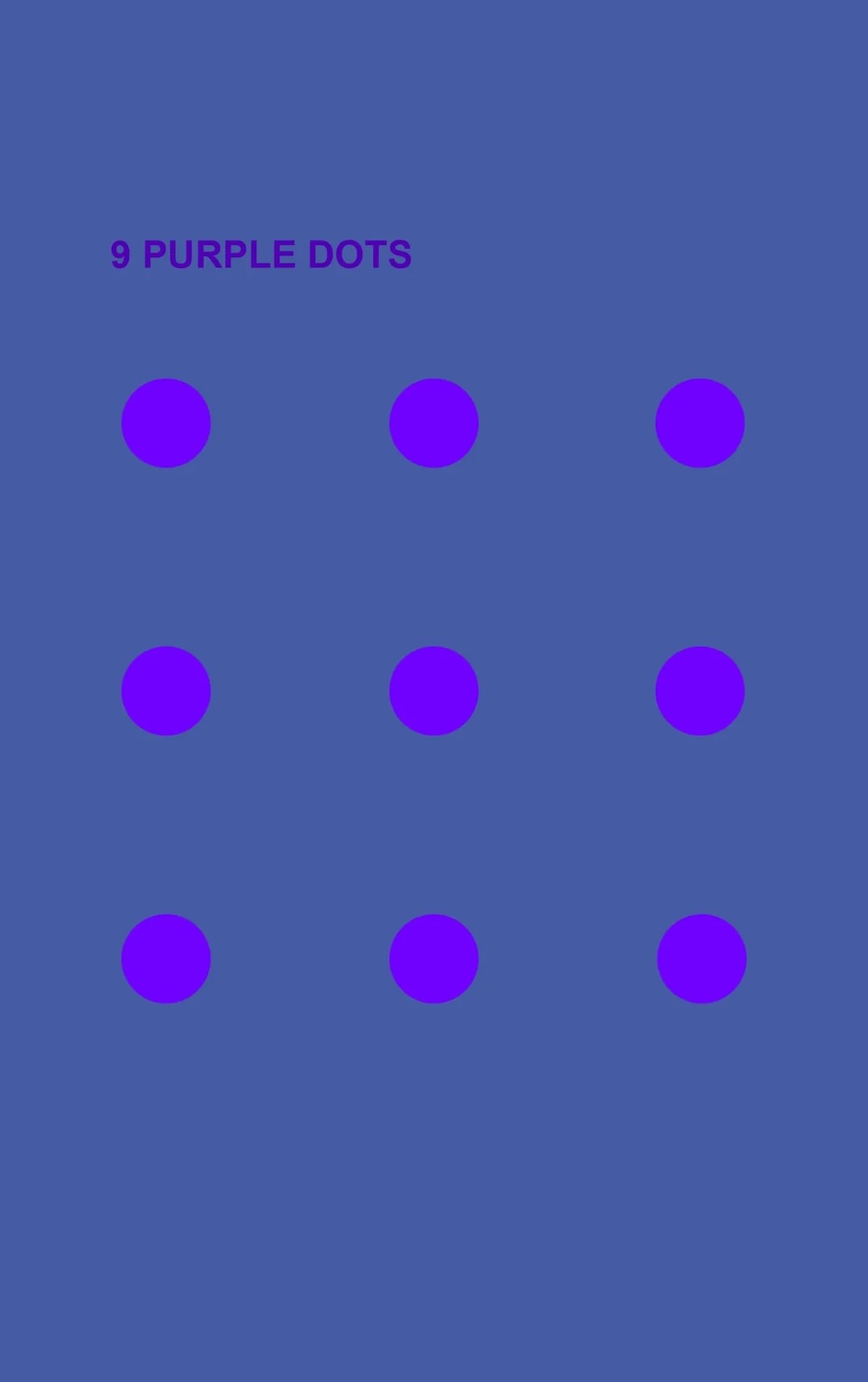
The human visual system is a complex architecture of biological sensors and neural processing units, yet it remains remarkably susceptible to deception. A recent optical illusion, developed by biomedical optics researcher Hinnerk Schulz-Hildebrandt of the Harvard Medical Center and published in the journal Perception, has reignited scientific and public interest in the mechanics of color vision. The image, featuring nine blue dots set against a purple-hued background, serves as a poignant reminder that what the eye sees is often a filtered, interpreted version of reality rather than an objective measurement of light. While observers frequently argue over whether the dots are blue, purple, or varying shades of both, the scientific reality is that every dot in the image shares the exact same hexadecimal color value. This phenomenon, known as simultaneous contrast, highlights the inherent limitations of the human eye—specifically the scarcity of short-wavelength-sensitive cells in the center of our vision.
The Biological Mechanics of Color Reception
To understand why the "Nine Dots" illusion is so effective, one must first examine the anatomical structure of the human retina. The retina contains two primary types of photoreceptors: rods, which handle vision in low-light conditions, and cones, which are responsible for color detection and high-spatial-resolution vision. Humans are typically trichromatic, meaning our eyes utilize three distinct types of cones, each tuned to different wavelengths of the visible light spectrum.
Long-wavelength-sensitive cones (L-cones) are primarily responsible for detecting reds, while middle-wavelength-sensitive cones (M-cones) perceive greens and yellows. The third type, short-wavelength-sensitive cones (S-cones), is dedicated to the detection of blue light. However, these receptors are not distributed equally across the retinal surface. Research indicates that L-cones and M-cones are far more numerous, outnumbering S-cones by a ratio of approximately 10 to 1.
Furthermore, the distribution of S-cones is notably sparse in the fovea, the tiny central pit of the retina that provides our sharpest vision. "In the fovea, the area of sharpest vision, L- and M-cones are present in high density, enabling the finest detail and color discrimination," Schulz-Hildebrandt noted in his study. He further explained that S-cones make up only 8 to 12 percent of the total cone population and are almost entirely absent from the absolute center of the fovea. This biological "blind spot" for blue light means that when an individual stares directly at a small blue object, the brain must work harder to interpolate the color data, making it highly susceptible to influence from surrounding colors.
The Phenomenon of Simultaneous Contrast
The "Nine Dots" illusion operates on the principle of simultaneous contrast, a concept first popularized by the 19th-century French chemist Michel Eugène Chevreul. This principle dictates that the perception of a color is significantly altered by the color of the area surrounding it. When two colors are placed side by side, the brain attempts to accentuate the differences between them to make objects stand out more clearly against their environment.
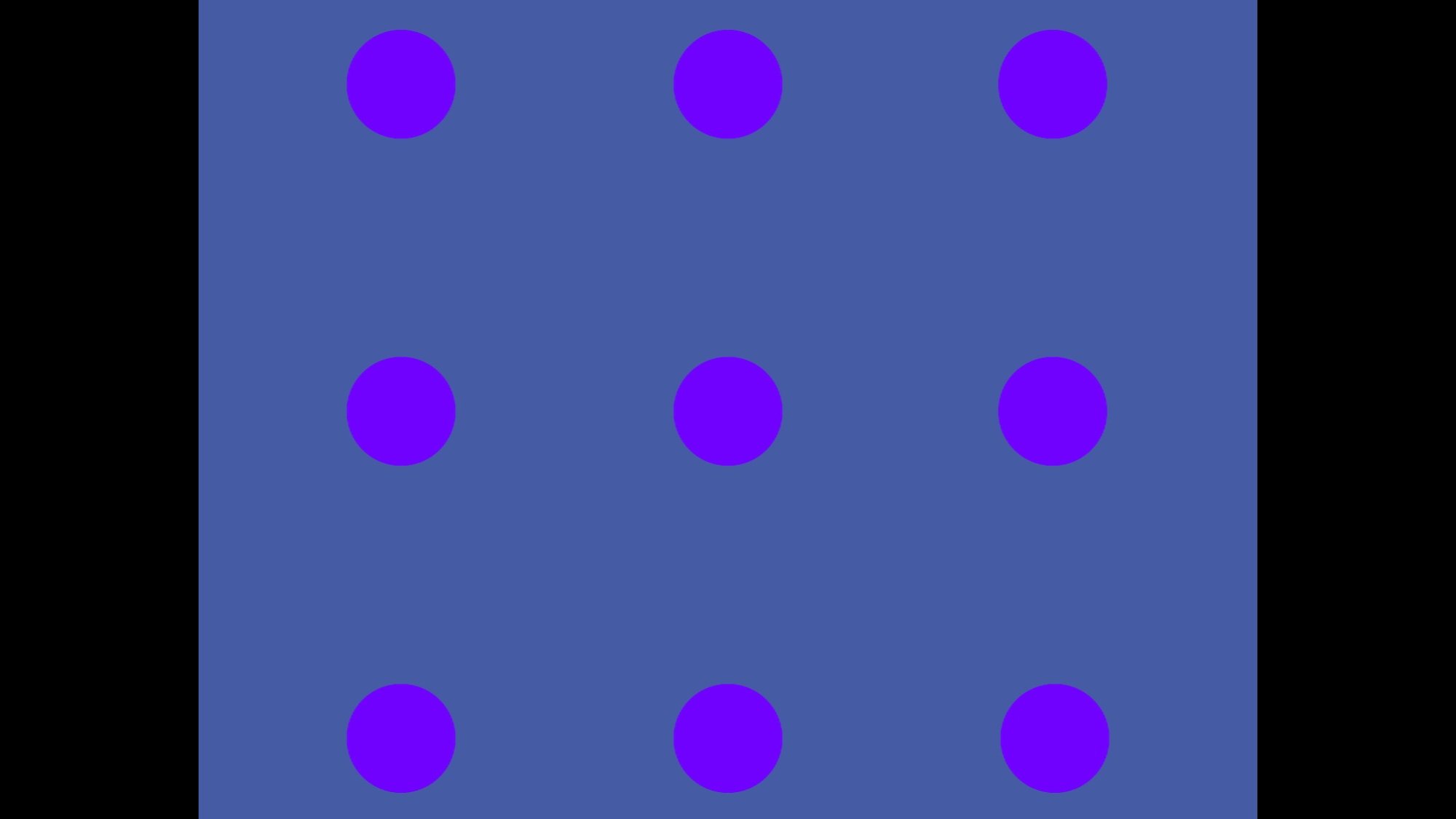
In the case of Schulz-Hildebrandt’s illusion, the background is a specific shade of purple that borders on the blue spectrum. When the brain processes the blue dots, it engages in a sensory "tug-of-war." Because the S-cones in the fovea are sparse, the brain lacks a definitive "blue" signal for the dot being directly looked at. To compensate, it looks at the surrounding purple background for context.
The brain’s visual processing centers attempt to maximize the contrast. If the background is slightly more purple (containing more red/long-wavelength light) than the dots, the brain may shift the perceived hue of the dot being focused on to appear more purple to "match" the environment, or conversely, it may make the peripheral dots appear more blue to distinguish them from the background. This creates a shimmering effect where the dots seem to change color as the eye moves across the image. As Schulz-Hildebrandt explains, the perception of colors is not absolute or isolated; it is a contextual calculation performed by the visual cortex.
A Chronology of Viral Perception
The "Nine Dots" illusion follows a long lineage of optical phenomena that have captured the public imagination and challenged our understanding of objective reality. The most famous modern predecessor is "The Dress," a photograph that went viral in 2015. The image featured a lace dress that some perceived as blue and black, while others saw it as white and gold.
Scientific analysis of "The Dress" revealed that the disagreement stemmed from "chromatic adaptation." The brain attempts to discount the color of the light source to determine the "true" color of an object. Those who assumed the dress was in a shadow or lit by blue-ish skylight saw it as white and gold, while those who assumed it was under artificial yellow light saw it as blue and black.
Following the dress, other illusions such as the "Yanny or Laurel" audio clip (2018) and various "phantom shape" illusions have trended globally. These events serve as massive, unintentional experiments in psychophysics. The "Nine Dots" illusion is unique because it relies less on assumptions about lighting and more on the hardwired biological distribution of photoreceptors in the eye. It moves the conversation from "how we think about light" to "how our eyes are physically built to fail."
Expert Analysis and Scientific Implications
The implications of Schulz-Hildebrandt’s research extend beyond internet curiosity. Understanding the limitations of S-cone distribution and simultaneous contrast is vital for several professional fields:
- Digital Display Technology: Engineers designing monitors and smartphone screens must account for the way the human eye perceives blue light. Since blue is harder for the fovea to process, text and fine details in pure blue are often difficult to read against dark backgrounds, leading to the development of specific UI/UX design standards.
- Ophthalmology and Vision Science: Illusions like these are used as diagnostic tools to identify color vision deficiencies. If a patient does not experience the "shimmering" or color-shifting effect in the Nine Dots illusion, it may indicate an underlying issue with cone density or neural processing.
- Artificial Intelligence: Modern computer vision systems are often modeled after the human eye. However, AI does not typically suffer from "simultaneous contrast" unless it is programmed to mimic human biological flaws. Researchers study these illusions to determine if AI should be "perfect" or if it should share human-like biases to better interact with human-designed environments.
The Role of the Visual Cortex in "Filling in the Blanks"
A significant portion of the "Nine Dots" effect occurs not in the eye, but in the brain’s primary visual cortex (V1). Because the retina is essentially a two-dimensional surface with various "holes" in its sensor array (such as the optic nerve head where there are no photoreceptors at all, and the foveal lack of S-cones), the brain is constantly "filling in" missing information.
This process is known as "perceptual completion." When you look at the Nine Dots, your brain receives a high-resolution map of the shapes from the M and L cones, but a low-resolution map of the blue color from the S-cones. To provide a seamless experience, the brain uses the color data from the surrounding area to color in the shapes. This is why, as you stare longer at the image, the dots may appear to fluctuate. The brain is constantly updating its "best guess" for what the color should be based on the latest data from the peripheral vision versus the central vision.
Broader Cultural and Philosophical Impact
The viral nature of these illusions points to a deeper human fascination with the fallibility of the senses. In a journalistic context, these stories resonate because they provide a rare moment of objective proof that two people can look at the exact same thing and see something fundamentally different.
In an era of polarized discourse, optical illusions like the Nine Dots serve as a metaphorical reminder of the "contextual" nature of truth. If our biological hardware—refined over millions of years of evolution—cannot agree on the color of a simple blue dot, it stands to reason that more complex cognitive perceptions are equally subject to the "background" of our experiences and biases.
Conclusion: The Persistence of Illusion
Despite knowing the scientific trick behind the "Nine Dots," the illusion does not disappear. This is a hallmark of "bottom-up" visual processing; even when the "top-down" conscious mind knows that all the dots are the same blue, the biological constraints of the retina and the automatic processes of the visual cortex continue to produce the distorted perception.
Hinnerk Schulz-Hildebrandt’s work reinforces the reality that our eyes are not cameras, and our brains are not simple storage drives. We are active participants in the creation of our visual world. As we continue to study the intricacies of the S-cone and the mysteries of the fovea, illusions like the Nine Dots will remain essential tools for mapping the boundaries of human perception. For the casual observer, however, the illusion remains a simple, frustrating, and fascinating challenge: a reminder to trust your eyes, but perhaps not too much.