


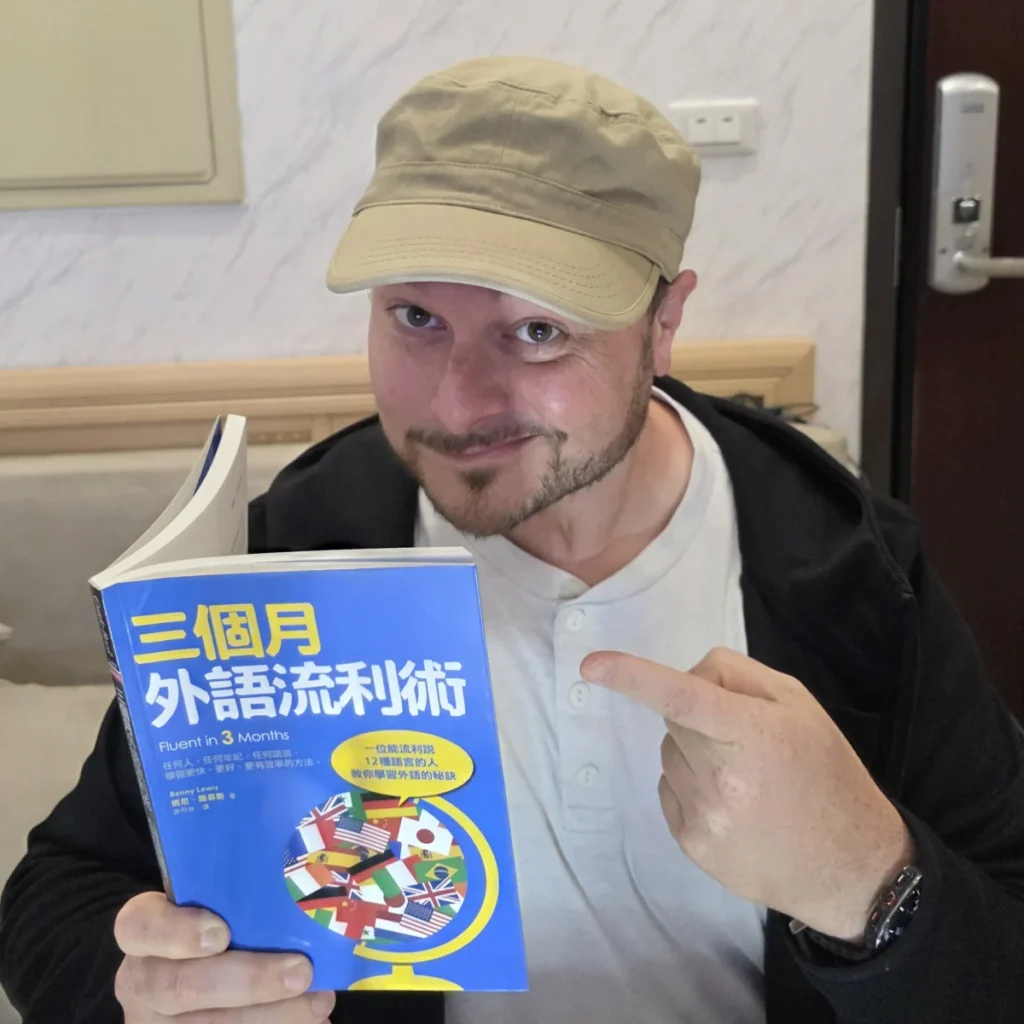
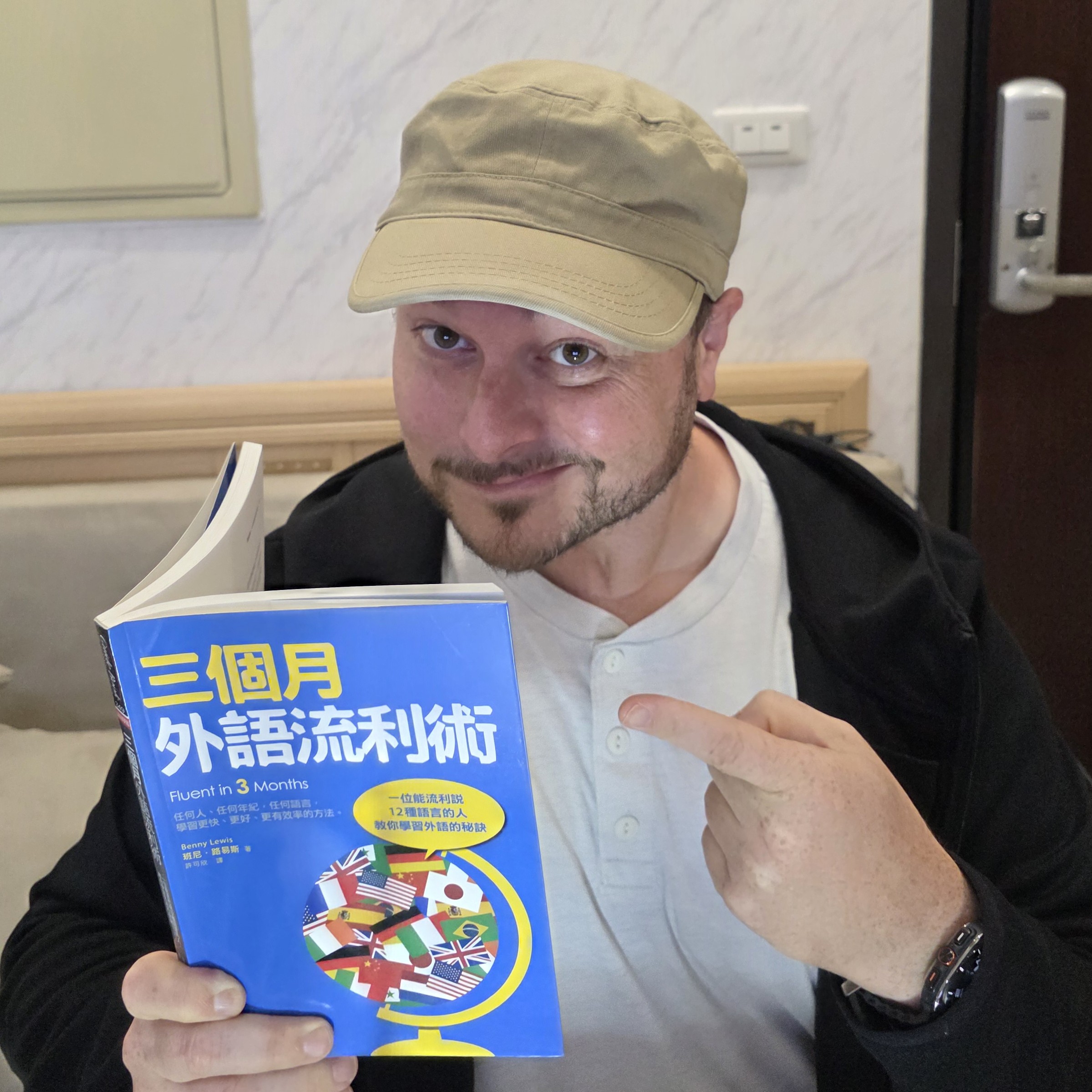
Benny Lewis, the founder of the prominent language-learning platform Fluent in 3 Months, has officially announced a return to Taipei, Taiwan, to resume intensive study of Mandarin Chinese, marking a significant pivot in his linguistic focus after more than a decade. The move comes as part of a broader "deep travel" project aimed at moving beyond the capital city to explore the cultural and linguistic nuances of the entire island. Lewis, an Irish polyglot who has spent over two decades as a nomadic language learner, originally documented a high-profile Mandarin project in 2012, which culminated in a B1 (lower intermediate) spoken proficiency certification. Following a period of linguistic attrition and a recent focus on the Malay language, Lewis has transitioned back to Mandarin, citing the influence of the Chinese diaspora encountered during recent travels in Southeast Asia.
Historical Context and the 2012 Mandarin Mission
The foundation of Lewis’s current endeavor dates back to 2012, when he launched what became one of the most documented experiments in the independent language-learning community. The "Mandarin Mission" involved three months of intensive study in Taiwan followed by two months of travel through mainland China. At the conclusion of that five-month period, Lewis underwent an independent evaluation that placed his spoken proficiency at the B1 level on the Common European Framework of Reference for Languages (CEFR).
While the 2012 project was considered a success in terms of functional fluency—enabling Lewis to navigate rural China, learn Kung Fu in a fishing village, and conduct interviews with native media personalities—it was also noted for being high-stress and controversial within the linguistics community. In the intervening 14 years, Lewis’s Mandarin proficiency faced significant "language attrition," a phenomenon well-documented in applied linguistics where a lack of regular use leads to the degradation of a non-native language. Aside from a brief period of intensive revision during the co-authoring of the Language Hacking Mandarin course, Lewis noted that his skills had slipped into a state of "rustiness," limited primarily to brief exchanges at international networking events.
Motivation and the Southeast Asian Catalyst
The decision to return to Mandarin was not immediate. In early 2024, Lewis spent two months traveling through Malaysia, a country characterized by its multi-ethnic population, including a substantial Chinese diaspora. Statistics from the Department of Statistics Malaysia indicate that ethnic Chinese make up approximately 22.6% of the population. The prevalence of Mandarin and various Chinese dialects in Malaysian commerce and social life served as a catalyst for Lewis.
Meeting both local Malaysian Chinese and tourists from mainland China reportedly reignited his interest in the language. The shift from studying Malay—the national language of Malaysia—back to Mandarin was described as a natural progression fueled by the immediate utility of the language in the region. This led to the current two-month residency in Taipei, which Lewis views as an opportunity to move Mandarin from a temporary project to a "permanent maintenance" language.
Immersive Methodology and Daily Routine
The current iteration of Lewis’s study plan reflects a hybrid approach, combining traditional academic study with modern digital tools and physical activity. His daily routine in Taipei is structured to maximize cognitive input and output through several distinct channels:
1. Grammar and Structural Refinement
Unlike his recommendations for absolute beginners, who he advises to focus on speaking over syntax, Lewis is currently prioritizing grammar. This is a strategic move to correct "fossilized errors" and create more natural-sounding sentences. He is utilizing textbooks that accommodate Taiwanese Mandarin—which often features different vocabulary and phonetic markers than the "Putonghua" spoken in Beijing—while simultaneously presenting examples in both Simplified and Traditional Chinese characters.
2. Digital Spaced Repetition (SRS)
A core component of the routine involves Anki, a flashcard application based on spaced repetition. Lewis is specifically rehabilitating personalized decks created during his 2012 mission. Data from the field of cognitive psychology suggests that "relearning" forgotten information is significantly faster than initial acquisition, a theory known as "savings." By recovering 14-year-old files and updating them to modern software formats, Lewis is targeting vocabulary that he previously found essential for social interaction.
3. Professional Instruction and AI Integration
Lewis utilizes online platforms, specifically Preply, to engage in multiple weekly sessions with professional teachers. This provides the necessary "momentum" to overcome the psychological barrier of the "rusty" phase. In addition to human tutors, Lewis has integrated AI-driven conversation tools into his workflow. This reflects a growing trend in the $70 billion global language learning market, where AI is increasingly used to provide low-cost, 24/7 speaking practice.
4. Auditory Input and Social Output
The routine includes the use of podcasts, such as ChineseClass101, during commutes. Lewis reports currently working at a lower-intermediate level. For social output, he attends local meetups found via platforms like Meetup.com. However, he noted a specific challenge in the Taipei social scene: the prevalence of "sit-down" events in noisy environments, which makes it difficult for intermediate learners to track multi-party conversations compared to "standing" mixers.
The Challenges of the Taipei Linguistic Environment
While Taipei is a modern international hub, Lewis noted that the "immersion" factor remains high. Despite the presence of English-speaking expatriate enclaves, daily transactions in restaurants, post offices, and cafes often require Mandarin. Lewis highlighted a specific instance where even a global chain like Starbucks required the use of the term "nóngsuō kāfēi" (espresso) rather than its English equivalent, illustrating the necessity of the language for basic functions.
This linguistic environment serves as a "forcing function," a term used in behavioral science to describe a situation where an individual is compelled to take an action—in this case, speaking Mandarin—because no alternative exists. Lewis has expressed that this lack of an "English safety net" is essential for reaching the next level of proficiency.
Strategic Expansion: The Deep Travel Project
A significant component of the current initiative is the "Taiwan Deep Travel Project." Lewis plans to spend several weeks traveling through the various counties and rural areas of Taiwan, moving beyond the Taipei metropolitan area. This follows a pattern established in his previous projects, such as:

- Brazil: A mission to visit every state in the country to understand regional Portuguese variations.
- United States: A project covering all 48 contiguous states.
- South Korea: An exploration of every province to practice Korean.
By taking the Mandarin project into rural Taiwan, Lewis aims to encounter environments where English proficiency is statistically lower, thereby increasing the intensity of the immersion. This "deep travel" approach is intended to provide a more holistic understanding of Taiwanese culture, which includes the influence of Hokkien (Taiwanese), Hakka, and indigenous languages on the local Mandarin dialect.
Industry Implications: Blogging and AI in the Creator Economy
Lewis’s return to active blogging also signals a shift in the digital content landscape. He addressed the impact of Artificial Intelligence and search engine optimization (SEO) on the "Fluent in 3 Months" platform. Between 2013 and 2023, the site relied heavily on a team of writers to produce SEO-optimized tips. However, changes in how search engines like Google display information—often using AI-generated "snippets" that discourage users from clicking through to the original source—have led to a change in strategy.
Lewis announced a return to a more personal, "human-centric" blogging style reminiscent of the site’s early years (2009–2013). This shift emphasizes personal narrative and "actual human experiences" over generic instructional content that is easily replicated by Large Language Models (LLMs). This reflects a broader trend in the creator economy where authenticity and lived experience are becoming the primary value propositions in an era of "AI slop" or mass-produced synthetic content.
Broader Impact and Linguistic Analysis
The return of a high-profile figure like Benny Lewis to Mandarin study highlights several key trends in the modern linguistic landscape. First, it underscores the importance of "maintenance" in language acquisition. Achieving a B1 level is a significant milestone, but without a strategy for long-term retention, those gains are perishable.
Second, the project illustrates the evolving role of Taiwan as a premier destination for Mandarin learners. With its use of Traditional Chinese characters and a distinct cultural identity, Taiwan offers an alternative to the mainland Chinese educational model. According to data from Taiwan’s Ministry of Education, the number of international students studying Mandarin in Taiwan has seen a steady recovery in the post-pandemic era, as the government continues to promote the island as a center for "Mandarin in a free society."
Finally, Lewis’s integration of health and fitness—noting a 25kg weight loss and a daily 90-minute running routine alongside his studies—aligns with research suggesting that physical exercise can improve neuroplasticity and cognitive function, potentially aiding in the retention of new vocabulary and grammatical structures.
As Lewis moves forward with his travel through the rest of Taiwan, the project will likely serve as a case study for "relearning" a language in adulthood. His progress is being documented via social media platforms, providing real-time data on the efficacy of his "Speak from Day One" philosophy when applied to a language as complex as Mandarin.