


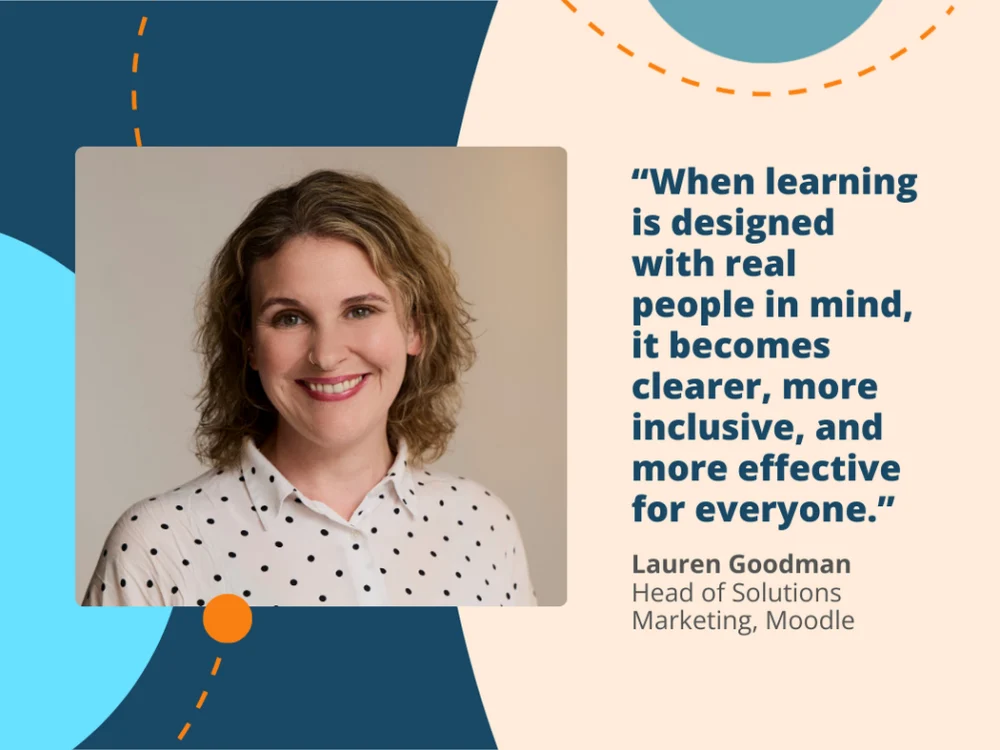
The digital learning landscape, while offering unprecedented access to education, is not a universally uniform experience. As educational institutions prepare for new academic semesters, a critical examination of course design is paramount to ensure equitable engagement and success for all students. This necessitates a shift from assuming a baseline of digital literacy and access towards a proactive approach that acknowledges and accommodates the diverse realities learners bring to the virtual classroom. Lauren Goodman, Head of Solutions Marketing at Moodle, emphasizes that "When learning is designed with real people in mind, it becomes clearer, more inclusive, and more effective for everyone." This sentiment underscores the growing imperative for educators to move beyond simply uploading materials and toward intentional design that addresses the "hidden learning gap" – the subtle yet significant disparities in students’ circumstances that can profoundly impact their educational journey.
The onset of a new semester often presents educators with a stark reminder of the varied digital ecosystems students inhabit. Course shells are prepared, resources are uploaded, and anticipation builds for the arrival of new cohorts. However, each student logs in with a unique constellation of expectations, technological access, and varying degrees of comfort with digital learning environments. The desire to foster a supportive and successful learning experience for every student is a shared aspiration among educators. Yet, the demands of teaching, grading, administrative duties, and other professional responsibilities can make the task of designing inclusive courses feel overwhelming. This challenge is a familiar one for many seasoned educators, including those who, like Goodman, have dedicated significant effort to understanding and improving online pedagogy.
"Most instructors care deeply about their learners and want their courses to work for everyone," Goodman observes. "The challenge is that students don’t all arrive with the same access, skills, or support – and those differences can profoundly shape their experiences from day one." This fundamental truth highlights the inadequacy of a one-size-fits-all approach to digital education. Designing equitably, therefore, means tailoring courses to the actual learners enrolled, rather than an idealized student profile. This is the essence of bridging the hidden learning gap: recognizing that disparities in learners’ circumstances – from reliable internet access and device availability to prior digital literacy and home learning environments – can significantly influence their ability to engage with content, participate in activities, and ultimately demonstrate their acquired knowledge.
The Evolving Reality of Digital Classrooms
The start of a new academic term frequently brings into sharp focus the tangible impact of minor discrepancies in access and digital confidence on student outcomes. Educators witness firsthand how these seemingly small gaps can create substantial barriers to learning. Goodman, drawing from her experience in learning design with Moodle Services and her prior work collaborating with faculty on course development, acknowledges this persistent reality.
"It’s tempting to assume learners start from the same general place," she states, "but in reality, every person has a different level of access." This assumption, often made unconsciously, can inadvertently disadvantage a significant portion of the student population. Consider two students who both appear to be actively participating online. One might be using a state-of-the-art laptop with high-speed broadband, possessing years of experience navigating learning management systems (LMS) and digital tools. The other, however, might be relying on a shared family computer, contending with intermittent internet connectivity, or be relatively new to the nuances of online learning platforms. Without deliberate and thoughtful course design, these disparities can transform what should be an enriching learning experience into an unnecessarily arduous undertaking.
Goodman offers a practical framework for educators grappling with this issue: "A useful way to approach course design is to think about learners working within real-world constraints – patchy internet, older devices, or working in shared spaces (like a public library or dormitory lounge)," she explains. "When you design with those realities in mind, the learning experience works better for everyone." This perspective shift from an ideal student to a real student is foundational to creating inclusive digital environments. The positive aspect of this approach is that significant improvements can often be achieved through incremental, intentional changes rather than a complete overhaul of existing course structures.

Small, Intentional Choices: The Foundation of Inclusive Design
The journey towards inclusive, human-centered digital learning begins with a series of simple, yet impactful, design decisions. For instance, structuring content in a clear, logical sequence ensures students understand the expected progression and know what steps to take next. Offering learning materials in multiple formats, such as text, audio, and video, caters to different learning preferences and accessibility needs. Providing explicit and unambiguous instructions, coupled with predictable navigation within the LMS, significantly enhances the online learning environment for all users. Furthermore, designing activities that do not demand constant, high-speed internet connectivity can prevent students with limited access from being excluded from crucial learning opportunities.
Individually, these adjustments can offer vital support to learners facing particular challenges. Collectively, however, they contribute to the creation of courses that are not only clearer and more navigable but also demonstrably more supportive for the entire student body. This approach cultivates a win-win scenario where enhanced inclusivity benefits everyone.
Goodman highlights the critical role of accessibility as a prime example: "Let’s take accessibility as an example," she says. "Accessible learning works best when it’s part of the design process from the beginning. Add headings as you create pages. Include alt text when you upload images. Check colour contrast as you go. Educate yourself about web accessibility basics and apply this to every course-building decision." This proactive integration of accessibility principles, rather than treating it as an afterthought, ensures that digital content is usable by the widest possible audience, including individuals with disabilities. This commitment extends beyond students with diagnosed needs; it benefits anyone who might be experiencing temporary limitations, such as poor lighting conditions or working in a noisy environment.
This foundational approach to design is not exclusive to specialized learning designers. Any educator responsible for building a course can cultivate habits that prioritize inclusivity and accessibility from the outset. By embedding these practices into the initial course development process, educators can mitigate the need for extensive retrofitting and remediation later on, ultimately creating a more supportive and effective learning experience for every student.
Transforming Awareness into Actionable Strategies
Accessibility represents a crucial starting point, but it is intrinsically linked to a broader objective: designing courses that genuinely reflect the diverse realities and circumstances that learners bring with them. While a student’s ability to log into a digital platform is a necessary first step, it does not automatically guarantee their readiness or capacity to learn effectively. Cultivating a more equitable learning environment necessitates looking beyond mere access and considering whether every learner can actively participate once they are present in the digital space.
"Getting online is only the first step," Goodman emphasizes. "What really matters is whether learners can confidently navigate the course, understand what’s expected of them, and stay engaged once they arrive. As educators, we need to be ready for every learner who shows up." This statement encapsulates the core challenge: ensuring that the digital learning environment fosters genuine engagement and understanding, not just passive presence.
For educators seeking guidance on how to initiate or enhance the creation of more inclusive learning environments, the good news is that they do not have to navigate this complex terrain alone. Moodle, recognizing this critical need, has developed a comprehensive resource designed to facilitate this transition. Drawing upon years of experience supporting faculty and learners in online education, the "Bridging the hidden learning gap" resource synthesizes these essential concepts into a practical guide. It offers realistic strategies that educators can implement immediately to foster greater inclusivity in their digital courses.

The resource provides practical insights, expert advice, and pragmatic approaches that empower educators to design courses capable of supporting a wider spectrum of learners. The overarching philosophy is not to achieve unattainable perfection, but rather to equip educators with the tools and mindset to design for the students they actually have, with all their unique characteristics and challenges. As Lauren Goodman eloquently puts it, "When learning is designed with real people in mind, it becomes clearer, more inclusive, and more effective for everyone." This human-centered approach to digital course design is not merely an educational trend; it is a fundamental requirement for fostering a truly equitable and effective learning future.
The Broader Implications of Inclusive Digital Education
The movement towards bridging the hidden learning gap has significant implications that extend beyond individual courses and institutions. In an increasingly digital world, where online learning is becoming a cornerstone of both formal education and professional development, ensuring equitable access and participation is crucial for social mobility and economic opportunity. As educational institutions increasingly rely on digital platforms, the disparities in access and digital literacy can exacerbate existing societal inequalities. A 2023 report by the National Center for Education Statistics indicated that while internet access has become more widespread, significant disparities persist based on socioeconomic status, geographic location, and racial/ethnic background. For instance, students from low-income households are less likely to have reliable high-speed internet at home, impacting their ability to engage with synchronous online sessions or download large course materials.
The proactive design of inclusive digital learning environments can serve as a powerful antidote to these trends. By embedding principles of Universal Design for Learning (UDL) and focusing on real-world constraints, educators can create a more resilient and adaptable educational system. This approach not only benefits students facing immediate challenges but also enhances the learning experience for all students by promoting clarity, flexibility, and varied pathways to engagement and demonstration of knowledge. Furthermore, a commitment to inclusive design fosters a sense of belonging and psychological safety within the digital learning space, which is essential for student well-being and academic success. When students feel seen, understood, and supported, they are more likely to persevere through challenges, engage actively in learning, and achieve their full potential.
The responsibility for creating these inclusive environments rests not only with individual educators but also with institutions, platform providers, and policymakers. Institutions can support faculty by providing professional development opportunities focused on inclusive course design, offering technical support for accessible technology, and establishing clear guidelines and expectations for digital pedagogy. Platform providers, such as Moodle, play a vital role in developing user-friendly and accessible technologies that can be leveraged by educators to create inclusive learning experiences. Policymakers can contribute by investing in digital infrastructure, ensuring affordable internet access for all communities, and supporting research into effective online learning strategies.
The initiative highlighted by Moodle’s "Bridging the hidden learning gap" resource represents a timely and practical response to the evolving demands of digital education. By providing educators with concrete strategies and a clear framework, it empowers them to move from awareness of the hidden learning gap to tangible action. This shift is critical for ensuring that digital learning fulfills its promise of democratizing education and empowering all learners to succeed in an increasingly complex and interconnected world. The future of education hinges on our collective ability to build digital learning environments that are not only technologically advanced but also deeply human-centered, recognizing and responding to the diverse needs of every student.
Download Bridging the hidden learning gap now and begin building learning environments where every student can succeed.