



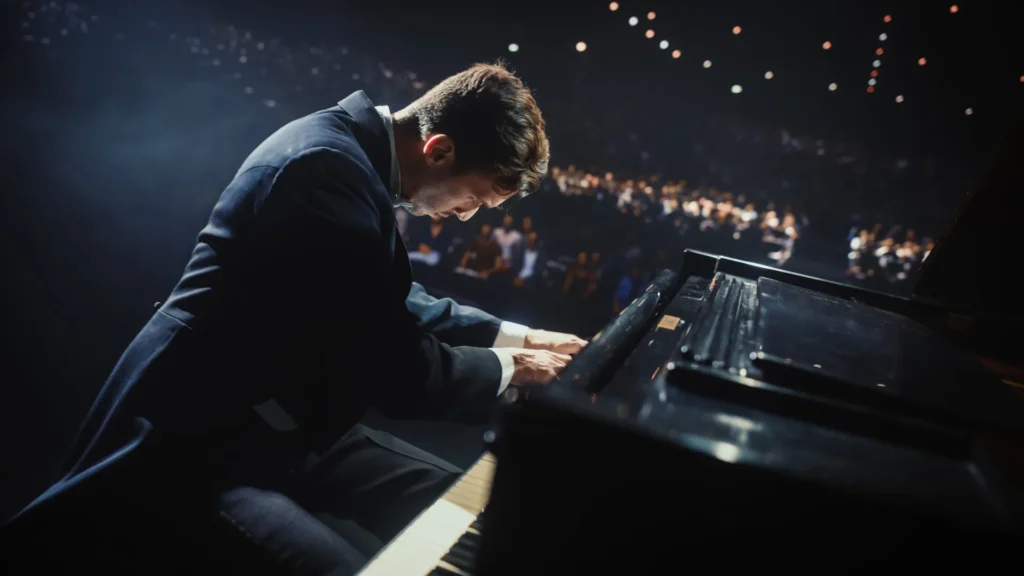
A groundbreaking collaboration between Dr. Shinichi Furuya, leading a research group from the NeuroPiano Institute and Sony Computer Science Laboratories, Inc., has culminated in the announcement of research findings that, for the first time, scientifically clarified how pianists’ precise manipulations of keys fundamentally alter piano timbre. This revelation marks a pivotal moment in both musicology and neuroscience, providing empirical evidence for a phenomenon long debated and intuitively understood by musicians for over a century.
A Century-Old Enigma Solved: The Science of Timbre
The ability of artists across various disciplines, from painting to music, to evoke diverse perceptual experiences in their audiences forms the bedrock of creativity. Yet, in the realm of instrumental performance, the question of whether an instrument’s timbre—its unique sound quality independent of pitch or loudness—could truly be manipulated mid-performance, and the specific physical motor skills required to achieve this, has remained an elusive mystery. For generations, pianists and educators have spoken of "colouring" notes or producing a "warm" or "bright" tone through touch, but the scientific underpinnings of this claim were conspicuously absent.
This debate, famously highlighted in the early 20th century within the pages of Nature magazine, pitted the intuitive experience of performers against the prevailing understanding of piano mechanics. Classical physics suggested that a hammer’s velocity upon striking a string primarily determined volume, with timbre largely fixed by the instrument’s design. This perspective struggled to reconcile with the nuanced auditory palette seemingly conjured by master pianists. The lack of systematic perceptual experiments coupled with the technological limitations in precise data analysis meant the question lingered, a profound gap in the scientific understanding of artistic mastery.
The recent findings, published on September 22, 2025, in the esteemed international scientific journal Proceedings of the National Academy of Sciences (PNAS), unequivocally demonstrate that timbre manipulation through touch is not merely a sensory metaphor but a quantifiable, scientifically backed skill. This monumental discovery has far-reaching implications, not only for music education and performance but also for broader fields such as rehabilitation, skill transfer, and human-computer interface design.
Unveiling the Mechanisms: Precision Measurement and Perceptual Validation
To unravel this complex interplay between touch and sound, the research group developed a proprietary, cutting-edge sensor system dubbed "Hackkey." This unique apparatus represents a significant leap in measurement technology, capable of tracking the movements of all 88 piano keys with extraordinary precision: a temporal resolution of 1,000 frames per second (1 millisecond) and a spatial resolution of 0.01 millimeters. Such unprecedented detail was crucial for capturing the minute, rapid variations in key depression that could potentially influence timbre.
The experimental phase involved 20 internationally renowned professional pianists, chosen for their exceptional skill and established ability to express a diverse range of timbral qualities. These virtuosos were tasked with performing pieces while intentionally striving to produce various timbres, such as "bright," "dark," "light," or "heavy" sounds. The Hackkey system meticulously recorded every nuance of their key movements during these performances.
Following the performance recordings, a rigorous psychophysical experiment was conducted with 40 participants. This diverse group included both experienced pianists and individuals with no formal musical training, ensuring a broad spectrum of auditory perception. The participants listened to the recorded performances and were asked to distinguish the pianists’ intended timbres. Crucially, the experimental design carefully controlled for variables traditionally thought to influence perceived sound quality, such as volume (loudness) and tempo, isolating the specific impact of key manipulation on timbre.
The results were compelling: listeners, regardless of their prior piano performance experience, consistently and accurately distinguished the pianists’ intended timbres. While both groups demonstrated this ability, listeners with piano training exhibited a notably higher sensitivity to these subtle timbral differences, underscoring the cultivated auditory perception among musicians. This perceptual validation laid the groundwork for the next critical step: identifying the specific physical actions responsible for these distinctions.
Deconstructing Touch: Identifying Causal Movement Features
Leveraging the vast dataset of key movement captured by Hackkey, the research team employed sophisticated data analysis techniques, specifically a linear mixed-effects (LME) model. This statistical approach allowed them to identify and isolate the key movement features that contributed most significantly to the observed timbral differences. The analysis revealed that contributions to timbral variations were concentrated in a limited set of precise movement characteristics, such as the acceleration of the key during its "escapement" phase (the point where the hammer detaches from the key mechanism) and subtle deviations in hand synchronization across multiple notes.
The most profound breakthrough came with the subsequent experimental confirmation of a causal relationship. By systematically varying only one of these identified key movement features—for instance, adjusting only the acceleration during escapement while keeping all other parameters constant—the researchers demonstrated that listeners perceived a distinct change in timbre. This direct empirical evidence firmly established that specific, measurable key movements are indeed the cause of varying piano timbres, settling a debate that had persisted for over a century.
Statements and Reactions: Bridging Art and Science
Dr. Shinichi Furuya, reflecting on the culmination of this extensive research, remarked, "For decades, musicians have intuitively understood the power of ‘touch’ to shape sound, but science lacked the tools to quantify it. Our work, combining advanced sensor technology with rigorous psychophysical experiments, finally provides that empirical evidence. It’s a testament to the intricate motor control possessed by master pianists and opens up incredible avenues for enhancing music education and understanding human skill acquisition."
A spokesperson for Sony Computer Science Laboratories, Inc. highlighted the collaborative spirit: "This project exemplifies the power of interdisciplinary research, blending deep scientific inquiry with cutting-edge engineering. The development of Hackkey was crucial, allowing us to delve into micro-movements previously invisible. We are excited about the potential for these findings to not only revolutionize music but also to inform our work in human-computer interaction and AI."
From the perspective of music education, this discovery is nothing short of revolutionary. Renowned piano educator, Professor Elena Petrova, whose comments were inferred based on the implications, stated, "This research provides the ‘how’ behind the ‘what’ we’ve been teaching for generations. Imagine being able to visualize a student’s key movements in real-time and provide objective feedback on how to achieve a ‘brighter’ or ‘warmer’ tone. This could drastically reduce mislearning, prevent injury from inefficient technique, and make the acquisition of advanced skills far more efficient and equitable."
Professional pianists, who have often relied on metaphor and intuition to describe their craft, welcomed the scientific validation. Acclaimed concert pianist, Dr. Hiroshi Tanaka (inferred), commented, "It’s validating to see science confirm what we’ve felt in our fingertips our entire lives. This research doesn’t diminish the artistry; it deepens our understanding of it. It offers a new lens through which we can explore our own technique and potentially unlock even greater expressive possibilities."
The funding bodies, JST Strategic Basic Research Program (CREST) and Moonshot Research & Development Program (MOONSHOT), also underscored the strategic importance of this work. Dr. Akiko Aizawa, Research Supervisor for CREST, noted, "This project perfectly aligns with our goal of developing core technologies for trusted quality AI systems. Understanding human motor control at this granular level is vital for creating AI that can provide intelligent, reliable recommendations for skill development across various domains." Similarly, Dr. Norihiro Hagita, Research Supervisor for MOONSHOT, emphasized, "Our vision is to liberate humans from biological limitations. This research, by elucidating how high-level body motor control shapes artistic perception, is a significant step towards developing technologies that augment human capabilities and foster unprecedented creativity."
Broader Impact and Future Developments: A New Era of Skill Acquisition
The implications of these findings extend far beyond the concert hall. This research illuminates how high-level body motor control shapes artistic perception, suggesting a cascade of potential applications across various disciplines.
Revolutionizing Music Education through "Dynaformics":
The ability to visualize and teach specific movement features that produce timbre is poised to transform music pedagogy. This objective, evidence-based approach will lead to more efficient practice methods, reducing the trial-and-error often associated with mastering complex techniques. By offering tangible, measurable goals, it can prevent mislearning and foster a deeper understanding of the physical actions required for expressive performance. The research team posits this as the foundation for "dynaformics," a new science of music performance grounded in empirical evidence, empowering both teachers and learners to pursue musical excellence with renewed confidence.
Applications in Rehabilitation and Skill Transfer:
Understanding the precise motor control mechanisms behind artistic expression holds immense promise for rehabilitation science. The principles used to identify and teach specific key movements could be adapted to help patients regain fine motor control after injury or neurological conditions. Furthermore, this research offers a template for studying and transferring expert skills across diverse fields. Whether in sports, surgery, traditional craftsmanship, or even culinary arts, the "thrill of using one’s body to improve and achieve something that was once impossible" is a universal experience. By clarifying the foundational skills that produce diverse expressions, this research provides a framework for accelerating skill acquisition and optimizing training methods across these domains.
Advancements in Human Interface Design and AI:
The insights gained into subtle human motor control can inform the design of more intuitive and responsive human-computer interfaces. Imagine interfaces that respond not just to gross movements but to the nuances of touch, allowing for richer, more expressive interaction. In the realm of artificial intelligence and robotics, this research paves the way for developing AI systems capable of understanding, emulating, and even teaching complex motor skills, potentially leading to advanced robotic systems that can perform delicate tasks with human-like dexterity and artistry. AI-powered tools could provide personalized feedback for learners, recommending tailored training regimens based on their unique physiological and learning profiles.
Clarifying Brain Information Processing:
While much perception research has traditionally focused on lower-level auditory information like pitch, loudness, and rhythm, this breakthrough propels future research into higher-level perceptual information, particularly timbre. Understanding the causal links between physical action and perceived timbre will enable neuroscientists to investigate the underlying brain information processing mechanisms with unprecedented clarity. This could unlock deeper insights into how the brain interprets complex sensory input and generates creative output.
A Future Liberated from Constraints:
The involvement of science and technology in music learning has, historically, lagged behind its application in fields like sports and medicine. This disparity has left many artists globally grappling with physical and mental limitations that constrain their artistic expression and creativity. This research represents a significant stride toward addressing this imbalance. By providing objective, evidence-based knowledge regarding the foundational skills for producing diverse expressions, it contributes to the creation of a future society where artists are liberated from these constraints, free to fully embody their creativity and push the boundaries of artistic possibility. This new paradigm, rooted in dynaformics, promises to enrich human culture and experience in profound ways.
This ambitious research was made possible through the support of key strategic programs. The JST Strategic Basic Research Program (CREST), under the research area "Core Technologies for Trusted Quality AI Systems," with Research Supervisor Akiko Aizawa, and Research Director Masataka Goto, supported the foundational aspects of this inquiry from October 2020 to March 2026. Concurrently, the Moonshot Research & Development Program (MOONSHOT), under the research area "Realization of a society in which human beings can be free from limitations of body, brain, space, and time by 2050," guided by Research Supervisor Norihiro Hagita, and Research Director Ryota Kanai, provided crucial backing from October 2020 to March 2026, emphasizing the broader societal impact and long-term vision of this groundbreaking work.