


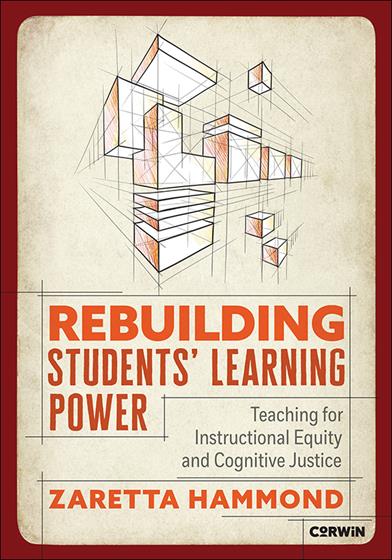
The perennial challenge of fostering genuine student ownership over their learning journeys continues to vex educators globally. This sentiment was recently articulated by a teacher observed during instructional rounds, expressing a common frustration: "I am trying to get them to own their learning. They are sweet. They do what I ask, but they just won’t own it." This lament underscores a critical gap in contemporary educational practice: while innovative pedagogical approaches like project-based learning, Universal Design for Learning (UDL), and makerspace learning are widely adopted and evidence-backed, they often fall short if students are not explicitly equipped with the fundamental skills to navigate and maximize these opportunities. The core issue, as highlighted by educational expert Zaretta Hammond in her forthcoming book, Rebuilding Students’ Learning Power (Corwin, 2025), is the necessity of coaching students in "learn-to-learn skills" – the deliberate tools, techniques, and cognitive "moves" that empower learners to become effective information processors.
The Cognitive Imperative: Why Learning is Ultimately the Learner’s Responsibility
Despite meticulously crafted lesson plans, engaging activities, and comprehensive scaffolded support, teachers cannot compel a student’s brain to initiate the intricate information processing cycle essential for deep learning. Learning, at its most fundamental level, is an internal process, solely dependent on the learner. If instruction fails to ignite intellectual curiosity, if the learning environment lacks psychological safety, or if students lack the metacognitive skills to move new content through the attention, elaboration, and consolidation phases of information processing, then meaningful learning remains elusive. As Hammond posits, "We can teach our hearts out, but in the end, only the learner learns." This profound insight shifts the pedagogical focus from merely delivering content to enabling students to actively construct knowledge. The goal, therefore, is not just to motivate students or explain brain function, but to couple these with concrete, actionable tools that make learning "sticky."
Defining "Learn-to-Learn" Skills: The Hidden Curriculum for Equity
Often misunderstood or overlooked, "learn-to-learn" skills are not a nebulous concept but a concrete set of abilities. David Perkins of Harvard’s Project Zero refers to this as the "game of learning," while Ron Berger, founder of EL Education, calls it the "craftsmanship of learning." Hammond, however, frames them as the "trade secrets" of learning, often "hiding in plain sight." Crucially, through an equity lens, these skills represent a "hidden curriculum" – the unspoken rules and strategies for academic success that are often implicitly understood by some students but remain opaque to others. Explicitly teaching these skills can significantly close the opportunity gap and drive more equitable academic outcomes, empowering students from all backgrounds to thrive.
It is important to differentiate learn-to-learn skills from executive function skills. While executive function skills (e.g., planning, organization, time management) are vital for academic success, they primarily address the management of learning. Learn-to-learn skills, conversely, directly enhance a student’s ability to process and internalize new information, thereby increasing their capacity to handle complex cognitive loads.
Moves vs. Skills: A Critical Distinction
To clarify the practical application of learn-to-learn competencies, Hammond distinguishes between "moves" and "skills." A "move" is a specific, discrete action or technique executed in a particular moment – akin to a chess move or a dance step. It is concrete and often has a clear beginning and end. A "skill," on the other hand, is a broader, developed ability or competency that encompasses understanding, judgment, and the capacity to effectively execute various moves. Skills involve the metacognitive awareness of when, how, and why to deploy different moves. For example, in basketball, dribbling is a move, but the skill of ball-handling involves knowing when to dribble, pass, or shoot, adapting to game situations. Skills are built through the practice of moves, coupled with developing the judgment and adaptability that transcend any single technique.
The learn-to-learn framework comprises five interconnected "moves" that, when mastered, constitute a robust skill set for processing new content, fostering meaningful engagement, and deepening understanding. Students are encouraged to use these moves adaptively, rather than in a rigid, linear fashion.
The Five Learn-to-Learn Moves: A Framework for Cognitive Independence
-
Move 1: Size It Up and Break It Down
This foundational move begins with task analysis. Students are guided to engage in a structured cognitive routine to comprehend what a task demands. The "Size It Up" phase involves assessing the task’s scope, complexity, and expected outcomes. The subsequent "Break It Down" phase focuses on strategic planning, dissecting the task into manageable cognitive activities, and identifying the necessary tools and strategies for completion. This process activates the brain’s information processing cycle by prompting a series of decision-making questions, helping the learner determine the appropriate emotional stance and develop an actionable plan. This move implicitly teaches problem-solving and strategic thinking, crucial elements of metacognition.
-
Move 2: Scan the Hard Drive
Central to effective learning is the activation of prior knowledge. The "Scan the Hard Drive" move stimulates neural pathways connected to a student’s existing background knowledge, or "funds of knowledge," in preparation for new content. Neuroscientific research consistently demonstrates that all new learning is most effective when explicitly linked to existing knowledge structures (schema). During the attention phase of information processing, the brain instinctively searches for related experiences, definitions, or concepts, no matter how tangential. This move, executed when encountering novel or confusing information, prompts the brain to embark on a "scavenger hunt" through its stored information, bridging the gap between the known and the new. This is particularly vital for students from diverse backgrounds, whose "hard drives" may contain rich, non-traditional forms of knowledge that are equally valuable. -
Move 3: Chew and Remix
This move directly addresses the elaboration phase of information processing. Once students have activated their schema through "Scanning the Hard Drive," they must actively integrate new content with the identified related schema. "Chewing and remixing" involves the dynamic process of mixing "the new with the known," weaving freshly presented information into their existing understanding. This active engagement facilitates meaning-making and deepens comprehension. It is the phase that requires productive struggle within the learner’s zone of proximal development (ZPD), pushing them to make sense of complex, conflicting, or competing information. This process moves students beyond surface-level recall to deeper learning, aligning with higher levels of Bloom’s taxonomy or Webb’s Depth of Knowledge wheel, where analysis, synthesis, and evaluation are paramount. -
Move 4: Engage in Skillful Practice
While "Chew and Remix" focuses on general meaning-making, "Skillful Practice" is dedicated to solidifying understanding of core concepts and building automaticity with specific skills and procedures, especially in areas like mathematics and reading. This move emphasizes deliberate practice designed to myelinate new neural pathways, enhancing proficiency and automaticity. Students deploy this move when they need to refine their application of a technique or improve their execution of a skill, whether it’s deepening comprehension of a historical event or mastering a mathematical formula. Skillful Practice cues the brain’s metastrategic awareness, enabling learners to pinpoint weaknesses in their execution and focus on targeted, specific improvements through repetition with continuous refinement. This iterative process of practice and feedback is crucial for expert development in any domain. -
Move 5: Make it Sticky
The final move, "Make It Sticky," is critical for the consolidation phase of information processing and for counteracting the brain’s natural "pruning mechanism." This biological process deletes fragile dendrites – newly formed neural connections – if new learning is not revisited and applied within twenty-four to forty-eight hours. The objective here is to transform these fragile connections into robust neural pathways through the application of newly acquired content in varied contexts. Students employ this move at the conclusion of a learning episode and within a specific timeframe outside of direct instruction, often during out-of-school hours. By applying the skill or reflecting on the information, learners strengthen these connections, deactivating the brain’s pruning feature and ensuring long-term retention. Examples include teaching the content to someone else, creating a mind map, or connecting the learning to real-world scenarios.
Cultivating Cognitive Independence: Strategies for Teachers
The true challenge lies not just in introducing these moves but in empowering students to internalize and consistently apply them without constant teacher prompting – the hallmark of a cognitively independent learner. Merely explaining these moves or using them as whole-class engagement strategies is insufficient; students must actively "own" them. Hammond outlines three key strategies for fostering this ownership:
-
Initiate Students into a Cognitive Apprenticeship:
Drawing parallels with traditional apprenticeships in crafts like carpentry or culinary arts, Hammond advocates for treating learners as apprentices. Classrooms should be structured as cognitive apprenticeships, featuring an onboarding process, skill-building phases, and habit formation leading to mastery of learning how to learn. This initiation period, ideally lasting 4-6 weeks, explicitly outlines the path to becoming a masterful learner. The apprenticeship aims to develop six capacities of a proficient information processor, including self-awareness, self-monitoring, and self-correction, all while building a growth mindset around learning. -
Invite Students to Revise Their Learner Identity:
Integral to the cognitive apprenticeship is guiding students to critically examine and potentially revise their self-perception as learners. Learner identity encompasses an individual’s beliefs about their abilities, motivations, and place within the academic world, profoundly impacting their sense of belonging and academic persistence. Underperforming students often struggle not only with content mastery but also with a diminished sense of themselves as capable learners, frequently expressing sentiments like, "I’m not a math person." By explicitly addressing and challenging these limiting beliefs, teachers can foster a more positive and empowering learner identity, demonstrating that learning is a malleable process accessible to everyone. -
Integrate Regular Opportunities for Reflection:
Developing robust learning power necessitates consistent reflection and feedback. Teachers must create regular, structured opportunities for students to discuss and reflect on their progress in cultivating their "craftsmanship of learning." This involves engaging students in instructional conversations several times a week, prompting them to analyze how they manage their learning process, navigate mistakes and confusions, and effectively deploy the learn-to-learn moves to correct course. Such reflective practices help students identify "choke points" – natural cognitive constraints like working memory limitations – and "pitfalls" – self-sabotaging behaviors such as cramming or multitasking. By understanding these, students can develop personalized strategies to work within constraints and avoid counterproductive habits, leading to self-regulated learning.
The Broader Implications: Teaching for Instructional Equity
Creating the conditions and actively inviting students to adopt these learn-to-learn skills transcends individual lesson enhancements; it is fundamental to achieving instructional equity. These skills are not merely supplementary strategies for making lessons more engaging; they constitute the "hidden equity curriculum" that every student requires to become a truly independent and powerful learner. In an increasingly complex and rapidly changing world, the ability to learn how to learn is perhaps the most critical skill. Every student, irrespective of background, deserves the opportunity to master the craftsmanship of learning, thereby unlocking their full potential and navigating future challenges with confidence and competence. This shift from teaching content to teaching how to learn is not just an pedagogical improvement but an ethical imperative for equitable education in the 21st century.