



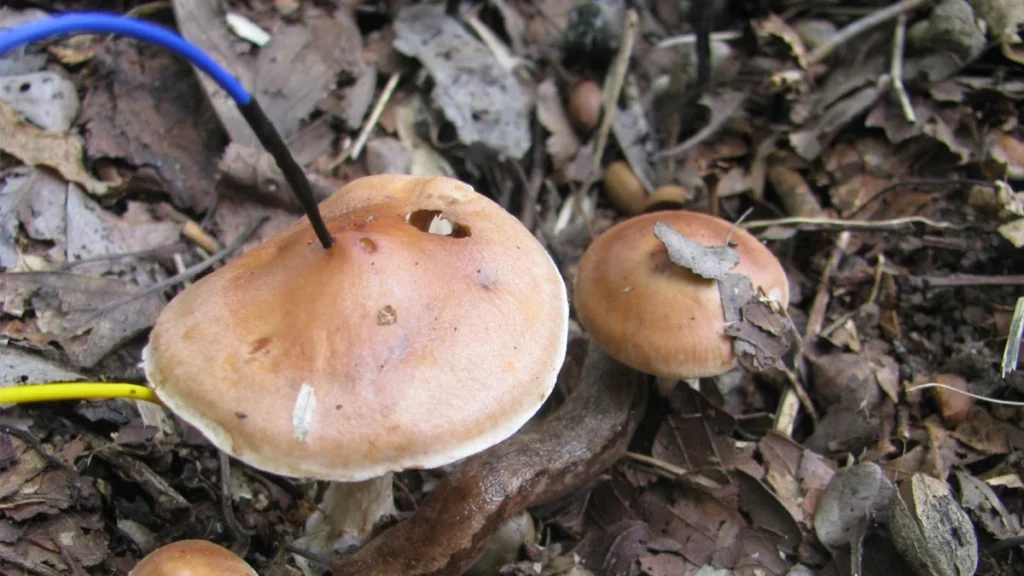
The silent floor of a temperate oak forest may appear dormant to the casual observer, but beneath the leaf litter exists a sophisticated, pulsing communication network that rivals the complexity of modern telecommunications. Recent research conducted by a team of mycologists at Tohoku University in Sendai, Japan, has shed new light on the "chatter" of fungi, revealing that these organisms use electrical signals to share information about their environment. Led by Associate Professor Yu Fukasawa, the study specifically examined how external factors—most notably rainfall and animal waste—alter the flow of information across mycelial networks. By attaching electrodes to wild mushrooms, the team discovered that these fungal communities exhibit highly dynamic responses to environmental changes, providing a rare glimpse into the subterranean intelligence that governs forest ecosystems.
The Hidden Architecture of Mycelial Networks
To understand the significance of the Tohoku University study, one must first grasp the scale and function of the "Wood Wide Web." Most of what humans recognize as a mushroom is merely the fruiting body of a much larger organism. The vast majority of a fungus exists underground as mycelium, a dense web of thread-like structures called hyphae. These networks can span several acres and connect different plant species, facilitating a symbiotic exchange of nutrients, water, and information.
Ectomycorrhizal fungi, the subject of this recent study, play a critical role in this ecosystem. Unlike endomycorrhizal fungi, which penetrate the cell walls of plant roots, ectomycorrhizal fungi form a sheath around the root tips. This relationship is foundational to forest health; the fungi provide the trees with essential minerals like phosphorus and nitrogen, while the trees provide the fungi with carbon-rich sugars produced through photosynthesis. However, the mechanism by which these fungi coordinate their activities across vast distances has long remained a mystery. The Japanese research team hypothesized that electrical potentials—similar to the impulses in human nervous systems—serve as the primary medium for this coordination.
Experimental Design and Methodology
The study, published in the journal Scientific Reports, utilized a meticulous experimental setup to capture the real-time electrical fluctuations within a natural setting. The researchers selected a cluster of 37 ectomycorrhizal mushrooms growing in a secondary oak forest. These mushrooms belong to the group known as "ammonia fungi," which are uniquely adapted to thrive in nitrogen-rich environments, often appearing in areas where animal remains or excrement have decomposed.
To measure the electrical activity, the team inserted needle-shaped electrodes into the caps of the mushrooms. These sensors were designed to detect minute changes in electrical potential, which the researchers interpreted as a form of intra-network communication. The experiment spanned 3.5 days, during which data was recorded at one-second intervals. This high-frequency monitoring allowed the team to observe how the fungal "chatter" fluctuated in response to specific localized treatments.
The researchers introduced two primary variables: water and urine. Since ectomycorrhizal ammonia fungi are sensitive to moisture and nitrogen levels, these stimuli were expected to trigger significant biological responses. By applying these substances to different sections of the mushroom cluster, the team could observe how information originated at one point and traveled—or failed to travel—across the network.
The Role of Ammonia and Urea in Fungal Growth
The inclusion of urine in the study was not incidental. Urine contains high concentrations of urea, a nitrogenous compound that serves as a precursor to ammonia. For ammonia fungi, the presence of urea signifies a sudden influx of nutrients, often indicating the presence of animal activity. In the wild, these fungi are the primary decomposers of nitrogenous waste, making them essential for the nitrogen cycle in forest soils.
When urea is introduced to the soil, it is broken down by microbial enzymes into ammonia, which the fungi then absorb to fuel their growth and the growth of their symbiotic tree partners. The researchers aimed to determine if the detection of this nutrient "windfall" was communicated electrically to other parts of the mycelial network that had not yet come into contact with the substance.
Findings: The Dynamics of Fungal Information Flow
The results of the study revealed a nuanced and highly reactive communication system. The researchers observed that the application of water to a single mushroom triggered a sharp increase in electrical activity, suggesting that the fungus was "alerting" the rest of the network to a change in moisture levels. This localized stimulus created a clear signal that propagated through the mycelium.
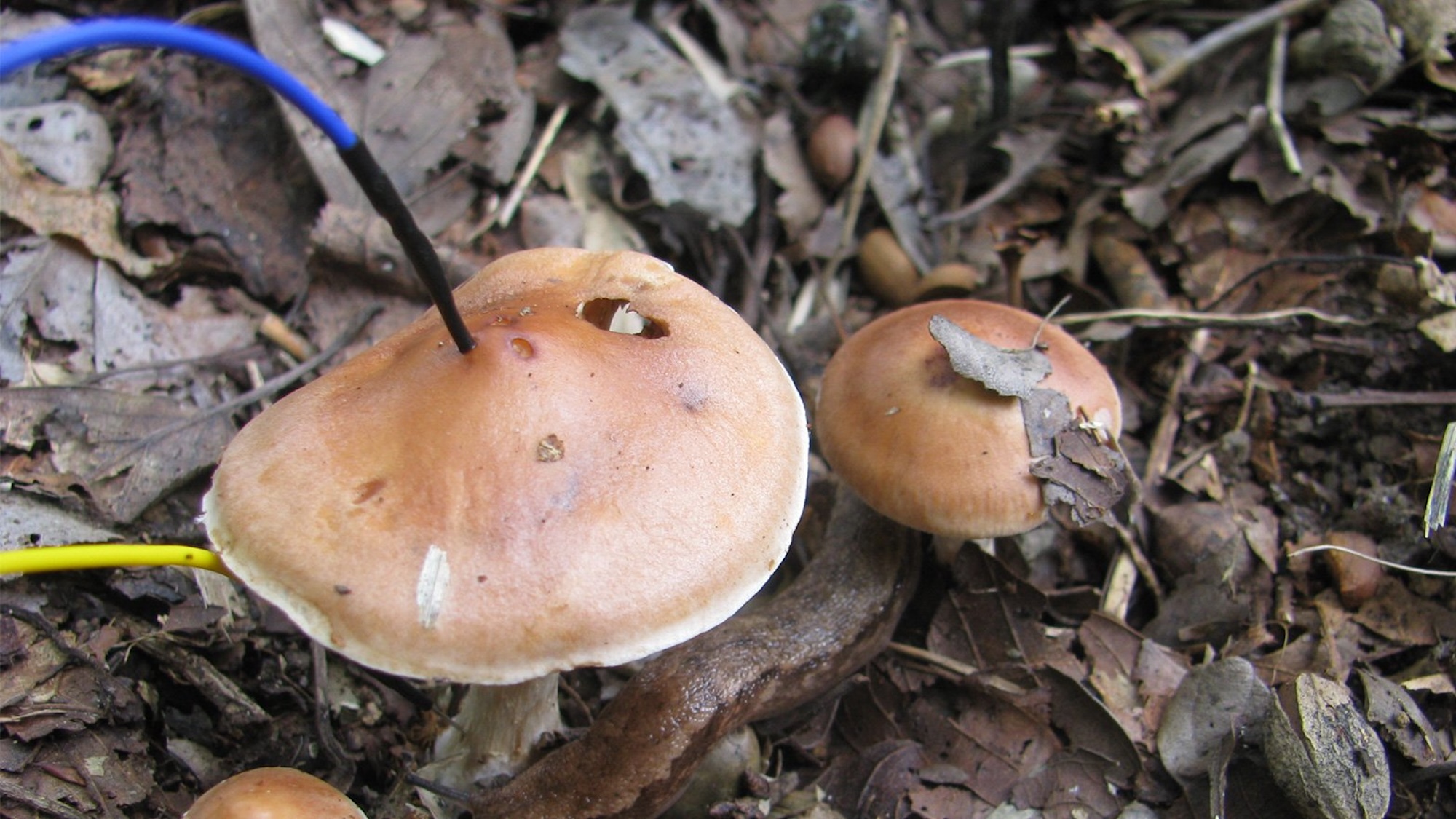
However, a surprising "diminishing returns" effect was observed. When water was applied to a larger number of mushrooms simultaneously, the overall electrical flow across the network actually decreased. Professor Yu Fukasawa hypothesized that this indicates a sophisticated level of information processing. "Applying water to all the mushrooms may mean that there’s no need to share information since the whole network already knows what’s going on," Fukasawa stated. This suggests that fungal networks may operate on a principle of efficiency, prioritizing the transmission of "new" or "local" news while dampening signals that are already redundant to the collective.
The response to urine was equally intriguing. Despite being a vital source of nutrients, the application of urine led to a general decrease in communication activity among the fungi. While the exact reason for this suppression remains a subject of ongoing investigation, it suggests that high concentrations of certain chemicals may "overwhelm" the electrical signaling system or trigger a shift from communication-heavy exploration to nutrient-absorption-heavy metabolism.
Historical Context: From the "Wood Wide Web" to Fungal Electrophysiology
This research builds upon decades of foundational work in mycology and forest ecology. In the late 1990s, ecologist Suzanne Simard popularized the term "Wood Wide Web" after her research demonstrated that Douglas fir and paper birch trees exchanged carbon through fungal networks. Since then, the scientific community has moved from proving the existence of these connections to deciphering the "language" used within them.
Previous studies have shown that fungi can transmit signals in response to physical damage, such as being nibbled by an insect, which allows neighboring plants to ramp up their chemical defenses. However, most of these studies were conducted in controlled laboratory settings. The Tohoku University study is significant because it brings these observations into the field, accounting for the chaotic variables of a real forest floor. It confirms that the electrical impulses observed in labs are not artifacts of the experimental environment but are fundamental components of how fungi interact with the natural world.
Broader Implications for Ecology and Agriculture
The ability to "listen" to mushroom networks has profound implications for our understanding of forest resilience. As climate change alters rainfall patterns and disrupts animal migration, the subterranean communication systems that support our forests will be forced to adapt. Understanding how these networks react to stress or nutrient surges could help foresters monitor the health of ecosystems from the ground up—literally.
Furthermore, this research has potential applications in sustainable agriculture. By understanding how ammonia fungi process nitrogen and communicate its availability, scientists may develop ways to optimize fertilizer use. If we can learn to "speak" to these networks or interpret their signals, we might be able to enhance the symbiotic relationships between crops and fungi, reducing the need for synthetic chemical inputs and improving soil health.
Future Research and Technological Integration
The team at Tohoku University plans to expand their research by attempting to decode the specific "vocabulary" of these electrical signals. By correlating specific patterns of electrical spikes with biological actions—such as the transport of specific nutrients or the growth of new hyphae—researchers hope to create a comprehensive map of fungal behavior.
There is also growing interest in "fungal computers" or bio-sensors. Because mycelial networks are naturally adept at processing environmental data and transmitting it across distances, they could theoretically be integrated into environmental monitoring technology. Imagine a forest where the mushrooms themselves act as sensors, providing real-time data on soil moisture, chemical pollutants, or the presence of invasive species through their electrical chatter.
Conclusion: A New Frontier in Biological Communication
The findings of Professor Fukasawa and his team represent a significant step forward in the field of mycology. They challenge the traditional view of fungi as passive decomposers, instead portraying them as active, communicating participants in the forest’s social structure. The discovery that something as common as animal urine can influence the "gossip" of a mushroom network highlights the deep, often invisible interconnections between the animal, plant, and fungal kingdoms.
As we continue to strip away the layers of mystery surrounding the mycelial world, it becomes increasingly clear that the forest floor is not just a place of decay, but a vibrant hub of information exchange. The electrical pulses moving through the soil are a reminder that intelligence and communication are not the sole domain of the animal kingdom, but are fundamental traits of life itself, woven into the very fabric of the earth. In the words of the researchers, we are only beginning to understand the "whispers" of the mushrooms, but what we have heard so far suggests a world far more complex and interconnected than we ever imagined.