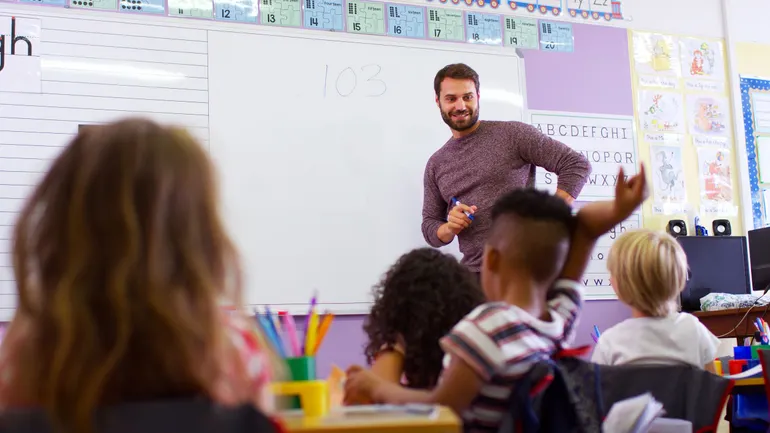
The cornerstone of effective education lies in meticulously building new knowledge upon the bedrock of students’ existing understanding, a pedagogical approach championed by leading educators who emphasize its role in fostering deeper comprehension and retention. This strategy, often referred to as scaffolding, involves strategically connecting novel concepts to what students already know, want to know, or have experienced. Experts suggest that by employing techniques such as concept mapping, visual aids, and drawing directly from students’ personal lives, educators can create a more robust and engaging learning environment.
The imperative to connect curriculum with students’ lived realities has gained significant traction among educational researchers and practitioners. This approach not only enhances academic performance but also promotes culturally responsive pedagogy, ensuring that learning is relevant and accessible to a diverse student population. The underlying principle is that by understanding and leveraging students’ unique backgrounds, interests, and prior knowledge, educators can transform abstract concepts into tangible and meaningful learning experiences.
The Pedagogical Anchor: Connecting to Prior Knowledge
Christopher Emdin, a prominent professor of science education at Columbia University Teachers College, articulates a core tenet of this educational philosophy: teachers must actively analyze and integrate students’ interests, passions, and backgrounds as foundational elements for their lessons. "That becomes the pedagogical anchor point," Emdin explains, highlighting how these personal connections serve as a crucial starting point for instruction. This initial assessment allows educators to move beyond a one-size-fits-all approach and tailor their teaching methods to resonate with individual students, thereby increasing engagement and comprehension.
The rationale behind this approach is rooted in cognitive science. When new information is linked to existing neural pathways, it is more readily assimilated and stored in long-term memory. Conversely, information presented in isolation, without any connection to prior knowledge, is often perceived as extraneous and is more likely to be forgotten. By intentionally creating these connections, educators are not merely imparting information; they are facilitating the construction of a more intricate and resilient knowledge network within the student’s mind.
Culturally Responsive Teaching: Learning From Students
Natalia Ortiz, a clinical assistant professor at New York University’s Steinhardt School of Culture, Education and Human Development, underscores the critical role of prior knowledge in enacting culturally responsive teaching. "One of the things we teach is the importance of making sure we are learning from our students about our students, to then help form our practice," Ortiz states. This reciprocal relationship, where educators actively seek to understand their students’ cultural contexts, experiences, and prior knowledge, is essential for creating an inclusive and effective learning environment.
Culturally responsive pedagogy recognizes that students bring a wealth of knowledge and experience from their homes and communities into the classroom. Ignoring or devaluing this existing knowledge can lead to alienation and disengagement. Conversely, by acknowledging and integrating these diverse perspectives, educators can validate students’ identities and create a more equitable learning experience. This often involves a shift in the traditional teacher-student dynamic, where the teacher becomes not only an instructor but also a learner, actively seeking to understand the unique contributions of each student.
Strategies for Integrating Prior Knowledge
Several practical strategies are recommended by educators to effectively integrate prior knowledge into lesson planning and delivery.
Concept Mapping and Visual Aids
One widely suggested method involves the use of charts and concept maps. These visual tools allow students to externalize what they already know about a topic and what they are curious to learn. By charting "what students know" versus "what students want to know," educators can identify existing knowledge gaps and areas of interest, which can then inform instructional design. Furthermore, concept maps visually represent the relationships between different ideas, helping students to see the interconnectedness of concepts and build a more coherent understanding of the subject matter.
Research has shown that visual learning strategies can be particularly beneficial for students who struggle with abstract concepts. A meta-analysis of studies on concept mapping, published in the Journal of Research in Science Teaching, found that the use of concept maps significantly improved students’ conceptual understanding and knowledge retention across various scientific disciplines. The study highlighted that concept mapping not only helps students organize information but also promotes critical thinking and metacognitive skills as they reflect on their own understanding.
Leveraging Student Experiences and "Heart-Storming"
Basing lessons on students’ own experiences is another powerful technique. This involves actively seeking out and incorporating students’ real-world encounters and perspectives into the curriculum. For instance, when teaching about scientific principles, educators can prompt discussions about everyday phenomena that students have observed. Similarly, in social studies, connecting historical events to contemporary issues that students care about can make the material more relevant and memorable.
Ortiz advocates for what she terms "heart-storming," an extension of brainstorming that encourages students to connect with topics on an emotional level. This involves understanding not only what students know but also how they feel about different subjects and why. By creating "student biographies" that span across different subjects, educators can gain a deeper insight into students’ motivations and concerns. This approach moves beyond a purely cognitive understanding to acknowledge the affective dimension of learning, recognizing that emotional engagement is a key driver of motivation and retention. She suggests prompts like, "This is boring. This is fun. This is why," as a way to elicit genuine student feedback and foster deeper connections.
"Do Now" Activities and Connecting to the Familiar
The use of "do now" activities, short introductory exercises at the beginning of a lesson, is another effective method for activating prior knowledge. These exercises can take various forms, such as posing a question that requires students to draw on their existing understanding or asking them to make connections between a new topic and their personal lives. Ortiz provides an example from her own teaching experience, where she would ask students to discuss a personal conflict when teaching about the Civil War. By drawing parallels between sibling squabbles over the television remote and historical conflicts over resources, she could effectively bridge the gap between students’ immediate experiences and broader historical contexts.
Emdin concurs with the utility of "do now" exercises, emphasizing that they serve as a valuable opportunity for teachers to solicit responses that reveal students’ prior knowledge. "It’s the teacher’s job to pull from those responses and then connect them to the content," he states. "When students tell their stories, that’s how they reveal their prior knowledge." This interactive approach not only activates prior knowledge but also empowers students by giving them a voice and demonstrating that their experiences are valued within the academic setting.
Fostering a Culture of Inquiry and Metacognition
Beyond specific activities, cultivating a classroom culture that encourages reflection and inquiry is paramount. Jon Star, a professor of teaching and learning at Harvard University Graduate School of Education, suggests that math educators should encourage students to brainstorm multiple problem-solving strategies rather than immediately latching onto the first idea. This approach shifts the focus from simply arriving at the correct answer to understanding the process and rationale behind it.
"The teacher has to establish a culture in the class… that the teacher is interested in not only getting to the right answer, but in how they get to the right answer," Star explains. This focus on process fosters metacognitive skills, where students become aware of their own thinking and learning strategies. By reflecting on their problem-solving approaches, students develop a deeper understanding of their strengths and weaknesses, which in turn enhances their ability to learn new concepts in the future. Star describes this as "essentially creating a database of features and strategy effectiveness," which is a powerful form of self-awareness and learning enhancement. This metacognitive process, he notes, is "taking those nuggets and storing them in my mind, increasing my knowledge of my knowledge."
Empowering Students as Learners
A significant aspect of integrating prior knowledge involves empowering students and granting them agency in their learning. Emdin proposes creating a "co-generative dialogue" where students feel comfortable critiquing lesson structures and providing feedback. This approach is rooted in the belief that when students are given the opportunity to share their perspectives and feel like experts in certain areas, they are more likely to engage with and contribute to the learning process.
"It begins with giving young people the agency to give feedback," Emdin says. "Once they feel like they’re the experts, they’re more likely to share what they knew previously." This shift in power dynamics can be transformative, fostering a more collaborative and student-centered learning environment.
Furthermore, Emdin suggests that involving students in co-teaching a lesson can be an effective way to tap into their prior knowledge. When students are involved in the planning and delivery of instruction, they naturally reveal their existing understanding and insights. This contrasts with passive learning, where information is simply transmitted from teacher to student. Emdin argues that "passive learning comes when someone is speaking information to you. Active learning develops when you are preparing a lesson." This active participation not only solidifies their own learning but also provides invaluable insights to the teacher about their peers’ understanding.
Bridging In-School and Out-of-School Learning
The integration of prior knowledge can also be facilitated by blurring the lines between in-school and out-of-school learning experiences. This involves creating assignments and activities that draw connections between academic concepts and students’ everyday lives, including their engagement with popular culture, technology, and their local environments. Emdin provides examples such as connecting video games to physics concepts or using rocks from a local park as an entry point to discuss weathering.
"I tell teachers, ‘No more Google images,’" Emdin asserts, advocating for the use of tangible, real-world artifacts. "We live in an artifact-rich environment." By bringing the outside world into the classroom and connecting it to academic subjects, educators can make learning more relatable and engaging. This approach acknowledges that learning is not confined to the classroom walls and that students are constantly acquiring knowledge and developing skills through their interactions with the world around them.
Broader Implications and Future Directions
The emphasis on integrating prior knowledge and creating culturally responsive learning environments has far-reaching implications for educational equity and student success. By valuing and building upon students’ existing knowledge, educators can help to close achievement gaps and ensure that all students have the opportunity to thrive. This approach also fosters critical thinking, problem-solving, and lifelong learning skills, preparing students for the challenges and opportunities of the 21st century.
The insights shared by Emdin, Ortiz, and Star represent a paradigm shift in educational thinking, moving away from a teacher-centric model towards a more student-centered and collaborative approach. As educational institutions continue to grapple with the complexities of diverse student populations and evolving learning landscapes, the principles of scaffolding learning upon prior knowledge and fostering culturally responsive pedagogy are likely to become even more critical. The ongoing research and practical applications of these strategies promise to shape the future of education, creating more effective, equitable, and engaging learning experiences for all students.