


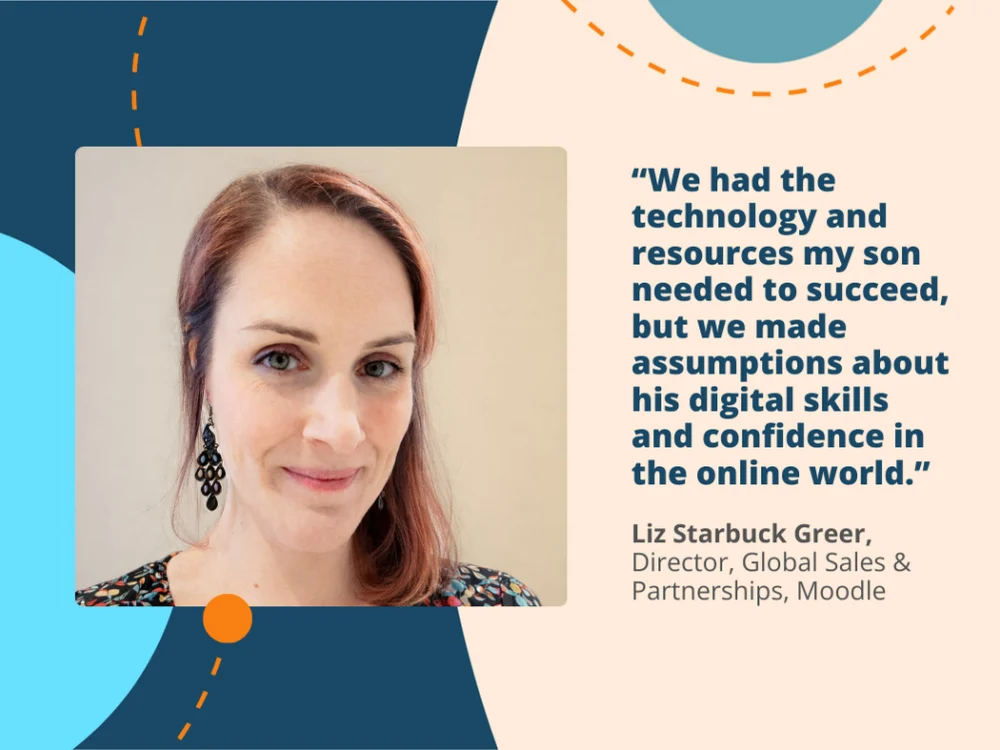
Liz Starbuck Greer, a prominent figure in educational technology and a speaker at MoodleMoot Global 2025, has shared a profound personal experience that highlights a critical distinction often overlooked in the digital learning landscape: the difference between digital confidence and digital competence. Her insights, drawn from a challenging period during the COVID-19 pandemic, underscore the complex nature of "digital capital" and its vital role in ensuring equitable learning outcomes. Greer’s reflections, initially shared in a presentation and a recent Moodle podcast, offer a compelling case study for educators and institutions grappling with the realities of online education.
The Unfolding Digital Divide: A Family’s Struggle
The narrative centers on Greer’s son, a high school freshman at the cusp of a new academic chapter when the unprecedented global health crisis of COVID-19 forced a swift transition to emergency remote learning in the UK. The sudden closure of schools and the abrupt shift to an online environment presented a unique set of challenges for the entire family. While Greer juggled the demands of her professional role, managing hundreds of business school students, supporting stressed staff, and overseeing the online transition of an MBA program, her son experienced a growing disaffection with his education.
This situation arose despite the family possessing what might be considered a high level of digital capital. They had robust internet connectivity, multiple digital devices, and a shared technical proficiency rooted in their professional lives. Greer herself was actively involved in designing and building online courses, a testament to her deep understanding of digital pedagogy. Furthermore, her children, having grown up overseas, were accustomed to leveraging technology for social connections, and her son was an enthusiastic and skilled gamer, demonstrating a high degree of comfort and fluency in certain digital environments. This seemingly advantageous position, however, masked a critical deficit in a different domain of digital literacy.
The Wake-Up Call: When "Untitled Documents" Reveal a Deeper Issue
The family’s realization that something was amiss came not from within, but from an external alert. A teacher reached out, expressing concern that Greer’s son was falling behind and had not been attending scheduled online classes. This revelation was met with disappointment, both by the parents and, implicitly, by the educational institution. It became apparent that their assumptions about their son’s digital readiness for academic pursuits were flawed.
A subsequent in-depth conversation revealed the extent of the disconnect. When asked to access his schoolwork, the son presented a daunting array of hundreds of files, all bearing the generic label "Untitled Document." His responses to inquiries about his work were equally vague: "It’s in one of these. Or maybe the questions are in the chat. Or they might be on email." This chaotic digital landscape pointed to a fundamental lack of foundational digital skills essential for academic engagement.
The investigation unearthed a stark reality: the son lacked the basic organizational skills to title documents, create folders, or navigate his school’s digital drive effectively. His typing skills were slow and rudimentary. He did not know how to independently locate his assignments, nor did he possess the digital etiquette to formulate and send an email with questions. The inconsistency in how different teachers disseminated and collected assignments further compounded his confusion. Each disparate process and expectation, born out of the emergency nature of the transition, amplified his disorientation and diminished his likelihood of success.
Greer reflects, "We’d made the assumption that because he was confident and capable of using technology in a social capacity, he would know how to use it as an online learner. But the skills and norms of using technology in an educational capacity were no more obvious to him than the intricacies of Fortnite were to me." This powerful analogy underscores the idea that proficiency in one digital realm does not automatically translate to another. The experience left her son feeling lost and ultimately, he had "simply given up."
Understanding Digital Capital: Beyond Access and Confidence
Greer’s concept of "digital capital," which she has explored in her MoodleMoot presentation and podcast appearances, provides a crucial framework for understanding these disparities. Digital capital, she explains, is the multifaceted combination of access to technology, acquired skills, accumulated experience, and the availability of social support that collectively shapes an individual’s capacity to effectively utilize digital tools and participate in online environments.
This concept moves beyond the simplistic notion of the "digital divide" as merely a gap in access to devices and internet connectivity. While access is undeniably a foundational element, it is insufficient on its own to guarantee equitable outcomes. The how and why of technology use, along with the depth of benefits derived from that usage, form a much broader picture. By adopting a holistic perspective on the digital advantages or disadvantages learners bring to virtual learning environments, educators can better design experiences that foster success for all.
The Impact of Inconsistent Design in Online Learning
The situation with Greer’s son was exacerbated by the inconsistent digital practices of his educators. While acknowledging the immense pressure and challenges faced by schools during the pandemic, Greer points out that each inconsistent process and expectation created further hurdles for her son. This inconsistency, she suggests, might have been an unintended consequence of educators, like herself, exercising their freedom to design and deliver courses as they saw fit. However, this autonomy, when not carefully considered through the lens of learner experience, can inadvertently make the learning journey more arduous.
The implications of such inconsistencies are significant. For learners with lower levels of digital capital, the lack of clear structure and signposting can lead to confusion and disengagement. Even for those with seemingly high digital confidence, the absence of explicit guidance on academic digital norms can be a significant impediment. As Greer notes, "Until they get started, they don’t know what they don’t know."
Designing for Real-World Digital Realities
Reflecting on the experience, Greer emphasizes the need for intentional design in online learning environments that accounts for the diverse digital realities learners bring. She advocates for:
- Clarity and Consistency: Implementing standardized structures and clear signposting across online courses can greatly benefit all learners, but is particularly crucial for those with less developed digital capital.
- Explicit Instruction: Providing clear, step-by-step instructions for tasks and explicitly modeling expectations for learner interactions can build both skills and confidence.
- Proactive Support: Regularly checking in with learners and identifying those who may be falling behind allows for timely intervention and support.
The COVID-19 pandemic served as an unplanned, high-stakes experiment in remote learning, revealing the critical importance of digital capital. While Greer’s son ultimately navigated his way through the experience and moved on to "bigger and better things," the lessons learned have profound implications for the future of education.
Broader Implications and Data
The challenges highlighted by Greer’s personal anecdote are not isolated incidents. Research consistently points to the digital skills gap, even among digitally native populations. A 2022 report by the Pew Research Center found that while a majority of teens feel they are digitally savvy, a significant portion struggle with essential skills like evaluating online information for accuracy and privacy management. This underscores the fact that "digital savvy" often refers to social media fluency and entertainment consumption, not necessarily academic or professional application.
Furthermore, the shift towards blended and online learning models, accelerated by the pandemic, shows no signs of abating. Data from the National Center for Education Statistics (NCES) indicates a substantial increase in the enrollment of students in online courses across higher education. This trend necessitates a deeper understanding of how to support diverse learners in these environments.
The implications extend beyond individual student success. Institutions that fail to adequately address the varying levels of digital capital among their students risk exacerbating existing inequalities. Students from socioeconomically disadvantaged backgrounds may have less access to reliable technology and fewer opportunities to develop digital skills outside of formal education, further widening the gap.
The Role of Learning Management Systems and Communities
Platforms like Moodle, with their robust community support, can play a pivotal role in addressing these challenges. The "super power" of Moodle, as Greer describes it, lies in its global network of educators and developers who are ready to share best practices, troubleshoot issues, and offer support. This collaborative ecosystem can be instrumental in developing resources and strategies to enhance digital literacy for both learners and educators.
Moving Forward: A Call to Action
Greer’s narrative serves as a powerful reminder that designing effective online learning experiences requires more than just providing access to technology. It demands a nuanced understanding of learners’ digital capital, acknowledging that confidence does not equate to competence. By focusing on clear instruction, consistent processes, and proactive support, educational institutions can create inclusive and equitable digital learning environments where every student has the opportunity to thrive.
As educators and designers continue to shape the future of learning, Greer’s personal journey offers an invaluable lesson: to design not just for the ideal digital learner, but for the complex, diverse realities that all learners bring to the virtual classroom. This approach is essential for bridging the hidden learning gap and ensuring that digital tools truly serve as enablers of educational success for everyone.
The call to action is clear: educators and institutions must invest in understanding and addressing the multifaceted nature of digital capital. This includes providing targeted training and support for learners who may lack essential academic digital skills, even if they appear digitally confident in other contexts. The goal is to move beyond assumption and embrace a proactive, learner-centered approach to digital education, fostering an environment where every student can not only participate but also excel.