



The human inclination to represent complex ideas visually is a fundamental aspect of communication and learning, a natural instinct often surfacing when attempting to clarify intricate concepts. From a rudimentary sketch to an elaborate diagram, individuals instinctively reach for tools to "show" rather than merely "tell." This innate drive finds a powerful, structured expression in concept mapping, a pedagogical strategy that has garnered significant attention from cognitive scientists and educators alike for its profound impact on meaningful learning. More than just a simple graphic organizer, a concept map is a sophisticated visual representation of knowledge, meticulously designed to illustrate relationships between key concepts in a structured, hierarchical, or interconnected manner. While terms like "mind maps" or "spider maps" are sometimes used interchangeably, concept maps possess distinct characteristics, primarily their emphasis on explicit linking words and directional arrows that define precise relationships between "nodes" – the boxes or bubbles containing individual concepts. This methodology, despite its apparent simplicity and minimal technological requirements, offers an incredibly robust framework for enhancing comprehension, retention, and the ability to synthesize information, especially when implemented with a deep understanding of its underlying cognitive principles.
Unpacking the Visual Power: A Cognitive Perspective
The effectiveness of visual aids in learning is not a novel concept; psychological research consistently demonstrates the brain’s remarkable capacity for processing and retaining visual information. This phenomenon is largely explained by the Dual Coding Theory, proposed by Allan Paivio, which posits that both verbal and non-verbal (visual) information are processed and stored in distinct but interconnected systems in the brain. When learners encounter information presented both verbally (e.g., text, lectures) and visually (e.g., diagrams, concept maps), they create two distinct mental representations, thereby enhancing the likelihood of successful retrieval and deeper understanding. Concept maps excel in leveraging this dual-coding advantage by transforming abstract textual information into concrete visual structures.
Beyond dual coding, concept maps engage several other critical cognitive processes. They necessitate active construction of knowledge, moving learners beyond passive reception to actively identifying, organizing, and linking concepts. This process is inherently elaborative, requiring students to think critically about how ideas connect, why certain relationships exist, and what propositions can be formed. Such elaboration fosters deeper processing, which is a hallmark of meaningful learning. Furthermore, the act of creating or interpreting a concept map serves as a powerful form of retrieval practice, compelling learners to recall information from memory and apply it within a new, relational context. This active recall strengthens memory traces and helps identify gaps in understanding. Metacognitive awareness is also significantly boosted, as students are forced to reflect on their own knowledge structures and the completeness of their understanding.
From Nodes to Networks: The Genesis and Evolution of Concept Mapping
The systematic development of concept mapping as a pedagogical tool can be traced back to the 1970s at Cornell University, spearheaded by Professor Joseph D. Novak. His research team sought to develop a method to track and understand changes in children’s knowledge of science, particularly in response to a constructivist learning program. Novak’s work was deeply rooted in David Ausubel’s Assimilation Theory of Meaningful Learning, which emphasizes that new knowledge is acquired by linking it to existing cognitive structures. According to Ausubel, meaningful learning occurs when learners consciously and explicitly integrate new concepts into their pre-existing conceptual frameworks, rather than merely memorizing isolated facts. Concept maps emerged as an ideal tool for this, providing a visual externalization of a learner’s internal cognitive structure.

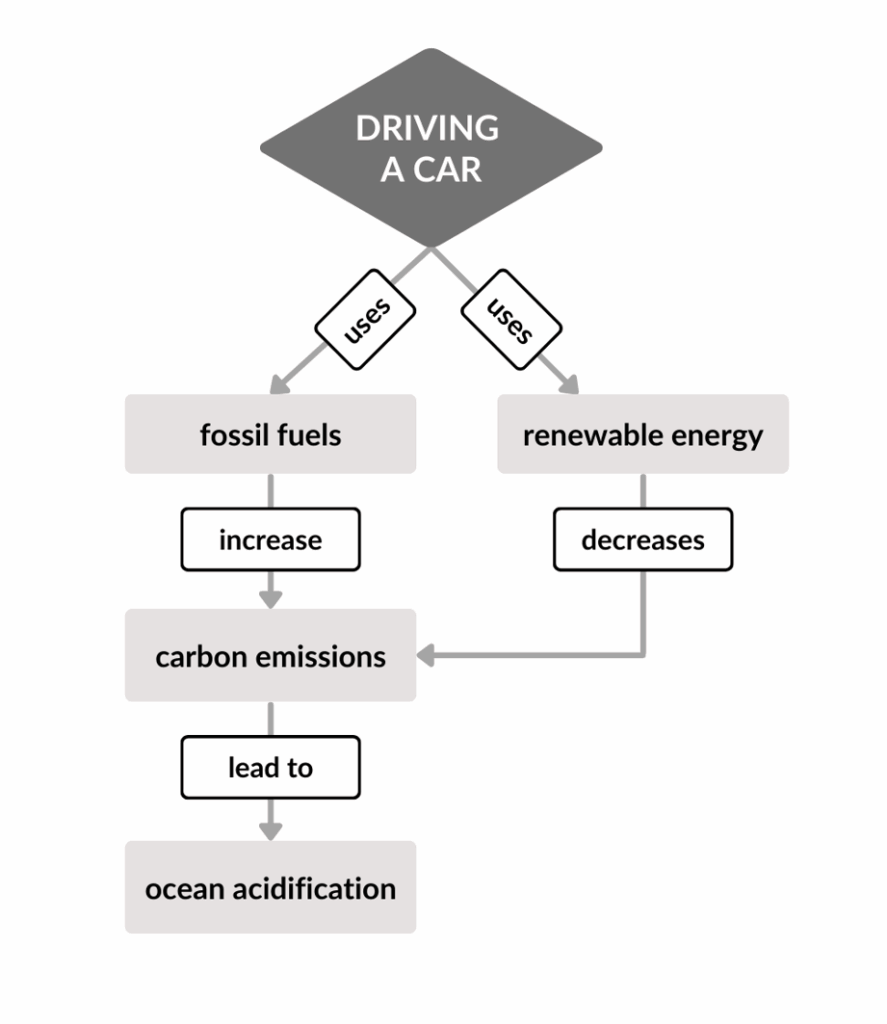
Over the decades, concept mapping has evolved from a niche research tool into a widely recognized and evidence-backed instructional strategy across various disciplines and educational levels. Its distinctiveness lies in its formal structure: concepts are enclosed in nodes (boxes or ellipses), and these nodes are connected by labeled lines or arrows. These labels, known as "linking words" or "linking phrases," articulate the precise relationship between the connected concepts, forming a propositional statement. For instance, "Cars emit Carbon Dioxide" forms a proposition, clearly defining the relationship. This contrasts with simpler "mind maps," which often use single words or images linked by unlabeled lines, serving more as brainstorming or free association tools rather than structured knowledge representations. The explicit nature of linking words in concept maps is crucial for fostering deeper conceptual understanding and revealing potential misconceptions.
The Science Behind Meaningful Learning: Insights from Cognitive Experts
The efficacy of concept maps is not merely anecdotal; it is substantiated by extensive research within cognitive science. Dr. Kripa Sundar, a distinguished cognitive scientist specializing in concept mapping and other learning strategies, is a prominent advocate for their use. Her contributions, alongside those of other experts, are highlighted in the collaborative work "Smart Teaching Stronger Learning: Practical Tips from 10 Cognitive Scientists," edited by Dr. Pooja Agarwal. This book serves as a vital bridge between cutting-edge cognitive research and actionable classroom practices, providing educators with evidence-based strategies to enhance student learning. Dr. Sundar, in particular, has articulated why concept maps are such potent learning instruments, referring to them as "such a packed strategy" that engages multiple facets of cognitive processing simultaneously.
In an article for the American Federation of Teachers (AFT), Dr. Sundar underscored the robust empirical support for concept mapping, citing multiple meta-analyses that consistently demonstrate its effectiveness. These comprehensive reviews of numerous studies often indicate that concept mapping can yield greater learning gains than traditional methods such as lectures, open discussions, or even text summaries. This compelling evidence positions concept maps as a highly impactful pedagogical tool.
Dr. Sundar further elucidates the cognitive underpinnings of concept map effectiveness by connecting them to the three fundamental stages of memory formation: encoding, storage, and retrieval.
- Encoding: The active process of constructing a concept map requires learners to deeply process new information. By identifying key concepts, discerning their relevance, and formulating explicit relationships, students engage in elaborative encoding. This active engagement contrasts sharply with passive reading or listening, leading to more robust initial learning.
- Storage: The visual and relational structure of a concept map aids in organizing knowledge within long-term memory. Instead of storing isolated facts, learners build interconnected schemas, which are mental frameworks that integrate related concepts. This organized storage makes information more accessible and less prone to decay over time.
- Retrieval: Concept maps inherently serve as powerful retrieval cues. The act of creating a map, or even reviewing an existing one, strengthens the pathways to stored information. When students later need to recall information, the visual structure and explicit links provide multiple routes for accessing knowledge, enhancing both the speed and accuracy of retrieval. This reinforces the learned material and aids in transferring knowledge to new contexts.
Crafting Effective Concept Maps: Essential Principles for Educators
While the potential of concept maps is immense, their optimal utility in an educational setting hinges on adhering to specific best practices. Dr. Sundar emphasizes that simply creating a map is not enough; strategic design and implementation are paramount.
-
Clarity of Motivation and Purpose: As with any instructional strategy, the foundational question is "why?" Educators must clearly define the learning objective they aim to achieve with concept mapping. Is it for individual note-taking, a collaborative group activity, a whole-class review, or a formal assessment? The purpose will dictate the map’s complexity, scope, and the level of guidance provided. For instance, a map used for brainstorming might be less structured than one designed to assess deep conceptual understanding. Understanding the "why" ensures that the map serves a specific, beneficial pedagogical function.
-
The Power of a Guiding Question: One of the most critical principles for effective concept mapping is the formulation of a clear "guiding question." This question acts as a focal point, helping to delimit the scope of the map and prevent cognitive overload. Without a guiding question, learners might struggle with where to start, what concepts to include, and how to structure their map, leading to frustration and superficial connections. A well-defined question narrows the focus, ensuring that the map directly addresses a specific learning objective.
Consider the topic of ocean acidification. If the guiding question is "What is the relationship between driving a car and ocean acidification?" the resulting concept map will be relatively contained, focusing on a direct causal chain from vehicle emissions to oceanic chemical changes. It might depict "Driving a car" leading to "Carbon Dioxide Emissions," which "contribute to" "Atmospheric CO2," which then "dissolves in" "Ocean Water," ultimately "leading to" "Ocean Acidification." This focused map clearly illustrates a specific, delimited aspect of the phenomenon.
In contrast, if the guiding question broadens to "What is the relationship between human activities and ocean acidification?", the resulting map becomes significantly more complex and comprehensive. It would encompass a wider array of human actions—industrial processes, deforestation, agricultural practices, alongside vehicle use—all contributing to various greenhouse gas emissions that subsequently impact ocean chemistry. Such a map would feature more nodes, more intricate relationships, and a higher degree of interconnectedness, reflecting the multifaceted nature of the broader inquiry. The difference in complexity underscores how a guiding question precisely calibrates the cognitive effort and the scope of knowledge representation required.
-
The Necessity of Linking Words: While simply drawing lines between concepts might seem intuitive, the explicit inclusion of "linking words" on these lines is perhaps the most defining and powerful feature of concept maps. These words transform a mere connection into a meaningful proposition. For example, instead of just a line between "Sun" and "Plants," a concept map would feature "Sun provides energy for Plants." This seemingly minor addition forces learners to articulate the specific nature of the relationship, moving beyond vague associations to precise conceptual understanding. Dr. Sundar acknowledges that this step, while demanding, "is a pain in the beep," but she emphatically states, "But that’s when you really push your learning harder." This active process of formulating linking words compels deeper critical thinking, helps uncover misconceptions, and reinforces the propositional nature of knowledge. It ensures that the map is not just a collection of terms but a structured argument or explanation of how concepts interrelate.
Beyond Rote Learning: Diverse Applications in the Educational Landscape
The versatility of concept maps allows for their integration across numerous instructional scenarios, catering to different learning objectives and classroom dynamics.

-
Expert Maps for Conceptual Scaffolding: Teachers can create "expert maps" that visually represent the key concepts and their relationships within an upcoming unit of study. These maps serve as powerful organizational frameworks, providing students with a "big picture" overview right from the outset. Dr. Sundar notes that expert maps offer "a wonderful way to show people, look, over the next 16 weeks, we’re going to talk about all of these things. It’s going to feel random at points, but here’s how they all connect." This initial overview helps students build a mental schema into which new information can be integrated, reducing the feeling of disjointed learning. However, a crucial caution from Dr. Sundar is to prevent "concept map shock." Presenting an overly complex expert map upfront can overwhelm students. To mitigate this, teachers can introduce a simplified version, showing only the major concepts and their primary connections, then progressively reveal more detailed layers as the unit advances. This layered approach scaffolds learning and prevents cognitive overload.
-
Efficient and Deep Note-Taking: Traditional linear note-taking, while common, can often lead to lengthy, less interconnected summaries. Concept maps offer a more efficient and conceptually richer alternative. Instead of writing paragraphs, students can capture information visually, using nodes for key ideas and linking words to define relationships. This method encourages conciseness and forces students to actively synthesize information rather than merely transcribe it. As Dr. Sundar explains, "Coming up with a visual representation for it kind of jumps over a lot of the need for lengthy explanations and paragraphs." A practical approach involves maintaining a running list of key terms (on a whiteboard, in notebooks, or digitally) and regularly tasking students with creating or updating concept maps that illustrate how these terms relate to one another. This iterative process reinforces learning and allows students to progressively build their understanding.
-
Formative Assessment for Diagnostic Insight: Concept maps are an exceptional tool for formative assessment, providing teachers with immediate and detailed insights into students’ conceptual understanding. Unlike multiple-choice questions, maps reveal not just what students know, but how they connect that knowledge. By analyzing a student’s concept map, an educator can identify strong connections, highlight areas of confusion, or pinpoint specific misconceptions. One highly effective method is to provide students with a partially completed concept map—perhaps with some nodes filled in and others left blank, or with concepts provided but links missing—and ask them to complete it. This reduces the initial burden of starting from scratch while still requiring significant cognitive effort in constructing relationships. Alternatively, students can be given a central concept and asked to build a map around it, or provided with a list of terms to arrange and link. These approaches allow teachers to diagnose learning gaps and tailor subsequent instruction effectively.
-
Fostering Collaborative Learning: Concept mapping can be a powerful collaborative activity. When students work in groups to construct a map, they engage in rich discussions, debate the relevance of concepts, and negotiate the precise wording of linking phrases. This process fosters peer learning, encourages diverse perspectives, and strengthens communication skills. Group maps can be particularly effective for tackling complex, interdisciplinary topics, as students pool their knowledge and collectively build a shared understanding.
-
Supporting Problem-Solving and Critical Thinking: Beyond knowledge acquisition, concept maps can be instrumental in developing higher-order thinking skills. They can be used to break down complex problems into manageable components, illustrate cause-and-effect relationships in scientific phenomena, or map out arguments in an essay. By visually structuring a problem or argument, students can identify critical elements, foresee potential consequences, and develop more coherent solutions or persuasive arguments.
Navigating the Nuances: Challenges and Considerations
While the benefits of concept mapping are extensive, educators should also be aware of potential challenges. The initial learning curve for both teachers and students can be a hurdle. Teachers need to be adept at designing effective guiding questions and providing clear instructions on linking words. Students, accustomed to more linear learning methods, may find the active construction required by concept maps initially demanding. This is where scaffolding, starting with simpler maps, and providing examples become crucial.
Another consideration is the time investment. Creating detailed, high-quality concept maps, especially with explicit linking words, requires significant cognitive effort and time. Educators must allocate sufficient time for students to engage in this process, emphasizing quality of connections over sheer quantity of concepts. Avoiding "concept map shock" by gradually introducing complexity is key. Furthermore, while concept maps are lauded for their simplicity, they can become cluttered or confusing if too many concepts are introduced without careful organization. Guiding students on hierarchical structuring and cross-links is essential to maintain clarity.
The Digital Horizon: Modern Tools and Future Implications
The advent of digital technologies has further expanded the possibilities for concept mapping. Software tools such as CmapTools (developed by the Institute for Human and Machine Cognition, IHMC), MindMeister, XMind, and Lucidchart offer user-friendly interfaces for creating, editing, sharing, and collaborating on concept maps. These digital platforms can streamline the mapping process, allow for easy revisions, and facilitate peer feedback and teacher assessment. They also enable the integration of multimedia elements, further enriching the visual representation of knowledge.
The broader implications of concept mapping for modern education are profound. In an era saturated with information, the ability to organize, synthesize, and critically evaluate knowledge is paramount. Concept maps directly cultivate these 21st-century skills, moving learners beyond rote memorization to foster deep conceptual understanding and critical thinking. They support personalized learning by allowing students to construct knowledge in a way that resonates with their individual cognitive processes. Moreover, their interdisciplinary applicability makes them invaluable across STEM fields, humanities, and vocational training, promoting a holistic and integrated approach to learning.
Cultivating Deeper Understanding: The Enduring Value of Concept Maps
In conclusion, concept maps stand as a testament to the enduring power of visual learning and active knowledge construction. Backed by rigorous cognitive science research and championed by experts like Dr. Kripa Sundar and Dr. Pooja Agarwal, they offer educators a versatile and highly effective strategy for enhancing meaningful learning. By engaging learners in the active process of identifying concepts, articulating relationships with precise linking words, and organizing knowledge visually, concept maps facilitate stronger encoding, more organized storage, and more efficient retrieval of information. From providing a "big picture" overview to serving as a diagnostic assessment tool, their applications are diverse and impactful. As educational practices continue to evolve, the art and science of concept mapping will undoubtedly remain a cornerstone in cultivating deeper understanding and empowering students to become more effective, self-directed learners.