
The historical trajectory of Chinese clothing, known as Zhongguo fushi, serves as a profound indicator of the nation’s shifting social hierarchies, aesthetic values, and political landscapes. From the structured elegance of the Hanfu to the revolutionary silhouettes of the Qipao, Chinese attire has transcended its primary function as a protective covering to become a sophisticated language of cultural identity. In the contemporary era, this heritage is undergoing a significant renaissance, fueled by the "Hanfu Movement" among younger generations and the increasing integration of traditional motifs into global haute couture. As China’s influence on the global stage expands, the study of its sartorial history provides essential insights into the country’s efforts to balance modernization with the preservation of its civilizational roots.
The Dynastic Foundations of Chinese Attire
The evolution of Chinese clothing is traditionally categorized by the successive dynasties that ruled the region, each introducing distinct regulations regarding color, material, and design to reflect the prevailing social order.
The Han Dynasty (206 BCE – 220 CE) and the Genesis of Hanfu
The Han Dynasty established the foundational aesthetic of traditional Han Chinese dress, or Hanfu. Characterized by the yi (a narrow-sleeved, knee-length tunic) and the chang (a narrow, ankle-length skirt), Hanfu emphasized the Confucian values of modesty and ritual propriety. The garments typically featured a cross-collar design, where the left lapel was wrapped over the right, a style known as youshen. This period saw the codification of clothing laws; for instance, certain shades of silk and specific embroidery patterns were reserved exclusively for the imperial family and high-ranking officials, establishing a visual shorthand for social status that would persist for millennia.
The Tang Dynasty (618 – 907 CE): An Era of Cosmopolitanism
Often cited by historians as the "Golden Age" of Chinese civilization, the Tang Dynasty witnessed a radical shift toward more diverse and expressive fashion. The prosperity brought by the Silk Road introduced foreign influences from Central Asia and Persia. During this era, women’s fashion became notably more liberated, featuring high-waisted skirts and lower necklines. The use of bold colors and intricate floral patterns became widespread. This period also saw the peak of silk production technology, with the development of complex weaves and dyes that made Chinese textiles the most sought-after luxury goods in the ancient world.
The Ming Dynasty (1368 – 1644 CE): Restoration and Refinement
Following a period of foreign rule under the Yuan Dynasty, the Ming Dynasty sought to restore traditional Han customs. Clothing became more structured and formal once again. A significant contribution of this era was the refinement of the "Mandarin collar"—a short, stand-up collar that would eventually become a defining feature of Chinese attire in the eyes of Western observers. Embroidery during the Ming period reached new heights of symbolic complexity, with "rank patches" or buzi being sewn onto the robes of officials to denote their specific civil or military grade.
The Qing Dynasty (1636 – 1912 CE): Manchu Integration
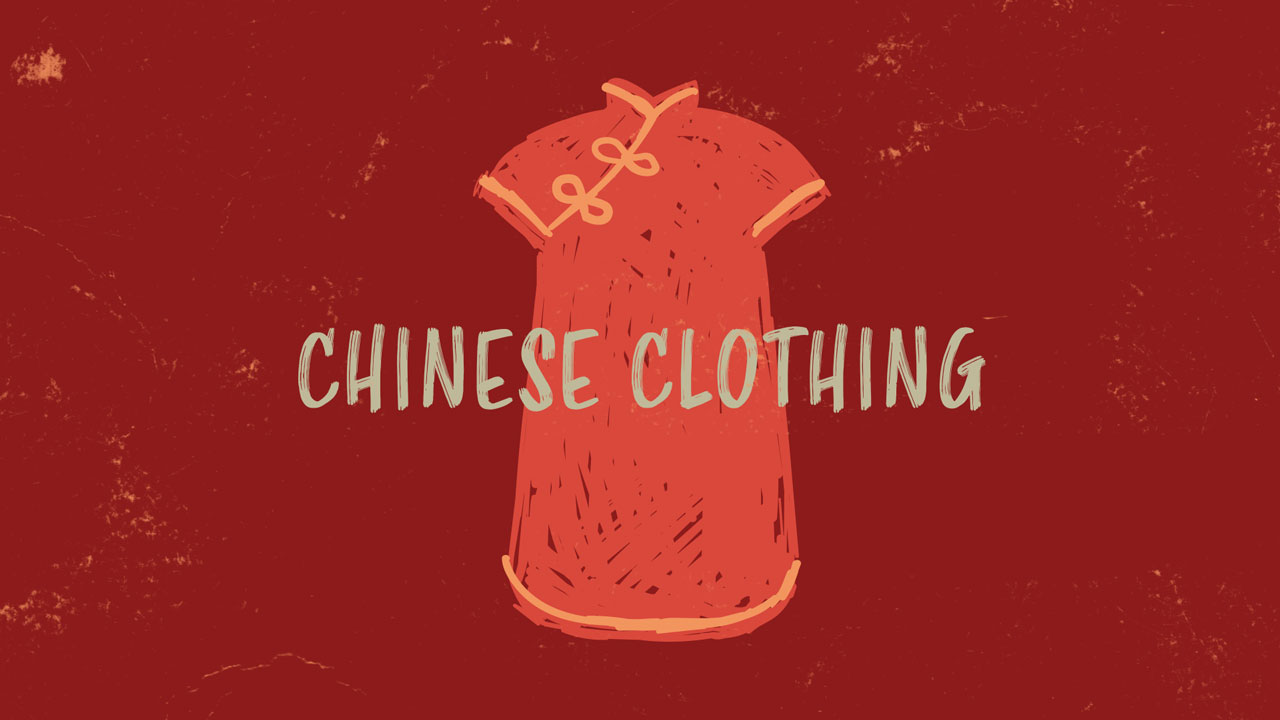
The ascent of the Manchu-led Qing Dynasty introduced the most drastic changes to Chinese dress in centuries. The Manchu rulers mandated the adoption of their ethnic styles, most notably the changpao for men. Over time, the Manchu women’s robe evolved into the qipao (or cheongsam). Originally a loose, T-shaped garment designed to conceal the figure, the qipao underwent a transformation in 1920s Shanghai, becoming the form-fitting, high-slit dress that remains an iconic symbol of Chinese femininity today.
Ethnic Diversity and Geographic Adaptation
While Han culture is predominant, China’s 55 officially recognized ethnic minorities contribute a vast array of sartorial traditions that reflect the country’s diverse geography and climate.
The Plateau and the Tropics
In the high-altitude regions of Tibet, the zangpao (Tibetan robe) is a necessity for survival. Made of heavy wool or sheepskin, these robes feature extra-long sleeves that can be tied around the waist during the heat of the day and let down for warmth at night. Conversely, the Dai people of Yunnan Province wear clothing suited for a tropical climate. Their attire, consisting of short, tight-fitting blouses and wrap-around skirts (sarongs), shares a clear lineage with the traditional dress of Southeast Asian nations like Thailand and Laos, illustrating the cross-border cultural flow of the region.
Central Asian Influence
The Uyghur people of Xinjiang utilize clothing that reflects Islamic heritage and Central Asian trade history. The atlas silk, known for its vibrant, tie-dyed patterns, and the doppa (a four-cornered embroidered cap), are central to their identity. These garments utilize breathable fabrics and intricate needlework, optimized for the arid desert environment of the Northwest.
Materials, Symbolism, and the Language of Color
The selection of materials and colors in Chinese clothing is never arbitrary; it is a calculated expression of philosophy and intent.
Textile Hierarchy
Silk (sichou) has historically occupied the pinnacle of the textile hierarchy. China remained the world’s sole producer of silk for centuries, and the fabric was often used as a form of currency. Beyond silk, linen (yama) and cotton (mianhua) were the staples for the general population, valued for their durability and breathability. Wool (yangmao) was primarily utilized in the northern frontier regions for insulation against harsh winters.
The Symbolic Palette
Color theory in Chinese clothing is deeply rooted in the Five Elements (Wu Xing) philosophy:
- Red (Hongse): Symbolizing fire, luck, and joy, red is the mandatory color for weddings and New Year celebrations.
- Yellow (Huangse): Historically representing the earth, yellow was the exclusive color of the Emperor during many dynasties. Unauthorized use of yellow could result in charges of treason.
- White (Baise): Associated with metal and the west, white is the traditional color of mourning and funerals, representing a departure from the earthly realm.
- Black (Heise): Representing water and the north, black was often used for formal attire and was considered a color of dignity and stability in ancient times.
The Modern Resurgence: The Hanfu Movement and Economic Impact
In the 21st century, Chinese clothing is no longer confined to museums or history books. A burgeoning "Hanfu Movement" (hanfu yundong) has seen millions of young Chinese citizens adopting traditional dress for daily wear. This trend is not merely aesthetic; it is a manifestation of "cultural confidence" (wenhua zixin), a movement encouraged by the state to foster national pride.
Market Data and Digital Influence
According to industry reports from 2023, the market value of the Hanfu industry in China has exceeded 10 billion yuan (approximately $1.4 billion USD). Platforms like Douyin (the Chinese version of TikTok) and Xiaohongshu are flooded with tutorials on traditional hairstyling and "subway-friendly" Hanfu adaptations. This commercial boom has led to a revitalization of traditional weaving and embroidery industries in provinces like Zhejiang and Jiangsu.
Global Haute Couture
On the international stage, Chinese designers such as Guo Pei have gained global acclaim for incorporating imperial-era embroidery into high-fashion gowns. International luxury houses, including Dior, Valentino, and Armani, frequently reference Chinese silhouettes and motifs—such as the dragon, the phoenix, and the crane—in their seasonal collections. However, this global interest has also sparked debates regarding cultural appropriation versus appreciation, leading to more rigorous scholarship and official responses from Chinese cultural organizations seeking to protect the integrity of traditional designs.
Broader Implications and Soft Power
The evolution of Chinese clothing serves as a potent tool for "soft power." By projecting a sophisticated and historically rich image through fashion, China communicates its cultural longevity to the world. The transition from "Made in China" to "Designed in China" is heavily reliant on this heritage.
From a sociological perspective, the return to traditional attire reflects a generational desire to find a unique identity in a globalized world. As modern Chinese citizens navigate a high-tech, fast-paced society, the act of donning a garment designed two thousand years ago offers a tangible connection to a continuous civilization. The ongoing fusion of these ancient styles with contemporary fabrics and functional designs ensures that Chinese clothing will remain a dynamic and evolving force in the global fashion landscape.
As the proverb states, "Ren kao yi zhuang, Fo kao jin zhuang" (People rely on clothes for appearance, just as Buddha relies on gold for decoration). This sentiment remains as relevant in the glass-and-steel skyscrapers of modern Shanghai as it was in the silk-lined courts of ancient Chang’an. The story of Chinese clothing is, ultimately, the story of the Chinese people—a narrative of adaptation, resilience, and an enduring reverence for beauty.