


The human struggle with managing vast quantities of information and adapting to technological disruption is a recurring theme throughout history, manifesting acutely in both the early modern period with the advent of the printing press and today with the rapid rise of artificial intelligence. While separated by centuries, the core challenges—how to discern valuable knowledge amidst a deluge, and how to understand technology’s true impact on society—reveal enduring patterns of human intellectual and economic adaptation. Recent discussions initiated by a historian of science from All Souls College, Oxford, highlighting the 17th-century strategies of Nicolaus Steno, an anatomist, geologist, and later Catholic Bishop, offer a compelling historical parallel to contemporary anxieties surrounding artificial intelligence and its potential implications for the global white-collar workforce.
The Genesis of Information Overload: Nicolaus Steno and the Printing Revolution
The 17th century, the era in which Nicolaus Steno embarked on his scholarly journey, represented a watershed moment in the history of knowledge dissemination. The Gutenberg printing press, invented in the mid-15th century, had, by Steno’s time, matured into a powerful engine for the mass production of books, journals, and pamphlets. This technological leap democratized access to information on an unprecedented scale, moving intellectual discourse beyond the confines of monastic scriptoria and elite universities. However, this liberation of knowledge brought with it a novel and often overwhelming challenge: information overload.
Prior to the printing press, books were rare and expensive commodities, painstakingly copied by scribes. Scholars typically had access to a limited, albeit profound, collection of texts. The very act of reading was often one of deep engagement and memorization. The explosion of printed material, fueled further by the humanist revival of ancient philosophies and the burgeoning scientific revolution, meant that knowledge was becoming available at a pace far exceeding the human capacity for absorption. As an essay shared by a historian of science aptly describes, "Books were a leading distraction in the early modern period—and how envious we should be of those times. From the 1500s onward, with the development of the printing press and the humanist revival of ancient philosophies, knowledge became available at a much greater pace than ever before."
For aspiring thinkers like Steno, born in Copenhagen in 1638, this new reality presented pressing questions that resonate eerily with today’s digital age: "How do we decide what to read? How long should we read it for? Must every single chapter be excerpted?" The sheer volume of new publications, debates, and discoveries meant that a scholar could easily drown in the sea of available texts without a disciplined approach.
Steno’s Innovative Strategies for Intellectual Focus
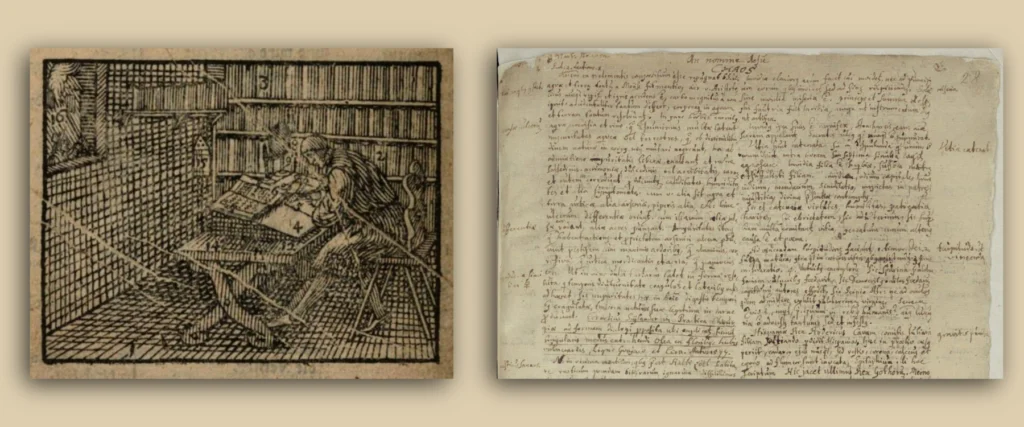
In response to this intellectual deluge, early modern scholars began to develop innovative methods for managing and synthesizing information. One prominent solution was the development of new note-taking techniques. The most notable among these was the "book of commonplaces," a master notebook where scholars would meticulously copy excerpts, observations, and reflections from their readings. This method, detailed in works like William Powell’s 2010 techno-history, Hamlet’s Blackberry, allowed scholars to organize disparate pieces of information under thematic headings, facilitating recall and intellectual synthesis. It was a manual precursor to modern databases and knowledge management systems.
However, as the essay on Steno elaborates, merely better note-taking was often insufficient. The core problem remained the overwhelming number of "good books" competing for a scholar’s attention. Steno, during his university studies in the 1650s, pushed beyond mere organizational tactics to innovate more advanced attention management strategies that strikingly prefigure modern productivity methodologies. He recognized that the greatest challenge was not just storage but selective focus.
Steno’s approach was multifaceted and deeply intentional:
- Thematic Focus: He learned to concentrate on specific themes, consciously resisting the urge to skim multiple topics superficially. He articulated this principle by stating that a "harmful hastening should be avoided" and that his solution was to "stick to one topic." This mirrors the contemporary concept of "deep work," championed by authors like Cal Newport, which advocates for sustained, undistracted focus on cognitively demanding tasks.
- Time Blocking for Priority Tasks: Steno implemented a rigorous schedule, allocating specific blocks of time to his most challenging intellectual endeavors. In his personal notebook, he famously declared, "before noon nothing must be done except medical things." This strict adherence to time blocking ensured that his most critical work received his freshest mental energy. This method, now a cornerstone of modern productivity systems, allowed him to delve into complex subjects without interruption.
- Dedicated Study of Foundational Texts: As he confided to a friend, Steno dedicated "almost all the morning hours" to the study of the Church Fathers and ancient biblical manuscripts housed in the prestigious Medici library. This practice underscores the value of sustained engagement with foundational texts, rather than chasing every new publication. It embodies what some contemporary thinkers refer to as "slow productivity," emphasizing deliberate, high-quality output over frantic, superficial activity.
Steno’s methodical approach, combining thematic focus, rigorous time blocking, and sustained engagement with core texts, allowed him to become a seminal figure in both anatomy and geology. His groundbreaking work on glandular and lymphatic systems, and his foundational principles of stratigraphy (Steno’s Laws), laid critical groundwork for modern scientific understanding, demonstrating the profound impact of disciplined intellectual effort in an era of burgeoning information. His strategies were not merely personal quirks but a systemic response to a new intellectual landscape, offering timeless lessons on cultivating profound thought amidst distraction.
The Modern Echo: AI Anxiety and the White-Collar Workforce
Fast forward to the 21st century, and humanity once again finds itself grappling with a technological shift of monumental proportions: artificial intelligence. The rapid advancements in AI capabilities, particularly in generative AI, have sparked widespread discussions and considerable anxiety regarding its potential impact on employment, especially within white-collar sectors. The parallels with the early modern period’s information overload are striking; while the 17th century saw an explosion of human-generated information, today we face an explosion of algorithm-generated capabilities that promise to transform work itself.
A recent episode that vividly illustrates this modern anxiety occurred just weeks ago, when a small financial services firm, Citrini Research, published an essay describing a bleak scenario for the future of white-collar jobs. The essay posited that AI agents are poised to decimate the professional job market in the near future, painting a picture of widespread technological unemployment. This piece quickly went viral, attracting significant attention across social media and mainstream news outlets. The impact was tangible: the essay was "cited as a factor" in a modest decline of the S&P 500 the very next day, underscoring the market’s sensitivity to perceived economic disruptions.
Escalation of AI Narratives and Economic Pushback
The Citrini essay was not an isolated incident but rather the culmination of a growing narrative. In the preceding weeks, multiple articles and op-eds in major publications had already floated similar scenarios with varying degrees of credulity. Titles such as "AI and the End of White-Collar Work," "The AI Economy: Labor Market Transformation," and "AI Jobs: White-Collar Apocalypse" appeared in prominent outlets like The Atlantic and The New York Times, contributing to a rising tide of public and investor apprehension. These articles, often relying on anecdotal evidence or speculative projections, fueled a perception of imminent and catastrophic job displacement.
However, the negative impact on the stock market served as a critical turning point, prompting a robust pushback from serious economists and financial analysts. The market reaction, even if modest, signaled that these "technological ghost stories" were beginning to move beyond academic debate into real-world economic consequences. This spurred a wave of counter-analyses aimed at providing a more nuanced and evidence-based perspective.
One particularly incisive critique came from a Deutsche Bank analyst, who, perhaps borrowing terminology from discussions about AI reporting, "told the Times" that the Citrini article exhibited a "vibes-to-substance ratio" that was "undeniably high." This pointed observation highlighted a central concern among economists: that much of the alarmist commentary lacked rigorous economic modeling and historical context, instead relying on emotional appeals and speculative rhetoric.
Expert Rebuttals and Economic Realities
Further solidifying the pushback, a detailed response article was published by an analyst from the Global Macro Strategies group at Citadel, a leading global financial institution. This article began with a dose of finance-geek sarcasm, stating, "Despite the macroeconomic community struggling to forecast 2-month-forward payroll growth with any reliable accuracy, the forward path of labor destruction can apparently be inferred with significant certainty from a hypothetical scenario posted on Substack…" This opening immediately set a tone of skepticism towards overly confident, unverified predictions about complex economic phenomena.
The Citadel report then proceeded to systematically dismantle the economic naivety inherent in many of the viral essays and breathless op-eds. It highlighted several critical points often overlooked in alarmist narratives:
- Historical Precedent: Economic history is replete with examples of technological advancements (e.g., the agricultural revolution, the industrial revolution, the internet) that initially sparked fears of mass unemployment but ultimately led to the creation of new industries, jobs, and overall economic growth. While specific jobs are indeed displaced, the labor market adapts and evolves.
- Productivity Paradox: The full economic benefits of revolutionary technologies often take decades to materialize. Early stages of adoption can even lead to a "productivity paradox," where investment in new technology doesn’t immediately translate into aggregate productivity gains. This suggests that the transformative impact of AI on the broader economy, including job displacement, will likely be a gradual process rather than an instantaneous collapse.
- Job Creation and Augmentation: While AI can automate routine tasks, it also creates new roles (e.g., AI trainers, prompt engineers, data scientists) and augments human capabilities, allowing professionals to focus on higher-value, more creative, and interpersonally complex aspects of their work. Many economists argue that AI will be more of a co-pilot than a replacement for most white-collar jobs in the near term.
- Demand-Side Economics: Economic models that predict mass unemployment often fail to account for the dynamic nature of demand. Increased productivity from AI can lower costs, leading to higher demand for goods and services, which in turn can create new jobs in other sectors.
- Implementation Challenges: The widespread integration of AI into complex organizational structures faces significant hurdles, including technical complexities, regulatory challenges, ethical considerations, and the need for workforce retraining. These factors will slow down the pace of adoption and transformation, providing time for adaptation.
The Citadel analysis, alongside similar commentaries from other economists, served to significantly reduce the "blood pressure" surrounding the idea of an immediate AI-driven economic unraveling. It underscored the importance of distinguishing between speculative "vibes" and rigorous economic analysis, advocating for a more measured and evidence-based approach to understanding technological change.
Enduring Principles of Adaptation and Focus
The narratives surrounding Nicolaus Steno’s intellectual discipline in the 17th century and the contemporary debate over AI’s economic impact offer profound, interconnected lessons. Both eras highlight periods of intense technological and informational flux, challenging individuals and societies to adapt.
The lessons from Steno’s era are clear and enduring: the human capacity to think deeply about meaningful ideas is not a recent phenomenon but a core aspect of intellectual progress that has been refined and reinforced since the early modern period, when sophisticated information first became widely accessible. The "best practices" developed then remain remarkably relevant today: avoiding information overload, cultivating focused attention on one task at a time, and strategically blocking off specific hours for mentally demanding efforts. These principles of "slow productivity," "deep work," and "time blocking" are not just historical curiosities but vital tools for navigating the complexities of the 21st-century information landscape.
Similarly, the current "AI Reality Check" underscores the critical importance of measured analysis over fear-mongering. While AI is undoubtedly a transformative technology that will reshape industries and job roles, its impact will be complex, gradual, and subject to economic forces that are far more intricate than simple technological substitution. History teaches us that human ingenuity, adaptability, and the capacity for creating new value often outpace predictions of technological doom.
In essence, both historical episodes remind us that technological advancement, whether a printing press or an AI algorithm, introduces new challenges but also new opportunities for human ingenuity and adaptation. The key lies not in succumbing to panic or distraction but in applying disciplined intellectual strategies, engaging in critical analysis, and fostering resilience to shape, rather than merely react to, the future. As humanity continues its journey through eras of profound change, the timeless principles of focused effort and rational assessment will remain our most valuable guides.