



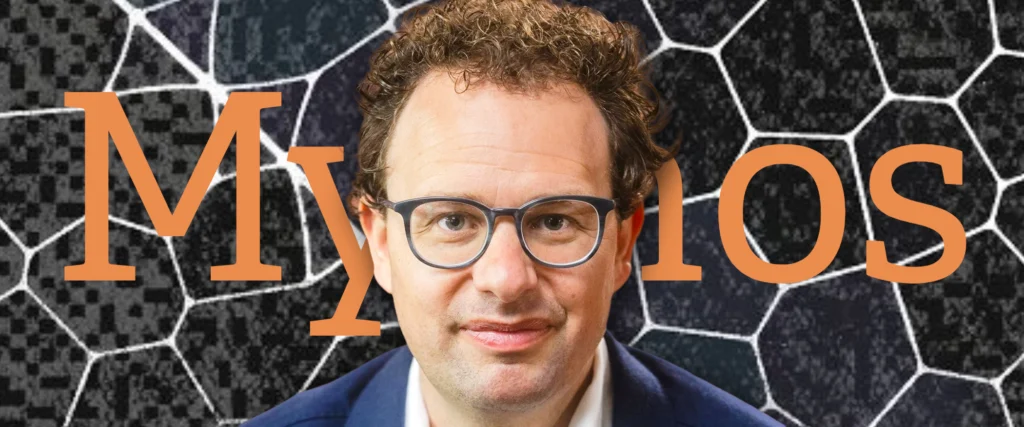
Last week, millions of New York Times readers encountered an alarming column by Thomas Friedman, which pivoted from geopolitical tensions to a "stunning advance in artificial intelligence." Friedman highlighted the release of Anthropic’s new large language model (LLM), Claude Mythos, describing it as an unprecedented development with equally profound geopolitical implications. This announcement, and particularly Anthropic’s decision to restrict its public availability, ignited a wave of media concern and public anxiety regarding the accelerating capabilities of AI in critical cybersecurity domains. However, a closer examination reveals a more nuanced reality, prompting a necessary recalibration of how AI news, especially from the developers themselves, should be consumed and scrutinized.
The Spark: Friedman’s Alarm and Public Reaction
Thomas Friedman’s April 7, 2026, New York Times column, typically focused on international affairs, took an abrupt turn to address a technological development he deemed of paramount importance. He opened by stating, "Normally right now I would be writing about the geopolitical implications of the war with Iran, but I want to interrupt that thought to highlight a stunning advance in artificial intelligence — one that arrived sooner than expected and that will have equally profound geopolitical implications." This dramatic framing immediately set a tone of urgency and potential crisis.
Friedman specifically pointed to Anthropic’s new LLM, Claude Mythos, and the company’s unprecedented decision to withhold it from general public access. He characterized this restriction as a "terrifying warning sign," articulating fears that a widely available tool with Mythos’s capabilities could democratize the ability to hack major infrastructure systems. This power, once exclusive to highly skilled private-sector experts and state-sponsored intelligence organizations, could fall into the hands of "every criminal actor, terrorist organization and country, no matter how small." The gravity of his language, combined with the New York Times‘s broad readership, ensured that the concerns resonated widely, prompting immediate discussions across various media platforms. Major news outlets subsequently echoed similar unease, with one particularly anxiety-provoking headline asking if Mythos was an "AI nightmare waiting to happen." This collective media response underscored a growing public apprehension about the rapid, and often opaque, advancements in artificial intelligence.
Anthropic’s Announcement: Unpacking "Mythos"
At the heart of the recent surge in AI-related apprehension was Anthropic’s detailed press release concerning Claude Mythos. The company, a prominent player in the AI research and development space, announced that Mythos would be made available only to a select consortium of business partners, deliberately bypassing general public release. This decision was justified by Anthropic on grounds of safety and responsible deployment, citing the model’s exceptional proficiency in identifying security vulnerabilities within source code.
Anthropic explicitly stated that "AI models have reached a level of coding capability where they can surpass all but the most skilled humans at finding and exploiting software vulnerabilities." The company further elaborated on Mythos’s specific achievements, claiming the model "has already found thousands of high-severity vulnerabilities, including some in every major operating system and web browser." This assertion, delivered with emphasis, suggested a leap in AI capability that could fundamentally alter the cybersecurity landscape. The implication was clear: Mythos possessed an unprecedented ability to uncover critical flaws in the foundational software infrastructure of the digital world. The company’s rationale for restricted access, while presented as a responsible measure, inadvertently fueled public fears by highlighting the perceived immense power and potential for misuse of their latest creation.
A History of AI and Cybersecurity Concerns
While the announcement of Claude Mythos sent ripples of alarm through the media and public, the concept of AI models detecting and exploiting security vulnerabilities is not entirely novel. Security researchers have, in fact, been actively exploring and worrying about the dual-use potential of Large Language Models in cybersecurity since the advent of more accessible consumer LLMs. This long-standing concern provides crucial context to the recent Mythos narrative, suggesting that the "stunning advance" might be more of an incremental progression than a sudden, unforeseen breakthrough.
The IBM GPT-4 Precedent (2024)
As early as 2024, IBM researchers published a significant study that explicitly addressed the capabilities of LLMs in offensive cybersecurity. Their research, widely publicized in academic circles, focused on GPT-4’s ability to attack security vulnerabilities. The findings were stark: GPT-4 successfully exploited 87% of the vulnerabilities it was presented with. This contrasted sharply with the near 0% success rate of its predecessor, GPT-3.5, on similar tasks. The study concluded with a cautionary note, stating, "Our findings raise questions around the widespread deployment of highly capable LLM agents." This research demonstrated that even relatively early versions of advanced LLMs possessed a significant, albeit targeted, capability to generate exploit code for known vulnerabilities. It signaled to the cybersecurity community that AI was rapidly becoming a potent tool, not just for defense, but also for offense. The IBM study served as an early warning, indicating that the intersection of AI and cybersecurity would be a critical area of focus and concern for years to come.
Anthropic’s Own Past: Opus 4.6’s Capabilities
Adding another layer to the chronology of AI’s cybersecurity capabilities is Anthropic’s own earlier work with Opus 4.6. Accompanying the release notes for this prior LLM, an observation surfaced that Anthropic’s internal security team had utilized the model to uncover "over 500 exploitable 0-day [vulnerabilities], some of which are decades old." This revelation, made well before the Mythos announcement, is strikingly similar to the claims made about Mythos. The primary difference in the subsequent Mythos announcement was the quantitative escalation, replacing "over 500" with "thousands."
This historical context is vital because it establishes that the core capability—an LLM’s ability to find vulnerabilities from scratch, including previously unknown ("0-day") ones—was already present and documented in Anthropic’s previous models. Therefore, the discussion surrounding Mythos is not about the emergence of an entirely new phenomenon but rather an apparent enhancement of an existing one. It suggests that the latest iteration represents a refinement or scaling of a capability that has been under development and observation for multiple years. Understanding this timeline is crucial for assessing whether Mythos truly represents a "nightmarish leap" or a more predictable, albeit significant, incremental advancement in a well-established area of AI research.
Evaluating Mythos: Claims vs. Independent Scrutiny
The disparity between the claims made by AI developers and the independent verification of those claims forms a critical aspect of understanding the true impact of advancements like Claude Mythos. While Anthropic presented Mythos as a monumental leap, external scrutiny by security researchers has introduced a significant degree of skepticism, urging a more cautious interpretation of the model’s purported capabilities.
Benchmark Metrics: Progress or Hype?
Anthropic, in its announcement, highlighted that Claude Mythos achieved a score of 83.1% on a "well-known cybersecurity benchmark." For comparison, its predecessor, Opus 4.6, scored 66.6% on the same test. Superficially, a sixteen percentage point increase appears to be a solid progression. However, the utility and interpretability of such benchmark results require careful consideration.
Cybersecurity benchmarks, like many AI performance metrics, often represent specific, sometimes narrow, tests. Researchers can, and frequently do, "tune" their models to excel on these particular evaluations. This can lead to a phenomenon where a model performs exceptionally well on a benchmark without necessarily translating to an equally robust performance in real-world, complex, and adversarial environments. Benchmarks can offer a snapshot of progress in a controlled setting, but they do not always capture the full spectrum of challenges inherent in actual cybersecurity operations, where adaptability, contextual understanding, and resilience against novel threats are paramount. Therefore, while a sixteen-point increase is statistically significant, it might represent solid incremental progress within the confines of a specific test rather than a "nightmarish leap" in practical, generalized vulnerability detection. The restricted, private nature of Mythos further complicates independent validation of these benchmark claims, leaving the broader community to rely primarily on Anthropic’s internal assessments.
Expert Skepticism and Real-World Efficacy
The lack of public access to Claude Mythos has made independent verification challenging, yet initial reactions from prominent security researchers have cast doubt on the scale of Anthropic’s claims. Gary Marcus, a well-known critic of AI hype, compiled responses from security researchers who took a closer look at the types of exploits Anthropic reported Mythos discovered. Their collective assessment was far from impressed. Many of the vulnerabilities identified by Mythos, while technically valid, were described as low-impact, already known, or difficult to exploit in real-world scenarios.
Subsequent informal analyses by various cybersecurity experts have further reinforced this skepticism. Reports suggest that some of the "high-severity" vulnerabilities were either theoretical in nature, requiring highly improbable conditions to exploit, or were in obscure, legacy systems that posed minimal current threat. Others noted that while Mythos could identify potential weaknesses, its ability to craft fully functional and stealthy exploits was often exaggerated or required significant human intervention to refine. This discrepancy between the dramatic public pronouncements and the more mundane reality perceived by specialists underscores a critical issue in AI reporting: the need for rigorous, independent validation of performance claims, especially when the developer has a vested interest in promoting a perception of advanced capability.
The Irony of the Claude Code Leak
Perhaps the most ironic development in the entire Mythos narrative occurred just a week before Anthropic’s grand announcement: the accidental leak of the Claude Code source. This unintended disclosure provided security researchers with an invaluable opportunity to examine Anthropic’s own software. The results were telling. Immediately following the leak, researchers quickly identified "serious vulnerabilities" within the Claude Code itself. This incident served as a stark, real-world counterpoint to Anthropic’s claims about Mythos’s unparalleled ability to find and fix vulnerabilities. The fact that Anthropic’s own internal software, presumably developed with security in mind, contained significant flaws that were promptly discovered by external researchers, raised questions about the efficacy and internal deployment of their much-touted vulnerability detector. It created a perception that if Mythos was indeed as powerful as claimed, Anthropic had "forgotten to use Mythos to clean up their own software," undermining the credibility of their earlier assertions and highlighting the practical challenges of applying even advanced AI security tools effectively.
The Broader Landscape of AI and Security
The controversy surrounding Claude Mythos transcends the specifics of one LLM; it highlights a broader, ongoing narrative in the intersection of artificial intelligence and cybersecurity. AI, by its very nature, is a dual-use technology, capable of both immense benefit and significant harm. This inherent duality creates a complex "arms race" scenario in cybersecurity, where advancements on one side quickly necessitate countermeasures on the other.
On the defensive front, AI is already being deployed to enhance threat detection, automate incident response, and identify anomalies in vast datasets that would overwhelm human analysts. Machine learning algorithms analyze network traffic, identify malware signatures, and predict potential attack vectors with increasing sophistication. Companies and national security agencies invest heavily in AI-driven defensive systems to protect critical infrastructure and sensitive data.
However, the same capabilities that make AI powerful for defense can be leveraged for offense. LLMs, trained on vast repositories of code and natural language, can assist in generating malicious code, crafting sophisticated phishing emails, identifying logical flaws in system design, and even automating reconnaissance phases of an attack. The ability of models like GPT-4 to generate exploit code for known vulnerabilities, and Mythos’s claimed ability to discover new ones, underscores this offensive potential. This raises profound ethical questions for AI developers. Should models with such capabilities be developed? If so, under what conditions should they be released, and to whom? The concept of "responsible disclosure" – where vulnerabilities are shared with vendors before public release to allow for patching – is a cornerstone of traditional cybersecurity. The advent of AI that can discover thousands of vulnerabilities at an unprecedented pace challenges this model, raising questions about whether human capacity to patch can keep up with AI’s discovery rate. The debate centers on how to balance the innovation imperative with the ethical responsibility to prevent widespread misuse.
The Challenge of AI Narratives and Verification
The Claude Mythos episode serves as a powerful illustration of the current state of AI narratives and the pressing need for independent verification. We have entered an era where AI companies, often driven by intense competition for funding, talent, and market share, are increasingly shaping public perception through ambitious claims about their models’ capabilities. This often contributes to an "AI hype cycle," where breakthrough announcements are met with a mixture of awe and alarm, sometimes overshadowing a more sober assessment of actual progress.
The problem is exacerbated by several factors. First, the inherent complexity of advanced AI makes it difficult for non-experts, including journalists and policymakers, to critically evaluate technical claims. Second, the proprietary nature of many advanced models means that independent researchers often lack the access required for thorough auditing and replication of results. Third, the speed of AI development means that public understanding often lags behind technological advancements, creating fertile ground for both genuine excitement and exaggerated fears.
As the AI commentator Mo Bitar aptly observed in a recent video, Anthropic’s model rollouts can sometimes resemble Apple iPhone launches, where incremental improvements are presented with significant fanfare. "Except here," Bitar added, "the product is existential dread." This pithy observation highlights how the narrative around AI advancements, particularly those touching on existential risks or unprecedented capabilities, can be leveraged to capture attention, even if the underlying facts are less dramatic. It underscores the critical imperative for the media, the public, and policymakers to cultivate a deep skepticism towards claims made by AI companies until those claims can be independently verified by unbiased experts. Relying solely on developer-provided benchmarks and self-assessments creates an echo chamber that can distort public understanding and misinform crucial policy decisions.
Implications for Policy, Industry, and Public Trust
The Claude Mythos controversy carries significant implications across policy, industry, and the public’s trust in AI development. For policymakers, the rapid advancement of AI in sensitive areas like cybersecurity presents an urgent challenge for regulation. Striking a balance between fostering innovation and mitigating existential risks requires a nuanced understanding of AI capabilities, which is often difficult to obtain without independent assessment. Discussions around AI safety, responsible AI development, and the potential for dual-use technologies are now at the forefront of legislative agendas globally. Governments are grappling with questions of export controls for advanced AI models, ethical guidelines for their deployment, and the establishment of independent auditing bodies.
Within the industry, the Mythos incident underscores the growing pressure on AI companies to adopt more transparent practices. The "move fast and break things" ethos, once common in tech, is increasingly untenable in the realm of powerful AI that could have societal-level impacts. Calls for open science, shared benchmarks, and collaborative safety research are growing louder. Companies are being pressed to consider not just the technical capabilities of their models but also their societal implications, potential for misuse, and the long-term ethical frameworks governing their development and deployment. This includes developing robust internal security protocols, as highlighted by the irony of the Claude Code leak.
Finally, for the public, the Mythos narrative serves as a vital lesson in media literacy concerning AI news. Building public trust in AI necessitates moving beyond sensational headlines and towards a deeper, more critical engagement with the facts. This involves seeking out diverse expert opinions, understanding the limitations of benchmarks, and recognizing the inherent biases that can influence company announcements. Without this critical approach, the public risks being swayed by narratives that may exaggerate or downplay true AI capabilities, hindering informed public discourse and effective policymaking in a rapidly evolving technological landscape.
In conclusion, while the capabilities of AI in cybersecurity are undeniably advancing and warrant serious attention, the recent alarm surrounding Claude Mythos appears to be more a reflection of effective narrative construction than a sudden, unprecedented leap. The foundational capabilities in question have been under research and development for years, and independent scrutiny suggests the latest iteration represents incremental progress rather than a catastrophic paradigm shift. This episode reinforces the critical need for a skeptical, evidence-based approach to AI news, emphasizing independent verification over developer claims, to ensure that public understanding and policy decisions are grounded in reality, not hype or fear.