

Ten years ago marked the publication of Cal Newport’s seminal work, Deep Work: Rules for Focused Success in a Distracted World. Released in 2016, the book quickly transcended the traditional self-help genre, establishing itself as a critical commentary on the evolving landscape of modern productivity and the increasing erosion of focused attention. As the book commemorates its tenth anniversary, Newport has recently issued a stark warning through a New York Times essay, articulating that the challenges he identified a decade ago have not only persisted but have significantly worsened, pushing humanity to the brink of losing its capacity for profound thought. This declaration underscores a growing concern among thought leaders, educators, and mental health professionals about the profound societal and individual implications of an increasingly distracted world.
The Genesis of a Movement: ‘Deep Work’ in Context
When Deep Work first arrived on the scene, it followed Newport’s previous title, So Good They Can’t Ignore You: Why Skills Trump Passion in the Quest for Work You Love. The initial reception for the latter had been modest, leading to tempered expectations for Deep Work. This lower pressure, however, proved liberating for Newport, allowing him to delve into the intricate conceptual edges of distraction and focus that genuinely captivated him. His fascination lay in the paradox of knowledge work: organizations systematically undervalued sustained focus, despite its clear economic benefits. Newport envisioned his work as a "Moneyball for the cubicle class," advocating for a strategic re-evaluation of cognitive assets. Beyond the economic rationale, he held a deep philosophical conviction that thinking was fundamental to the human experience, the wellspring of our most profound ideas, satisfactions, and even moments of transcendence.
This fusion of economic pragmatism and philosophical depth distinguished Deep Work from its contemporaries. The prevailing trend in the productivity genre often featured anecdotal narratives of overwhelmed executives, followed by statistics on interruptions and generic, actionable tips presented in a light, conversational tone. Deep Work, however, adopted a more rigorous and intellectually diverse approach. Newport eschewed conventional tropes, instead drawing from an eclectic array of sources. He quoted philosophers of religion, profiled a blacksmith employing ancient forging techniques, highlighted the feats of a memory champion, and explored chavruta, the Jewish practice of paired Talmudic study. Rather than opening with a relatable tale of corporate stress, Newport delved into Carl Jung’s deliberate efforts to distance himself from Sigmund Freud’s intellectual capriciousness, illustrating a historical precedent for intentional focus. This idiosyncratic, direct engagement with his core fascinations resonated deeply with readers, indicating that he had tapped into a fundamental, unaddressed tension in contemporary work culture.
The book’s reception was nothing short of remarkable. It went on to sell over two million copies in more than 45 languages, becoming a global phenomenon and establishing Newport as a leading voice in the discourse on productivity and attention. Its success also provided retrospective vindication for So Good They Can’t Ignore You, which subsequently found its audience, quietly selling over half a million copies. The enduring appeal of Deep Work highlighted a widespread hunger for strategies to reclaim focus in an increasingly fragmented world, signaling that Newport’s initial assessment of an undervalued skill was profoundly accurate.
A Decade of Deterioration: The Intensification of Distraction (2016-2026)
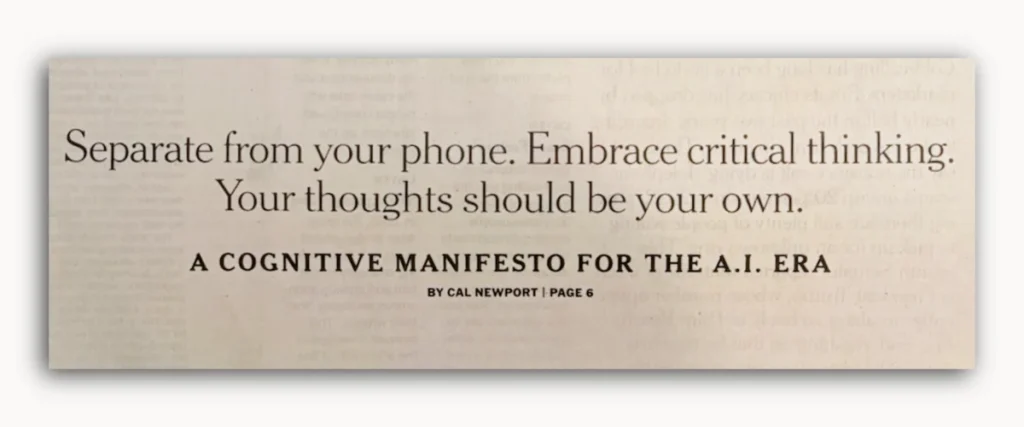
The ten years since Deep Work‘s publication have witnessed an accelerating decline in collective attention spans, fueled by a relentless proliferation of digital tools and platforms. Newport’s recent New York Times essay, published over the weekend, presents an alarming assessment: "The problems I focused on in Deep Work, and in my writing since, have been getting steadily worse. In 2016 my main concern was helping people find enough free time for deep work. Today I think we’re rapidly losing the ability to think deeply at all, regardless of how much space we can find in our schedules for these efforts." This shift from a battle for time to a battle for cognitive capacity itself marks a critical escalation of the problem.
The Workplace: A Constant Barrage
In 2016, email was often cited as the primary digital disruptor in the workplace. While still a significant factor, the intervening decade has introduced and normalized an array of even more immediate and demanding communication tools:
- Instant Messaging Platforms (Slack, Microsoft Teams): These platforms have become ubiquitous, fostering an "always-on" culture where employees are expected to respond instantaneously. Studies consistently show that constant notifications and the pressure to participate in multiple chat channels lead to frequent context switching, which can reduce productivity by as much as 40% and increase error rates. A 2023 survey by RescueTime indicated that knowledge workers check communication apps every six minutes on average, disrupting focus repeatedly throughout the day.
- Video Conferencing (Zoom, Google Meet): While invaluable for remote and hybrid work, the explosion of video meetings has introduced "Zoom fatigue." The cognitive load of processing non-verbal cues, maintaining eye contact, and seeing oneself on screen contributes to exhaustion, leaving less mental energy for deep, analytical tasks. Many organizations have seen meeting loads increase dramatically, with workers spending upwards of 50% of their time in virtual meetings, often without clear objectives.
- The "Hyperactive Hive Mind": Newport himself coined this term to describe a work culture characterized by unstructured, unscheduled, and ongoing digital communication. This environment prioritizes constant connection over focused individual effort, making sustained concentration an anomaly rather than the norm.
The Personal Sphere: Optimized for Distraction
Beyond the office, personal digital habits have undergone an even more profound transformation, transitioning from mere distraction to sophisticated attention-capture mechanisms:
- Social Media’s Metamorphosis: In 2016, platforms like Facebook and Instagram were largely admired for their ability to connect people. Today, Newport describes social media as an "addictive TikTok-ified slurry of optimized brain rot." The rise of short-form, algorithmically curated content, exemplified by TikTok, has fundamentally reshaped digital consumption. These platforms are engineered to maximize engagement through dopamine-driven feedback loops, shortening attention spans and fostering a craving for constant novelty. Data from Statista shows that average daily social media usage has increased significantly since 2016, with users spending several hours a day scrolling through feeds, often subconsciously.
- Smartphone Ubiquity and Notifications: The smartphone, already prevalent in 2016, has become an indispensable extension of the self. Constant notifications, from news alerts to app updates, serve as perpetual interruptions, making it challenging to disconnect and engage in sustained thought, even during leisure time. Research by Deloitte found that individuals check their phones dozens of times a day, often without a specific purpose, highlighting an ingrained habit of digital seeking.
- The Erosion of Leisure: What once might have been time for quiet contemplation, reading, or hobby engagement is now often filled with passive digital consumption, further diminishing opportunities for the brain to engage in slower, deeper processing.
The AI Factor: A New Frontier of Cognitive Erosion?
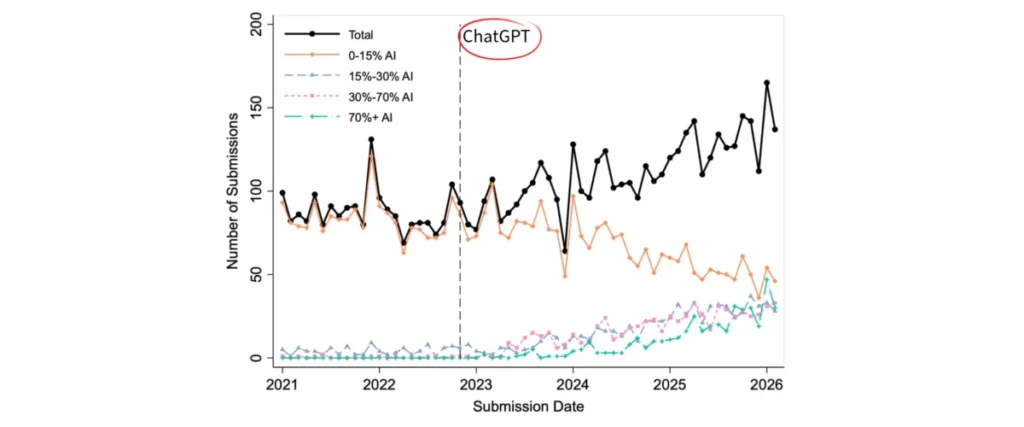
The most recent development adding complexity to this landscape is the rapid emergence of Artificial Intelligence (AI) tools. While offering unprecedented efficiencies, AI presents a dual-edged sword in the context of deep work:
- Quick-Fix Shortcuts: Tools like large language models (LLMs) can generate summaries, draft content, or solve problems that once required significant intellectual effort. While this can free up time, Newport warns that it risks offering "quick-fix short-cuts to whatever intellectually engaging work activities remain." The concern is that over-reliance on AI for cognitive tasks could atrophy human critical thinking, problem-solving, and creative synthesis skills.
- The "Prompt Engineering" Trap: If the future of knowledge work becomes primarily about crafting effective prompts for AI, rather than deeply understanding and executing complex tasks, the very nature of human intellectual contribution could be fundamentally altered, potentially reducing opportunities for genuine deep work.
- Augmentation vs. Replacement: The ongoing debate centers on whether AI will primarily augment human capabilities, allowing for deeper work on more complex problems, or if it will replace the need for deep thinking in many areas, leading to a broader deskilling of the workforce. Newport’s perspective leans towards the latter, highlighting the risk to cognitive fitness.
The Broader Implications: A Societal Crisis of Cognition
The collective decline in the ability to think deeply carries profound implications across society:
- Reduced Innovation and Problem Solving: Deep work is the bedrock of innovation. Complex problems, whether in science, engineering, or policy, require sustained, undistracted cognitive effort. A society losing this capacity may struggle to generate breakthrough ideas or address its most pressing challenges effectively.
- Erosion of Expertise: True expertise is built through years of deep learning, deliberate practice, and focused reflection. If individuals are constantly distracted, their ability to acquire and retain complex knowledge, and thus develop genuine expertise, may be compromised.
- Impact on Education: The challenges of distraction are deeply felt in educational settings. Students, accustomed to constant digital stimulation, often struggle with tasks requiring sustained reading, analytical writing, or focused study, raising concerns about future generations’ cognitive resilience.
- Mental Health and Well-being: The constant stimulation and pressure to be "always on" contribute to increased stress, anxiety, and burnout. The superficiality of digital interactions can also leave individuals feeling less connected and fulfilled, even while being constantly "connected."
- Societal Polarization and Misinformation: A decline in deep, critical thinking can make individuals more susceptible to misinformation and less capable of engaging in nuanced discussions. This can exacerbate societal divisions and hinder collective decision-making.
The Call for a Cognitive Revolution: Reclaiming the Mind
Faced with this escalating crisis, Newport does not merely lament the situation but issues a powerful call to action: a "revolution in defense of thinking." He argues that passive fretting is no longer sufficient; decisive action is required to reclaim cognitive autonomy.
While the New York Times essay details specific actions, broadly, Newport’s philosophy suggests a multi-pronged approach encompassing both individual discipline and systemic change:
- Individual Digital Minimalism: This involves a conscious and disciplined reduction of digital consumption to only what serves a clear purpose. It means critically evaluating every app, every notification, and every online habit, and ruthlessly eliminating those that detract from focus and well-being. This could involve scheduled digital detoxes, strict app usage rules, and the re-cultivation of analogue hobbies.
- Structured Deep Work Practices: Re-establishing rituals and routines that protect blocks of uninterrupted time for focused intellectual effort. This includes scheduling deep work sessions, creating dedicated distraction-free environments, and employing strategies like time-blocking to manage one’s schedule proactively.
- Re-evaluation of Communication Tools and Norms: Advocating for workplace policies that prioritize asynchronous communication over instant messaging, encouraging the reduction of unnecessary meetings, and fostering a culture where sustained focus is respected and rewarded. This might involve clear guidelines on email response times, "no meeting" days, and a shift towards project-based communication rather than constant, reactive interaction.
- Institutional Advocacy for Focus: Beyond individual efforts, the revolution calls for broader changes in how organizations and educational institutions are structured. This means designing work environments that minimize interruptions, investing in training that cultivates focus skills, and recognizing deep work as a core competency.
- A Philosophical Shift: At its heart, the revolution is a call to re-instill a societal respect for the act of cognition itself. It challenges the prevailing notion that busyness and constant connectivity equate to productivity, instead championing the deliberate, slow, and often solitary process of deep thought.
Newport articulates the urgency with conviction: "I’m done ceding my brain — the core of all that makes me who I am — to the financial interests of a small number of technology billionaires or the shortsighted conveniences of hyperactive communication styles. It’s time to move past fretting about our slide into the cognitive shallows and decide to actually do something about it."
Expert Perspectives and Future Outlook
Newport’s alarm resonates with a growing body of research and expert opinion. Neuroscientists like Dr. Adam Gazzaley have extensively documented the impact of digital multi-tasking on brain function, highlighting the diminished capacity for sustained attention. Psychologists such as Sherry Turkle have long warned about the corrosive effects of constant connectivity on human relationships and introspection. Even within the technology industry, there’s a burgeoning movement among former executives and designers who express regret over the addictive nature of the products they helped create, advocating for more ethical design principles.
While some might argue that technological advancement is inevitable and adaptation is key, Newport’s thesis posits that certain adaptations come at too high a cognitive cost. The debate is no longer merely about efficiency or convenience; it is about the fundamental preservation of human intellectual capacity. The call for a cognitive revolution is a recognition that the stakes are higher than ever, demanding a conscious and collective effort to safeguard the very essence of human thought in an increasingly demanding and distracting digital age. The next decade will undoubtedly determine whether this revolution gains traction, or if society continues its slide into what Newport describes as the "cognitive shallows."