

The evolutionary transition from egg-laying reptiles to live-bearing mammals has long remained one of the most significant mysteries in biological history. While modern monotremes, such as the platypus and echidna, provide a living link to this past by laying eggs despite being mammals, the fossil record for the earliest mammalian ancestors has been notably sparse regarding reproductive evidence. However, a landmark study published on April 9 in the journal PLOS One has provided the most definitive evidence to date. By analyzing a 250-million-year-old fossilized embryo of the genus Lystrosaurus, researchers have confirmed that these pivotal mammalian ancestors reproduced via soft-shelled eggs, a strategy that may have contributed to their remarkable survival during Earth’s most devastating mass extinction.
The Karoo Basin Discovery and the Role of Technological Advancement
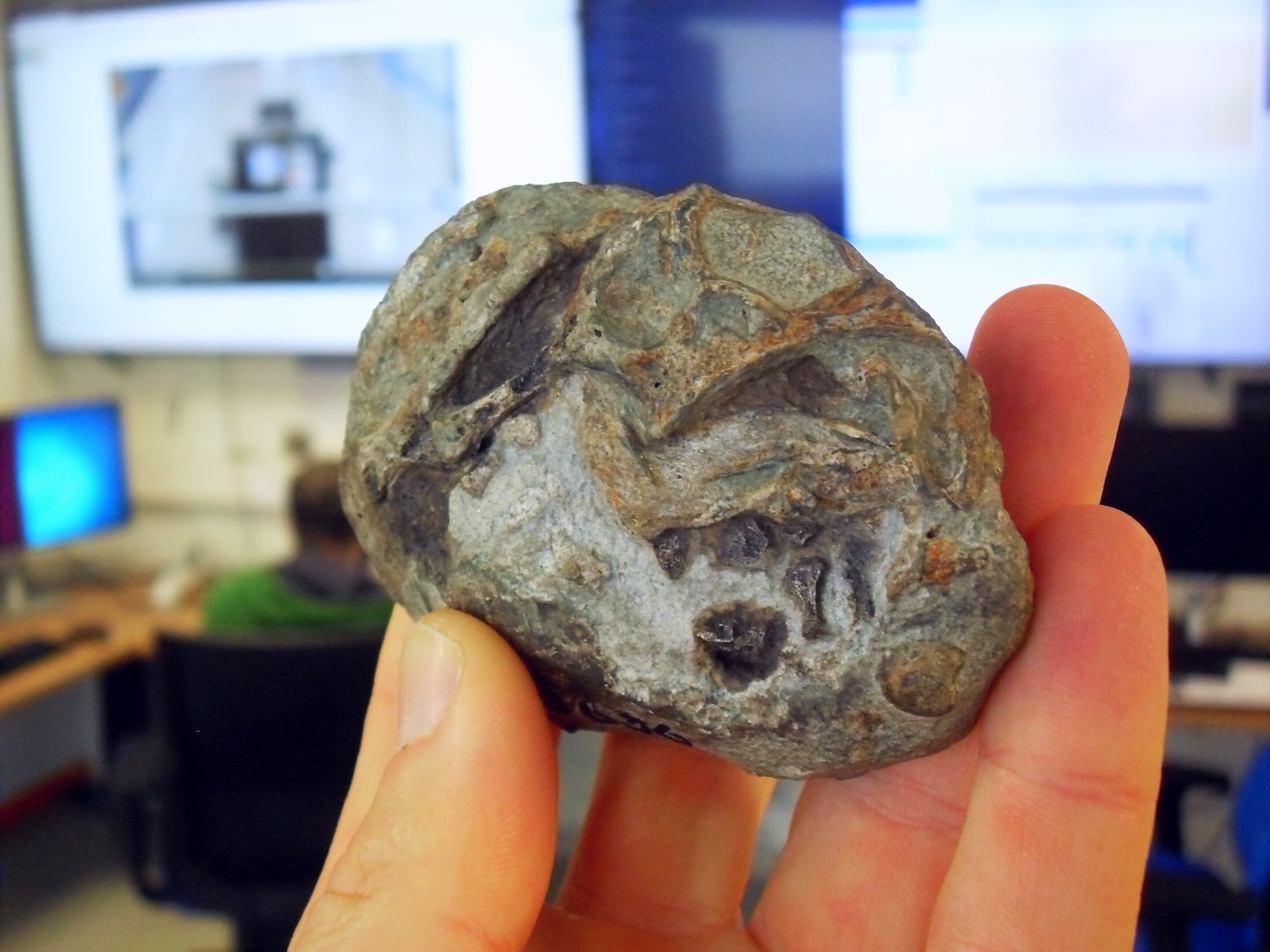
The journey to this discovery began nearly two decades ago in the Karoo Basin of South Africa. This vast, arid region, located approximately 200 miles northeast of Cape Town, is globally renowned among paleontologists as a premier site for Permian and Triassic fossils. In 2008, John Nyaphuli, a veteran fossil finder and preparator working with the University of the Witwatersrand, identified a small, unassuming mineral nodule. Initial inspection revealed only microscopic flecks of bone, but as Nyaphuli meticulously cleaned the specimen, the skeletal remains of a perfectly curled-up Lystrosaurus hatchling began to emerge.
Despite the visual evidence suggesting an embryonic state, the scientific community required more than a visual match to confirm the specimen’s origin. In 2008, the imaging technology necessary to look inside the fossilized remains without destroying them was not sufficiently advanced to provide a conclusive answer. The specimen remained in a state of scientific limbo for over fifteen years, awaiting the development of non-invasive high-resolution imaging.
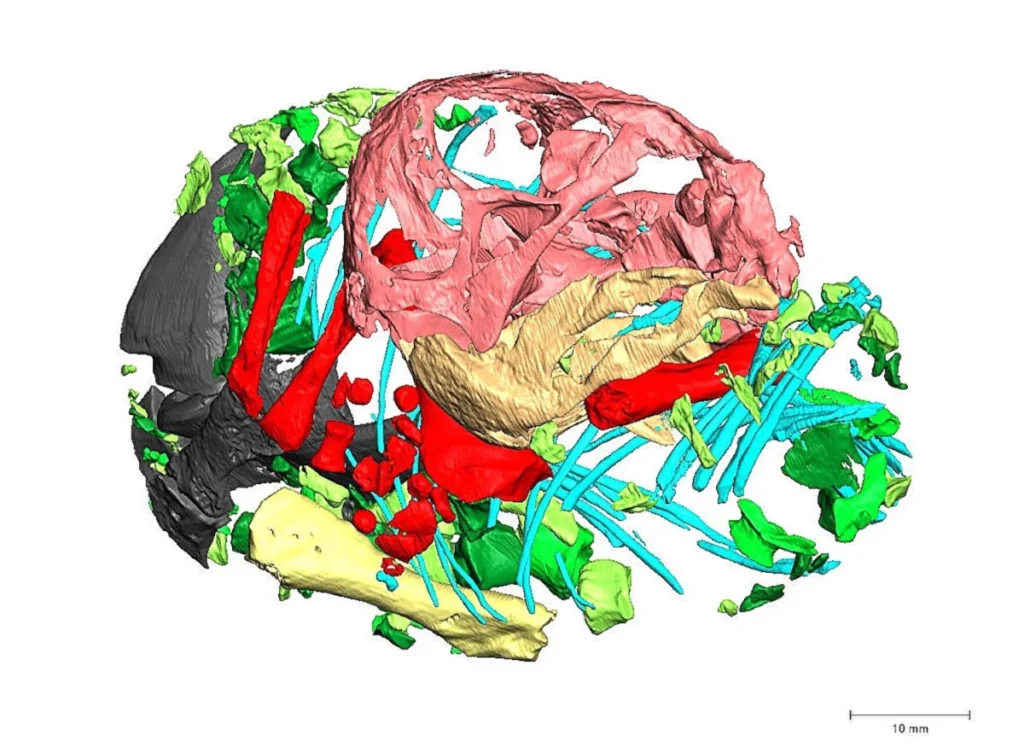
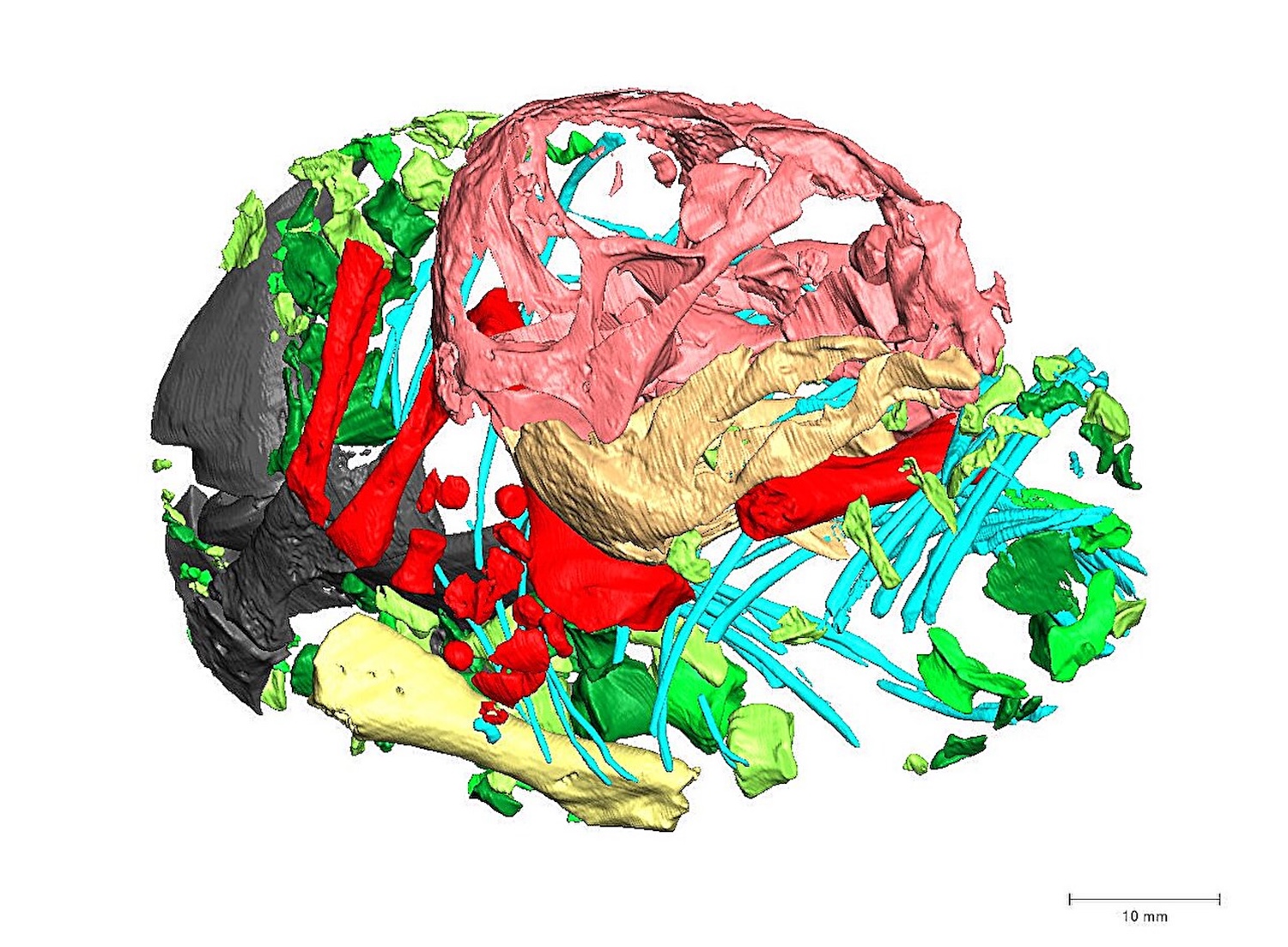
The breakthrough finally arrived with the application of synchrotron X-ray CT scanning. Jennifer Botha, a paleobiologist at the University of the Witwatersrand, transported the fossil to the European Synchrotron Radiation Facility (ESRF) in Grenoble, France. This facility utilizes a particle accelerator to produce high-intensity X-rays, allowing researchers to create three-dimensional reconstructions of the internal structures of fossils with micrometer-level precision. This technology allowed the team to examine the specimen’s skeletal development in unprecedented detail, leading to the identification of the "smoking gun" of its embryonic status.
Anatomical Evidence: The Mandibular Symphysis
The primary evidence for the specimen being an unhatched embryo lies in its jaw structure. Using the synchrotron data, the research team, including University of the Witwatersrand paleobiologist Julien Benoit, focused on the mandibular symphysis—the point where the two halves of the lower jaw meet.
In vertebrates that are born or hatched ready to feed themselves, this section of the jaw is typically fused or highly developed to withstand the mechanical stress of eating. However, the scans revealed that the jaw halves of the Lystrosaurus specimen had not yet fused. This incomplete development meant the individual would have been physically incapable of independent feeding at the time of its death.
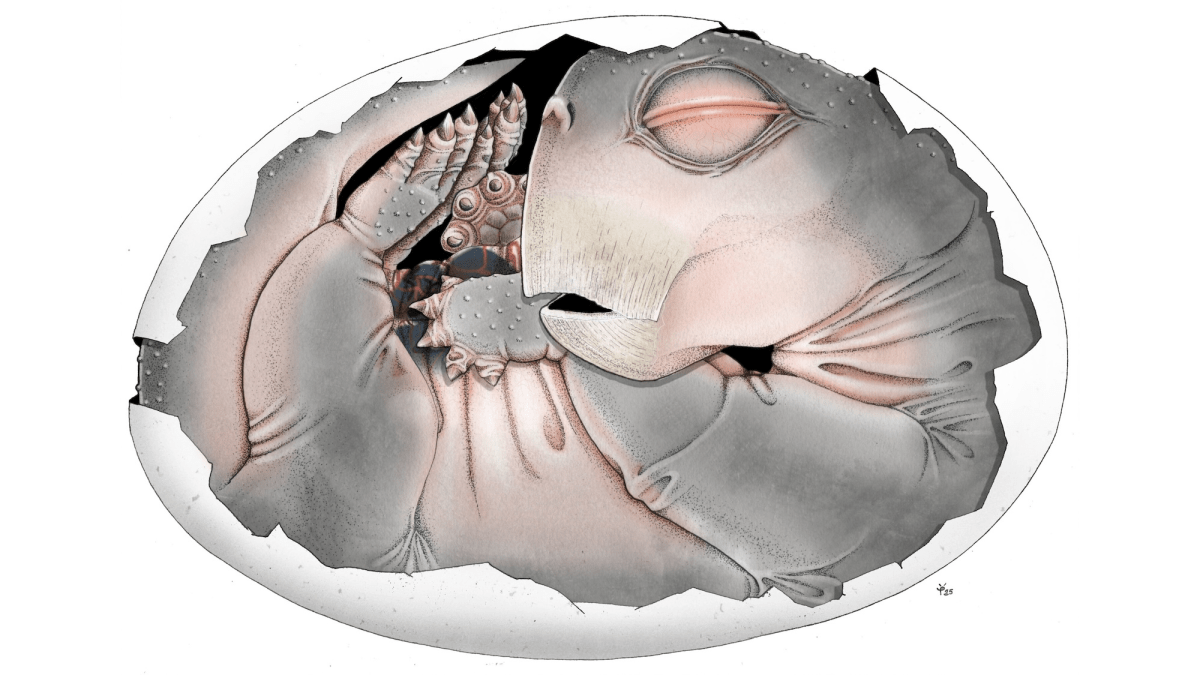
Furthermore, the positioning of the skeleton—tightly curled and compact—mirrored the posture of modern embryos within an egg. Combined with the presence of partially preserved shell fragments, the researchers concluded that the specimen was not a young hatchling that had died shortly after birth, but an embryo that perished while still encased in its shell. The thinness and texture of the preserved shell material further suggested that Lystrosaurus laid soft-shelled eggs, similar to those of many modern reptiles and the platypus, rather than the hard, calcified eggs associated with birds and many dinosaurs.
A Chronology of Survival: Lystrosaurus and the "Great Dying"
To understand the significance of this discovery, it is essential to place Lystrosaurus within its historical context. The genus lived approximately 250 million years ago, during the transition between the Permian and Triassic periods. This era was defined by the End-Permian Mass Extinction, often referred to as "The Great Dying."
The extinction event, triggered by massive volcanic eruptions in the Siberian Traps, led to a catastrophic release of carbon dioxide and methane. The resulting global warming, ocean acidification, and depletion of oxygen wiped out approximately 90% of marine species and 70% of terrestrial vertebrate families. Yet, Lystrosaurus did not merely survive this apocalypse; it thrived. For several million years following the extinction, Lystrosaurus was the most common terrestrial vertebrate on Earth, accounting for as much as 95% of the total vertebrate population in some fossil beds.
The timeline of this discovery highlights a critical period in vertebrate history:
- 252 Million Years Ago: The End-Permian Mass Extinction occurs, devastating global biodiversity.
- 250 Million Years Ago: Lystrosaurus becomes the dominant land animal across the supercontinent Pangea.
- 2008: The fossilized nodule containing the Lystrosaurus embryo is discovered in South Africa.
- 2023-2024: Advanced synchrotron scanning at the ESRF provides the internal morphological data needed for confirmation.
- April 2024: The findings are published, confirming the egg-laying nature of mammalian ancestors.
Supporting Data: Reproductive Strategy as a Survival Mechanism
The discovery provides a wealth of data regarding the reproductive biology of early synapsids (the group that includes mammals and their ancestors). One of the most striking observations made by the research team was the size of the egg relative to the adult animal.
Analysis suggests that Lystrosaurus laid relatively large eggs for its body size. In biological terms, larger eggs typically contain a higher volume of yolk. This yolk provides a rich source of nutrients, allowing the embryo to reach a more advanced stage of development before hatching. This strategy, known as "precociality," means that the offspring are relatively mature and mobile from the moment they emerge.
This reproductive data offers a potential explanation for the success of Lystrosaurus in the post-extinction world:
- Desiccation Resistance: Soft-shelled eggs are often vulnerable to drying out, but larger eggs have a lower surface-area-to-volume ratio, making them more resilient to the arid, drought-prone conditions of the Early Triassic.
- Rapid Maturation: By hatching in an advanced state, Lystrosaurus young could likely avoid predators and begin foraging almost immediately, reducing the period of vulnerability.
- Population Recovery: A robust reproductive strategy allowed the species to rapidly repopulate vacant ecological niches left by the extinction event.
Scientific and Peer Reactions
The publication has drawn significant attention from the global paleontological community. While it has long been hypothesized that early cynodonts and dicynodonts (the group to which Lystrosaurus belongs) laid eggs, physical proof has been elusive.
Dr. Julien Benoit emphasized the broader implications of the find, noting that the discovery provides a "deep-time perspective on resilience." By understanding how Lystrosaurus managed its reproductive cycle during a period of extreme climate volatility, modern biologists can gain insights into how current species might adapt—or fail to adapt—to contemporary ecological crises.
Other experts in the field have praised the study for its use of the synchrotron, noting that it sets a new standard for the analysis of fossilized embryos. The ability to distinguish between a "perinatally dead" hatchling and an "unhatched embryo" based on bone fusion is a methodology that is expected to be applied to other mysterious nodules found in fossil beds worldwide.
Broader Impact and Evolutionary Implications
The confirmation that Lystrosaurus laid eggs recalibrates our understanding of the mammalian timeline. It demonstrates that the transition to live birth (viviparity) was a much later development in the mammalian lineage than some earlier models suggested. The ancestors of humans, dogs, and whales were still laying eggs long after they had developed many other mammalian characteristics, such as specialized teeth and potentially even endothermy (warm-bloodedness).
The discovery also underscores the importance of soft-shelled eggs in evolutionary history. Because soft shells do not fossilize as easily as the hard shells of dinosaurs or birds, there is likely a significant "hidden" history of egg-laying that has yet to be uncovered. This study suggests that many other extinct lineages may have employed similar reproductive tactics that simply left no obvious trace in the fossil record.
In a modern context, the study of Lystrosaurus serves as a cautionary and informative tale. As the Earth currently faces what many scientists describe as a "sixth mass extinction" driven by human activity and climate change, the story of a resilient, egg-laying ancestor that inherited a broken world provides a unique window into the mechanics of biological survival. The Lystrosaurus embryo is no longer just a "tiny fleck of bone" in a South African nodule; it is a vital piece of the puzzle explaining how life on Earth persists through its darkest chapters.