

A landmark study led by Professor Karim Jerbi from the Department of Psychology at the Université de Montréal, featuring the participation of renowned AI pioneer Yoshua Bengio, has unveiled unprecedented insights into the capabilities of generative artificial intelligence systems like ChatGPT in producing original ideas. This comprehensive research represents the largest direct comparison ever conducted between human creativity and that of large language models (LLMs), charting a new course in understanding the evolving dynamic between human ingenuity and artificial intelligence. The findings, published in the esteemed Scientific Reports (Nature Portfolio) on January 21, 2026, indicate a significant paradigm shift: while generative AI can now outperform the average human on specific creativity measures, the pinnacle of creative thought remains firmly within the domain of the most gifted human minds.
The Dawn of AI Parity in Creative Thought
The study meticulously evaluated several leading large language models, including prominent systems such as ChatGPT, Claude, and Gemini, benchmarking their creative outputs against those of over 100,000 human participants. This unparalleled scale provided a robust dataset for analysis, revealing a crucial turning point in AI’s developmental trajectory. Certain advanced AI systems, notably GPT-4, demonstrated the capacity to exceed average human scores on tasks specifically designed to gauge divergent linguistic creativity. This achievement marks a significant milestone, challenging long-held assumptions about the exclusivity of creativity to human consciousness.
Professor Karim Jerbi articulated the dual nature of these findings, stating, "Our study shows that some AI systems based on large language models can now outperform average human creativity on well-defined tasks. This result may be surprising—even unsettling—but our study also highlights an equally important observation: even the best AI systems still fall short of the levels reached by the most creative humans." This nuanced perspective underscores a reality where AI is not merely a tool for automation but an increasingly capable, albeit distinct, creative entity.
Further granular analysis, conducted by the study’s co-first authors, postdoctoral researcher Antoine Bellemare-Pépin from the Université de Montréal and PhD candidate François Lespinasse from Concordia University, illuminated a striking pattern. While the average person’s creative output can now be surpassed by some AI models, the upper echelons of creativity—characterized by truly novel, profound, or groundbreaking ideas—remain an exclusively human domain. Indeed, when researchers focused on the most creative half of the human participants, their average scores consistently outstripped those of every AI model subjected to the tests. This gap widened considerably when examining the top 10 percent of the most creative individuals, solidifying the notion that peak human creativity continues to possess an intrinsic advantage.
Professor Jerbi emphasized the methodological rigor underpinning these conclusions: "We developed a rigorous framework that allows us to compare human and AI creativity using the same tools, based on data from more than 100,000 participants, in collaboration with Jay Olson from the University of Toronto." This commitment to a standardized, large-scale comparison ensures the validity and reliability of the study’s groundbreaking insights. The collaborative effort, spanning multiple prestigious institutions and involving figures like Yoshua Bengio, a foundational figure in deep learning, further amplifies the study’s authority and impact within the global AI research community.
Unpacking the Metrics: How Creativity Was Measured
To ensure a fair and equitable evaluation of creativity across both human and machine participants, the research team employed a multi-faceted approach, central to which was the Divergent Association Task (DAT). The DAT is a widely recognized psychological test specifically designed to measure divergent creativity—the ability to generate a broad spectrum of diverse and original ideas from a single prompt. This particular metric is crucial because it assesses the capacity for "out-of-the-box" thinking, a hallmark of genuine creative thought.
The DAT, originally conceptualized by study co-author Jay Olson, instructs participants—whether human or AI—to list ten words that are as semantically unrelated as possible. For instance, a highly creative response might juxtapose words like "galaxy, fork, freedom, algae, harmonica, quantum, nostalgia, velvet, hurricane, photosynthesis." The task’s elegance lies in its simplicity while simultaneously probing complex cognitive processes related to conceptual distance and associative thinking. Performance on the DAT has been empirically linked to success in other established creativity tests encompassing various domains, including written composition, ideation processes, and creative problem-solving. While fundamentally language-based, the DAT transcends mere vocabulary recall, engaging deeper cognitive mechanisms integral to creative thinking across a multitude of disciplines. Its practical advantages, requiring only two to four minutes for completion and being readily accessible online, facilitated the unprecedented scale of human participation in the study.
Beyond the DAT, the researchers broadened their investigation to assess whether AI’s proficiency in this foundational word association task could translate to more intricate and ecologically valid creative endeavors. They challenged both AI systems and human participants with creative writing exercises, including the composition of haiku (a traditional three-line poetic form), the summarization of movie plots, and the crafting of short stories. These tasks demand not only divergent thinking but also an understanding of narrative structure, emotional resonance, and stylistic nuance. The results of these more complex evaluations mirrored the pattern observed with the DAT: while AI systems occasionally surpassed the performance of average humans, the most accomplished and skilled human creators consistently produced work that was both qualitatively stronger and demonstrably more original. This finding reinforces the idea that while AI can mimic and even excel at certain aspects of creativity, the profound depth and innovative spark of top human talent remain unparalleled.
The Tunability of AI Creativity: A Human-Guided Frontier
A critical question arising from the study’s findings concerned the plasticity of AI creativity: Is it a fixed attribute, or can it be deliberately shaped and adjusted? The research provided compelling evidence that AI’s creative output is indeed highly malleable, particularly through the manipulation of technical parameters, most notably the model’s "temperature" setting. This parameter directly influences the predictability and adventurousness of the generated responses.
At lower temperature settings, AI systems tend to produce more conservative, conventional, and predictable outputs, adhering closely to established patterns in their training data. As the temperature is increased, however, the responses become significantly more varied, less predictable, and markedly more exploratory. This allows the AI to venture beyond familiar conceptual boundaries, generating ideas that are more novel and divergent. This tunability implies that human operators possess a substantial degree of control over the creative nature of AI outputs, transforming the AI from a mere generator into a dynamic collaborative tool.
Furthermore, the study highlighted the profound influence of prompt engineering—how instructions are formulated—on AI creativity. Researchers discovered that prompts specifically designed to encourage models to delve into the etymology of words or consider their underlying structural relationships led to more unexpected associations and consequently, higher creativity scores. For example, instructing an AI to "think about the origins and semantic evolution of words before generating associations" could unlock more unconventional and creative outputs. These results unequivocally emphasize that AI creativity is not an autonomous process but is heavily contingent upon astute human guidance and interaction. The quality and specificity of human prompting emerge as a central, indispensable element in cultivating the creative potential of AI systems, positioning human-AI interaction at the very heart of the contemporary creative process.
Historical Context and the Evolution of AI’s Creative Ambitions
The journey to this point of AI’s creative parity has been long and multifaceted. Early AI research, dating back to the mid-20th century, primarily focused on symbolic reasoning and problem-solving, far removed from the nuances of human creativity. Alan Turing’s seminal 1950 paper, "Computing Machinery and Intelligence," introduced the Turing Test, a benchmark for machine intelligence that, while not directly measuring creativity, implicitly raised questions about machines’ ability to mimic human cognitive functions. Programs like ELIZA (1966) demonstrated rudimentary conversational abilities, yet lacked genuine understanding or creative flair.
The subsequent "AI winters"—periods of reduced funding and interest due to unmet expectations—gave way to a resurgence driven by advancements in machine learning, particularly neural networks. The late 20th and early 21st centuries saw gradual progress, but the true explosion in generative AI began with the advent of deep learning and, critically, the Transformer architecture in 2017. This breakthrough enabled the development of Large Language Models (LLMs) with billions, then trillions, of parameters, capable of processing and generating human-like text at an unprecedented scale.
The release of models like GPT-3 in 2020 and subsequently ChatGPT in late 2022 democratized access to powerful generative AI, thrusting its creative potential into the public consciousness. Suddenly, machines could write poems, compose music, generate art, and craft narratives, sparking intense debate about authorship, originality, and the future of creative professions. The study by Professor Jerbi and his team, with its rigorous methodology and vast scale, directly addresses these contemporary concerns, moving beyond anecdotal evidence to provide empirical data on where AI truly stands in the creative landscape. The involvement of Yoshua Bengio, a recipient of the Turing Award for his foundational work in deep learning and a figure instrumental in establishing Mila (Quebec AI Institute) as a global hub for AI research, underscores the significance and depth of this investigation, connecting it directly to the very pioneers of the technology.
Broader Implications: Redefining Creativity and Collaboration
The findings of this seminal study offer a balanced and pragmatic perspective on the pervasive anxieties surrounding the potential for artificial intelligence to displace creative professionals. While the study unequivocally demonstrates that AI systems can now match or even exceed average human creativity on specific, well-defined tasks, it simultaneously highlights their inherent limitations and their continued reliance on human direction.
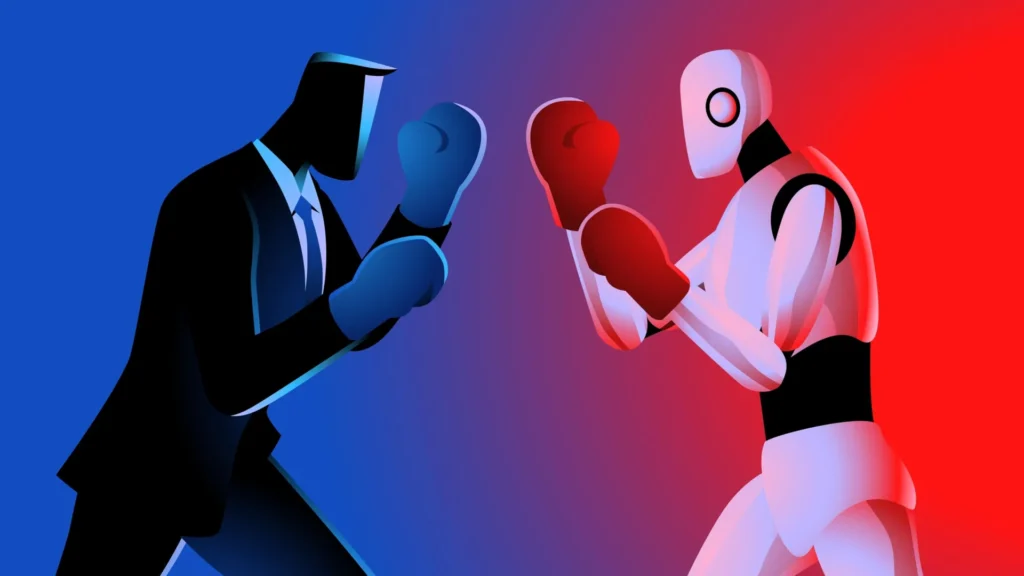
Professor Jerbi articulates a forward-looking vision: "Even though AI can now reach human-level creativity on certain tests, we need to move beyond this misleading sense of competition. Generative AI has above all become an extremely powerful tool in the service of human creativity: it will not replace creators, but profoundly transform how they imagine, explore, and create—for those who choose to use it." This statement shifts the narrative from one of human-versus-machine competition to one of human-AI collaboration, where AI functions as an enhancer and accelerator of human imagination.
This perspective has profound implications across various sectors:
- Creative Industries: For artists, writers, designers, musicians, and filmmakers, AI is poised to become an indispensable assistant. It can rapidly generate countless variations of an idea, explore diverse styles, perform tedious iterative tasks, or even overcome creative blocks by offering unexpected prompts. This could lead to increased productivity, faster prototyping, and the exploration of creative avenues previously too time-consuming or resource-intensive. However, it also raises complex questions regarding intellectual property, attribution, and the ethical use of AI-generated content. Industry standards and legal frameworks will need to evolve rapidly to address these new challenges.
- Education: The study’s results necessitate a re-evaluation of how creativity is taught and fostered. Instead of rote memorization or basic idea generation, curricula may shift to emphasize higher-order creative thinking, critical evaluation of AI outputs, and the skill of "prompt engineering"—learning how to effectively communicate with and guide AI tools to achieve desired creative outcomes. The focus will likely pivot towards understanding intent, critical analysis, and the unique human capacity for empathy and subjective experience that AI still lacks.
- Future of Work: Rather than portending a future of job displacement for creative roles, the study suggests a transformation. New hybrid roles may emerge, such as "AI creative directors," "prompt engineers," or "AI content curators," where human expertise lies in guiding, refining, and imbuing AI-generated content with distinct human vision and emotional depth. The value of human intuition, cultural understanding, and the ability to connect with an audience on a deeply human level will likely increase.
- Philosophical and Societal Impact: The ability of machines to emulate creativity forces society to confront fundamental questions: What truly defines creativity? Is it merely the output, or does it encompass the underlying consciousness, intent, and lived experience of the creator? The study challenges traditional anthropocentric views of creativity, prompting a deeper philosophical inquiry into the nature of intelligence and the unique attributes of human existence.
"By directly confronting human and machine capabilities, studies like ours push us to rethink what we mean by creativity," concludes Professor Karim Jerbi. This research is not just about comparing scores; it is about initiating a deeper dialogue on the essence of creativity itself in an age where the lines between human and artificial capabilities are increasingly blurred. It heralds a future where AI, rather than diminishing human imagination, serves as a powerful catalyst, expanding the horizons of what is creatively possible and allowing human ingenuity to reach unprecedented heights. The collaborative landscape between human and AI is just beginning to unfold, promising a rich tapestry of innovation, challenge, and profound discovery.