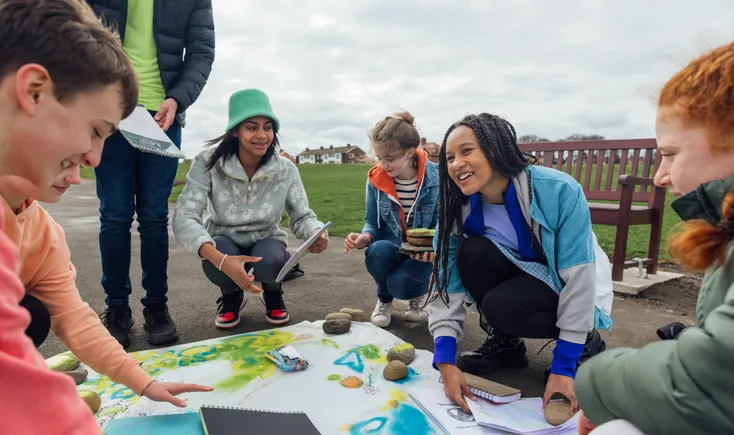

Project-Based Learning (PBL), a dynamic instructional approach that engages students in sustained inquiry into real-world problems, has long been lauded for its potential to foster critical thinking, collaboration, and creativity. However, a significant challenge persists in ensuring that the benefits of PBL extend equitably to all learners, particularly those from diverse backgrounds, including English Language Learners (ELLs), neurodiverse students, and those with executive function challenges. Recent insights from educators and researchers highlight that while PBL offers profound opportunities, its implementation often inadvertently creates barriers, reserving its most enriching experiences for a select demographic. This disparity underscores an urgent need for intentional pedagogical adjustments to transform PBL into a truly inclusive and universally accessible educational tool.
The journey toward inclusive PBL is often illuminated by individual teacher experiences. A case in point involves a middle school educator tasked with managing "energetic" students during standardized testing. Initially overwhelmed by the prospect of keeping these students engaged post-exam, the teacher saw an unexpected opportunity to pilot a novel approach. Recognizing that traditional silent reading would be ineffective, the educator proposed a documentary film project. Students chose their topic and began researching, interviewing, and filming after completing their tests. This impromptu experiment, while initially chaotic, revealed profound shifts in student engagement and capability. Students who previously showed little interest in academics began voluntarily conducting interviews and developing complex narratives. Those who claimed a lack of creativity were storyboarding and editing. The project, initially conceived for a week, extended as students dedicated extra time, including before and after school, to their work. This transformation prompted a critical question from students: "Why can’t we learn like this in our regular social studies class?" The educator acknowledged that fear of losing control, perceived lack of time, and resource constraints had been significant deterrents, yet the profound impact on students underscored the transformative power of PBL when even partially realized.
A subsequent survey conducted by the educator revealed a stark pattern: nearly all gifted students had prior experience with project-based methodologies, while none of the English Learners or neurodiverse students had. This finding is not isolated; studies consistently show that educational innovations, while promising, often disproportionately benefit students already performing at higher levels, exacerbating achievement gaps rather than narrowing them. For instance, data from various educational bodies indicate that ELLs and neurodiverse students are less frequently exposed to inquiry-based learning models, often relegated to more structured, traditional instruction due to perceived needs for foundational skill development. This practice, however, deprives them of the very experiences that could cultivate deeper understanding, language acquisition through authentic contexts, and the development of crucial executive functions. The core issue, therefore, lies not in PBL itself, but in how it is structured, often overlooking the inherent need for differentiated support and universal design principles.
Fortunately, making PBL universally accessible does not necessitate a complete overhaul. Rather, it involves implementing thoughtful, structural modifications that ensure every student can thrive. Drawing on principles of Universal Design for Learning (UDL) and cognitive science, educators can integrate five key strategies to foster a more inclusive PBL environment.
1. Managing Extraneous Cognitive Load within PBL Frameworks
A common pitfall in PBL is the initial overwhelm students experience when faced with a multi-week, open-ended project. The sheer scope can lead to procrastination, disengagement, and the feeling of "not knowing where to start." This phenomenon aligns with John Sweller’s Cognitive Load Theory, which suggests that poorly designed tasks can induce extraneous cognitive load, consuming working memory and hindering actual learning. The goal in accessible PBL is to minimize this extraneous load, simplify intrinsic load (the inherent complexity of the task), and maximize germane load (the mental effort directly contributing to learning).
The primary strategy for managing cognitive load is to provide a clear blueprint or schema for the project. While maintaining the authentic, non-prescriptive nature of PBL, a foundational structure is invaluable. This involves breaking projects into distinct, manageable phases with clear checkpoints and deadlines. Frameworks like the LAUNCH Cycle (Look, Ask, Understand, Navigate, Create, Highlight) offer a predictable sequence that allows students to see the "big picture" while focusing on incremental progress. For students with executive function challenges, this structure provides essential predictability. Visual project management tools such as Kanban boards, SCRUM boards, flowcharts, or visual calendars are particularly effective. These tools help students, especially those with ADHD, visualize time and tasks spatially, providing a tangible representation of progress. For English learners, visual aids enhance comprehension and reduce linguistic barriers. Autistic students benefit from the clear, predictable roadmap these tools offer, reducing anxiety associated with ambiguity. Breaking larger tasks into smaller, trackable sub-tasks, akin to "early wins" in a video game, can also tap into the Endowed Progress Effect, boosting motivation and self-efficacy.
Consider a fifth-grade project where students design and build a roller coaster to study forces and motion. Instead of simply stating "build a roller coaster," the project is introduced with a blueprint outlining phases: research, design, prototype, test, and refine. Each phase has a dedicated section on a class SCRUM board, where students move sticky notes representing sub-tasks (e.g., "Research types of roller coasters," "Sketch initial track design," "Calculate potential energy at peak," "Test marble speed"). This visual progression helps a group struggling with initial brainstorming to see their ideas transition from "To Do" to "In Progress," providing a sense of momentum and direction.
2. Implementing a Gradual Release of Responsibility Approach
Another critical aspect of accessible PBL is ensuring adequate preparation before students dive into complex tasks. Research by John Hattie on visible learning emphasizes that structured preparation significantly enhances the impact of inquiry-based learning. While pure inquiry might have a lower effect size, front-loading vocabulary, conducting concept attainment lessons, and providing foundational skill practice can dramatically increase its effectiveness. This "I do, We do, You do" model, or gradual release of responsibility, applies not just to individual lessons but to the entire project lifecycle.
Before initiating a project, educators should dedicate time to building necessary background knowledge and skills. This might involve mini-lessons on research methodologies, data analysis, or specific software tools. The goal is to equip students with sufficient confidence and competence to move forward independently. Furthermore, choice paralysis, where too many options overwhelm students, can be mitigated by structuring choices within a gradual release framework.
For the roller coaster project’s research phase, a gradual release approach might unfold over several days:
- Day 1 (I Do): Teacher models effective online research techniques, demonstrating how to identify credible sources and extract key information about forces and motion.
- Day 2 (We Do): Students work in small groups, guided by the teacher, to research a specific aspect of roller coaster physics, practicing source evaluation and information synthesis.
- Day 3 (You Do – Supported): Students independently research another aspect, with the teacher providing direct support to groups or individuals as needed.
- Day 4 (You Do – Independent): Students independently conduct research for their specific design challenges, applying learned skills.
This phased approach allows students to gradually build autonomy. Gifted learners, who often demonstrate higher needs for novelty and fluid reasoning, can be permitted to accelerate through skill practice once mastery is demonstrated, ensuring they remain challenged while the rest of the class progresses. For students needing more reinforcement, differentiated practice can be integrated into warm-ups or through brief, targeted workshops, allowing them to refine skills without delaying the entire project.
3. Providing a Toolbox of Optional Scaffolds
A cornerstone of Universal Design for Learning (UDL) is the provision of multiple means of representation, action, and engagement. In accessible PBL, this translates to creating a rich "toolbox" of optional scaffolds available to all students, regardless of identified needs. The principle here is to normalize the use of support, removing the stigma often associated with requiring "extra help."
Imagine the roller coaster classroom equipped with a variety of resources:
- Interactive Chatbots/AI Tools: For quick research queries or clarification on scientific concepts.
- Vocabulary Databases: Offering definitions, synonyms, and translations for key terms like "kinetic energy" or "centripetal force."
- Leveled Texts: Providing information on physics concepts at varying reading levels.
- Visual Diagrams and Graphic Organizers: To help plan layouts, map ideas, or visualize complex processes.
- Physics Simulations: Allowing students to virtually experiment with gravity, friction, and momentum before physical construction.
The critical element is that these tools are optional and universally available. Students are empowered to choose the supports that best suit their learning style and current needs. This fosters self-advocacy and metacognition, as students learn to identify their challenges and proactively seek appropriate solutions. A student struggling with organization might opt for a visual diagram to plan their coaster layout, while another, an English learner, might use a vocabulary database to grasp scientific terminology. By making these resources accessible to all, the classroom cultivates a culture of self-directed learning and respects individual learning pathways.
4. Strategic Grouping for Equitable Contribution
Grouping students effectively is paramount to successful PBL. Random grouping or friendship-based selections often lead to imbalanced participation, with some students dominating and others becoming disengaged. Strategic grouping, however, can transform group dynamics into a powerful engine for collaborative learning.
Educators should transparently explain the rationale behind grouping strategies. While fully heterogeneous groups can be beneficial, sometimes a tiered approach is more effective, especially when there are vast skill disparities. For example, students can be categorized into three skill tiers, and then mixed-skill groups are formed within these tiers. This ensures that each group has a range of abilities but prevents one student from being solely responsible for bridging a significant gap, allowing for more balanced contributions and targeted teacher intervention with specific tiers if needed.
Establishing clear group norms and expectations from the outset is also crucial. This can take the form of a simple group contract outlining roles, responsibilities, and consequences, particularly for younger students. Emphasizing quality over quantity in contributions is vital, especially when addressing perceived inequities. A student with dyslexia, for instance, might process information slower but produce highly insightful work, which should be valued equally alongside a faster-paced peer.
In the roller coaster project, roles can be intentionally assigned to align with student strengths and developmental areas. One student might be the "Materials Manager," ensuring components are organized. Another might be the "Quality Control Specialist," meticulously testing track stability. A strong problem-solver could be the "Project Manager," delegating tasks and leading brainstorming. A visual learner could excel as the "Design Lead," focusing on the aesthetic and structural layout. This strategic role assignment ensures meaningful contribution from every student, mitigating the risk of anyone feeling overwhelmed or sidelined and fostering a sense of collective ownership. It also allows for individual assessment of contributions, moving away from potentially problematic peer-grading systems.
5. Providing Additional Processing Time
PBL often carries a reputation for being dynamic and energetic, which, while stimulating for some, can be overwhelming for others. The rapid pace of group discussions and collaborative brainstorming can disadvantage students who require more time to process information and formulate their thoughts before verbalizing them. This includes introverted students, those with processing disorders, and English learners.
To create a more inclusive environment, intentional pauses and quiet spaces must be integrated throughout the project. This can start with quiet warm-up activities where students reflect individually on prior learning or brainstorm ideas before engaging in group discussions. Designating "quiet zones" within the classroom allows students to retreat for focused thinking, planning, or independent work without being isolated.
During the brainstorming phase of the roller coaster project, each student could be given 5-10 minutes to sketch their initial design ideas or jot down key concepts before sharing with their group. This "think time" allows introverts to prepare their contributions, reducing anxiety in group interactions. For students with ADHD, this priming period helps them narrow their focus. English learners benefit immensely from the opportunity to internally process and formulate their thoughts, potentially translating ideas before expressing them aloud. By acknowledging and accommodating diverse processing speeds, educators not only make PBL more inclusive but also model the value of thoughtful reflection as an integral part of problem-solving and innovation.
Authenticity in Structured PBL: A Reaffirmation
A common misconception is that adding structure and scaffolds detracts from the "authenticity" of PBL. However, true authenticity in learning does not equate to chaos or abandonment. Rather, it stems from equipping students with the skills and support necessary to confidently navigate complex, real-world challenges. Allowing students to select their scaffolds is not about making a project easier; it’s about making it more purposeful and empowering students to take ownership of their learning journey.
Real-world problem-solving, whether in scientific research, engineering, or documentary filmmaking, is rarely an unstructured free-for-all. Professionals routinely use project management tools, consult experts, and access resources to overcome challenges. By integrating structured support, we are not diluting PBL but mirroring professional practices and preparing students for future endeavors. Authenticity in PBL arises from genuine engagement with real-world problems, sustained inquiry, and the opportunity for students to create meaningful products, all of which are enhanced, not diminished, by intentional design for accessibility and equity. When PBL is designed with all learners in mind, it transcends its potential to become a truly transformative force in education, fostering deep learning and equitable opportunities for every student.