


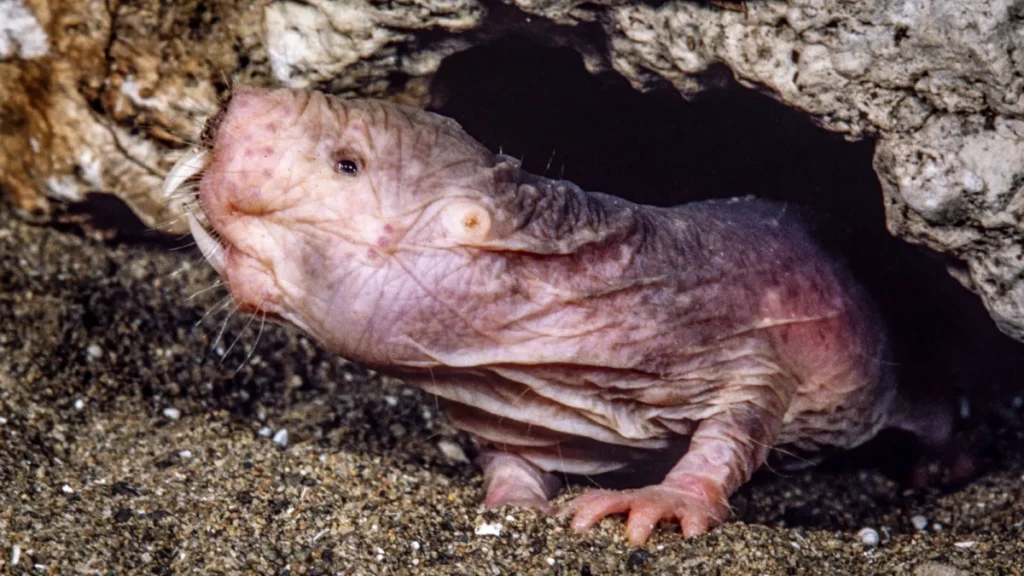
The subterranean world of the naked mole-rat (Heterocephalus glaber) has long served as a source of fascination for evolutionary biologists, primarily due to the species’ status as one of the few eusocial mammals on Earth. Traditionally, the social hierarchy of these rodents was thought to be governed by a rigid and often violent reproductive strategy, where a single dominant queen maintains her throne through physical intimidation and, when necessary, lethal combat. However, a groundbreaking six-year study published in the journal Science Advances has upended this narrative, revealing that naked mole-rats are capable of navigating queen succession through peaceful, cooperative transitions when faced with environmental instability. This discovery, led by researchers at the Salk Institute, provides a new lens through which to view biological resilience and the evolution of social cooperation in the animal kingdom.
The Biological Marvel of the Naked Mole-Rat
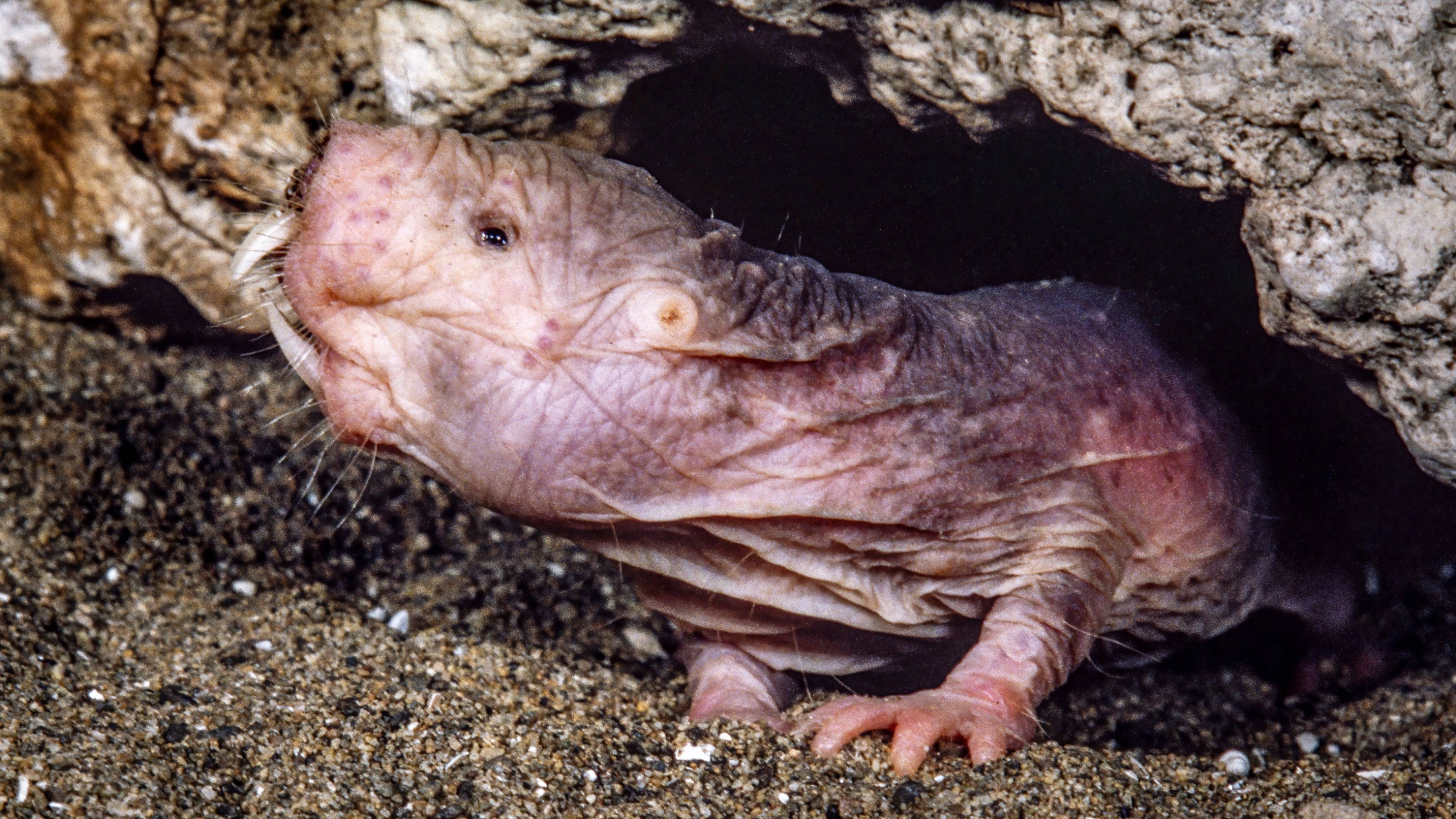
Native to the arid regions of East Africa, including parts of Ethiopia, Kenya, and Somalia, naked mole-rats are biological anomalies. These pinkish, hairless rodents live in sprawling underground tunnel systems that can stretch for miles. Beyond their unique appearance, they possess a suite of extraordinary traits: they can live up to 30 years—nearly ten times longer than other rodents of similar size—and they exhibit a remarkable resistance to age-related diseases, including cancer. Furthermore, they can survive in low-oxygen environments that would be fatal to most mammals and lack the neural receptors for certain types of inflammatory pain.
However, it is their social structure that most closely aligns them with insects like bees, wasps, and ants. In a naked mole-rat colony, which can number up to 300 individuals, there is a strict division of labor. Most colony members are "subordinates" or workers that spend their lives digging tunnels, foraging for tubers, and defending the colony against predators like snakes. At the center of this society is the queen, the only female who reproduces. She typically chooses one to three males as her consorts, while the rest of the colony remains reproductively suppressed.
The Traditional Narrative of Succession
For decades, the scientific consensus held that the queen’s grip on power was absolute and maintained through behavioral dominance. By shoving and biting her subordinates, the queen induces stress that suppresses their reproductive hormones. When a queen dies or her fertility wanes, it was believed that the resulting power vacuum inevitably led to "queen wars." These are documented periods of intense violence where high-ranking subordinate females fight to the death to claim the reproductive throne.
This aggressive strategy was thought to be an evolutionary trade-off. While the violence causes temporary instability and loss of life within the colony, it ensures that only the strongest, most fertile female takes the lead, thereby concentrating the colony’s resources into a single, healthy litter. However, this rigid system also makes the colony vulnerable. If a queen dies without a clear successor, or if the succession battle lasts too long, the colony’s growth halts, and its survival is threatened.
A Longitudinal Study of Colony Resilience
To investigate the flexibility of this social structure, Janelle Ayres, a Salk Institute biologist, and her team conducted an exhaustive observation of a laboratory colony over a six-year period. The goal was to understand how biological systems return to a state of equilibrium after experiencing significant stress—a concept known as resilience.
The study began by establishing a healthy, stable colony with a single reproducing queen. Once the colony was thriving, the researchers introduced a series of controlled environmental stressors designed to mimic the challenges the animals might face in the wild or during habitat shifts.
The first stressor was increased population density. By restricting the available space, the researchers forced the colony into a high-density environment. Under these conditions, the queen continued to produce litters, but the survival rate of the pups plummeted. Despite the loss of offspring, the social hierarchy remained intact, and the queen maintained her status.
The second, more significant stressor involved relocating the entire colony to a new facility. This move proved to be the tipping point. The environmental shift completely compromised the reigning queen’s reproductive success; she was no longer able to produce viable litters. This failure of the reproductive "linchpin" triggered the process of succession.
The Discovery of Peaceful Transition
Contrary to expectations, the end of the queen’s reproductive reign did not result in a bloody coup. Instead, the researchers observed a gradual and cooperative transition. As the queen’s fertility failed, a subordinate female began to undergo physical and hormonal changes, signaling her rise to reproductive status.
Crucially, the reigning queen did not attack this challenger. Instead, the two females existed in a state of temporary "co-queen" status. For a period, they even maintained partially overlapping pregnancies, a phenomenon never before documented in a stable naked mole-rat colony. This overlap appeared to serve as a biological safety net, ensuring that the colony continued to produce offspring while the new queen established her dominance.
Eventually, a second subordinate female emerged and successfully took over the role of the primary breeder. The original queen did not die or suffer exile; rather, she slipped peacefully into a non-reproductive, subordinate role within the colony. This non-violent abdication suggests that naked mole-rats possess a "hidden" level of social plasticity that allows them to prioritize colony survival over individual reproductive conflict during times of extreme environmental stress.
Chronology of the Salk Institute Experiment
The six-year study followed a precise timeline that allowed researchers to map the colony’s behavioral evolution:
- Year 1-2: Baseline Establishment. The colony was monitored under optimal conditions. A single queen produced multiple litters, and the hierarchy remained stable with no signs of reproductive competition.
- Year 3: Density Stress. The colony’s living quarters were condensed. While social order was maintained, the biological toll was evident in the high mortality rate of the neonates.
- Year 4: Relocation and Reproductive Failure. The move to a new facility disrupted the queen’s hormonal cycle. This period marked the beginning of the "peaceful transition" phase.
- Year 5: The Co-Queen Period. For several months, the original queen and a rising subordinate co-existed. The subordinate began to show the elongated spine characteristic of breeding queens, and both females were observed to be pregnant simultaneously.
- Year 6: Final Succession. A third female eventually stabilized as the sole queen. The original queen remained a functional, non-breeding member of the colony, and the population growth resumed.
Supporting Data and Statistical Observations
The Salk Institute team utilized high-resolution video monitoring and hormonal tracking to quantify their observations. Data points from the study highlighted several key indicators of the peaceful transition:
- Hormonal Shift: Progesterone and estrogen levels in the rising subordinate increased steadily over twelve months, coinciding with a decrease in the original queen’s reproductive markers.
- Behavioral Frequency: Instances of "shoving"—the primary indicator of dominance—did not increase during the transition period, remaining at baseline levels. This is a stark contrast to "queen wars," where shoving and biting incidents typically spike by over 500%.
- Pup Survival: While pup survival was 0% during the peak of the relocation stress, it rebounded to 85% within two litters of the new queen taking full control.
Implications for Biological Resilience and Human Health
The findings have significant implications for the study of biological resilience across all species, including humans. Janelle Ayres emphasized that understanding how cooperation drives resilience is central to modern medicine. "Resilience is the core principle for health and disease," Ayres stated. "By studying how biological systems recover from stress, we can identify the principles that allow organisms to function after a challenge."
The study suggests that conflict is not the only organizing principle in nature. In the case of the naked mole-rat, cooperation serves as a survival mechanism that protects the group when the environment becomes unpredictable. This shift from competition to cooperation during times of crisis could provide insights into how human biological systems—such as the immune system or the gut microbiome—manage stressors to maintain overall health.
Conclusion and Future Research
The discovery of peaceful queen succession in naked mole-rats represents a major shift in the field of sociobiology. It challenges the "nature red in tooth and claw" perspective, suggesting that even in the most rigid hierarchies, there is room for negotiation and flexibility.
"Our study reveals a ‘hidden’ side of reproductive organization," said Alexandria Schraibman, a study co-author and biologist. This revelation opens new avenues for research into what exactly determines whether a colony chooses violence or cooperation. Future studies will likely focus on the specific pheromonal or neurological triggers that signal a "peaceful" abdication versus a "bloody" battle.
As scientists continue to peel back the layers of the naked mole-rat’s complex life, it becomes increasingly clear that these "ugly" rodents are among the most sophisticated social engineers on the planet. Their ability to adapt their entire social order to survive environmental hardship offers a powerful testament to the evolutionary success of cooperation.