


The human inclination to represent ideas visually is a fundamental aspect of communication and learning. When faced with the task of explaining a complex topic, individuals often instinctively reach for a pen and paper, uttering, "Here, let me show you." This natural tendency underscores the power of visual aids in clarifying and solidifying understanding. While some concepts are inherently visual, such as a blueprint or a biological diagram, many abstract ideas can be effectively represented through visual tools that illustrate processes, relationships, and hierarchies. Among the most potent of these tools are concept maps, graphic organizers that have garnered significant attention from cognitive scientists for their profound impact on learning outcomes.
A concept map, distinct from similar tools like mind maps or spider maps, is a structured visual representation of knowledge where key concepts are encased in nodes (often boxes or bubbles) and interconnected by lines or arrows. Crucially, these connecting lines are labeled with "linking words" that describe the precise relationship between the connected concepts, forming propositional statements. This seemingly simple methodology, which requires no advanced technology and can be generated with ease, belies an incredible power to foster deep, meaningful learning, particularly when implemented with an understanding of the underlying cognitive principles.
The efficacy of concept maps is a subject extensively researched by cognitive scientists. Dr. Kripa Sundar, a distinguished cognitive scientist specializing in concept mapping research, is a leading voice in advocating for their strategic use in education. Her insights, shared in the collaborative volume "Smart Teaching Stronger Learning: Practical Tips from 10 Cognitive Scientists," edited by Dr. Pooja Agarwal, highlight the evidence-based practices that elevate concept mapping from a mere organizational tool to a formidable learning strategy. The book compiles actionable, research-backed classroom techniques from ten experts, building upon previous discussions on strategies such as retrieval practice, further emphasizing a commitment to scientifically informed pedagogy. Dr. Sundar’s chapter specifically elucidates why concept maps are such potent learning instruments and provides concrete strategies for their optimal utilization in educational settings.
The Enduring Power of Visualizing Knowledge: A Historical and Cognitive Perspective

The concept map was formally introduced in the 1970s by Joseph D. Novak at Cornell University, rooted in David Ausubel’s assimilation theory of meaningful learning. Ausubel posited that learning is most effective when new concepts are related to existing knowledge structures in a non-arbitrary, substantive way. Concept maps were designed to facilitate this process, helping learners to identify and organize the core ideas within a subject domain and to understand the relationships between them. This historical context is vital, as it positions concept mapping not as a fleeting trend, but as a method grounded in established theories of human cognition.
Dr. Sundar often refers to concept maps as a "packed strategy," a testament to their multifaceted engagement with the learning process. Indeed, multiple meta-analyses across various disciplines and educational levels consistently support the effectiveness of concept maps, often indicating a more significant impact on learning compared to traditional methods like lectures, rote memorization, or simple text summarization. A comprehensive review by the American Federation of Teachers (AFT), to which Dr. Sundar contributed, highlighted these findings, underscoring the broad consensus in educational research regarding their benefits. For instance, studies have shown effect sizes for concept mapping to be notably higher than many other instructional interventions, signifying a robust and reliable improvement in learning outcomes.
The effectiveness of concept maps can be attributed to their capacity to engage all three critical stages of memory formation: encoding, storage, and retrieval.
-
Encoding: When constructing a concept map, learners actively process information rather than passively receiving it. The act of identifying key concepts, deciding on their placement, and articulating the relationships between them through linking words requires deep elaborative rehearsal. This process compels students to synthesize, analyze, and make connections, leading to stronger initial encoding of the information. Furthermore, concept maps leverage the dual-coding theory, which suggests that information is better remembered when presented both visually and verbally. The nodes represent verbal information, while the spatial arrangement and linking lines provide a visual structure, creating multiple pathways for memory.
-
Storage: The hierarchical and interconnected nature of a concept map helps learners to build robust mental schemas. Instead of isolated facts, information is organized into a coherent network, mirroring how well-organized knowledge is stored in long-term memory. This structured storage makes it easier for the brain to integrate new information and prevents cognitive overload, as complex ideas are broken down into manageable, related chunks. The process of mapping actively builds and refines these internal knowledge structures, making them more resilient and accessible.
-
Retrieval: Concept maps serve as powerful retrieval cues. The visual layout provides a "big picture" overview, allowing learners to recall information by navigating the map’s structure. If one concept is remembered, its connections to other concepts provide multiple entry points for retrieving associated knowledge. This interconnectedness enhances the flexibility and efficiency of recall, enabling students to access and apply their knowledge more readily in various contexts. The visual-spatial organization acts as a scaffold for memory, making retrieval a more deliberate and successful process.
Best Practices for Maximizing Concept Map Effectiveness
While the foundational principles of concept mapping are straightforward, their optimal application in educational settings requires adherence to specific best practices that enhance their learning potential. Dr. Sundar, drawing from extensive research, outlines several key strategies to ensure concept maps are used to their fullest capacity.
-
Be Clear About Your Motivation: The initial step in leveraging concept maps effectively is to establish a clear purpose. As Dr. Sundar emphasizes, "the first question is why?" Concept maps are versatile and can serve various instructional goals:
- Individual Learning/Note-taking: To help students organize their thoughts, summarize complex texts, or prepare for exams.
- Group Activity: To foster collaborative learning, facilitate discussion, and build shared understanding among peers.
- Whole Class Activity: To introduce a new unit, review prior knowledge, or collectively synthesize information.
- Assessment: To gauge student comprehension, identify misconceptions, or evaluate the depth of their understanding.
The specific motivation will dictate the design, complexity, and expected outcomes of the map, influencing how teachers instruct students in their creation and how the maps are subsequently used. For instance, a map designed for individual note-taking might be less formal than one intended for a summative assessment.
-
Have a Guiding Question: To prevent cognitive overload and maintain focus, concept maps should ideally be constructed around a specific "guiding question." This question acts as an anchor, limiting the scope of concepts included and directing the relationships explored. Without a clear question, maps can quickly become unwieldy, encompassing too many disparate ideas, which dilutes their effectiveness and can overwhelm the learner.
Dr. Sundar illustrates this with examples related to ocean acidification. A guiding question like "What is the relationship between driving a car and ocean acidification?" yields a focused, linear map detailing the specific causal chain. In contrast, a broader question such as "What is the relationship between human activities and ocean acidification?" necessitates a much more complex map, incorporating various anthropogenic factors and their intricate interconnections. The guiding question thus serves as a powerful filter, ensuring the map remains relevant and manageable.
-
Use Linking Words: This is arguably the most critical differentiator between concept maps and other visual organizers, and it is where much of the "deep learning" truly occurs. The directional arrows connecting nodes must be explicitly labeled with linking words (e.g., "causes," "is a type of," "leads to," "requires," "results in"). As Dr. Sundar candidly states, "It is a pain in the beep… But that’s when you really push your learning harder."
This "pain" is precisely what makes linking words so powerful. They force learners to articulate the specific nature of the relationship between concepts, moving beyond mere association to propositional understanding. Forcing the creation of explicit propositions (e.g., "Combustion releases Carbon Dioxide") compels deeper cognitive processing, elaborative thinking, and the identification of precise causal, hierarchical, or sequential relationships. This process often reveals gaps or misconceptions in a student’s understanding that might otherwise go unnoticed. Without linking words, the map becomes a collection of terms with arbitrary connections, losing its explanatory power and much of its cognitive benefit.
Diverse Applications in the Educational Landscape
The versatility of concept maps allows for their integration into various pedagogical practices, supporting teaching and learning across subjects and grade levels.
-
Expert Maps: Illuminating the Learning Journey: Teachers can create "expert maps" that visually represent the key concepts and their relationships within a unit of study. These maps serve as invaluable reference tools for students throughout the unit. When introduced at the outset of a new topic, expert maps function as "advance organizers," providing learners with a clear "big picture" of the information to come. As Dr. Sundar notes, this is "a wonderful way to show people, look, over the next 16 weeks, we’re going to talk about all of these things. It’s going to feel random at points, but here’s how they all connect."
However, Dr. Sundar also cautions against "concept map shock," where presenting an overly complex expert map at once can overwhelm students. To mitigate this, teachers can employ scaffolding techniques. For example, they might start with a skeletal map showing only the most general, overarching concepts. As the unit progresses and students acquire more specific knowledge, additional layers of detail, sub-concepts, and intricate cross-links can be progressively revealed or collaboratively added. This gradual unveiling ensures that students are not intimidated but rather guided through the complexity, continuously seeing how new information fits into the larger conceptual framework. -
Concept Maps as Dynamic Note-Taking Tools: Traditional linear note-taking, while common, can often lead to passive transcription without deep processing. Concept maps offer a more efficient and cognitively engaging alternative for note-taking. Instead of simply writing down information sequentially, students using concept maps must actively identify, prioritize, and connect concepts, forcing synthesis and organization in real-time.
This method allows students to capture more information concisely, using keywords and diagrams to represent complex ideas. The visual representation bypasses the need for lengthy prose, facilitating a more rapid and comprehensive capture of essential information and its relationships. A practical approach recommended by Dr. Sundar involves providing students with a running list of key terms (either on a whiteboard or in their notebooks) and periodically tasking them with building a concept map that illustrates the relationships among these terms. This regular practice reinforces understanding and helps students to see the interconnectedness of their learning.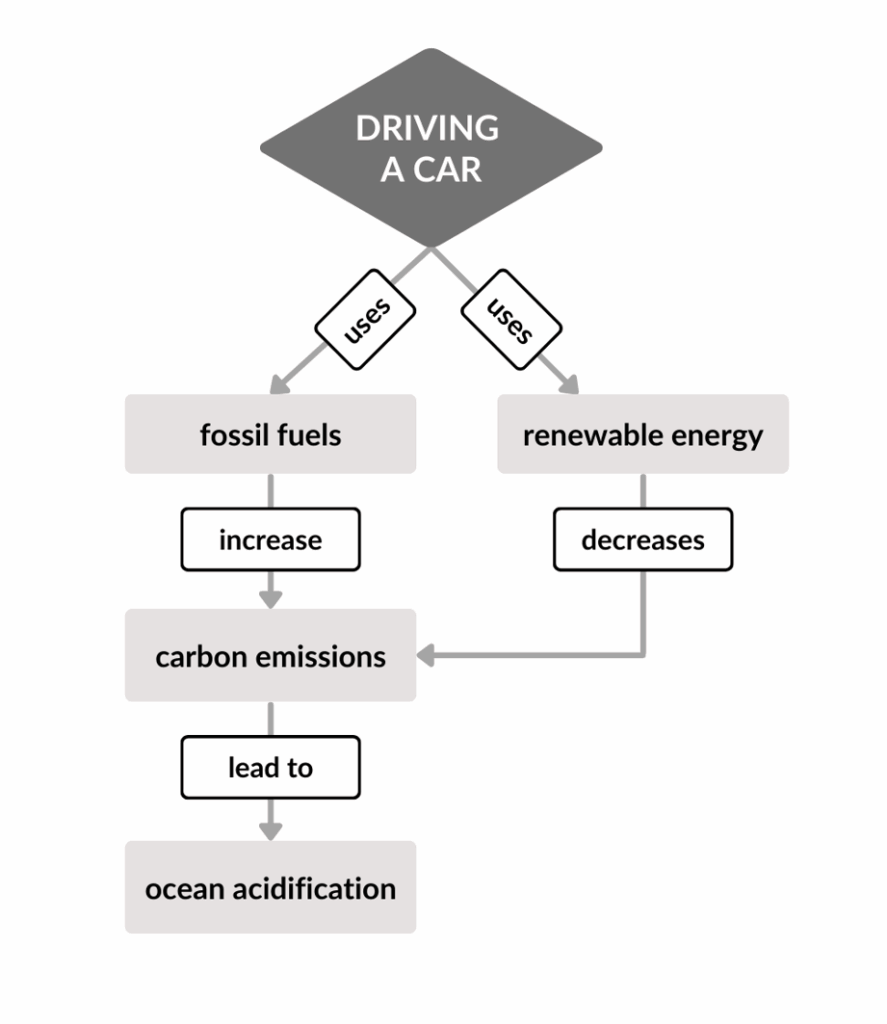
-
Formative Assessment: Gauging Understanding and Guiding Instruction: Concept maps are exceptionally powerful tools for formative assessment, providing teachers with immediate, granular insights into student comprehension. By having students construct or complete concept maps, educators can effectively measure how well they understand the content and, crucially, diagnose specific misconceptions.
One highly effective strategy involves presenting students with a partially completed concept map and asking them to finish it. This could involve:- Missing Nodes: Students fill in blank nodes with relevant concepts.
- Missing Links: Students draw the connections between existing nodes.
- Missing Linking Words: Students provide the specific relational terms for established links.
- Correcting Errors: Students identify and rectify inaccurate connections or propositions.
This approach allows teachers to target specific aspects of understanding. For instance, if students struggle with linking words, it indicates an issue with understanding the nature of relationships, not just the concepts themselves. Concept maps can also be used for peer assessment, where students review and critique each other’s maps, fostering collaborative learning and critical evaluation. The diagnostic power of concept maps makes them an indispensable tool for tailoring instruction and providing timely, targeted feedback.
Technological Integration and Broader Implications
While concept maps are fundamentally low-tech and can be created with paper and pencil, a growing array of digital tools has emerged to facilitate their creation and collaboration. Platforms like CmapTools, MindMeister, Miro, and Lucidchart offer features such as easy revision, collaborative editing, and digital sharing, making them suitable for remote learning environments or complex group projects. However, educators must ensure that the use of technology does not overshadow the cognitive effort required for effective mapping; passive dragging and dropping of nodes without thoughtful consideration of links can diminish the learning benefits. Accessibility considerations are also important, ensuring that all students, regardless of learning style or physical ability, can engage with concept mapping effectively.
Beyond their direct applications, concept maps hold broader implications for educational development. They actively promote the development of higher-order thinking skills, including analysis, synthesis, and evaluation. By requiring students to identify, organize, and articulate relationships between ideas, concept maps foster critical thinking and problem-solving abilities. They also cultivate metacognition, as the process of mapping forces learners to reflect on their own understanding and identify gaps in their knowledge. This makes them valuable across various disciplines, from scientific inquiry to historical analysis and literary interpretation. Furthermore, concept mapping can be a powerful tool for professional development, enabling educators to map out curricula, identify interdisciplinary connections, and refine their instructional approaches based on how concepts are logically structured.
In conclusion, concept maps represent a scientifically validated and highly versatile pedagogical tool. Rooted in theories of meaningful learning and backed by extensive cognitive science research, they actively engage learners in the encoding, storage, and retrieval of knowledge. By following best practices such as establishing clear motivation, employing guiding questions, and meticulously crafting linking words, educators can harness the full potential of concept maps to move students beyond rote memorization towards a deeper, more integrated, and enduring understanding of complex subjects. As education increasingly emphasizes critical thinking and conceptual mastery, concept maps stand as a powerful method for empowering learners to visually construct, articulate, and ultimately master their knowledge.