


The Discovery of a Cretaceous Glider
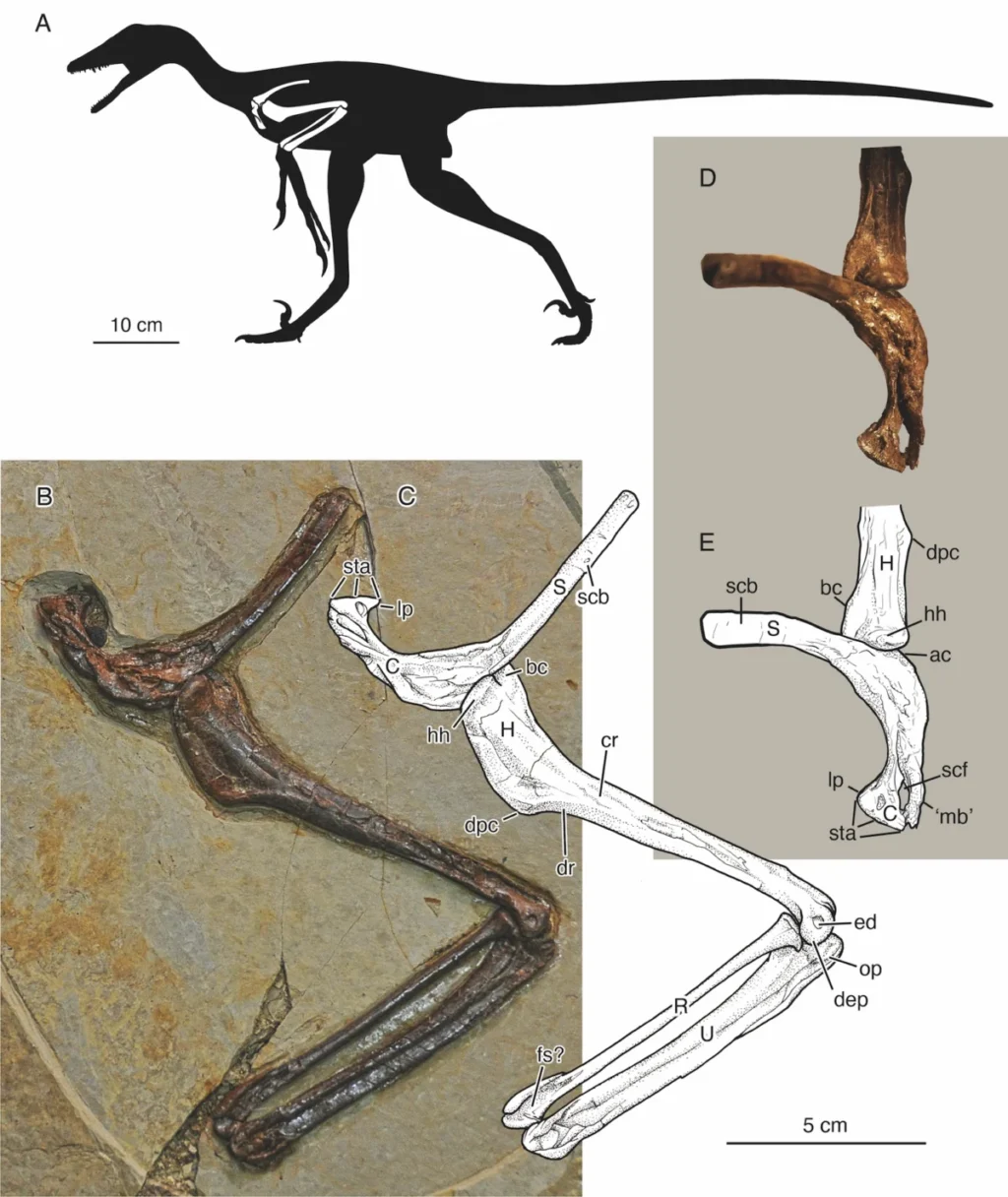
The identification of Jian changmaensis, published in the Annals of Carnegie Museum, stems from a meticulous analysis of fossilized remains recovered from the Xiagou Formation. While many dinosaur discoveries involve nearly complete skeletons, Jian was identified primarily through a well-preserved portion of its upper arm, or humerus. Despite the limited material, the specific morphological features of the bone—including the shape of the deltopectoral crest and the robusticity of the shaft—allowed researchers to categorize it as a microraptorine dromaeosaurid.
Named after a winged creature from Chinese mythology, Jian changmaensis lived approximately 120 million years ago during the Early Cretaceous period. Unlike its more famous ground-dwelling cousins, this dinosaur belonged to a specialized lineage of small, feathered carnivores. Most microraptors were roughly the size of modern crows, but Jian was a relative giant among its kin. Estimates based on the recovered humerus suggest a wingspan of approximately four feet, making it comparable in size to a modern barn owl.
The anatomy of Jian suggests a creature adapted for a life spent both on the ground and in the canopy. Like other members of the Microraptoria clade, it almost certainly possessed long, asymmetrical feathers on both its forelimbs and hindlimbs, effectively giving it four wings. However, researchers emphasize that Jian was likely not capable of the powered, flapping flight seen in modern birds. Instead, it likely functioned as a highly efficient glider, leaping from trees and using its feathered limbs to navigate the air like a flying squirrel, perhaps using its long, stiffened tail as a rudder to strike unsuspecting prey from above.
Solving the Mystery of the Changma Bird Fossils
The Changma Basin has long been a focal point for avian paleontology. Since the late 20th century, the site has yielded over 100 specimens of prehistoric birds, most notably Gansus yumenensis, which is considered one of the oldest known members of the lineage that led to modern birds. However, the condition of these fossils has long puzzled researchers. Many of the remains are found in "concentrations"—small clusters of shattered, acid-etched bones that bear a striking resemblance to the gastric pellets produced by modern raptors like owls and hawks.
For years, the presence of these "pellet-like" fossils suggested that a specific predator was consuming these birds and regurgitating the indigestible bits. Yet, despite the abundance of bird fossils, evidence of a suitable predator was non-existent until now.
"It’s the only dinosaur found at this site that wasn’t a bird, it was a carnivore, and it was much bigger than everything else that we’ve found there," said Jingmai O’Connor, a study co-author and associate curator of fossil reptiles at the Field Museum.
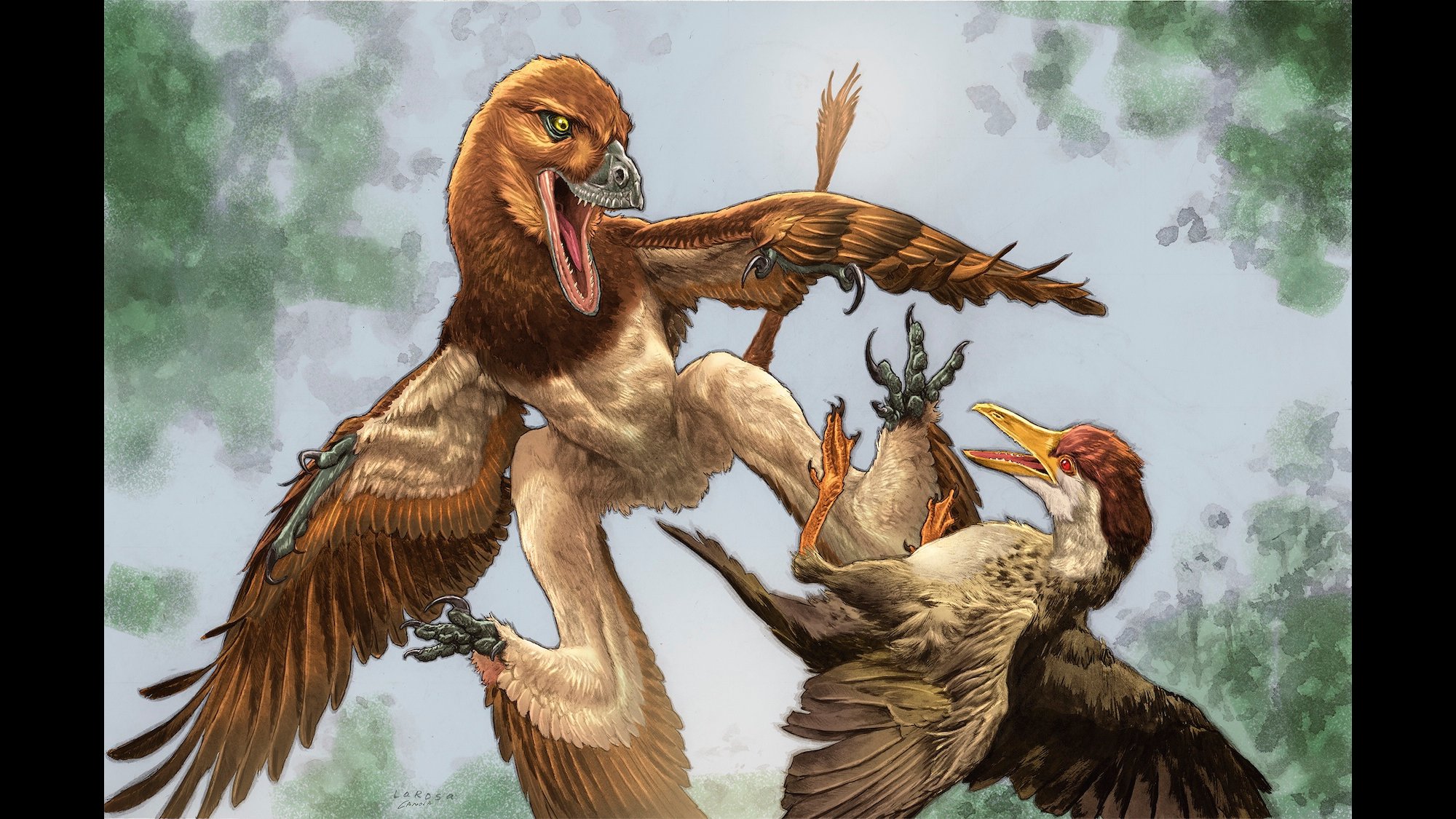
The discovery of Jian provides the missing ecological link. Its size, predatory adaptations, and overlapping timeline with the Gansus birds make it the primary suspect for the creation of these fossilized pellets. By swooping down on the smaller, aquatic-leaning birds of the Changma Basin, Jian occupied the apex of the local micro-ecosystem, exerting significant selective pressure on the evolution of early avian flight and defense mechanisms.
A Chronology of the Changma Basin Excavations
The journey to identifying Jian changmaensis is the culmination of decades of geological and paleontological exploration in Gansu province.
- 1981: The first significant bird fossils were discovered in the Changma Basin, leading to the naming of Gansus yumenensis. This discovery proved that the region was a critical site for understanding the transition from dinosaurs to birds.
- 2002–2010: Large-scale international expeditions led by the Chinese Academy of Sciences and the Carnegie Museum of Natural History uncovered dozens of additional bird specimens. During this period, researchers began noticing the peculiar "pellet" preservation of many bones.
- 2015–2020: Ongoing field work resulted in the recovery of various non-avian fragments, including the humerus that would eventually be identified as Jian.
- 2024–2026: Advanced comparative anatomy and phylogenetic modeling allowed the research team to confirm that the fragment belonged to a new genus of microraptor, leading to the formal publication of the findings.
This timeline highlights the slow, painstaking nature of paleontology in the Changma Basin, where the rock layers—while rich in fossils—are often difficult to access and require meticulous preparation to reveal the delicate structures of feathered dinosaurs.
Supporting Data: Microraptorine Diversity and Biomechanics
The discovery of Jian adds significant data to our understanding of the Dromaeosauridae family. While the Velociraptor of the Late Cretaceous represented the peak of terrestrial, sickle-clawed pack hunters, the microraptors of the Early Cretaceous represented an evolutionary experiment in arboreal predation.
| Feature | Jian changmaensis | Typical Microraptor |
|---|---|---|
| Wingspan | ~4.0 feet | ~2.0 – 2.5 feet |
| Weight (est.) | 2.5 – 4.0 kg | 0.5 – 1.0 kg |
| Locomotion | Gliding/Arboreal | Gliding/Arboreal |
| Primary Prey | Early Birds (Gansus) | Insects/Small Lizards |
| Era | 120 Million Years Ago | 125-120 Million Years Ago |
The data suggests that Jian was an outlier in terms of size. This gigantism within the microraptor clade may have been an evolutionary response to the abundance of bird prey in the Changma Basin. Larger size allowed for the consumption of larger avian species, but it also posed challenges for flight. Biomechanical analysis suggests that as microraptors grew larger, their ability to stay airborne decreased, shifting their niche from agile aerial hunters to "ambush gliders" that used height and gravity to overwhelm their targets.
Official Responses and Scientific Significance
The paleontological community has welcomed the discovery as a vital piece of the Early Cretaceous puzzle. Matt Lamanna, a study co-author and the Carnegie Museum’s curator of vertebrate paleontology, noted that the discovery provides a clearer picture of the biological "arms race" occurring 120 million years ago.
"For decades, the Changma site has been renowned among paleontologists for its extraordinary bird fossils," Lamanna stated. "Now, with the discovery of Jian, we finally know what was eating them."

Other experts in the field of theropod evolution have noted that Jian helps bridge the gap between the Jehol Biota of eastern China and the less-studied western deposits. The Jehol Biota is famous for its "feathered revolution," but the Changma Basin represents a slightly different environment—one dominated by vast lake systems and different climatic pressures. The presence of a microraptor in Changma suggests that these feathered predators were geographically widespread and highly adaptable to various wetland and forest habitats across Asia.
Broader Impact and Implications for Flight Evolution
The existence of Jian changmaensis has profound implications for the study of how flight evolved. For over a century, the "trees-down" versus "ground-up" theories of flight have been debated. Jian supports a more nuanced view where flight—or at least gliding—evolved multiple times across different lineages of dinosaurs.
The "four-wing" configuration of Jian represents an evolutionary pathway that eventually went extinct, as the lineage leading to modern birds eventually favored two-winged powered flight. By studying Jian, researchers can better understand why the four-wing model was successful for millions of years and what environmental factors eventually led to the dominance of the avian flight model we see today.
Furthermore, the discovery underscores the importance of protecting and continuing to excavate the Changma Basin. While the site has already yielded over 100 bird fossils, the discovery of Jian from a single bone fragment suggests that many more species of non-avian dinosaurs remain hidden in the siltstone. Future discoveries may reveal more about the social behavior, reproductive habits, and full skeletal anatomy of Jian, further illuminating the lives of the feathered dragons that once ruled the skies of ancient China.
As researchers continue to scan the horizon of the Changma Basin, the legacy of Jian changmaensis serves as a reminder that even in a field dominated by birds, the "terrible lizards" still have stories to tell. The predator of the birds has finally stepped out of the shadows, providing a definitive end to a decades-old mystery and a new beginning for the study of Cretaceous ecology.