



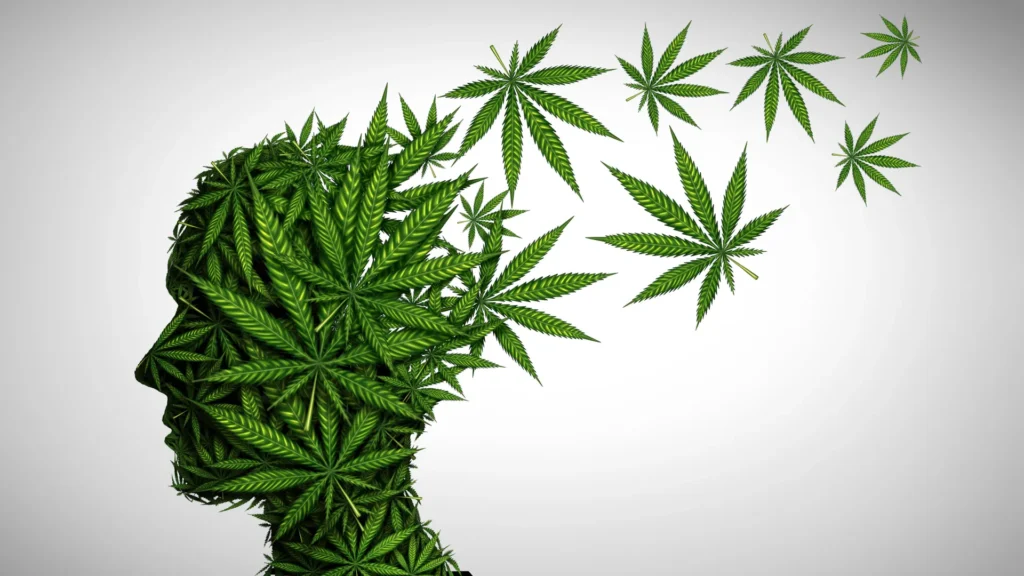
Smoking cannabis may do more than make memories fuzzy; it may actually alter how memories form and are recalled, according to a groundbreaking new study from Washington State University (WSU). The research indicates that individuals who consumed tetrahydrocannabinol (THC), the primary psychoactive compound in cannabis, were significantly more prone to recalling words that were never presented to them and faced increased difficulty with routine memory tasks essential for daily functioning. Published in the Journal of Psychopharmacology, this study represents one of the most comprehensive examinations to date into the acute effects of cannabis on various facets of human memory. Its findings suggest a pervasive impact across numerous memory systems that individuals rely on constantly.
Comprehensive Study Unveils Widespread Memory Impairments from THC
The WSU research team, led by senior author Carrie Cuttler, an associate professor of psychology, and co-author Ryan McLaughlin, an associate professor in the Department of Integrative Physiology and Neuroscience, embarked on this extensive investigation to fill critical gaps in the scientific understanding of cannabis’s cognitive effects. While previous studies often focused on one or two specific types of memory, such as simple verbal recall, this new work adopted a holistic approach, scrutinizing a wide array of memory functions simultaneously.
"Most previous studies have only looked at one or two types of memory, like recalling lists of words," Cuttler explained. "This is the first study to comprehensively examine many different memory systems at once, and what we found is that acute cannabis intoxication appears to broadly disrupt most of them."
The implications of this broad disruption are substantial. Beyond simple forgetfulness, the study illuminates how cannabis can impair complex cognitive processes that underpin daily life, including remembering future appointments, accurately tracking conversations, and discerning the original source of information. These are not minor inconveniences but fundamental components of cognitive health and effective social interaction.
Unpacking the Methodology: A Rigorous Double-Blind Examination
To achieve such a comprehensive understanding, the researchers designed a meticulous double-blind experiment, a gold standard in scientific research to minimize bias. They recruited 120 regular cannabis users, ensuring the participant pool reflected individuals with existing familiarity with the substance, thereby controlling for novelty effects or first-time user reactions. Participants were then randomly assigned to one of three groups: a placebo group, a group receiving 20 milligrams of THC, or a group receiving 40 milligrams of THC. The substance was administered via vaporization, a common method of cannabis consumption that allows for precise dosing and rapid onset of effects, mirroring real-world acute intoxication scenarios. Neither the participants nor the researchers administering the tests knew which substance had been consumed, further enhancing the study’s objectivity.
Following consumption, each participant engaged in approximately an hour of rigorous memory assessments. These tests were specifically designed to measure a diverse range of memory systems, including:
- Verbal memory: The ability to recall spoken or written words.
- Visuospatial memory: Remembering locations, shapes, and objects in space.
- Prospective memory: The ability to remember to perform actions in the future (e.g., remembering to take medication).
- Source memory: Identifying where, when, or how information was acquired.
- False memory: The tendency to "remember" events or items that did not actually occur or were not presented.
- Episodic content memory: Recalling the details of personal experiences.
- Temporal order memory: Remembering the sequence of events.
This broad spectrum of tests allowed the researchers to paint a detailed picture of cannabis’s influence across the cognitive landscape. The results were stark: participants who had consumed cannabis performed significantly worse than those in the placebo group on the vast majority of these assessments. Out of 21 distinct memory measures, significant impairments were observed in 15, underscoring the widespread nature of THC’s acute disruptive effects.
Key Findings: False Memories, Source Confusion, and Everyday Task Disruptions
The most pronounced effects of acute cannabis intoxication were observed in two critical areas: false memory and source memory. These are vital cognitive functions that help individuals accurately reconstruct events and discern the credibility and origin of information.
In a particularly telling experiment designed to assess false memory, participants were exposed to lists of thematically related words. Crucially, the central keyword that tied these lists together was never actually spoken. For example, a list might include "bed," "rest," "dream," "snooze," but the word "sleep" would be omitted. Later, individuals who had consumed THC were significantly more likely to confidently assert that they remembered hearing the unspoken, thematic keyword.
"I found it was really common for people to come up with words that were never on the list," Cuttler noted, highlighting the pervasive nature of these memory distortions. "Sometimes they were related to the theme of the list, and sometimes they were completely unrelated." This phenomenon of constructing memories for non-existent events has profound implications, particularly in contexts where accurate recall is paramount, such as legal proceedings or personal testimony.
Compounding this, participants under the influence of cannabis also demonstrated greater difficulty in source memory tasks. This involved struggling to identify where previously learned information originated – whether it came from a trusted authority, a casual conversation, or a less reliable online source. The inability to correctly attribute the source of information can lead to significant misunderstandings, misjudgments, and even the unwitting propagation of misinformation. Imagine a scenario where an individual cannot differentiate between information heard from a reputable news outlet versus a speculative social media post; the societal consequences of such widespread confusion could be considerable.
Beyond these fundamental distortions, the study also identified significant impairments in prospective memory. This form of memory is arguably one of the most crucial for daily autonomy and productivity. It governs our ability to remember to perform actions in the future – tasks like remembering to take prescribed medication, attending scheduled meetings, paying bills, or picking up groceries on the way home.
"These are things we rely on constantly in our day-to-day lives," Cuttler emphasized. "If you have something you need to remember to do later, you probably don’t want to be high at the time you need to remember to do it." The observed deficits in prospective memory suggest that acute cannabis use could significantly hinder an individual’s capacity to manage daily responsibilities and commitments, potentially leading to missed appointments, forgotten tasks, and a general reduction in personal effectiveness.
Interestingly, one form of memory, episodic content memory – which involves recalling the specific details of personal experiences – did not show a statistically significant effect in this particular study. However, Cuttler cautioned against drawing firm conclusions from this single observation, stressing that additional research would be necessary to fully understand cannabis’s impact on this nuanced memory system.
The Surprising Dose-Response: Even Moderate THC Shows Significant Impact
One of the study’s more unexpected, yet critical, findings concerned the dose-response relationship of THC. Researchers were surprised to observe no meaningful differences in memory impairment between participants who consumed 20 milligrams of THC and those who consumed 40 milligrams. This suggests a potential ceiling effect, where even a moderate dose of THC can induce significant memory disruption, with higher doses not necessarily leading to proportionally greater impairment in the acute phase.
This finding carries substantial public health implications. Many casual or infrequent users might assume that lower doses of cannabis would have negligible effects on cognitive function. However, the WSU study indicates that even what might be considered a moderate amount of THC can significantly interfere with a broad spectrum of memory processes. This challenges common perceptions and underscores the need for greater public awareness regarding the potency and pervasive effects of commercially available cannabis products.
Broader Context: Cannabis Legalization Outpaces Scientific Understanding
The publication of this study comes at a pivotal moment in North America, as cannabis use becomes increasingly normalized and legally accessible across numerous states and provinces. Washington state, where the research was conducted, legalized recreational cannabis in 2012, making it one of the pioneering states in this legislative shift. This trend reflects a broader societal movement towards reconsidering cannabis policies, driven by various factors including perceived public demand, potential tax revenues, and a re-evaluation of historical prohibitions.
However, the rapid expansion of legalization has, in many respects, outpaced the scientific understanding of cannabis’s full range of short-term and long-term effects on human health, particularly cognitive function. While discussions often center on addiction potential, mental health impacts, or physical health risks, the nuanced effects on memory and cognition have received less widespread public attention, despite their profound relevance to daily life and public safety.
Research Roadblocks: The Challenge of Schedule I Classification
A significant contributing factor to this knowledge gap is the enduring federal classification of cannabis as a Schedule I substance under the Controlled Substances Act in the United States. This classification, which places cannabis alongside drugs like heroin and LSD, implies a high potential for abuse and no accepted medical use, despite mounting evidence to the contrary.
Historically, this federal status has created substantial bureaucratic and logistical hurdles for researchers seeking to conduct studies on cannabis. Accessing standardized, federally approved cannabis for research purposes has been notoriously difficult, and funding opportunities have been limited. This restrictive environment has severely hampered robust scientific inquiry, leaving many critical questions about cannabis’s effects unanswered even as its legal status changes at the state level.
Studies like the one from Washington State University are therefore not just valuable for their findings but also for their ability to navigate these complex regulatory landscapes, pushing the boundaries of what is scientifically permissible and achievable. They serve as crucial examples of how rigorous research can be conducted despite federal obstacles, providing much-needed data to inform public health policy and individual choices.
Implications for Public Health and Informed Decision-Making
The WSU study’s findings carry significant implications for public health, safety, and individual well-being. The broad disruption of memory systems, particularly the increased propensity for false memories and source confusion, could have far-reaching consequences. In educational settings, students under the influence of cannabis might struggle to accurately recall information or distinguish between lecture content and their own interpretations. In professional environments, impaired prospective memory could lead to missed deadlines or errors in critical tasks. On a societal level, issues with source memory could exacerbate the challenges of navigating an increasingly complex information landscape, making individuals more susceptible to misinformation.
Furthermore, the implications extend to public safety. While the study did not directly assess driving performance, cognitive impairments, including those related to memory and attention, are known risk factors for impaired driving. The observed difficulties in remembering to perform tasks in the future or accurately recalling details could translate into increased risks in situations requiring sharp cognitive faculties.
Public health officials and policymakers are likely to take keen interest in these findings. The study provides concrete data that can be used to develop more targeted and effective public awareness campaigns. Such campaigns could educate users about the specific cognitive risks associated with acute cannabis intoxication, moving beyond general warnings to provide detailed information about how memory functions can be affected. This is particularly relevant given the surprising finding that even moderate doses can have significant effects, underscoring the need to challenge assumptions about "safe" or "minimal" use.
From the perspective of public health organizations, the study reinforces the call for responsible use and the importance of avoiding cannabis in situations that demand high cognitive function, such as driving, operating machinery, or engaging in critical tasks. It also highlights the need for continued vigilance in monitoring the public health impacts of cannabis legalization.
Looking Ahead: The Call for Continued Research
Despite its comprehensive nature, the WSU study is a single piece in a much larger scientific puzzle. Carrie Cuttler underscored the ongoing need for more research, especially concerning the long-term effects of chronic cannabis use and the potential variability of effects across different individuals and cannabis strains. "We’re living in a state where cannabis use is very common, but there’s still a lot we don’t know about its acute effects," Cuttler reiterated. "The goal is to help people make informed decisions about the risks and benefits."
Future research should aim to build upon these findings by exploring:
- The effects of chronic cannabis use on these same memory systems.
- Variations in cognitive impact based on different cannabis strains, cannabinoid profiles (e.g., CBD:THC ratios), and consumption methods.
- Individual differences in susceptibility to memory impairment, potentially linked to genetics, age, or pre-existing cognitive conditions.
- The precise neurological mechanisms through which THC disrupts memory formation and recall.
- The practical implications of these memory impairments in real-world settings, such as academic performance, workplace productivity, and social interactions over extended periods.
As the legal landscape surrounding cannabis continues to evolve, the demand for robust, unbiased scientific research will only intensify. Studies like the one from Washington State University are instrumental in providing the empirical evidence necessary for policymakers to develop evidence-based regulations, for healthcare professionals to offer informed guidance, and for individuals to make responsible decisions regarding their own cannabis consumption. The journey to fully understand the complex interplay between cannabis and the human mind is ongoing, and this research marks a significant step forward in that crucial endeavor.