



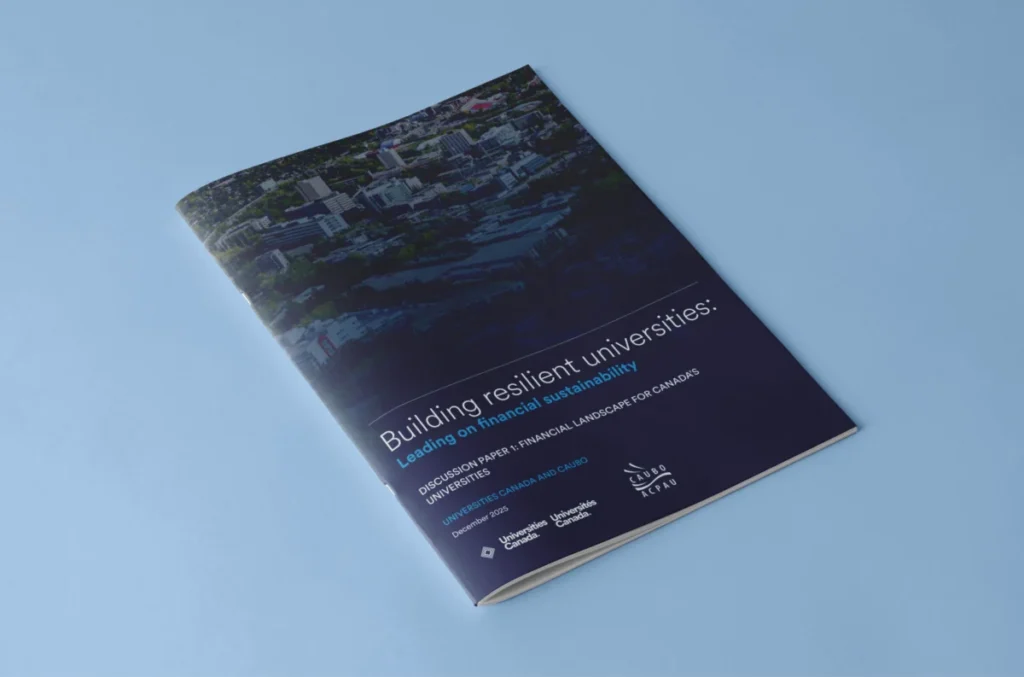
A comprehensive new report paints a stark picture of the financial health of Canada’s public post-secondary institutions, warning of a significant deterioration and urgently recommending targeted federal interventions to ensure sector stability. Released today, the report, "Building Resilient Universities: Leading on Financial Sustainability," developed by Universities Canada in collaboration with the Canadian Association of University Business Officers (CAUBO), details a system facing unprecedented strain. The authors contend that a confluence of persistent underfunding, escalating operational costs, aging infrastructure, policy ambiguity, and an increasing burden of regulatory requirements has severely curtailed universities’ capacity to adapt to evolving labour market demands, demographic shifts, and rapid technological advancements.
A System Under Strain: The Core Findings
The report’s central thesis is that Canada’s university system is at a critical juncture. For over a decade, public funding per student has stagnated or declined, while the expenses associated with running academic institutions have continued to climb. This widening gap has left universities with minimal financial flexibility to innovate, expand crucial programs, or invest in vital research infrastructure.
"This report comes at a critical moment for Canada’s university system," stated Nathalie Laporte, Executive Director of CAUBO. "Over the past decade, public funding per student has declined while costs have continued to rise, and institutions have very limited flexibility to respond." Laporte emphasized that the financial pressures are no longer abstract concerns for those within the sector. Faculty and staff are experiencing the tangible effects of stretched resources, including larger class sizes, the difficult necessity of program closures, and constraints on research capacity, which is the lifeblood of innovation and national competitiveness. "The report is needed now to clearly lay out these realities and to identify practical steps to stabilize the system and protect its core academic mission," she added.
Federal Levers for Stability: Key Recommendations
While many of the fundamental challenges confronting universities fall under provincial jurisdiction, the report identifies several critical areas where federal policy can provide immediate and substantial relief. These recommendations are designed to bolster financial resilience and ensure the continued vitality of higher education in Canada.
Enhancing Tax Policy for Educational Institutions
One of the most actionable recommendations focuses on tax policy, specifically the federal Goods and Services Tax/Harmonized Sales Tax (GST/HST) rebate for universities. The report advocates for increasing this rebate to 100 per cent, bringing it in line with the exemption already provided to municipalities and designated municipal service providers. Currently, universities receive a 67 per cent rebate. According to the report’s projections, raising this to 100 per cent would generate an estimated $240 million in annual savings for the sector.
Gabriel Miller, President and CEO of Universities Canada, characterized this tax adjustment as a matter of basic economic sense. "When these institutions are under the gun, does it really make sense for them to be using student tuition and government subsidies to pay sales tax to the federal government? I don’t think so," Miller remarked, highlighting the paradoxical situation where essential public services are indirectly taxed. This financial relief could be redirected towards student support, infrastructure upgrades, or critical research initiatives, directly enhancing the operational capacity of universities.
A Coordinated National Approach to Talent and Immigration
A second major recommendation calls for a more cohesive national strategy concerning talent, skills, and immigration policy. The report argues that federal departments must work together to ensure these policies align with Canada’s economic and regional workforce priorities, crucially removing barriers that hinder the attraction and retention of global talent. The authors underscore the significant risks posed by fragmented approaches among sector stakeholders, particularly in light of recent federal immigration policy shifts, most notably the implementation of an international student visa cap in 2024.
This concern is amplified by the findings of a recent report from the Auditor General of Canada, which specifically critiqued Immigration, Refugees and Citizenship Canada’s (IRCC) failure to adequately consider the needs of smaller provinces when enacting nationwide immigration policies. This oversight is particularly detrimental given provincial efforts to recruit and retain international students as a means to offset declining domestic populations and bolster their workforces.
"We can’t have federal and provincial governments pursuing contradictory policies in terms of which parts of the country we’re trying to draw people to or what talent we need," stated Mr. Miller. "You have to line up your research investments, your global marketing and your immigration policies so you’re sending a strong message to the world that we want to attract the best and the brightest." A unified and strategic approach to immigration is seen not only as vital for academic institutions but also as a cornerstone of Canada’s long-term economic prosperity and innovation agenda.
Establishing Federal Safeguards for Institutions in Crisis
Lastly, the report urges the federal government to establish robust safeguards to protect universities facing severe financial distress. Without such mechanisms, these institutions risk either ceasing operations entirely or requiring complex and financially burdensome provincial bailouts. The report highlights the precedent set by Laurentian University in Sudbury, Ontario, which became the first public university in Canada to seek protection under the Companies’ Creditors Arrangement Act (CCAA) in 2021. This process allowed the university to temporarily shield itself from creditor claims while it underwent significant cost-cutting, program closures, and financial restructuring.
However, federal legislation, Bill C-59, which received royal assent in June 2024, amended the Bankruptcy and Insolvency Act and the Companies’ Creditors Arrangement Act to explicitly bar applications from public post-secondary institutions. Universities Canada and CAUBO contend that a robust "safety net" is now essential to protect students, ongoing research, and the communities that rely on these institutions. Such a net could involve developing a sector-specific alternative to the CCAA or implementing a structured, transparent, court-supervised restructuring process that balances public accountability with the imperative of institutional autonomy. This would provide a framework for managing financial crises in a manner that minimizes disruption and preserves the core academic mission.
Broader Context and Long-Term Implications
The current financial pressures are exacerbated by significant long-term trends that threaten the future viability of Canada’s higher education sector. Demographic shifts are a primary concern. Canada is projected to experience a substantial increase in its youth population, placing greater demand on university enrolment. Statistics Canada forecasts that if current trends persist, Canada could welcome an additional 218,000 to 488,000 university students by 2040. Simultaneously, an aging workforce and a growing elderly population will lead to widespread labour shortages, particularly in healthcare. Projections indicate nearly 8 million job openings between 2022 and 2031, with two-thirds requiring post-secondary education or management experience. This demographic reality underscores the critical role universities play in training the next generation of skilled workers, especially in regions with aging populations like Newfoundland and Labrador, Nova Scotia, and New Brunswick.
The economic well-being of numerous Canadian communities is also intrinsically linked to the health of their local universities. These institutions serve as major employers, hubs for research and innovation, and crucial sources of skilled talent. Further reductions in funding or institutional closures could trigger job losses and have cascading negative consequences for local economies, potentially leading to brain drain and reduced economic diversification.
A Path Forward: Collaboration and Optimism
Despite the gravity of the challenges outlined in the report, there remains a degree of optimism within the post-secondary sector. Mr. Miller expressed confidence that collaboration between federal and provincial governments, alongside sector stakeholders and leaders, can effectively mitigate the impending challenges. "We feel there is a government in Ottawa that wants to be part of the solution, and we see in Prime Minister Carney someone who understands the importance of universities and why their contributions to Canadian life and our economy are so important," he stated, referencing a perceived receptiveness within the current federal administration.
The report, currently under discussion at Universities Canada’s annual membership meeting in Vancouver, is intended to serve as a foundational document for coordinated action. The urgency of these recommendations is underscored by the interconnectedness of the challenges: underfunded institutions struggle to adapt to changing demographics and labour needs, while uncoordinated immigration policies can exacerbate talent shortages. The proposed federal interventions, from tax policy adjustments to a unified approach to immigration and crisis management, aim to create a more stable and resilient environment for Canadian universities to continue their vital role in education, research, and national development. The coming months will be crucial in determining the extent to which these recommendations translate into concrete policy changes and tangible support for a sector foundational to Canada’s future.