


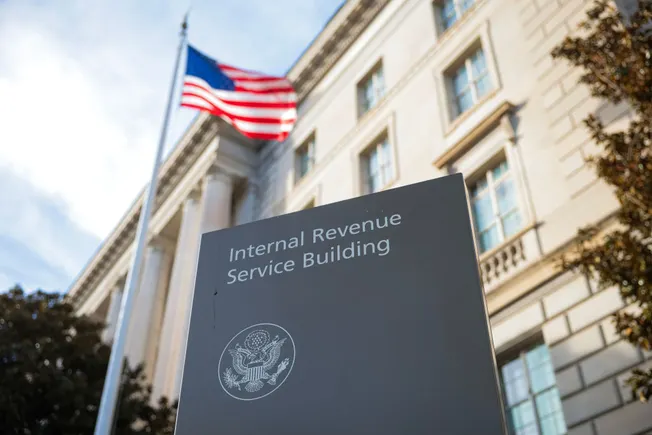
More than half the states – 27 in total – have signaled their intention to participate in the nation’s inaugural federally available private school choice tax incentive program, according to disclosures made to the Internal Revenue Service (IRS) as of April 15. This significant early adoption indicates a strong interest from a broad spectrum of states, from the western reaches of Alaska to the southeastern coast of Florida, and from the mountainous terrains of Montana to the northeastern landscapes of New Hampshire. These states have provided advance notification to the IRS regarding their intent to opt into the Federal Scholarship Tax Credit program, a provision embedded within the legislation commonly referred to as the "One Big Beautiful Bill" enacted for the 2025 fiscal year. The program is slated to officially launch on January 1, 2027, marking a new era in federal educational funding mechanisms.
Program Overview and State Participation
The Federal Scholarship Tax Credit program is designed to allow individual taxpayers to make charitable donations to 501(c)(3) organizations, which will then distribute these funds as scholarships for K-12 educational expenses. These expenses can encompass private school tuition as well as costs associated with public schooling, such as tutoring and supplementary learning resources. While a formal opt-in process for states is still under development, with anticipated details forthcoming in a U.S. Department of the Treasury notice of proposed rulemaking, the early indication of interest from 27 states underscores a significant national movement towards embracing private school choice initiatives.
Eligibility for these scholarships will be geographically restricted: only students residing in states that formally opt into the program will be able to benefit. The early opt-in process was extended to states to provide scholarship-granting organizations with ample time to prepare for the program’s launch. These organizations will be responsible for managing and distributing the taxpayer-funded donations.
Under the program’s framework, individual taxpayers will have the opportunity to claim a 100% federal income tax credit for their charitable contributions, up to an annual limit of $1,700. This incentive structure aims to encourage widespread philanthropic engagement in educational funding.
On the student side, eligibility for scholarships is determined by household income. Families earning up to 300% of the area median income, as defined by the U.S. Department of Housing and Urban Development (HUD), will qualify. The specific income thresholds vary significantly by region. For instance, in California’s San Jose-Sunnyvale-Santa Clara metropolitan area, the potential annual household income limit could reach as high as $585,600. Conversely, in the Pine Ridge Reservation region of South Dakota, the limit would be substantially lower, around $113,100, according to an analytical map compiled by Doug Geverdt, a retired data program manager at the National Center for Education Statistics. This disparity highlights the varying economic landscapes across the nation and the potential reach of the program in different locales.
The states that have indicated their desire to opt into the Federal Scholarship Tax Credit program as of April 15, according to the IRS, are: Alabama, Alaska, Arkansas, Colorado, Florida, Georgia, Idaho, Indiana, Iowa, Louisiana, Mississippi, Missouri, Montana, Nebraska, Nevada, New Hampshire, North Dakota, Ohio, Oklahoma, South Carolina, South Dakota, Tennessee, Texas, Utah, Virginia, West Virginia, and Wyoming.
The Dynamics of State Participation and Legislative Battles
The decision for states to participate in the Federal Scholarship Tax Credit program has not been without considerable debate and lobbying efforts, even in the absence of finalized federal guidelines from the Treasury Department and the IRS. These discussions have unfolded across various legislative bodies and at the local levels, reflecting diverse perspectives on the role of public versus private education funding.
A notable instance occurred in Kentucky, where the state’s General Assembly approved a measure to opt into the program earlier this spring. However, Governor Andy Beshear vetoed the legislation. The General Assembly subsequently overrode the governor’s veto, signifying a strong legislative push for participation. This action follows a broader context in Kentucky where a proposed constitutional amendment in 2024 aimed at allowing state funding for private school education was rejected by approximately 65% of voters, according to Ballotpedia, indicating a significant public sentiment against diverting public funds to private institutions.
In Colorado, a bill currently under consideration proposes that schools accepting students utilizing federal scholarships must adhere to nondiscrimination mandates and regulations concerning students with disabilities. This proposed legislation would prohibit participating schools from discriminating based on a student’s race, ethnicity, religion, sexual orientation, gender identity, family composition, language proficiency, or other protected characteristics.
Conversely, some organizations are advocating for a more hands-off federal approach. The Business Leadership Organized for Catholic Schools, a scholarship organization, submitted comments to the Treasury Department urging the agency to prevent states and governors from imposing additional eligibility restrictions or regulatory conditions beyond those stipulated by the federal program. This perspective emphasizes the importance of allowing the federal framework to operate with minimal state-level interference.
The debate has also reached local school districts. The Chicago Public Schools Board of Education, for example, voted on April 8 to formally urge the Illinois General Assembly and Governor JB Pritzker to reject any legislative actions or federal incentive programs that could lead to the creation, expansion, or subsidization of school voucher programs within the state. This resolution reflects a strong stance by a major urban school district against policies perceived to divert resources from public education.
The America First Policy Institute, a nonprofit organization advocating for private school choice, has projected that states opting out of the federal program could forfeit an estimated $23 billion over the next three years in potential tax-credit-eligible donations for education. Erika Donalds, chair of Educational Opportunity at AFPI, stated in a March 30 release, "This is a zero-cost, high-impact policy, yet non-participating states are effectively sending those resources to other states instead of supporting their own families." This assertion frames participation as a missed economic opportunity for states that choose to remain outside the program.
Broader Implications for Public Education and Divergent Views
The Federal Scholarship Tax Credit program has ignited significant opposition from various quarters, with concerns primarily focused on its potential impact on public school systems. In Congress, a legislative effort is underway to repeal the program. Last week, 30 Democratic and Independent senators introduced legislation to that effect, garnering endorsement from 163 national and state organizations, according to a statement from Senator Mark Kelly (D-Ariz.), a key sponsor of the bill.
Senator Kelly articulated his concerns, stating, "In Arizona, we’ve already seen how universal vouchers are leading to rampant fraud and benefiting people who already had the means to send their kids to private school, while decimating public education for everyone else. If we want to keep improving education to build a better future for the next generation, we have to start with keeping public funds in public schools that serve all kids." This statement reflects a common argument that private school choice programs, particularly voucher-like mechanisms, can disproportionately benefit families who can already afford private education, while simultaneously undermining the financial stability of public schools.
Educators, lawmakers, and researchers have voiced alarm over the potential negative repercussions of private school choice initiatives on public education. A significant point of contention is that private schools are not legally bound by the Individuals with Disabilities Education Act (IDEA), the federal law mandating special education services for eligible students. Furthermore, they are often not subject to other federal education civil rights regulations, leading to concerns about transparency, accountability, and equitable access for all students, especially those with disabilities.
Research released this month by the Economic Policy Institute suggests that these programs can be particularly detrimental to rural schools, which may lack sufficient private school alternatives to absorb students if public school funding is diminished. Opponents argue that diverting taxpayer funds to private school tuition will inevitably result in fewer resources available for public schools, which serve a larger percentage of the student population nationwide.
A February resource from Public Funds Public Schools, a project of the Education Law Center, characterized the establishment of a federal school voucher program as "part of a broader assault on public education, one of the most important common goods underpinning American democracy." This statement encapsulates the view that public schools are fundamental institutions for a democratic society and that their weakening through private school choice initiatives poses a threat to broader societal well-being.
Alternative Perspectives and Potential Benefits
Despite the significant opposition, not all organizations view the Federal Scholarship Tax Credit program as a detriment to public education. Some, like Democrats for Education Reform (DFER), see potential benefits, particularly in how the scholarships can be applied to public school expenses. DFER advocates for state participation, suggesting that the program can be leveraged to expand vital educational services.
A March memo from DFER highlighted Georgia as an example, recommending that the state utilize the Federal Scholarship Tax Credit to enhance tutoring and out-of-school time learning opportunities. The memo also proposed directing resources to under-resourced students and supporting trusted community-based organizations that offer academic and enrichment programs. DFER further suggested that Georgia could use this initiative to foster innovative practices, such as incentives for attracting high-quality teachers and implementing reforms to the state’s education funding formula.
Jorge Elorza, CEO of DFER, emphasized the urgency for proactive educational reform, stating, "Without renewed urgency and a forward-looking vision, Georgia risks the futures of tens of thousands of its students. The state’s concerning academic outcomes demand immediate action to avoid a generational loss of student potential, socioeconomic mobility, and economic productivity." This perspective frames the federal program not merely as a vehicle for private school choice but as a potential catalyst for broader educational improvement, including within the public sector.
The diverse reactions to the Federal Scholarship Tax Credit program—ranging from enthusiastic adoption by a majority of states to strong legislative opposition and advocacy for public school preservation—underscore the complex and deeply divided landscape of educational policy in the United States. As the program’s launch date of January 1, 2027, approaches, the national dialogue is expected to intensify, with ongoing debates shaping the future of educational funding and access for millions of American students. The ultimate impact of this federal initiative will likely depend on how states navigate its implementation, how effectively scholarship organizations operate, and the continued engagement of both proponents and opponents in shaping its trajectory.