

In an educational landscape increasingly shaped by technological advancements and the omnipresence of artificial intelligence, educators like Marcus Luther are pioneering innovative methods to safeguard and elevate authentic student voice in writing. Luther, a seasoned teacher whose insights are often shared through platforms like Cult of Pedagogy, has cultivated a classroom environment where student exemplars are not merely displayed but are actively integrated into the instructional fabric, fostering both enhanced writing skills and a profound sense of belonging. This pedagogical shift addresses the dual challenges of improving literacy and instilling confidence, particularly vital as AI tools prompt a re-evaluation of traditional writing assessment and instruction.
The Power of Visible Language: The ‘Beautiful Language Wall’
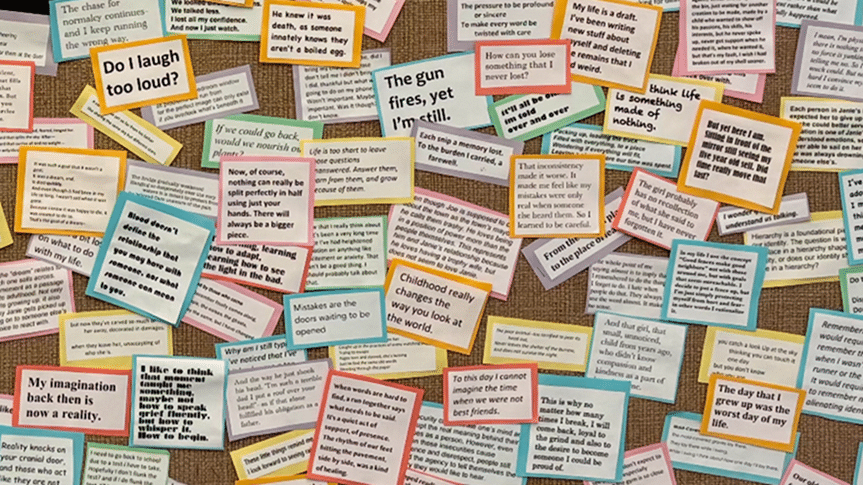
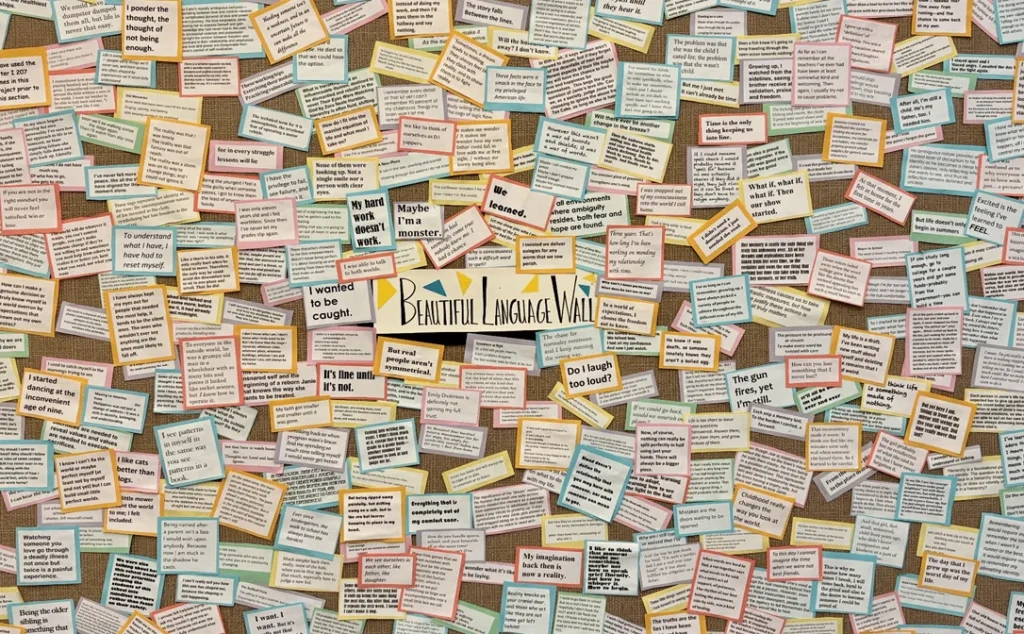
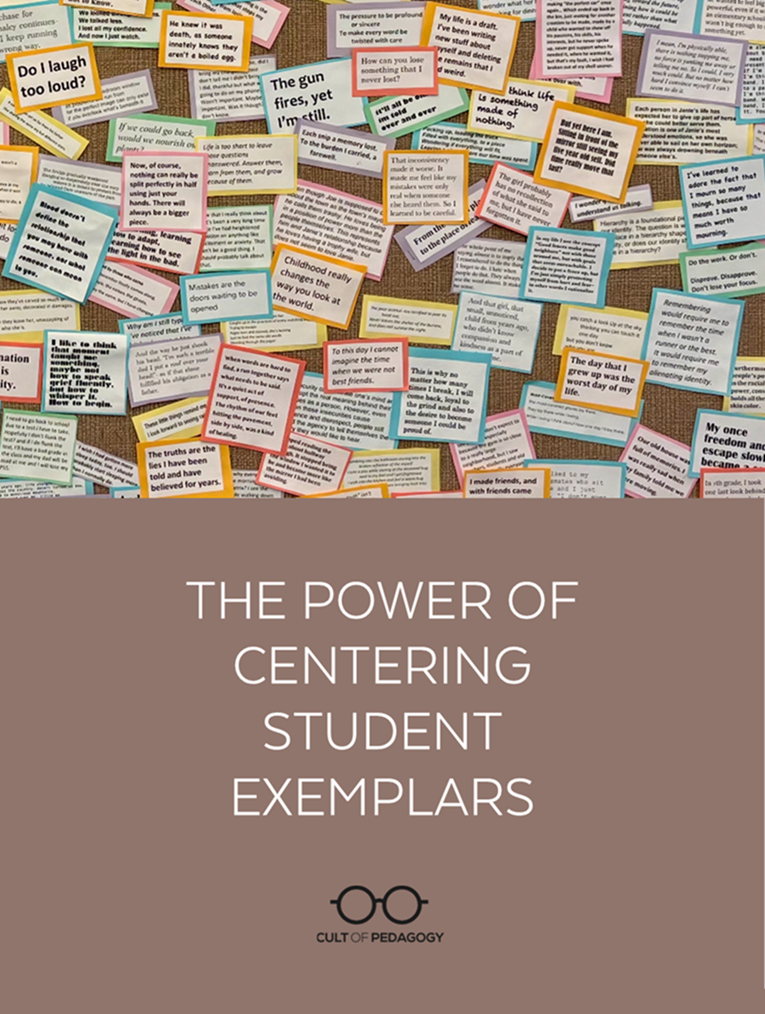
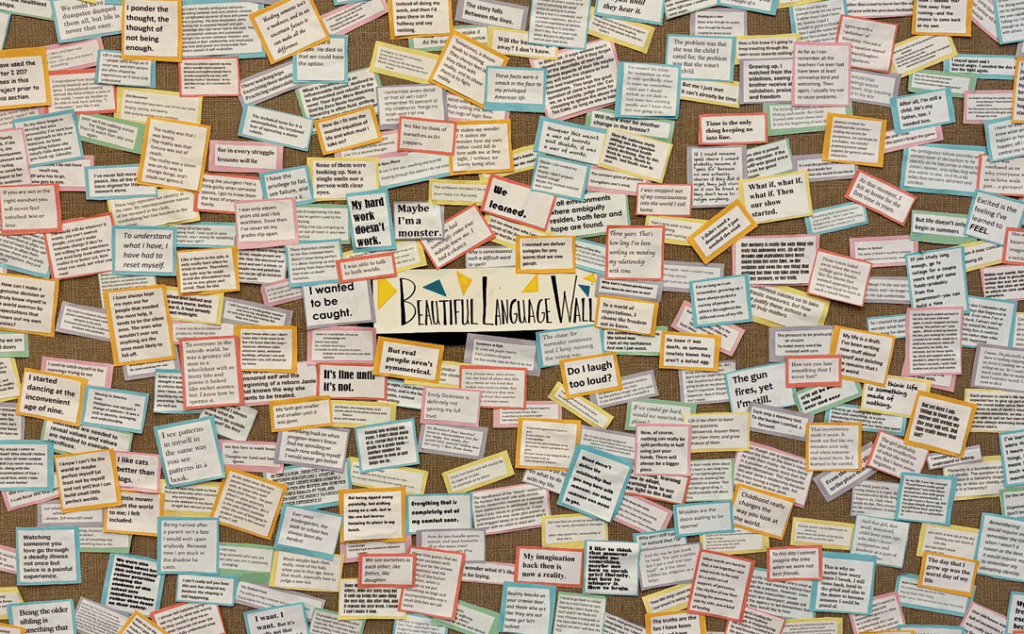
At the core of Luther’s approach is a physical manifestation of student achievement: the "Beautiful Language Wall." What begins each academic year as a blank bulletin board, adorned only with a simple placard, progressively transforms into a vibrant tapestry of student prose. Throughout the year, as Luther reviews student writing, he meticulously identifies sentences and phrases that exemplify strong writing, noteworthy vocabulary, or innovative rhetorical moves. These anonymized selections are then printed and added to the wall, serving as a dynamic, evolving anthology of classroom excellence.
This seemingly simple practice, inspired by workshops from literacy advocates like Kelly Gallagher nearly a decade ago, has a profound impact. Students are observed gravitating towards the wall before and after class, eagerly searching for new additions, proudly identifying their own contributions, and even bringing peers from outside the class to showcase their work. By year’s end, the wall is brimming with examples, visually narrating the collective linguistic journey of the class. This strategy moves beyond generic praise, offering tangible, accessible models that demystify complex writing concepts and provide a constant source of inspiration rooted directly in their shared learning experience. It taps into the psychological principle of "visible learning," where making learning processes and outcomes transparent significantly boosts student engagement and achievement.
Beyond Grades: Cultivating Specific Wins and Growth Mindset
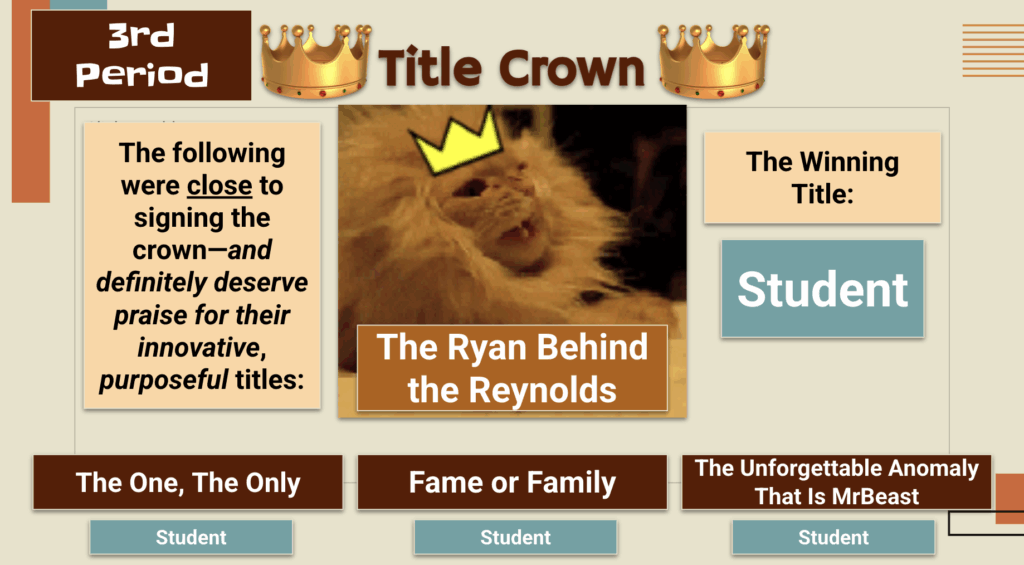
One of Luther’s key refinements in utilizing student exemplars involves a more granular approach to celebrating achievements, moving beyond the singular focus on overall grades. Working with colleague Andrea James, Luther has integrated "feedback days" that dedicate specific time to highlighting "specific wins" within student essays. Instead of a blanket assessment, students receive recognition for elements such as the "best title," "most engaging opening," "favorite sentence," or "strongest closing."
During these sessions, specific student examples (again, anonymized) are projected and discussed, with Luther explaining precisely why each piece of writing stands out. The top selection in each category earns the unique privilege of "signing the crown"—a large, cardstock crown made at the beginning of the year for various classroom competition winners. This practice has proven remarkably effective. As one student eloquently articulated in a post-feedback self-reflection, "I’m so proud of my essay!! I got the award for best title […] I told myself I should at least try because I wanted to see if I could get it and I did!" This anecdote underscores the motivational power of targeted recognition. Research in educational psychology consistently demonstrates that specific, actionable feedback, coupled with recognition for effort and growth, fosters a growth mindset, encouraging students to view challenges as opportunities for improvement rather than insurmountable obstacles. This shifts the perception of writing from a pass/fail endeavor to a continuous journey of refinement and discovery, where even students who may struggle with overall grades can find significant points of pride and motivation.
Interactive Learning: Exemplars as Dynamic Tools

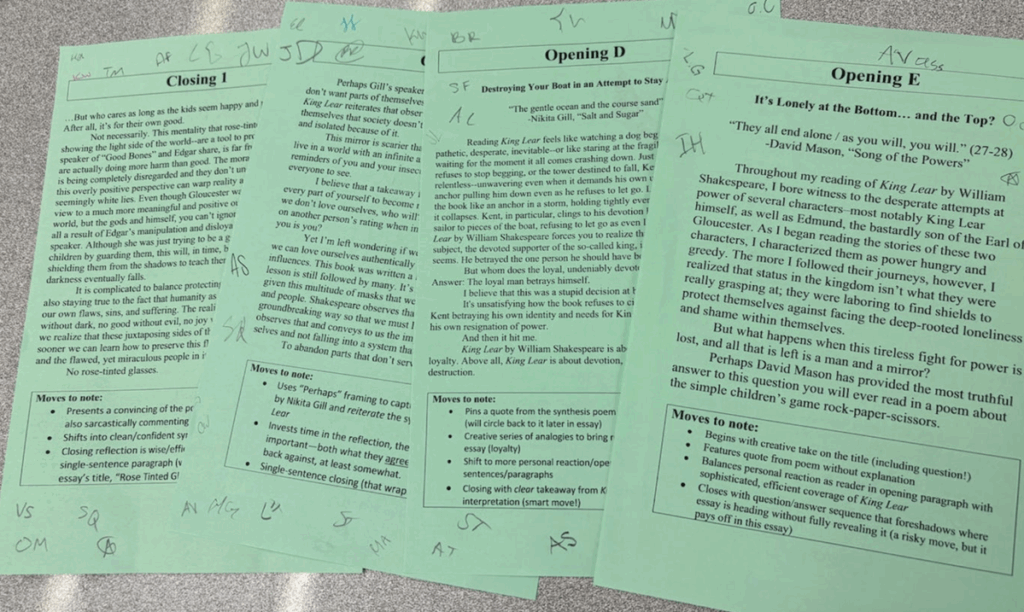
Luther’s methodology further evolves by transforming exemplars from static displays into interactive learning tools. Following a particularly challenging synthesis essay unit with his juniors, which required them to interpret King Lear alongside a contemporary poem and design their own essay structure, Luther observed a significant improvement in student openings and closings. To capitalize on this collective strength, he curated five distinct openings and five closings from the essays, anonymized them, and added his own "Moves to note" commentary beneath each, explaining its effectiveness.
These annotated exemplars were then posted around the classroom for a "gallery walk." Students traversed the room, meticulously analyzing their peers’ work, taking notes on admirable techniques, and initialing those that particularly resonated. This was followed by small group discussions, allowing students to debrief their observations and synthesize their learning. This interactive engagement serves multiple pedagogical purposes: it provides diverse pathways for students seeking to elevate their own writing by learning directly from their classmates; it reaffirms for students who took risks in their writing that their efforts were validated and successful; and it fosters metacognition as students actively analyze and articulate effective writing strategies. As one student reflected after seeing their work featured, "I am proud of the risks I took and my ability to insert my own voice into my essay when the thought of that terrified me at first." This demonstrates how interactive exemplar analysis simultaneously builds competence and confidence, filling "both cups," as Luther puts it.
Weaving Voices: The Collective Poem as Community Tapestry
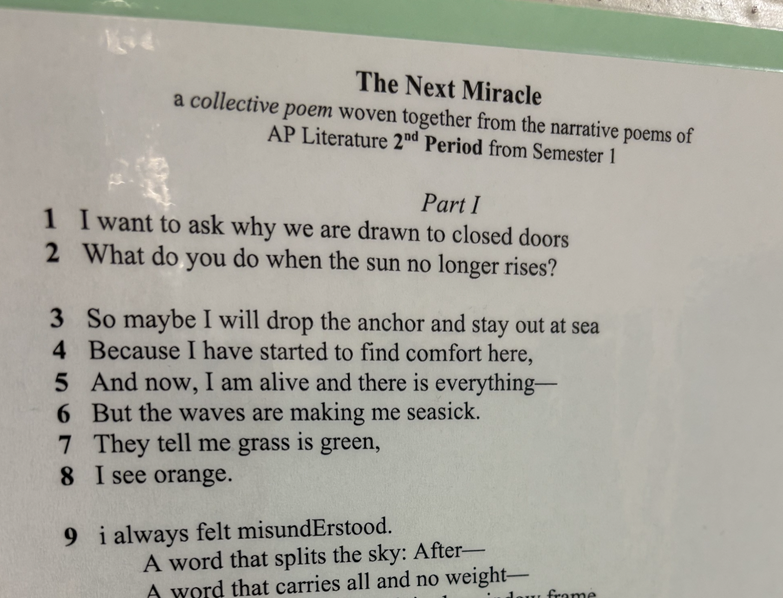
Perhaps the most poignant illustration of Luther’s approach is the "collective poem." At the close of the first semester, students, weary from finals, were presented with one last poem to read aloud, line by line, around the room. Initially met with predictable high school "eyerolls," a profound realization gradually dawned upon them: the poem they were reading was a mosaic of their own words. Luther had painstakingly woven together one line from every student’s individual narrative poem, written earlier in the semester, into a single, cohesive "collective poem" for each of his classes.
The room, initially quiet with individual readings, erupted into conversation as students recognized their own lines and those of their peers. "Hey, I wrote that," "This is from my poem," "I did this," were the whispers that escalated into a communal realization: "We wrote this." This activity transcends typical writing exercises; it is a powerful act of community building and identity affirmation. As one student reflected months later, "It shows how each person, aware or not, is given a spot to be, which seems pretty meaningful to me. The poem truly became a symbol of the community we created—even in a classroom setting." This strategy directly addresses the fundamental human need for belonging, demonstrating that each student’s voice contributes uniquely to the collective whole. It transforms individual efforts into a shared narrative, validating personal expression within a supportive community framework.
Navigating the AI Frontier: Authenticity in the Digital Age
Luther’s innovative use of student exemplars gains heightened significance in the current educational climate, particularly with the rapid integration of artificial intelligence tools like ChatGPT. The advent of AI has presented educators with unprecedented challenges regarding academic integrity, the definition of authentic student work, and the very purpose of teaching writing. As AI models become increasingly sophisticated at generating coherent and grammatically correct text, the emphasis in writing instruction must pivot from mere correctness to the cultivation of genuine voice, critical thinking, and personal connection—qualities that AI cannot replicate.
In this context, Luther’s strategies offer a robust framework for fostering authentic learning. By consistently highlighting and celebrating student-generated content, he intrinsically motivates students to produce original work. The "Beautiful Language Wall," the "specific wins" awards, and the interactive exemplar activities all reinforce the value of human creativity and individual expression. The "collective poem" stands as a powerful testament to the unique contributions of each student, making it unequivocally clear that their personal narratives and linguistic choices are irreplaceable. These methods directly counteract the potential for AI to diminish student ownership and voice, instead championing the irreplaceable value of human intellect and emotion in communication. Educational leaders and researchers, like those contributing to the National Education Association (NEA) discussions on AI, increasingly advocate for pedagogical approaches that prioritize human skills such as critical analysis, creativity, and empathy, all of which are cultivated through Luther’s exemplar-centered classroom.
Broader Pedagogical Impact and Expert Commentary
The pedagogical implications of Luther’s approach extend far beyond his individual classroom. Educational experts consistently highlight the importance of student-centered learning, authentic assessment, and fostering a positive classroom culture. Luther’s strategies embody these best practices, providing a replicable model for educators seeking to enhance student engagement and writing proficiency. Studies from organizations like Solution Tree, which champions professional learning communities, often underscore the effectiveness of peer learning and the power of positive reinforcement in driving academic growth.
School administrators observing such practices often note the tangible increase in student motivation and the palpable sense of pride students exhibit in their work. The focus on celebrating specific aspects of writing, rather than just the final grade, aligns with modern assessment theories that advocate for formative feedback and a growth-oriented approach. This can lead to improved student retention in challenging subjects, reduced anxiety surrounding writing tasks, and ultimately, students who are not only better writers but also more confident communicators. The development of such intrinsically motivated learners is paramount in preparing students for a future where adaptability, creativity, and critical thinking will be more valuable than rote memorization or mere information recall. This approach also contributes to a healthier classroom ecosystem, where collaboration and mutual respect are foundational, rather than competition based solely on grades.
Conclusion: A Blueprint for Authentic Learning
In an era of unprecedented technological change, the fundamental questions for educators remain: How do we make learning meaningful? How do we value authentic voice? How do we empower students to confidently share their stories? Marcus Luther’s classroom provides compelling answers, demonstrating that by intentionally centering student writing, educators make an unequivocal statement about its inherent value. His innovative use of student exemplars—from the "Beautiful Language Wall" to the "collective poem"—offers a powerful blueprint for fostering a classroom community where every student’s contribution is seen, celebrated, and leveraged as a tool for collective growth. This pedagogical choice, as Luther himself notes, is a profound expression of educational values, ensuring that human creativity and connection remain at the heart of learning, now more than ever.