



The impetus for this critical work stems from a widespread frustration articulated by educators globally. As observed during recent instructional rounds, a teacher lamented, "I am trying to get them to own their learning. They are sweet. They do what I ask, but they just won’t own it." This sentiment echoes across classrooms, highlighting a fundamental disconnect: while teachers invest heavily in lesson planning, engaging activities, and scaffolded support, the ultimate act of learning remains solely with the student. Without internal mechanisms for processing information, intellectual curiosity, or a sense of intellectual safety, even the most meticulously designed lessons may fail to ignite meaningful learning.
The Evolving Landscape of Student-Centered Learning
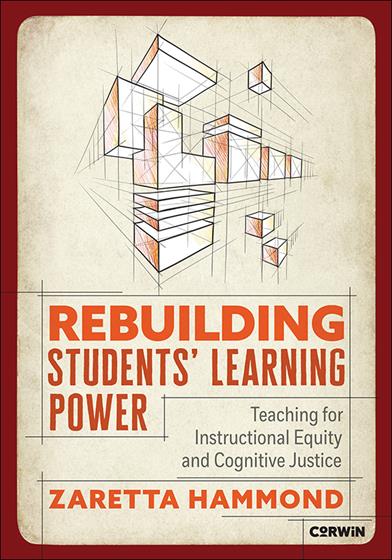
The concept of student ownership in learning is not new but has gained increasing prominence within educational discourse over the past several decades. Early 20th-century progressive education movements, spearheaded by figures like John Dewey, advocated for active learning and experience-based education. The late 20th and early 21st centuries saw the rise of pedagogical approaches such as Project-Based Learning (PBL), Universal Design for Learning (UDL), and makerspace learning, all designed to engage students more deeply and foster independence. These methods, while evidence-backed and powerful, often implicitly assume students possess the inherent capacity to navigate complex learning tasks. However, as Hammond argues, these approaches, though valuable, often fall short because they do not explicitly teach students how to learn within these dynamic environments.
Research consistently supports the notion that metacognitive skills – the ability to think about one’s own thinking – are crucial for academic success. A meta-analysis by John Hattie in "Visible Learning" (2009) identified metacognitive strategies as having a significant effect size on student achievement. Similarly, a 2013 review by the Education Endowment Foundation found that metacognition and self-regulation strategies, when explicitly taught, can lead to learning gains equivalent to an additional seven months’ progress. Despite this evidence, explicit instruction in these foundational learning skills remains an overlooked component of many curricula.
Distinguishing "Learn-to-Learn" Skills from Executive Function

Hammond’s framework carefully distinguishes "learn-to-learn" skills from executive function skills. While executive function skills — such as planning, organization, time management, and self-control — are undeniably important for academic success, they primarily address the management of learning. Tools like binders, planners, and study schedules aid in organizing tasks and materials. In contrast, "learn-to-learn" skills delve deeper into the cognitive process of information acquisition and retention, focusing on how the brain actively processes new content. These are the "trade secrets" of learning, often hidden curriculum elements that, when made explicit, can close significant opportunity gaps and promote equitable academic outcomes.
The framework proposes five "moves" that constitute a robust "learn-to-learn" skill set. These moves are not rigid steps but flexible cognitive actions that students can deploy adaptively depending on the demands of a learning task. The distinction between a "move" and a "skill" is critical: a move is a specific, discrete action (like a chess move), while a skill is the broader competency that allows a learner to choose and execute the right moves effectively and adaptively.
The Five Learn-to-Learn Moves: A Deeper Dive
-
Move 1: Size It Up and Break It Down
This foundational move initiates the information processing cycle by engaging students in rigorous task analysis. "Size It Up" involves a structured cognitive routine where learners dissect the task, understanding its core requirements and implications. This includes identifying the task’s purpose, the expected output, and the criteria for success. Following this, "Break It Down" focuses on crafting a strategic plan of attack. Students are prompted to segment the task into its constituent cognitive activities, anticipate challenges, and determine which tools and strategies will be necessary. This move helps students establish an appropriate emotional stance towards the task, mitigating anxiety and fostering a sense of control. Questions like "What is this task really asking me to do?" and "What do I already know about tasks like this?" guide the learner. -
Move 2: Scan the Hard Drive
Central to effective learning is the activation of prior knowledge. The "Scan the Hard Drive" move specifically targets this, firing neural pathways associated with a student’s existing "funds of knowledge" or schema. Grounded in the brain rule that all new learning must connect with existing learning, this move primes the brain for meaning-making. When encountering new information during the attention phase of processing, the brain instinctively searches for related experiences, definitions, or concepts, no matter how seemingly tangential. This active retrieval process helps learners build bridges between the known and the unknown, making new content more comprehensible and memorable. Prompts such as "What does this remind me of?" or "Where have I seen this idea before?" facilitate this crucial connection. -
Move 3: Chew and Remix
This move directly addresses the elaboration phase of information processing, where students actively integrate new content with their activated schema. "Chewing" involves grappling with complex, conflicting, or competing information, engaging in productive struggle within their zone of proximal development (ZPD). This active mental manipulation leads to "remixing," where new information is not just absorbed but actively transformed and integrated into existing knowledge structures. This process facilitates a transition from surface-level understanding to deeper learning, aligning with higher levels of Bloom’s Taxonomy or Webb’s Depth of Knowledge. Students are encouraged to ask: "How does this new information fit (or not fit) with what I already know?" and "How can I explain this in my own words?"
-
Move 4: Engage in Skillful Practice
While "Chew and Remix" focuses on general meaning-making, "Skillful Practice" is dedicated to solidifying understanding of core concepts and building automaticity with specific skills and procedures. This move emphasizes deliberate practice, a concept extensively researched by K. Anders Ericsson, which involves focused, repetitive engagement with continuous refinement. The goal is to myelinate new neural pathways, enhancing efficiency and automaticity. Students learn to use metastrategic awareness to identify weaknesses in their execution of a skill or understanding of a concept and then target small, specific improvements. This might involve mastering a math formula, refining an argumentative essay structure, or deepening comprehension of a historical event. Key questions include: "What part of this is still hard for me?" and "What small thing can I practice to get better?" -
Move 5: Make It Sticky
The final move focuses on strengthening the consolidation phase of information processing and counteracting the brain’s natural pruning mechanism, which can delete fragile neural connections if new learning isn’t reinforced. "Make It Sticky" involves applying new content in different settings within a critical timeframe (ideally within 12-48 hours after initial learning). This out-of-school application is vital for transforming fragile dendrites into robust neural pathways. Activities like explaining the concept to someone else, teaching it, creating analogies, or applying it to a real-world problem reinforce the learning and make it durable. This move prompts students to consider: "How can I use this information outside of class?" and "Who can I teach this to?"
Implementing Learn-to-Learn Skills: Fostering Cognitive Independence
The core challenge lies not just in introducing these moves but in ensuring students adopt and consistently apply them without constant teacher prompting. Hammond outlines three strategic approaches to foster this cognitive independence:
-
Initiate into a Cognitive Apprenticeship: Drawing parallels with traditional apprenticeships, this approach frames the classroom as a space where students are guided towards mastery of learning. An onboarding process, lasting 4-6 weeks, explicitly lays out the path to becoming a skilled information processor. During this period, the teacher acts as a mentor, modeling the moves, thinking aloud, and providing structured opportunities for students to practice. This apprenticeship aims to develop six key capacities: self-awareness, self-monitoring, self-regulation, metacognitive reflection, persistence, and adaptability.
-
Invite Revision of Learner Identity: A student’s self-perception as a learner profoundly impacts their engagement and persistence. Many underperforming students struggle not only with content but also with a diminished sense of themselves as capable learners, often manifesting as statements like, "I’m not a math person." By explicitly teaching "learn-to-learn" skills within a cognitive apprenticeship, educators can invite students to revise these limiting beliefs. This involves helping students understand their brain’s capacity for growth (growth mindset) and recognizing their own agency in the learning process. Shifting a student’s learner identity from passive recipient to active agent is a critical step towards ownership.
-
Integrate Regular Opportunities for Reflection: Developing "craftsmanship of learning" requires consistent reflection and feedback. Teachers must create structured instructional conversations where students regularly discuss their learning process, including challenges, mistakes, confusions, and the specific moves they employed to navigate them. This metacognitive dialogue helps students identify their "choke points" (natural cognitive constraints, like working memory limitations) and "pitfalls" (self-sabotaging behaviors, like cramming). Understanding these individual learning dynamics empowers students to develop personalized strategies for overcoming obstacles and maximizing their learning power.
Broader Implications and the Pursuit of Instructional Equity
The explicit teaching of "learn-to-learn" skills transcends individual classroom strategies; it represents a fundamental shift towards instructional equity. These skills constitute a "hidden equity curriculum" that every student deserves to master, particularly those from historically marginalized backgrounds who may not have acquired these implicit skills through prior educational experiences or home environments. By making these cognitive processes transparent and teachable, educators can level the playing field, ensuring all students have the opportunity to become truly independent and powerful learners.
The impact of this framework extends beyond academic achievement. In a rapidly changing world, the ability to learn continuously and adaptively is paramount. Equipping students with these metacognitive tools fosters lifelong learning capabilities, critical thinking, problem-solving prowess, and resilience—qualities essential for navigating future personal and professional challenges. Educational institutions, policymakers, and curriculum developers have a vested interest in integrating such frameworks to prepare students for a future that demands not just knowledge, but the agile capacity to acquire, process, and apply new knowledge effectively. The release of "Rebuilding Students’ Learning Power" in 2025 marks a significant moment, offering a tangible, evidence-informed pathway to cultivate a generation of empowered, self-directed learners.