



In a critical period for American education, where traditional metrics of success like standardized test scores continue to stagnate or decline, and educators grapple with unprecedented challenges in student behavior, a burgeoning movement is advocating for a fundamental shift in pedagogical approach: centering student voice and agency. This paradigm, championed through works like "Street Data" and its practical companion, "Pedagogies of Voice: Street Data and the Path to Student Agency," posits that authentic school improvement can only be achieved by deeply listening to and empowering the very individuals most impacted by the system: the students themselves, particularly those at the margins whose experiences are often overlooked.
The Crisis in American Education: A Call for New Solutions
For decades, the discourse around improving schools in the United States has predominantly revolved around quantifiable outcomes, primarily standardized test scores, and the implementation of top-down curricular mandates. This focus, while ostensibly aimed at accountability and achievement, has frequently overlooked the holistic development and human experience of students. The limitations of this approach have become increasingly apparent. A recent report by Schwartz (2025) highlighted a concerning trend: reading scores on the National Assessment of Educational Progress (NAEP) have fallen to new lows, with significant declines observed among struggling students. This data point underscores a systemic failure to adequately address foundational literacy skills, particularly for those who need it most.
Beyond academic performance, the educational environment itself is facing severe strain. A survey conducted by Stephens (2025) revealed that nearly half of all educators reported student behavior as worse than pre-pandemic levels, a troubling increase from a similar survey conducted just two years prior. This deteriorating climate affects learning, teacher morale, and the overall well-being of the school community. Such statistics paint a stark picture: despite considerable investment and numerous reform initiatives, the educational system is not consistently delivering the desired results, nor is it fostering environments where students and educators feel satisfied and engaged. While isolated examples of success exist, these often struggle to scale, and the broader system continues to miss the mark by attempting to solve problems without directly engaging with the perspectives of those most affected – the students.
The Emergence of "Street Data": A Ground-Up Approach
Against this backdrop of frustration and stagnation, a transformative approach emerged with the publication of "Street Data: A Pathway Toward Equitable, Anti-Racist Schools" by Shane Safir and Jamila Dugan. This seminal work introduced a methodology for school improvement that diverged sharply from conventional, "sky data" analyses (broad, quantitative data like test scores). Instead, "Street Data" advocated for "slow, thoughtful listening sessions" with students, especially those from marginalized communities whose voices are historically silenced and whose needs are consistently unmet. The core premise is that by understanding the lived experiences and perceptions of these students, educators can uncover root causes of issues and co-create more effective, equitable, and sustainable solutions.

The process outlined in "Street Data" is iterative and deeply human-centered:
- Deep Listening: Engaging in qualitative, narrative-rich conversations with students, particularly those at the periphery.
- Collaborative Sense-Making: Analyzing these narratives to identify patterns, challenges, and opportunities.
- Co-Creation of Solutions: Developing new strategies, programs, or pedagogical approaches in partnership with students and other stakeholders.
- Piloting and Iteration: Testing these solutions on a small scale, gathering feedback, and refining them.
- Continuous Feedback Loop: Re-engaging with student voices to guide further adaptation and improvement.
This model resonated deeply within the educational community due to its emphasis on authentic engagement and its potential for fostering genuine, bottom-up change, in contrast to many expensive, top-down programs that often fail to adapt to local contexts.
A Chronology of Impact: From Book to Classroom Practice
The journey of "Street Data" from a theoretical framework to a widely discussed and implemented methodology has been deliberate and well-documented.
- Initial Introduction (Episode 178): Shortly after its publication, authors Shane Safir and Jamila Dugan were featured on Episode 178 of the Cult of Pedagogy podcast, introducing the core concepts of "Street Data" to a broad audience of educators. This initial exposure highlighted the book’s innovative approach to equity and school improvement.
- Visualizing the Process (Mini-Documentary, 2023): Recognizing the power of seeing the methodology in action, a mini-documentary was produced, showcasing Safir and Dugan guiding two distinct schools through the "Street Data" process. This visual resource provided educators with an up-close, practical demonstration of how the approach worked in real-world settings, making the abstract concepts tangible.
- Deep Dive into Implementation (Eight-Episode Video Series & Podcast Episode 203): Building on the mini-documentary, an eight-episode video series was subsequently released, offering a more granular look at various stages and nuances of "Street Data" implementation. Participants from these schools later joined a follow-up podcast, Episode 203, to share their firsthand experiences, challenges, and successes, further enriching the community’s understanding.
As the "Street Data" methodology gained traction, a natural and crucial question arose among educators: "What does it actually look like when teachers truly center student voice and student agency in their daily pedagogy?" While "Street Data" provided the systemic framework for listening and responding, there was a clear need for practical, classroom-level strategies that could translate these principles into actionable teaching practices.
"Pedagogies of Voice": Translating Theory into Classroom Action
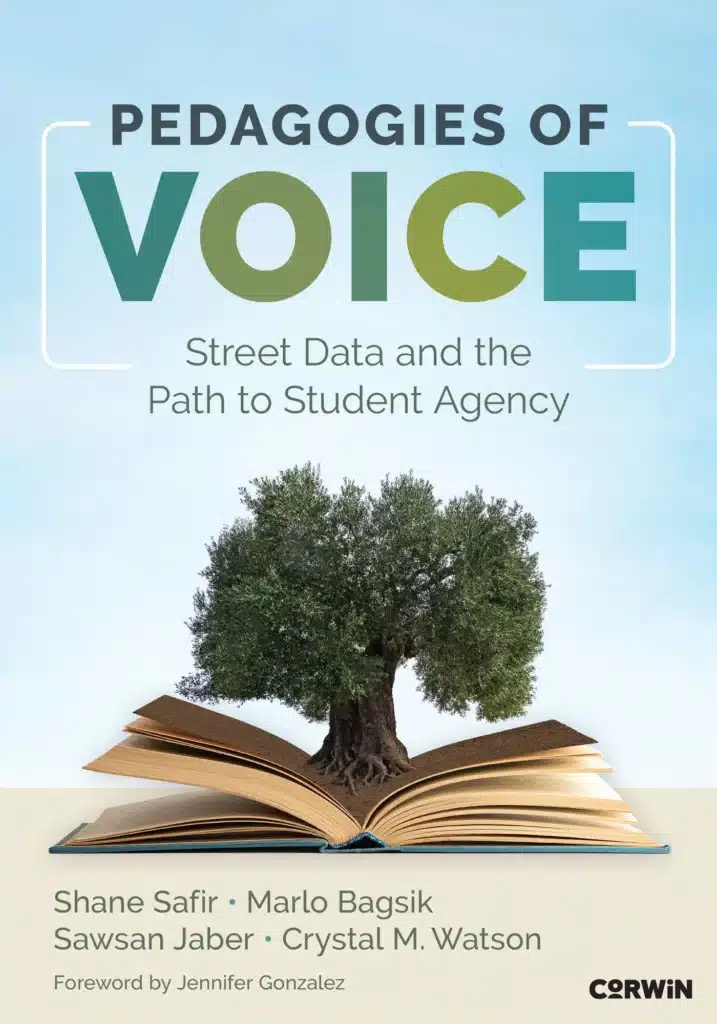
To address this critical need, Shane Safir collaborated with three distinguished educators—Marlo Bagsik, Sawsan Jaber, and Crystal Watson—to co-author "Pedagogies of Voice: Street Data and the Path to Student Agency." This new book serves as a vital bridge, transforming the systemic insights of "Street Data" into concrete, implementable classroom strategies. Rather than prescribing a rigid curriculum, "Pedagogies of Voice" is conceptualized as a "seed store" of practices—a rich repository of adaptable "moves" that educators can employ to cultivate student voice, foster agency, and create genuinely meaningful learning experiences.
The book organizes classroom practices into an "Agency Framework" comprising four interconnected domains: Identity, Belonging, Inquiry, and Efficacy. This framework provides a comprehensive structure for nurturing students’ internal sense of self and their capacity to influence their learning and the world around them.
1. Practices that Awaken Identity:
This domain focuses on creating learning environments where every student feels that their unique ways of being, knowing, and learning are not just tolerated, but actively valued and celebrated. The goal is for each learner to confidently declare, "My ways of being, knowing, and learning are valued here." Sawsan Jaber, a co-author, highlights the power of storientation, a practice that leverages storytelling as a springboard for both learning content and developing a deeper understanding of one’s own identity.
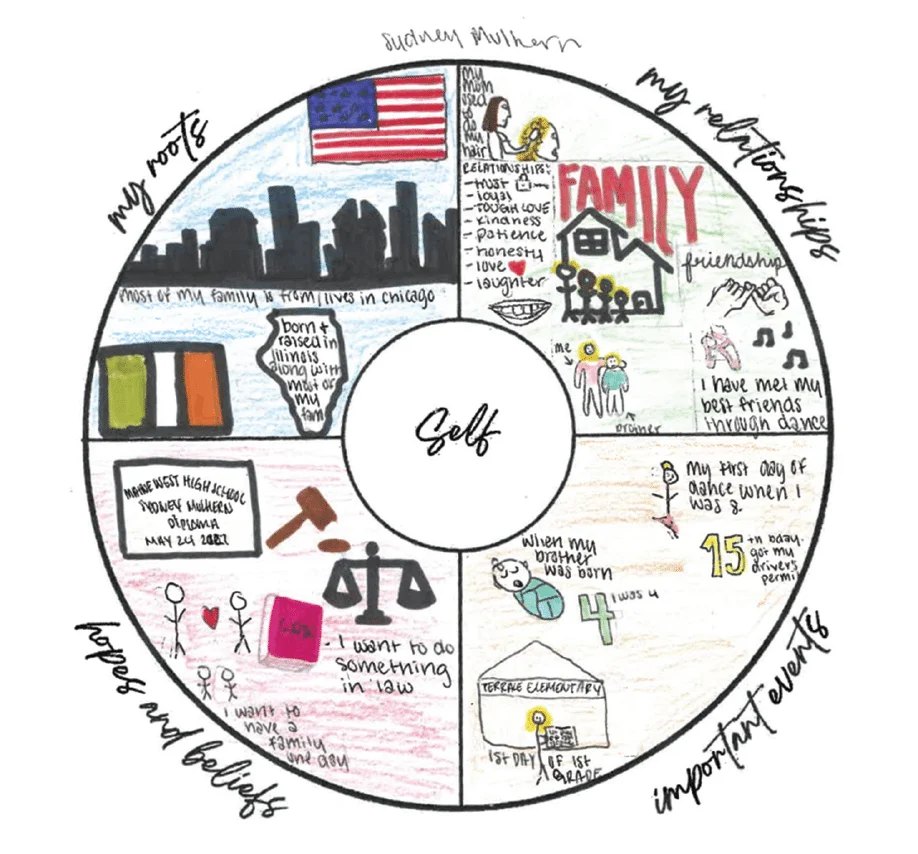
- Identity Mandalas: Students create visual representations of their multifaceted identities, incorporating elements like cultural heritage, personal interests, values, and aspirations. This visual exercise provides a non-threatening entry point for self-expression and mutual understanding. The intricate designs, like the one from Jaber’s classroom, become powerful artifacts of personal narrative, allowing students to share who they are beyond academic labels.
- Narrative Prompts: Teachers provide prompts that encourage students to share personal stories related to the curriculum, linking academic concepts to their lived experiences. For example, in a history class, students might share family migration stories when discussing immigration patterns, or in a science class, recount personal observations of natural phenomena before diving into scientific principles. This not only deepens comprehension but also validates diverse perspectives.
2. Practices that Awaken Belonging:
This domain centers on cultivating classroom environments where every student feels seen, acknowledged, and genuinely cared for. Crystal Watson, another co-author, emphasizes the profound impact of a seemingly simple practice: circling up. This involves arranging classroom seats in a circle for various activities, breaking away from traditional linear or tiered seating arrangements.
- Equidistant Engagement: As Watson eloquently explains, "when you circle up, you’re all equidistant from the center." This spatial arrangement inherently democratizes the classroom, ensuring that no single identity, idea, or individual is perpetually centered or marginalized. It fosters a sense of shared space and equal participation.
- Conversational Math: Watson, whose work often focuses on math education, finds circling up particularly transformative in this subject. She notes that many students develop an aversion to math because they perceive it as a solitary activity of "just sitting there and doing problems." Circling up facilitates rich mathematical discourse, argumentation, and collaborative problem-solving, moving math from an individualistic endeavor to a communal exploration of ideas. This shift can significantly enhance engagement and conceptual understanding, challenging the notion that math is solely about rote memorization.
- Community Building Circles: Beyond academic discussions, circling up is utilized for morning meetings, check-ins, and restorative justice practices, creating a consistent ritual for emotional connection and mutual support. This regular practice builds a strong, inclusive classroom community where students feel safe to share and be vulnerable.
3. Practices that Awaken Inquiry:
This domain empowers students to ask probing questions, critically analyze information, and construct knowledge in increasingly sophisticated ways. Shane Safir notes that inquiry has been "stripped from the learning environments" in many places, leading to passive consumption rather than active engagement. The goal is to reignite students’ innate curiosity and develop their capacity for critical literacy across all forms of media and the world itself.
- Question Formulation Technique (QFT): This structured process teaches students how to generate, categorize, and prioritize their own questions about a given topic or text. It empowers them to take ownership of their learning by defining what they want to investigate.
- Phenomenon-Based Learning: Instead of starting with direct instruction, lessons begin with an intriguing phenomenon, observation, or problem. Students are encouraged to generate questions, formulate hypotheses, and design investigations to explore the phenomenon, mimicking the process of scientific discovery or real-world problem-solving.
- Critical Media Literacy Projects: Students are guided to critically analyze news articles, social media, advertisements, and other media for bias, source reliability, and underlying messages. They then create their own media, demonstrating their understanding of how information is constructed and consumed.
4. Practices that Awaken Efficacy:
The final domain focuses on cultivating learning spaces where every student develops a robust belief in their ability to effect positive change concerning issues that matter to them. Marlo Bagsik, a co-author, shared two complementary practices that effectively bookend a week, reinforcing student efficacy:
- "What I Need to Thrive" (WINTT) Check-ins: At the beginning of the week or a learning unit, students engage in WINTT check-ins. They reflect on their learning goals, identify potential challenges, and articulate what they need from their teachers, peers, and the learning environment to succeed. This practice empowers students to advocate for themselves and articulate their learning needs, fostering a sense of ownership and self-awareness. It shifts the dynamic from passive reception to active partnership in the learning process.
- "What I’m Proud Of" (WIPO) Reflections: At the end of the week or unit, students engage in WIPO reflections. They document their accomplishments, learning breakthroughs, and contributions, both individual and collaborative. This practice helps students recognize their growth, celebrate their efforts, and internalize their capabilities, building self-esteem and a sense of achievement. By explicitly reflecting on their successes, students reinforce their belief in their own agency and competence.
Broader Implications in a Challenging Societal Landscape
The timing of "Pedagogies of Voice" is particularly salient. In an era marked by escalating societal tensions, aggressive pushes to restrict curriculum, widespread book banning, teacher censorship, and an erosion of democratic norms, these pedagogical approaches offer a powerful counter-narrative and a tangible pathway for positive change. When marginalized voices, which had just begun to gain overdue recognition, face renewed efforts to silence them, teaching practices that amplify student voice become acts of profound resistance and empowerment.
By creating spaces where students can reflect critically, articulate their perspectives, and act meaningfully, educators are not merely teaching academic content; they are cultivating essential civic virtues. Practices that encourage listening to diverse opinions, respectfully challenging differing viewpoints, and collaborating on shared goals are the bedrock of a functioning democracy. Students who learn to navigate these processes in the classroom are better equipped to engage with complex societal issues, resist misinformation, and contribute constructively to their communities. They become the "kind of people who will reshape the world for the better," as the authors suggest.
The long-term implications extend beyond individual classrooms. A generation of students empowered with agency and a strong sense of identity, belonging, and inquiry is more likely to:
- Drive Equitable Change: Advocate for social justice and equity within and beyond educational institutions.
- Innovate and Problem-Solve: Approach complex global challenges with creativity and critical thinking.
- Engage Civically: Participate actively and responsibly in democratic processes, understanding the power of their collective voice.
- Foster Mental Well-being: Experience higher levels of engagement, self-worth, and resilience in environments that validate their existence and contributions.
Conclusion: A Path Towards a More Human-Centered Education System
The challenges facing American education are multifaceted and deeply entrenched. However, the "Street Data" framework and the practical strategies offered in "Pedagogies of Voice" present a compelling and hopeful alternative to the cycle of top-down reforms and standardized metrics that have consistently failed to meet the needs of all students. By prioritizing the humanity of learners, fostering genuine connection, and empowering students to be active participants in their educational journey, these approaches offer a sustainable path toward creating schools that are not only academically rigorous but also deeply equitable, inclusive, and truly democratic. The call to action is clear: in these critical times, investing in pedagogies that amplify student voice is not just a matter of educational improvement; it is an investment in the future of our society.