



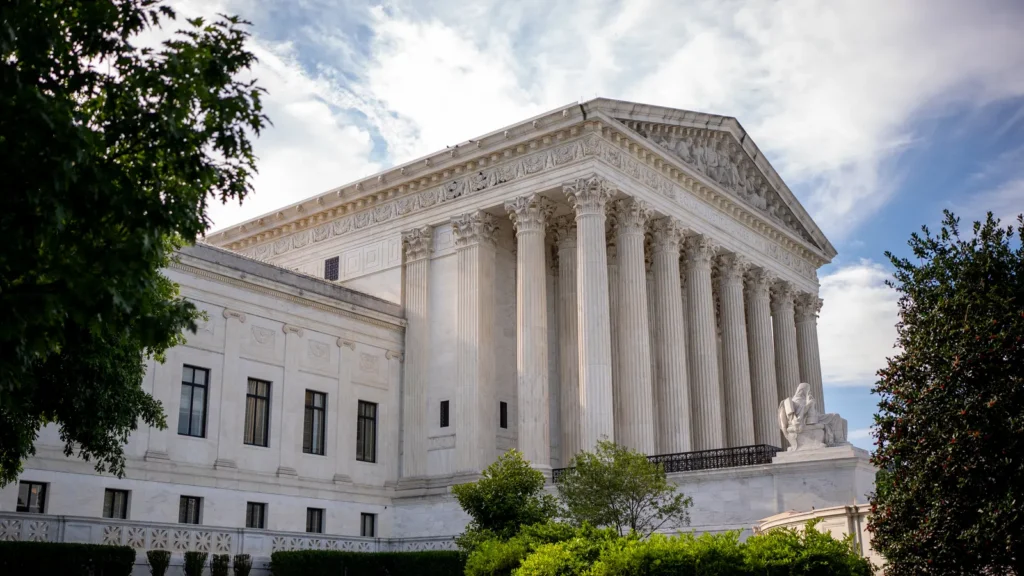
The U.S. Supreme Court has once again opted not to intervene in the increasingly contentious legal battles over the rights of LGBTQ+ students in public schools versus the asserted rights of their parents. On Monday, the nation’s highest court denied a petition in Littlejohn v. School Board of Leon County, effectively leaving in place lower court rulings that dismissed a case brought by Florida parents challenging the constitutionality of gender support plans implemented without their explicit consent. This decision marks another instance where the Supreme Court has sidestepped a direct ruling on these deeply divisive issues, which continue to fuel significant debate and litigation across the country.
The Genesis of the Littlejohn Case
The case originated with a lawsuit filed by two parents in Leon County, Florida, against the local school board and superintendent. The core of their legal challenge centered on the alleged violation of their parental rights under the Fourteenth Amendment. Specifically, they contended that school officials met with their 13-year-old child, identified in court documents as A.G., and developed a "gender support plan" without their knowledge or consent.
According to the parents’ petition to the Supreme Court, this plan involved school personnel referring to A.G. as "nonbinary," instructing teachers to use they/them pronouns for the student, and updating school records to reflect a "new" name chosen by A.G. The parents argued that the school’s actions bypassed their fundamental right to direct the upbringing and education of their child.
"They did all this without even asking A.G. if she wanted her parents to be involved," stated the parents’ petition, highlighting their frustration. "When the Littlejohns found out and asked the school to stop, the school refused. When the Littlejohns asked to participate, the school said they had no right. And when the Littlejohns asked for records of the meetings with their daughter, the school said those records were private."
The parents revealed that they were actively seeking to address their child’s perceived gender identity issues through therapeutic intervention, having retained a therapist for A.G. They expressed opposition to what they termed A.G.’s "social transition" and viewed the school’s actions as an undermining of their parental authority and their efforts to guide their child through this period.
Lower Court Rulings and the Path to the Supreme Court
The federal district court and the Eleventh Circuit Court of Appeals had previously dismissed the Littlejohns’ claims. Their reasoning was based on the argument that the school district’s actions, while contested, did not rise to a level that "shocked the conscience," a legal standard often applied in due process claims. Furthermore, they noted that the specific actions were reportedly undertaken under a prior school policy, although the parents contested this characterization.
Undeterred, the Littlejohns petitioned the Supreme Court, framing their case as a matter of "great and growing national importance." They sought a definitive ruling on whether public schools can constitutionally establish gender support plans without parental consent or involvement, arguing that such practices erode fundamental parental rights. The petition asserted that the Supreme Court was the ideal venue to "resolve the disarray" surrounding these evolving educational policies.
The Supreme Court’s Consistent Stance on Contentious LGBTQ+ Cases
The Supreme Court’s denial in Littlejohn v. School Board of Leon County is consistent with a pattern observed in recent years. The Court has repeatedly declined to hear cases that could establish broad legal precedents on the intersection of LGBTQ+ student rights and parental rights in educational settings. This approach allows existing lower court rulings to stand, leading to a patchwork of legal interpretations and practices across different states and school districts.
This is not the first time this term or the previous one that the Supreme Court has faced such a dilemma. Just the week prior to the Littlejohn decision, the Court turned away a case from Massachusetts. In that instance, parents alleged that Ludlow Public Schools violated their rights by implementing a policy that required students’ consent before notifying parents about their children’s preferred names or pronouns at school. The parents in that case argued that such policies undermined their ability to be informed and involved in their children’s lives.
However, the Supreme Court’s docket has also seen instances where it has sided with parents or teachers in disputes concerning LGBTQ+ student identities. In a notable decision last month, the Court sided with parents and teachers in a case involving California state policies that had prevented schools from disclosing students’ LGBTQ+ identities to their parents. This ruling came through the Court’s "shadow docket," also known as the emergency docket, which allows for swift decisions on urgent matters without extensive oral arguments or full briefing.
In the California case, Mirabelli v. Bonta, the unsigned opinion from the Court stated that such policies "cut out the primary protectors of children’s best interests: their parents." Justice Elena Kagan, in a dissenting opinion, criticized the Court’s use of the emergency docket in this instance, arguing that it led to a decision based on "scant and, frankly, inadequate briefing about the legal issues in dispute." She noted that nearly 40 similar cases were progressing through lower courts at the time, indicating the widespread nature of these conflicts.
The Rise of Gender Support Plans and Their Implications
Gender support plans, also known as gender-affirming plans or care plans, have become increasingly prevalent in school districts across the United States, particularly in areas with more progressive political leanings. Proponents of these plans argue they are crucial for creating safe and inclusive environments for transgender and gender non-conforming students. They contend that these plans help prevent the "outing" of students, which can lead to bullying, harassment, or discrimination. Furthermore, in cases where students may face unsupportive or even abusive home environments, school-based support plans can provide a vital lifeline and ensure a student’s gender identity is respected at school.
These plans typically outline specific accommodations and support mechanisms for a student. This can include the use of a student’s chosen name and pronouns, adjustments to restroom and locker room access, and strategies for staff to communicate with the student about their gender identity. The primary goal, according to advocates, is to affirm the student’s identity and reduce the risk of distress and harm.
Conversely, the implementation of these plans without direct parental notification or consent has ignited fierce opposition from many parents and conservative groups. They argue that such policies usurp parental authority and infringe upon their fundamental right to raise their children according to their own values and beliefs. Critics often express concerns that schools are overstepping their bounds by engaging in what they perceive as social or psychological interventions that should be managed by families, often in consultation with medical or mental health professionals of the parents’ choosing.
The debate highlights a fundamental tension between the evolving understanding of gender identity and the long-held legal and societal norms surrounding parental rights in education. Data from organizations tracking LGBTQ+ youth mental health often point to higher rates of depression, anxiety, and suicidality among transgender and gender non-conforming youth, particularly when they lack support. For instance, the Trevor Project’s 2023 National Survey on LGBTQ+ Youth Mental Health found that 81% of transgender and nonbinary youth reported wanting to be affirmed in their gender identity, and those who were affirmed reported lower rates of attempting suicide. This data is often cited by proponents of gender support plans as evidence of their necessity.
However, opposing viewpoints often cite studies or anecdotal evidence suggesting potential harms from what they consider premature social transitions or a lack of parental oversight. The differing perspectives create a complex legal and social landscape, with schools often caught in the middle of these deeply held beliefs.
Broader Impact and Future Outlook
The Supreme Court’s decision to deny review in Littlejohn means that the legal questions surrounding gender support plans and parental rights will continue to be litigated in lower federal and state courts. This is likely to result in ongoing legal uncertainty and inconsistent application of policies across the country. School districts will continue to navigate the delicate balance between supporting LGBTQ+ students and respecting parental rights, often facing pressure from both sides of the issue.
The repeated denials by the Supreme Court suggest that the Justices may be awaiting a case with clearer legal standing or one that has percolated through the lower courts in a way that presents a more compelling national question. Alternatively, the Court may be intentionally allowing these issues to play out at the state and local levels, perhaps reflecting a judicial reluctance to broadly dictate educational policy in such a rapidly evolving and socially charged area.
The impact of these ongoing legal battles extends beyond the immediate parties involved. It affects the daily lives of LGBTQ+ students, their families, educators, and school administrators. The lack of definitive national guidance can create environments of confusion, anxiety, and potential legal risk for schools. As more cases emerge and lower courts grapple with these complex issues, the pressure on the Supreme Court to eventually weigh in may intensify. For now, however, the legal landscape remains fragmented, and the debate over parental rights versus LGBTQ+ student support in schools will continue to be shaped by ongoing litigation and evolving societal norms.