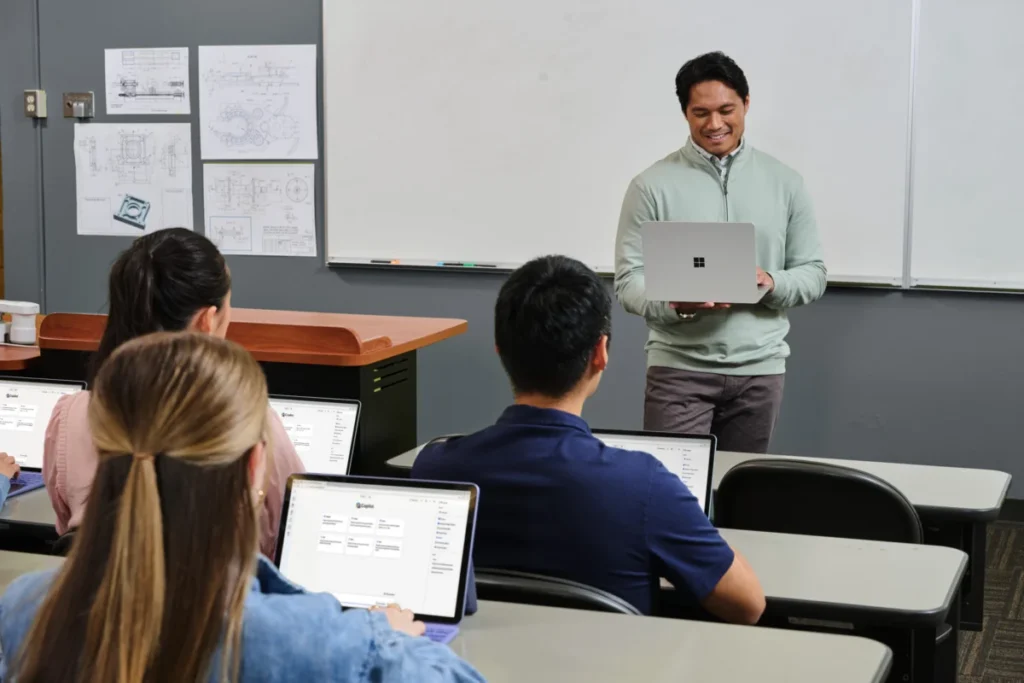




The landscape of engineering education is undergoing a significant transformation, driven by a confluence of financial imperatives, evolving student expectations, and the enduring principle of academic freedom. Universities are increasingly integrating entrepreneurship into their engineering programs, a strategic pivot aimed at equipping graduates with the skills necessary to not only excel in traditional technical roles but also to lead, innovate, and drive economic growth. This paradigm shift is exemplified by the proactive approach taken by the École de technologie supérieure (ÉTS), a prominent engineering school in Montreal, Quebec.
In an exclusive interview with University Affairs, Kathy Baig, Chief Executive Officer of ÉTS, detailed the institution’s commitment to fostering an entrepreneurial mindset among its engineering students. Baig articulated how this focus is not merely a response to external pressures but an intrinsic alignment with ÉTS’s institutional identity and the dynamic needs of the modern market. The integration of entrepreneurial education is seen as a natural evolution, enhancing the core technical competencies that have always defined the engineering profession.
Redefining the Engineer’s Role: Beyond Technical Prowess
The traditional image of an engineer as solely a technical problem-solver is being augmented by a recognition of their expanding roles in management, leadership, and entrepreneurship. Baig emphasized that while technical skills remain the bedrock of engineering education, the contemporary professional requires a broader skill set. "Technical skills are still at the core of our programs; that won’t change," Baig stated. "But today’s engineers are increasingly playing management, entrepreneurship, and leadership roles. So, there is an evolution towards integrating management and interpersonal skills as well as strategic vision. That’s one reason we’re training engineers in these areas."
This sentiment is supported by compelling data. A 2022 study conducted by the Ordre des ingénieurs du Québec revealed that a notable 15 percent of engineers have ventured into starting their own businesses. More significantly, over half of the students surveyed expressed a keen interest in pursuing a similar entrepreneurial path. This indicates a generational shift in aspirations, with emerging engineers eager to create their own opportunities rather than solely seeking employment within established structures.
The growing interest in entrepreneurship within engineering circles coincides with broader national trends. Canada has, in recent years, witnessed a decline in its overall entrepreneurial activity. In response, various government initiatives have emerged to bolster business development and encourage innovation. However, Baig was clear that ÉTS’s strategic direction is not dictated by these external pressures. Instead, the emphasis on entrepreneurship is a deliberate choice that resonates with the institution’s core mission and its understanding of market demands. "External pressures are not guiding ÉTS’s choices," Baig asserted. "Entrepreneurship aligns with our institutional identity and with market needs."
ÉTS views entrepreneurship as one of several vital avenues available to its students. The institution is committed to providing a comprehensive educational experience that caters to a diverse range of student interests and career aspirations. Whether students aspire to be highly specialized technical experts, adept managers, or ambitious entrepreneurs, ÉTS aims to equip them with the necessary tools and support. This holistic approach recognizes that a well-rounded engineer can contribute to society in numerous ways, from groundbreaking research to impactful community engagement and the creation of innovative ventures. "Entrepreneurship is one among several avenues students can pursue," Baig explained. "We are also training technical experts and managers. ÉTS students are free to chart their own path, whether in university sports, community engagement, or entrepreneurship. Our goal is to offer ways to pursue a wide variety of interests."
Centech: A Catalyst for Deep Tech Innovation
A cornerstone of ÉTS’s entrepreneurial ecosystem is Centech, a deep tech incubator closely affiliated with the university but also open to external projects. Centech plays a crucial role in translating cutting-edge research and innovative ideas into viable businesses. The incubator offers two primary programs: Acceleration and Propulsion.
The Acceleration program is designed for promising projects that have already demonstrated significant progress. Teams participating in this program benefit from Centech’s comprehensive support, which includes intensive training, personalized coaching, and access to a network of mentors and investors. The goal is to provide these nascent ventures with the resources and guidance needed to rapidly scale their operations and achieve market traction.
The Propulsion program, on the other hand, targets earlier-stage ideas and startups, offering a structured pathway to develop their business models, refine their technologies, and secure initial funding. Both programs are meticulously crafted to accelerate business development, empowering entrepreneurs to navigate the complex journey from concept to commercialization. While not every team will achieve sustained success, the objective is to create an environment where innovation can flourish and where the entrepreneurial spirit is nurtured and amplified.

Navigating the Interplay of Entrepreneurship, Research, and Academic Freedom
The integration of entrepreneurship into academic institutions naturally raises questions about its relationship with fundamental research and the sacrosanct principle of academic freedom. Kathy Baig underscored that academic freedom remains the paramount principle at ÉTS. "Academic freedom is our keystone," she affirmed. "Professors are free to choose what they research. ÉTS can define certain priorities or invest in strategic areas, but our university governance protects researchers’ independence."
However, this independence operates within a framework designed to maximize the societal impact of research. ÉTS’s letters patent explicitly mandate the institution to support knowledge development and contribute to Quebec’s economic advancement. This directive fosters a symbiotic relationship between academic inquiry and industrial application. Approximately 70 percent of ÉTS’s research is conducted in collaboration with industry partners, a testament to the university’s commitment to applied innovation and knowledge transfer. This close collaboration ensures that research endeavors are not only academically rigorous but also relevant to the challenges and opportunities facing the business world.
Recent global developments, particularly concerning academic freedom in certain jurisdictions, have understandably prompted discussions and anxieties within academic communities. Baig acknowledged these concerns, noting that while some researchers have experienced pressures, the impact on ÉTS has been relatively minimal. The proportion of funding ÉTS receives from the United States, for instance, is described as "relatively low," mitigating significant disruption to its research activities. Institutions like the Institut AdapT, dedicated to designing climate-resilient infrastructure, continue to operate without substantial disruption, demonstrating the resilience of ÉTS’s research framework.
Empowering Student Entrepreneurs: Bridging the Gap
While ÉTS is actively cultivating an entrepreneurial culture, Baig acknowledged that there is ongoing work to be done to fully empower students in their journey to transform research into viable business ventures. "There’s still work to do," she admitted. "We saw that we could do more to help our own students become entrepreneurs, so we created a hub that supports students seeking to launch a business."
This dedicated hub serves as a central resource for students looking to embark on entrepreneurial endeavors, offering guidance, mentorship, and access to a network of support services. Furthermore, ÉTS is actively exploring the development of a formal student entrepreneur program. Such a program would aim to formally recognize the valuable experience gained by students who choose to work in startups or launch their own businesses during their academic careers. This initiative draws inspiration from successful models observed internationally, particularly concerning internship programs designed to expose students to the startup ecosystem and provide hands-on industry experience. The ultimate objective is to create a more robust and supportive environment that stimulates greater interest in and facilitates the development of engineering-driven businesses.
The Future of Engineering: Entrepreneurship and the AI Revolution
Looking ahead, Baig anticipates that entrepreneurship will continue to be a defining characteristic of engineering education and practice. The next two decades are poised to witness profound changes, with generative artificial intelligence (AI) emerging as a transformative force. "Entrepreneurship will remain a very prominent feature," Baig predicted. "Generative AI will transform the profession, as other tools before it did; we’ve already been using design-assist software for years. There’s no doubt AI is changing our practices."
The integration of AI into engineering workflows is not entirely novel; engineers have long leveraged sophisticated software tools for design and analysis. However, generative AI represents a significant leap forward, promising to automate complex tasks, accelerate innovation cycles, and unlock new possibilities. This technological evolution will undoubtedly reshape the skills required of future engineers, necessitating a greater emphasis on critical thinking, creativity, and the ability to collaborate effectively with AI systems.
Despite the profound impact of AI, Baig stressed that the fundamental nature of engineering work will persist. "Engineers still do complex, multidisciplinary and deeply human work," she concluded. The challenges of designing sustainable infrastructure, developing groundbreaking medical technologies, and addressing complex societal issues will continue to demand the ingenuity, problem-solving capabilities, and ethical considerations that are inherent to the engineering profession. The evolving role of the engineer, therefore, will be one of adaptation and leadership in a technologically advanced world, with entrepreneurship serving as a key vehicle for driving that progress.