
In a significant move to align private sector innovation with national policy, Microsoft announced a comprehensive suite of new commitments today during a meeting of the White House’s AI Education Task Force. These initiatives are designed to bolster the Presidential AI Challenge and fulfill key objectives outlined in the AI Education Executive Order, signaling a major expansion of high-level AI tools and training programs within the American educational landscape. The announcement, delivered by Microsoft Chairman and CEO Satya Nadella, Vice Chair and President Brad Smith, and LinkedIn CEO Ryan Roslansky, underscores a strategic shift toward democratizing artificial intelligence technology to ensure that students, educators, and the broader workforce are prepared for an increasingly automated economy.
The meeting at the White House serves as a pivotal moment in the administration’s efforts to coordinate with technology leaders to manage the risks and maximize the benefits of generative AI. By integrating these tools directly into the academic and professional pipelines, Microsoft aims to address the growing "AI literacy gap" that experts warn could exacerbate existing socio-economic disparities. The commitments focus on three primary areas: empowering the academic community with cutting-edge technology, scaling AI-specific skill acquisition, and bridging the gap between certification and employment through data-driven platforms.
A Strategic Framework for National AI Literacy
The collaboration between Microsoft and the White House AI Education Task Force is rooted in the belief that the long-term success of artificial intelligence depends not on the sophistication of the models themselves, but on the breadth of their diffusion across society. Satya Nadella, in a video statement released during the meeting, emphasized that the goal is to create a "virtuous cycle" of learning and opportunity. This framework is built upon the foundation of the October 2023 Executive Order on the Safe, Secure, and Trustworthy Development and Use of Artificial Intelligence, which called for expanded federal support for AI education and workforce development.
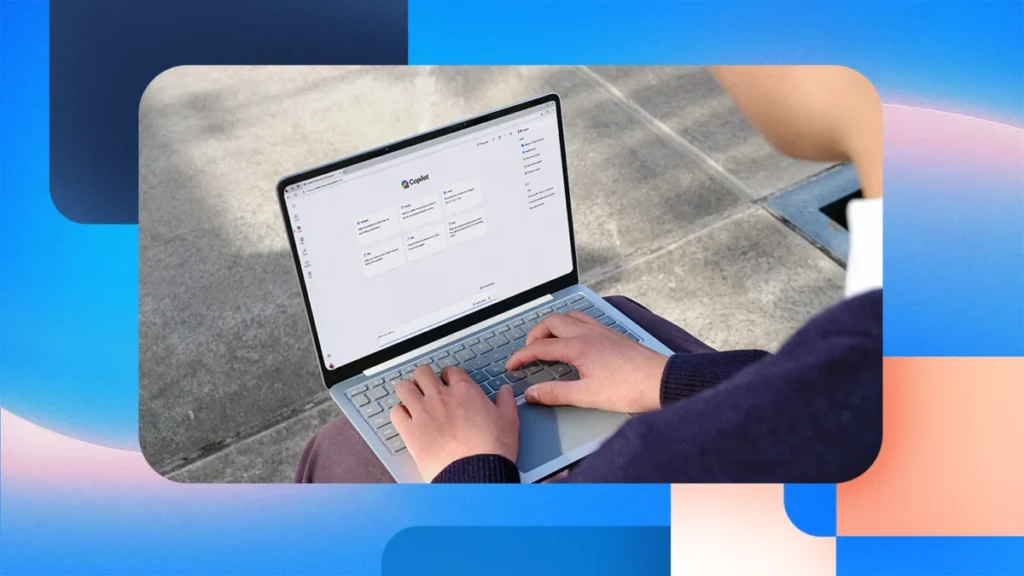
To meet these federal mandates, Microsoft is deploying resources intended to modernize the classroom experience. This includes providing educators with specialized versions of Microsoft Copilot—the company’s flagship AI assistant—tailored for pedagogical use. These tools are designed to assist teachers in lesson planning, administrative tasks, and personalized student feedback, theoretically freeing up more time for direct instruction. For students, the initiatives provide a controlled environment to explore generative AI, fostering the critical thinking skills necessary to navigate a world where AI-generated content is becoming ubiquitous.
Building the Workforce of the Future: The Three Pillars
The Microsoft announcement outlines a tri-fold strategy that addresses the lifecycle of a professional career in the AI era. This structured approach aims to transform the American education system from a traditional model into one that is "AI-fluent" by default.
Pillar I: Empowering Teachers and Students
The first pillar focuses on the immediate classroom environment. Microsoft has committed to providing low-cost or no-cost access to AI learning modules and software for Title I schools and community colleges. By targeting these institutions, the company seeks to ensure that the AI revolution does not leave behind underfunded districts. This includes the "AI for Educators" program, which offers professional development tracks to help teachers understand the ethical implications, prompt engineering basics, and data privacy requirements of using AI in schools.
Pillar II: Scalable AI Skilling and Certification
The second pillar addresses the speed at which AI technology is evolving. Unlike previous technological shifts, such as the rise of the internet or mobile computing, AI is advancing at an exponential rate. Microsoft’s strategy emphasizes "learning by doing." Through platforms like Microsoft Learn and LinkedIn Learning, the company is launching new certification paths that recognize micro-credentials in AI fluency. These certifications are designed to be dynamic, updating as the technology evolves, ensuring that a credential earned today remains relevant in the face of next-year’s breakthroughs.
Pillar III: Connecting Skills to Economic Opportunity
The final pillar leverages the massive data ecosystem of LinkedIn to connect newly skilled individuals with employers. Ryan Roslansky, CEO of LinkedIn, highlighted the platform’s role in creating a "skills-based" labor market. As companies increasingly prioritize what a candidate can do over where they went to school, Microsoft is integrating AI-skill verification directly into LinkedIn profiles. This allows job seekers to showcase their proficiency in AI tools to recruiters in real-time. This pillar is particularly critical as LinkedIn data suggests that job postings mentioning AI or Generative AI have more than doubled in the past year alone.
Chronology of AI Governance and Educational Integration
The journey toward today’s announcement began in earnest in early 2023, following the public explosion of generative AI tools. The timeline of development shows a rapid acceleration of both technological capability and regulatory response:

- May 2023: Microsoft and other industry leaders met with the White House to discuss voluntary commitments to AI safety and transparency.
- October 2023: President Biden signed the landmark Executive Order on AI, which specifically tasked the Department of Education and the White House AI Education Task Force with developing a strategy for AI in schools.
- Early 2024: The Presidential AI Challenge was launched, inviting private sector partners to develop solutions that use AI to solve major societal issues, including education and workforce training.
- September 2025: Microsoft formalizes its sweeping commitments, transitioning from theoretical frameworks to large-scale deployment of tools and skilling programs across the United States.
This chronology illustrates a concerted effort by the federal government to move beyond regulation and into active partnership with the tech sector to drive national competitiveness.
Supporting Data: The Economic Imperative for AI Education
The urgency behind Microsoft’s commitments is supported by a growing body of economic data. According to the World Economic Forum’s Future of Jobs Report, nearly 44% of workers’ core skills are expected to change in the next five years due to the integration of AI. Furthermore, a recent Microsoft-commissioned study found that 70% of business leaders would rather hire a less experienced candidate with AI skills than a more experienced candidate without them.
In the United States, the demand for AI talent has historically outpaced the supply. By providing these tools to students at the K-12 and university levels, Microsoft and the White House are attempting to build a sustainable talent pipeline. Data from LinkedIn indicates that members who have added AI skills to their profiles see a 17% higher rate of recruitment outreach compared to those who have not. These statistics reinforce the argument that AI education is no longer an elective or a niche interest but a fundamental requirement for modern economic participation.
Official Responses and Industry Reactions
The response from the educational and political sectors has been largely positive, though characterized by a sense of cautious optimism. Dr. Jill Biden, who has been a vocal advocate for the AI Education Task Force, noted that these partnerships are essential for ensuring that "every student, regardless of their zip code, has the opportunity to lead in the digital age."
Brad Smith, Microsoft’s Vice Chair and President, framed the initiative as a matter of national responsibility. "We are at a crossroads where the decisions we make about education will determine our economic trajectory for the next fifty years," Smith stated. "Our goal is to ensure that AI is a tool that empowers people, rather than a force that replaces them."
Industry analysts suggest that Microsoft’s move also serves as a strategic competitive advantage. By embedding its ecosystem (Copilot, Azure, LinkedIn) into the educational fabric of the country, Microsoft is effectively training the next generation of workers on its proprietary tools. However, from a public policy perspective, the immediate benefits of increased digital literacy and job placement are seen as a net positive for the national economy.
Broader Impact and Long-term Implications
The implications of Microsoft’s commitment extend far beyond the classroom. By standardizing AI education through the Presidential AI Challenge, the United States is positioning itself to remain a global leader in innovation. However, this transition also presents challenges. Critics and privacy advocates remain concerned about the data harvesting potential of AI tools in schools and the ethical implications of "algorithmic bias" in educational software.
Microsoft has addressed these concerns by pledging that its educational AI tools will adhere to the highest standards of data privacy and security, as outlined in the White House’s AI Bill of Rights. The company has committed to regular audits and transparency reports to ensure that its AI models are serving students equitably.
As these programs roll out, the primary metric of success will be the "diffusion" mentioned by Nadella—how effectively these tools reach rural, underserved, and marginalized communities. If successful, this initiative could serve as a global blueprint for how public and private entities can collaborate to manage the most significant technological transition of the 21st century. The focus now shifts to implementation, as schools across the country begin to integrate these new resources into their curricula for the upcoming academic cycles.